

TL;DR:
- Modern laser hair removal offers long-term, effective hair reduction through targeted light energy.
- Proper preparation and choosing a qualified clinic are vital for safe, optimal results.
- Most clients see significant hair reduction after 4 to 6 sessions, with maintenance possible.
Shaving every few days, booking waxing appointments you dread, or tolerating the regrowth itch — these are frustrations that accumulate quietly but significantly. Modern laser hair removal offers a genuinely transformative alternative: a clinically proven, non-invasive approach that reduces unwanted hair long-term without the cycle of temporary fixes. This guide walks you through everything you need to know, from how the technology works to exactly what happens in a premium London clinic, so you can approach treatment with confidence and achieve the smooth, lasting results you are looking for.
Table of Contents
- What to know before you start laser hair removal
- Preparing for your first laser hair removal session
- Step-by-step: The laser hair removal process in London
- Aftercare and maximising your results
- Laser hair removal: What most guides don’t tell you
- Next steps: Premium hair removal and beyond
- Frequently asked questions
Key Takeaways
| Point | Details |
|---|---|
| Multiple sessions required | Laser hair removal needs several treatments for optimal, lasting results. |
| Clinic choice matters | Selecting a reputable, experienced London clinic dramatically improves safety and outcome. |
| Custom plans for all skin types | Premium devices and skilled practitioners safely treat all skin tones and hair types. |
| Proper aftercare essential | Following aftercare steps reduces discomfort and risk for the smoothest finish. |
| Expect and plan for maintenance | Top-up sessions help preserve your results over time. |
What to know before you start laser hair removal
Understanding how laser hair removal actually works sets realistic expectations from the start. The treatment uses concentrated light energy to target melanin, the pigment inside each hair follicle. That energy converts to heat, which damages the follicle and disrupts its ability to produce new hair. Crucially, the laser only targets follicles in the active growth phase, which is why multiple sessions are essential.
The role of lasers in aesthetics extends far beyond hair removal, but for permanent hair reduction, the results are among the most evidence-backed of any non-surgical treatment available today. Research shows 57-74% reduction across 3 to 6 sessions for clients with darker skin tones (Fitzpatrick IV to VI), with specific data recording 57.9% underarm reduction and 56.7% chin reduction after just 3 sessions using an 808nm diode laser. Triple diode technology pushes results to 74% compared to 46% with IPL (intense pulsed light).
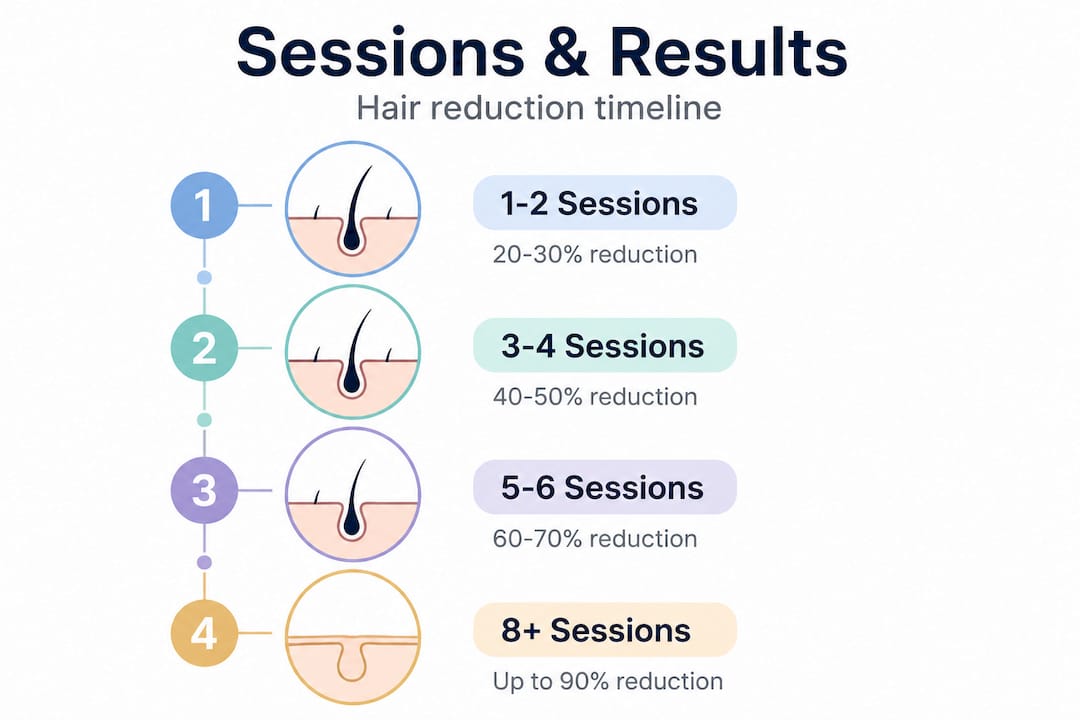
| Sessions completed | Expected reduction | Notes |
|---|---|---|
| 1 to 2 | 20 to 30% | Initial shedding begins |
| 4 to 6 | 50 to 70% | Most noticeable change |
| 8+ | Up to 90% | Long-term maintenance phase |
| Darker skin (IV to VI) | 57 to 74% (3 to 6 sessions) | Diode laser with correct protocols |
Who benefits the most? Generally, those with a meaningful contrast between hair colour and skin tone respond fastest. However, advances in types of aesthetic lasers mean that London’s diverse clientele, including all Fitzpatrick skin types, can now be treated safely and effectively.
Ideal candidates typically include:
- Those with dark, coarse hair on areas such as legs, underarms, bikini line, face, back, or chest
- Individuals tired of ingrown hairs caused by shaving or waxing
- People with polycystic ovary syndrome (PCOS) managing hormonally driven hair growth
- Men seeking long-term reduction on the back, shoulders, or neck
Pro Tip: Avoid sun exposure, sunbeds, and any waxing or plucking for at least four weeks before your first session. These activities either disrupt the follicle cycle or increase photosensitivity, both of which can compromise results and safety.
Preparing for your first laser hair removal session
Once you know what results to expect, preparation makes all the difference. Arriving at your appointment correctly prepared is one of the most practical things you can do to optimise every session.
Your pre-treatment checklist:
- Shave the area 24 to 48 hours before your appointment. The laser targets the follicle beneath the skin, not surface hair.
- Avoid waxing, threading, and epilating for at least four weeks prior. These methods remove the follicle root that the laser needs to target.
- Skip fake tan and tanning beds for a minimum of two weeks. Artificial pigmentation in the skin increases the risk of burns or hyperpigmentation.
- Pause retinoids or exfoliating acids on the treatment area for 48 to 72 hours beforehand.
- Wear loose, comfortable clothing to your appointment to avoid friction on treated skin afterwards.
- Stay well hydrated and arrive with clean, product-free skin on the area being treated.
When choosing a premium London clinic, look beyond the price point. London’s central clinics, particularly those in Marylebone, Oxford Circus, and Mayfair, offer flexible booking hours and personalised treatment plans that accommodate busy professional schedules. Leading London providers use premium devices including the Soprano Titanium, Cynosure, and Thunder MT, all of which are capable of treating all skin tones safely.
Experienced practitioners will always conduct a thorough consultation before any treatment begins. This is not a formality. It is where your skin tone, hair type, medical history, and treatment goals are assessed to build a bespoke protocol. Clinics offering advanced London treatments understand that no two clients are identical, and your plan should reflect that.
Important: Avoid unqualified or budget providers offering laser hair removal at unusually low prices. In London’s saturated market, cheap does not mean comparable. Incorrect laser settings for your skin type can cause burns, blistering, or permanent pigmentation changes. Always verify that your clinic holds CQC registration and that practitioners are appropriately qualified. See our medical aesthetics safety tips for a full guide on what to look for.
It is also completely normal to feel a little nervous before your first appointment. Most clients describe the sensation as similar to a warm snap of a rubber band, which is very manageable, particularly with modern cooling technology built into today’s devices.
Step-by-step: The laser hair removal process in London
Preparation leads naturally to the experience itself — here is how a typical session unfolds at a reputable London clinic.
- Consultation review. Your practitioner reviews your skin and hair assessment from your initial consultation, confirms there are no contraindications since your last visit, and agrees the treatment area.
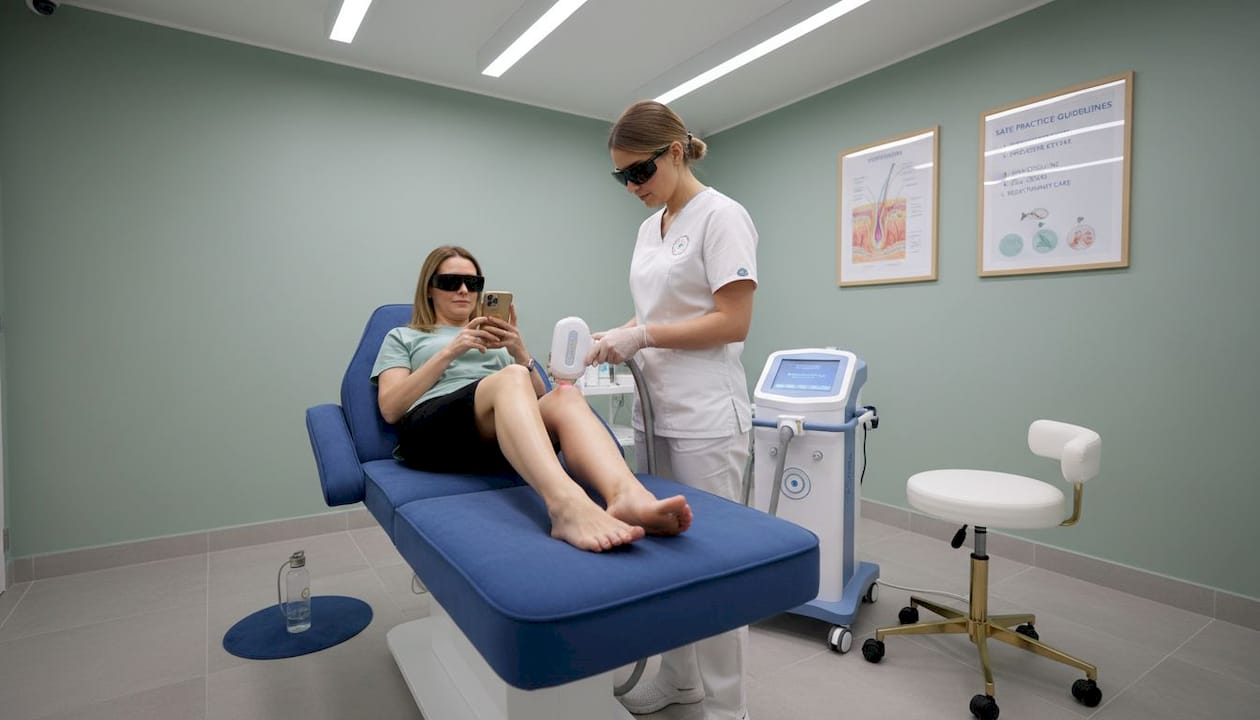
- Area preparation. The treatment zone is cleansed thoroughly to remove any residue, and protective eyewear is provided for both you and the practitioner.
- Patch test (if first session). A small test pulse is applied to confirm your skin’s reaction before full treatment begins. This step is non-negotiable at responsible clinics.
- Cooling gel application. A clear cooling gel is applied to the skin to increase comfort and protect the surface while the laser energy travels to the follicle.
- Laser treatment. The practitioner moves the laser handpiece methodically across the treatment area in overlapping passes. Settings are calibrated to your Fitzpatrick skin type and hair characteristics. Research confirms triple diode lasers achieve 74% reduction, outperforming older IPL technology significantly.
- Post-treatment cooling. Cool compresses or the device’s built-in cooling is applied to soothe the skin and reduce any immediate warmth or redness.
- Aftercare briefing. Your practitioner provides written and verbal aftercare instructions, books your next session, and answers any questions before you leave.
How do popular London devices compare?
| Device | Technology | Skin tones treated | Typical sensation | Session speed |
|---|---|---|---|---|
| Soprano Titanium | Triple wavelength diode | All (I to VI) | Warm, gradual heat | Fast |
| Cynosure Elite iQ | Alexandrite and Nd:YAG | I to VI | Sharp pulse | Moderate |
| Thunder MT | Multi-wavelength diode | All (I to VI) | Mild warmth | Fast |
| IPL (intense pulsed light) | Broadband light | I to IV | Snapping sensation | Moderate |
Session length varies from 10 minutes for smaller areas (upper lip, underarms) to 60 minutes or more for the full legs or back. Understanding the real impact of lasers on the skin helps you appreciate why each step in this process matters to your final results.
Pro Tip: Always ask your practitioner to confirm what patch testing protocol they follow for your specific skin tone before beginning a full session. This one question separates skilled clinics from reckless ones.
Aftercare and maximising your results
Keeping your results and comfort maximised is all about aftercare. What you do in the 48 to 72 hours following each session plays a meaningful role in both your immediate comfort and your long-term outcomes.
Essential aftercare steps:
- Avoid heat for 48 hours. This means no hot showers, saunas, steam rooms, or intense exercise that causes sweating. Heat aggravates post-treatment sensitivity.
- Apply cool compresses if you experience warmth or puffiness. This settles down quickly for most clients.
- Skip exfoliation on the treated area for at least five days. Scrubs, acids, and rough cloths can irritate sensitised skin.
- Use fragrance-free moisturiser to keep the skin calm and hydrated. Products with aloe vera or centella asiatica are particularly soothing.
- Apply SPF 30 or above every morning on any treated area that will be exposed to daylight, throughout your full course of sessions and beyond.
- Do not wax or pluck hairs between sessions. Shaving is fine and will not compromise your results.
Between two and three weeks after each session, you will notice hairs beginning to shed. This is entirely normal and signals that the treatment is working. The follicles are releasing the damaged hair shaft. Do not pick or scrub; let the shedding happen naturally.
Reassurance: Major complications from laser hair removal are extremely rare when treatment is carried out by a qualified practitioner using appropriate settings. Clinical data from a 73-patient study confirms that side effects are transient, with mild redness and minor swelling being the most commonly reported reactions. Burns or pigmentation changes occur only when incorrect settings are applied to skin types, reinforcing why choosing a skilled, regulated clinic matters so much.
If you notice prolonged blistering, significant swelling, or skin crusting beyond a few days, contact your clinic promptly. These reactions are rare but warrant professional review. Skincare devices for recovery can also support your skin between sessions, particularly LED therapy, which calms inflammation and supports cell repair.
Laser hair removal: What most guides don’t tell you
Here is something most instructional articles skip over entirely: the device is often the least important factor in your results. This might sound counterintuitive given how much marketing energy goes into comparing Soprano versus Cynosure versus IPL. But in our experience, what consistently separates a transformative result from a disappointing one is practitioner skill, consultation quality, and your commitment to the process.
London’s aesthetic market is saturated. You will find laser hair removal offered at every price point, from budget beauty salons to CQC-registered medical clinics. Clients who go for the cheapest option frequently return to better providers after suboptimal results or, worse, adverse reactions. The lowest cost rarely reflects the calibration expertise, consultation depth, or the genuine aftercare follow-up that premium treatment involves.
There is also a widespread assumption that laser hair removal is a finite course. It is not, not entirely. Most clients require maintenance sessions once or twice a year after their initial course, particularly those managing hormonal conditions such as PCOS. Expecting permanent, complete hair removal after eight sessions sets you up for disappointment. Expecting dramatic, long-lasting reduction that is far superior to any other method is entirely realistic.
What we genuinely recommend — and what reflects sound medical aesthetics workflow thinking — is to prioritise ongoing communication with your practitioner over the course of your treatment. Settings should be reviewed and adjusted as your hair density reduces. A practitioner who simply repeats the same parameters session after session, without reassessment, is not delivering truly personalised care.
Finally, do not underestimate the emotional dimension. Clients who arrive with excessive hair growth linked to hormonal conditions or self-consciousness often report that the confidence boost from laser hair removal is as significant as the physical change. That is not a small thing. It is worth investing in getting it right.
Next steps: Premium hair removal and beyond
Now that you understand how laser hair removal works and what exceptional treatment looks like, taking the next step with a trusted London provider is the most impactful thing you can do for your skin confidence.

At The Aesthetics Room, based in the heart of Knightsbridge, we specialise in bespoke aesthetic plans that treat the whole person, not just one concern. Our CQC-accredited clinic and membership in the ACE Group reflect our commitment to safety, precision, and genuinely personalised care. Beyond laser treatments, many of our clients explore complementary options such as dermal fillers for facial rejuvenation or discover the lasting value of skin rejuvenation treatments to restore radiance and firmness alongside their hair removal journey. Book a consultation today to begin your bespoke plan with a practitioner who listens.
Frequently asked questions
How many laser hair removal sessions will I need?
Most people see a 50 to 70% reduction after 4 to 6 sessions, with up to 90% possible after 8 sessions, though maintenance appointments may be needed annually.
Is laser hair removal safe for darker skin types?
Yes. Modern diode lasers safely treat skin tones IV to VI, with research confirming 57 to 74% reduction across 3 to 6 sessions when correct protocols are applied.
Are there any risks or side effects with laser hair removal?
Mild redness or swelling is common and resolves quickly. Serious side effects are very rare when treatment is performed by a qualified practitioner using appropriate settings for your skin type.
Can men benefit from laser hair removal as much as women?
Absolutely. London clinics offer fully personalised programmes for men, addressing areas such as the back, chest, shoulders, neckline, and face with protocols suited to coarser male hair growth patterns.
How soon will I see results after my first session?
Within 2 to 3 weeks of your first session, treated hairs will begin to shed naturally. Visible improvement builds progressively over your full course of treatment.
Recommended
- Role of lasers in aesthetics: 50% wrinkle reduction proven – The Aesthetics Room
- Discover the real impact of lasers in skincare for radiant results – The Aesthetics Room
- Types of aesthetic lasers for skin rejuvenation results – The Aesthetics Room
- Aesthetics Dos and Don’ts 2026: 95% Safer Results – The Aesthetics Room
- Epilare Definitivă pentru Adolescenți și Tineri | aBeauty Clinique ®