

TL;DR:
- Preventative skincare involves proactive measures to protect skin from aging, pollution, and stress.
- Key ingredients include retinoids, antioxidants, peptides, and broad-spectrum sunscreens supported by scientific evidence.
- Consistent daily habits and professional treatments starting early offer more cost-effective and natural results over time.
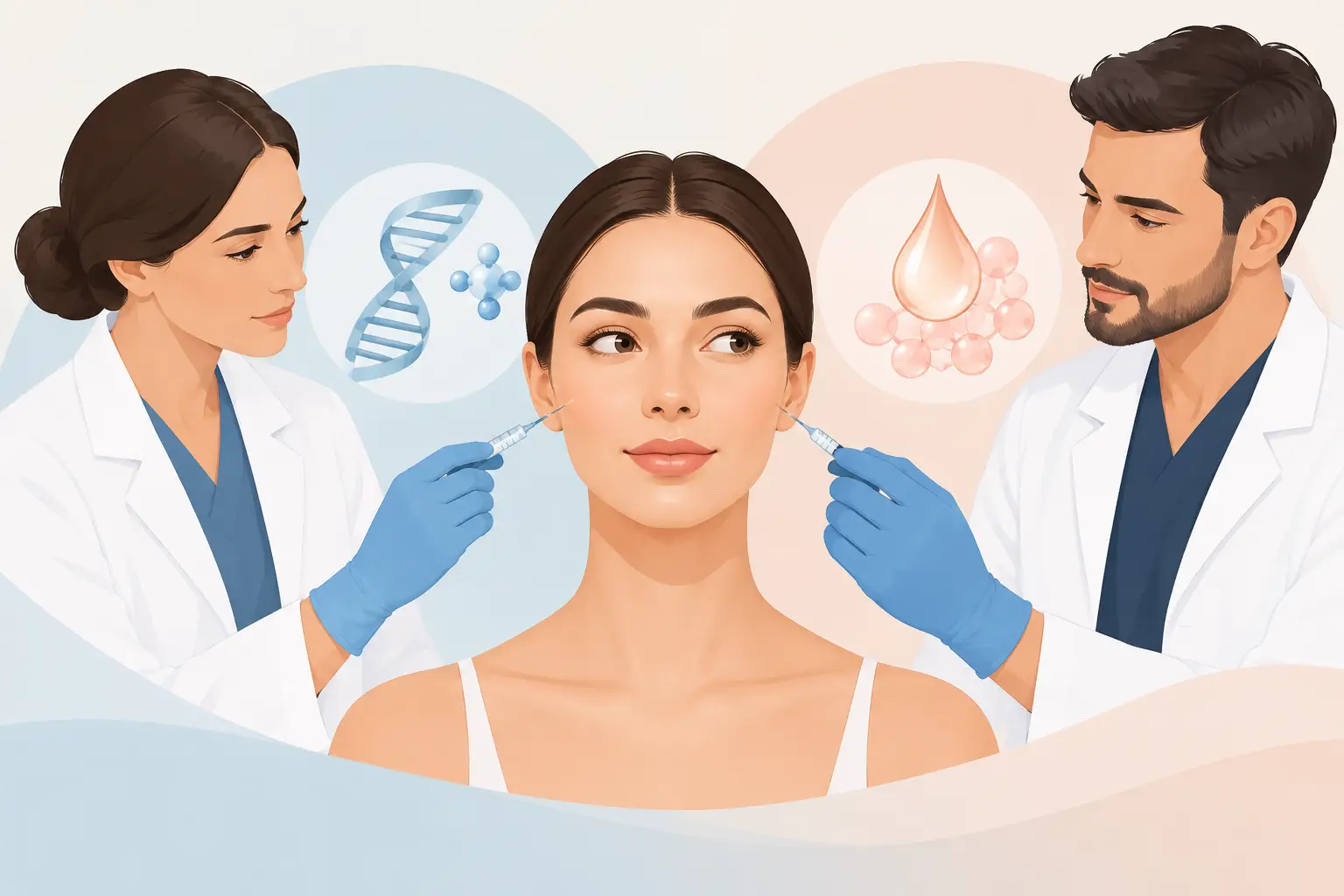
Most people treat skincare like a fire service: they call for help only when something goes wrong. Fine lines appear, pigmentation sets in, and suddenly there is a scramble for corrective treatments. Yet the Londoners with the most luminous, youthful-looking skin are rarely the ones fixing problems; they are the ones who never let them develop in the first place. Preventative skincare is not a trend or a marketing phrase. It is a science-backed approach that protects your complexion against the relentless forces of ageing, urban pollution, and stress, and it works most powerfully when it begins early. This guide explains exactly how to build that approach.
Table of Contents
- What is preventative skincare and why does it matter?
- Science-backed ingredients and treatments that work
- Luxury preventative treatments for London’s proactive professionals
- Building your preventative skincare strategy: habits and professional care
- What most Londoners misunderstand about preventative skincare
- Elevate your preventative skincare with specialist expertise
- Frequently asked questions
Key Takeaways
| Point | Details |
|---|---|
| Prevention trumps correction | Proactive care and evidence-backed treatments help avoid future skin issues and costly fixes. |
| Science drives results | Retinoids, high-tech sunscreens, and expert-led interventions offer real anti-ageing effects. |
| Luxury care, lasting impact | Bespoke treatments blend convenience and efficacy, ideal for Londoners wanting visible results with minimal downtime. |
| Consistency is key | Regular routines and scheduled professional visits build cumulative, resilient skin health. |
What is preventative skincare and why does it matter?
Preventative skincare means taking targeted, proactive action to slow the biological processes that degrade skin before they become visible or entrenched. Rather than waiting for deep wrinkles, uneven tone, or sagging to demand attention, you put protective and regenerative strategies in place while the skin is still resilient.
The contrast with corrective skincare is significant. Corrective treatments address damage that already exists: ablative lasers resurface scarred tissue, heavy-duty peels strip away discolouration, and volumising fillers replace lost structural fat. These are valuable when needed, but they require more downtime, greater investment, and often more intervention than prevention ever would have. Prevention, by contrast, keeps the canvas in excellent condition from the outset.
For Londoners specifically, prevention is especially relevant. Urban air quality exposes skin to nitrogen dioxide, particulate matter, and ozone. Stress from demanding professional lives elevates cortisol, which suppresses collagen synthesis and disrupts the skin’s moisture barrier. Long indoor hours under artificial lighting and heating further dehydrate the complexion. These pressures compound quietly over months and years, producing ageing that looks premature precisely because it was accelerated by environment, not just time.
The skin rejuvenation benefits of beginning early are consistently documented in clinical literature. The core mechanisms at work include:
- Antioxidants that neutralise free radicals generated by UV radiation and pollution, stopping them before they degrade collagen fibres
- Brighteners such as niacinamide and kojic acid that inhibit melanin overproduction, keeping pigmentation uniform
- Peptides that signal skin cells to maintain and rebuild structural proteins, keeping tone firm
- Retinoids that accelerate cell turnover, clearing dull, damaged surface cells and stimulating fresh collagen beneath
- Broad-spectrum sunscreens that physically and chemically block UV before it penetrates the dermis
As UV and pollution induce free radicals and collagen loss, preventative actives work by quenching those radicals, inhibiting melanin synthesis, relaxing expression-related muscle tension through peptides, and stimulating cellular turnover through retinoids. None of these mechanisms is speculative; they are among the most replicated findings in dermatological science.
“Luxury skincare clients are increasingly seeking outcomes, not experiences. Prevention delivers the outcomes they want before problems ever require correction.” Industry specialist commentary, 2025.
Pro Tip: Prevention is substantially more cost-effective over a decade than correction. A consistent sunscreen and retinoid routine at £50 to £80 per month compares very favourably with the £2,000 to £5,000 often spent addressing established photoageing through clinical interventions.
Science-backed ingredients and treatments that work
Having grasped the concept of prevention, the next step is discerning which ingredients and treatments truly deliver transformative, long-term benefits.
The most rigorously tested preventative actives are well established, and their clinical evidence is not subtle. A meta-analysis of 23 RCTs involving 3,905 participants ranked retinoids, specifically isotretinoin and tretinoin, as the top-performing actives for reducing wrinkle depth and severity. The same body of research confirmed that broad-spectrum sunscreen formulated with sclareolide and niacinamide prevents post-inflammatory hyperpigmentation, offering approximately 16 ITA° (Individual Typology Angle) of measurable protection against melanin-induced discolouration. Separately, oral hyaluronate supplementation at 120 mg per day over 12 weeks improved hydration, elasticity, and wrinkle depth in 150 adult participants, making it one of the few supplements with genuine, statistically significant skin benefits.
| Ingredient or treatment | Evidence level | Primary effect | Best suited for |
|---|---|---|---|
| Retinoids (tretinoin) | Very high (23 RCTs) | Reduces wrinkle depth, stimulates collagen | Adults 25 and over |
| Broad-spectrum SPF + niacinamide | High | Prevents pigmentation, UV protection | All skin types, daily use |
| Oral hyaluronate (120 mg/day) | Moderate-high (RCT) | Hydration, elasticity, wrinkle depth | Adults 30 and over |
| Luxury skin hydration boosters | High (clinical setting) | Deep dermal hydration, plumping | Dehydrated or maturing skin |
| Microneedling | Moderate-high | Collagen induction, texture refinement | Adults 28 to 55 |
| LED and laser therapy | Moderate | Cellular energy stimulation, tone | Under-35 prejuvenation |
Injectables for prevention such as skin boosters and low-dose neuromodulators are also gaining recognition for their preventative value, not merely corrective use. Skin boosters deliver hyaluronic acid directly into the dermis, providing sustained hydration and stimulating local collagen production in a way that no topical product fully replicates. Low-dose neuromodulators used from the mid-twenties onward can reduce the repetitive muscle contractions that etch expression lines into the skin, intercepting a process before it becomes irreversible.
Pro Tip: When evaluating a product or treatment’s effectiveness, look for randomised controlled trials (RCTs) and meta-analyses rather than brand-commissioned studies. If a luxury brand cannot point to independent clinical evidence, the formulation may be more aesthetically appealing than genuinely preventative.
Key preventative actives to look for:
- Vitamin C (L-ascorbic acid) as an antioxidant and brightener
- Niacinamide for barrier reinforcement and melanin suppression
- Peptides including Argireline and Matrixyl for firmness
- Hyaluronic acid in both topical and injectable forms
- Retinol or prescription tretinoin for cell turnover
Luxury preventative treatments for London’s proactive professionals
Once you understand the science, choosing among London’s premium preventative options comes down to what suits your lifestyle and unique needs.
London’s aesthetics landscape has matured considerably. There is now a sophisticated market of tailored luxury skincare treatments designed specifically for proactive professionals who want results without downtime, visible disruption, or days of recovery. The concept of “prejuvenation”, meaning preventative aesthetics for those typically under 35, is reshaping how London’s most style-conscious professionals view their skin investments.
According to data on luxury preventative treatments in London, radiofrequency treatments such as Forma for collagen stimulation are priced from approximately £299 per session, while Hydrafacial, microneedling, LED and laser therapies, gold masks, and injectable skin boosters are available in packages that collectively save clients in the region of £500 compared to piecemeal bookings. The value proposition is clear for someone investing in their skin over years.
“Prejuvenation is the new luxury. The most discerning clients are not coming to us at 45 to correct damage; they are arriving at 28 to ensure that damage never happens.” Senior practitioner, London, 2025.
Among bespoke luxury treatments for Londoners, Tatler has highlighted 24-carat gold radiofrequency facials at around £475, HVN hydrobed treatments at approximately £200, and Lisa Franklin RF protocols as standout options for professionals seeking genuinely no-downtime skin enhancement. These treatments combine the sensory quality of a luxury experience with measurable physiological outcomes, which is why they attract London’s most discerning clientele.
| Treatment | Approx. cost | Key benefit | Ideal candidate |
|---|---|---|---|
| Radiofrequency (Forma) | £299/session | Collagen stimulation, skin tightening | Adults 30 and over |
| Hydrafacial | £180 to £250 | Deep cleansing, hydration, glow | All adults, especially 25 to 45 |
| Microneedling | £250 to £400 | Texture refinement, collagen induction | Adults 28 to 50 |
| LED and laser therapy | £150 to £300 | Cellular rejuvenation, tone | Under-35 prejuvenation |
| 24-carat gold RF facial | £475 | Anti-inflammatory, firming, luxury | Affluent professionals, 30 and over |
| Injectable skin boosters | £350 to £500 | Dermal hydration, collagen stimulation | Adults 25 and over |
How to select the right preventative treatment pathway in London:
- Assess your current skin status through a professional consultation, not a self-diagnosis based on advertisements.
- Define your timeline and budget for both at-home and clinic-based care.
- Prioritise evidence-based treatments over aesthetic novelty alone.
- Consider your schedule: no-downtime options like Hydrafacial and LED suit busy professionals best.
- Plan a quarterly clinic visit alongside a consistent daily home routine for compounding results.
Explore advanced London skin treatments to understand which clinical interventions map most precisely to your skin type and age.
Building your preventative skincare strategy: habits and professional care
With options and actives in mind, what makes for a practical, sustainable prevention routine tailored to a London lifestyle?
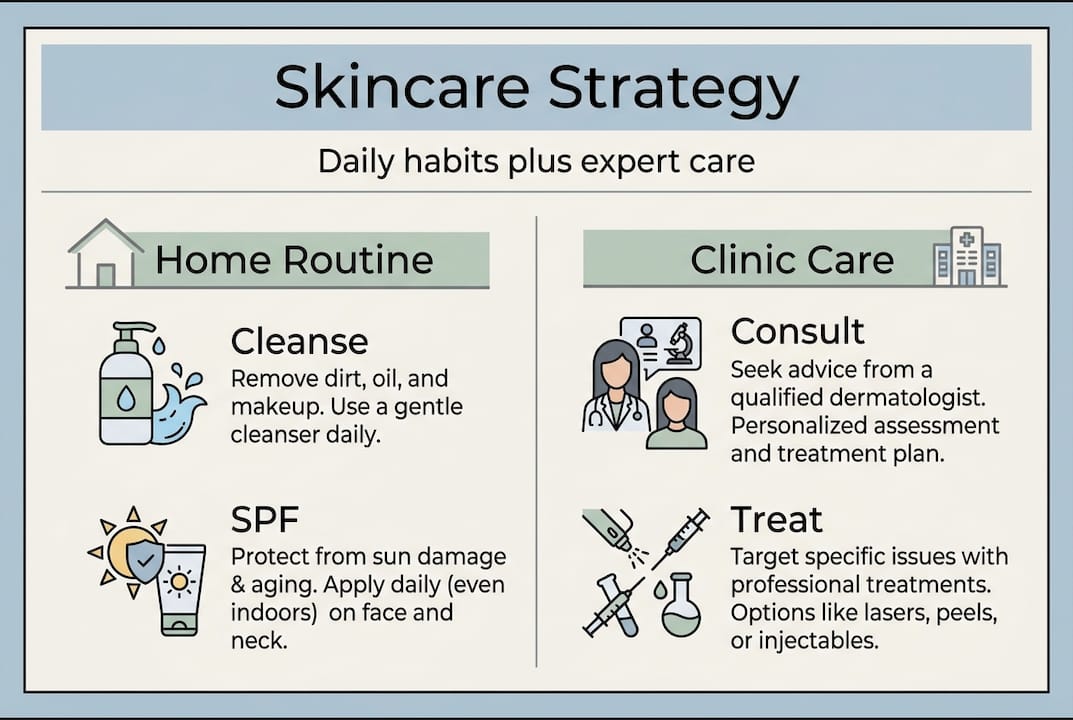
The foundation of any effective preventative strategy is consistency. Not intensity, not spending, not the latest imported brand: consistency. Skin responds to sustained, cumulative inputs. A £30 broad-spectrum sunscreen applied daily for ten years will outperform a £500 serum used sporadically. That is not marketing speak; it is basic dermatological fact.
Your foundational preventative steps should include:
- Daily broad-spectrum SPF of at least 30, ideally 50, applied every morning regardless of weather or whether you plan to be outdoors. London’s diffuse, cloudy UV is underestimated by almost everyone.
- Evening retinoid application three to five nights per week, beginning with a lower-strength formulation and building gradually to prescription tretinoin under medical guidance.
- Antioxidant serum in the morning (vitamin C) to neutralise free radicals generated by pollution and UV before they cause damage.
- Peptide-rich moisturiser to support barrier function and signal collagen maintenance.
- Oral hyaluronate supplementation: as supported by clinical evidence for skin health, 120 mg daily over 12 weeks measurably improves hydration, elasticity, and wrinkle depth.
- Limit pollution exposure where possible, particularly during high-traffic commuting hours.
Beyond the daily routine, integrating professional treatments on a structured schedule amplifies results significantly. A quarterly Hydrafacial or skin booster appointment, for instance, delivers active compounds at a depth no home product can reach and provides a clinical review of your skin’s progress. An annual assessment with a qualified practitioner ensures your strategy evolves with your skin.
Seek expert skin advice from a medically trained aesthetics specialist rather than relying solely on brand-driven recommendations. And if you are curious about expanding your approach, non-surgical enhancement options in London offer a broad spectrum of treatments that complement a committed home routine.
Pro Tip: The clients who maintain the most radiant skin over decades are rarely those who underwent the most dramatic treatments. They are the ones who built quiet, undramatic habits that compounded year after year. Think of prevention as a standing order, not a one-off payment.
What most Londoners misunderstand about preventative skincare
There is a persistent belief in London’s beauty culture, even among those who can access and afford the very best, that skin concerns should be addressed when they become bothersome enough to demand attention. This belief is the single most expensive mistake we see.
The “wait and treat” philosophy is not merely inefficient; it is genuinely more costly in every meaningful sense. Addressing established photoageing, deep dynamic lines, or structural volume loss requires significantly more intervention, more sessions, more downtime, and more expenditure than prevention would have. And the results, while excellent with the right practitioner, rarely match what consistent early prevention would have maintained naturally.
What surprises many clients is that the most luminous skin we see at The Aesthetics Room often belongs not to those who have undergone the most treatments, but to those who have been quietly consistent with sunscreen, retinoids, and periodic professional inputs since their mid-twenties. The visible difference at 45 or 50 is remarkable, and it was built incrementally, not dramatically.
There is also a common confusion between fashionable treatments and effective ones. London is flooded with aesthetics trends, some backed by evidence and some by clever marketing. Gold leaf facials feel luxurious and may offer genuine anti-inflammatory benefit. But without an individualised protocol grounded in a client’s actual skin biology, even the most expensive treatment delivers less than it could.
We advise treating your skin as you would a significant personal asset, something maintained with steady, measured care through bespoke preventative strategies rather than reactive, last-minute interventions. The Londoners who understand this principle tend to look ten years younger than their peers at fifty. That is not coincidence; it is the compounding effect of consistent, early, science-led prevention.
Elevate your preventative skincare with specialist expertise
At The Aesthetics Room in Knightsbridge, we work with London’s most proactive professionals to design bespoke preventative skincare plans grounded in clinical evidence and tailored to your lifestyle, goals, and skin biology. Whether you are beginning your prevention journey in your twenties or looking to sharpen an existing routine, our specialists offer the expert assessment and advanced treatments that make measurable, lasting differences.

Begin with a skin rejuvenation consultation to establish your skin’s baseline and identify the most impactful preventative pathway for you. Where appropriate, our practitioners can discuss how Botox options used conservatively and early can intercept dynamic line formation, or how dermal fillers for prevention can maintain structural integrity before volume loss becomes pronounced. Every treatment plan we create is personalised, evidence-based, and designed to protect the results you have already worked hard to achieve.
Frequently asked questions
Are preventative skincare treatments effective for both men and women?
Yes, scientific studies confirm that evidence-based treatments and actives benefit men and women equally. A 23-RCT meta-analysis including 3,905 participants identified retinoids as top-performing for wrinkle reduction across all adult demographics, regardless of sex.
How early should I start preventative skincare?
Beginning in your twenties or early thirties is optimal, particularly to take advantage of prejuvenation treatments such as LED and laser therapies designed for under-35s, when skin resilience is highest and prevention is most efficient.
Can preventative treatments replace my daily skincare at home?
Clinic treatments powerfully complement but do not replace daily home routines. As confirmed by UV and pollution research, consistent application of antioxidants, retinoids, and sunscreens remains the non-negotiable foundation of any preventative strategy.
Are luxury treatments really more effective than standard facials?
Tatler-recommended bespoke treatments such as 24-carat gold radiofrequency facials and specialist RF protocols combine advanced technology with clinically validated ingredients, offering superior, measurable outcomes particularly when delivered by medically trained practitioners with personalised protocols.
Recommended
- Skin rejuvenation tips: Advanced London treatments for radiant results – The Aesthetics Room
- How to treat sun damage: Advanced solutions for radiant skin – The Aesthetics Room
- The ultimate anti-aging checklist for radiant, youthful skin – The Aesthetics Room
- Skin rejuvenation benefits: expert guide for Londoners – The Aesthetics Room