
Choosing the right aesthetic laser is one of the most consequential decisions you can make on your cosmetic journey. London clinics now offer a remarkable range of laser technologies, each engineered for specific skin concerns, skin types, and recovery preferences. With so many options available, from ablative resurfacing to picosecond pigment correction, navigating the landscape without expert guidance can feel overwhelming. This article breaks down every major laser category in plain language, explaining the science, the strengths, and the situations where each technology truly shines, so you can walk into your consultation fully informed and confident.
Table of Contents
- Core mechanisms behind aesthetic lasers
- Ablative lasers: deep resurfacing power
- Non-ablative lasers: gentle but effective
- Fractional lasers: bridging recovery and results
- Lasers for vascular and pigmentation concerns
- Intense pulsed light (IPL): the versatile multitasker
- Comparing the main types of aesthetic lasers
- Special considerations: skin type, combinations, and the London edge
- Next steps: find the best laser treatment for you
- Frequently asked questions
Key Takeaways
| Point | Details |
|---|---|
| Laser selection matters | Different lasers offer unique benefits and risks—choice should match skin type and goals. |
| Fractional and picosecond advances | New fractional and picosecond lasers maximise results with less downtime and safer pigment treatment. |
| Consult local experts | London clinics are at the forefront of advanced laser therapies—seek professional advice tailored to you. |
| Understand downtime and sessions | Ablative lasers have longer recovery but need fewer sessions, while non-ablative and IPL are gentler but gradual. |
Core mechanisms behind aesthetic lasers
To understand how different lasers work, it is vital to first grasp the scientific mechanisms at play. All aesthetic lasers interact with skin tissue through one of three core processes, and knowing which applies to your chosen treatment helps you set realistic expectations.
The mechanisms of clinical lasers fall into three categories:
- Photothermal: Heat energy vaporises or coagulates tissue. This is the basis of most resurfacing lasers.
- Photochemical: Light triggers a chemical reaction, as seen in photodynamic therapy (PDT).
- Photomechanical: Rapid energy pulses create shockwaves that shatter pigment particles, the principle behind picosecond and Q-switched devices.
The concept of selective photothermolysis is central to safe laser treatment. It means targeting a specific chromophore (a pigment that absorbs light), such as melanin, haemoglobin, or water, without damaging surrounding tissue. This precision is what separates modern aesthetic lasers from older, less targeted technologies. Understanding the role of lasers in aesthetics helps clarify why mechanism matters so much for safety and outcomes.
Pro Tip: When consulting a clinic, ask which mechanism their recommended laser uses and why it suits your specific concern. A knowledgeable practitioner will answer confidently and clearly.
Ablative lasers: deep resurfacing power
Now that you know the science, let us explore the most intensive laser category: ablative lasers. These devices physically remove the outer layers of skin to trigger dramatic renewal from beneath.
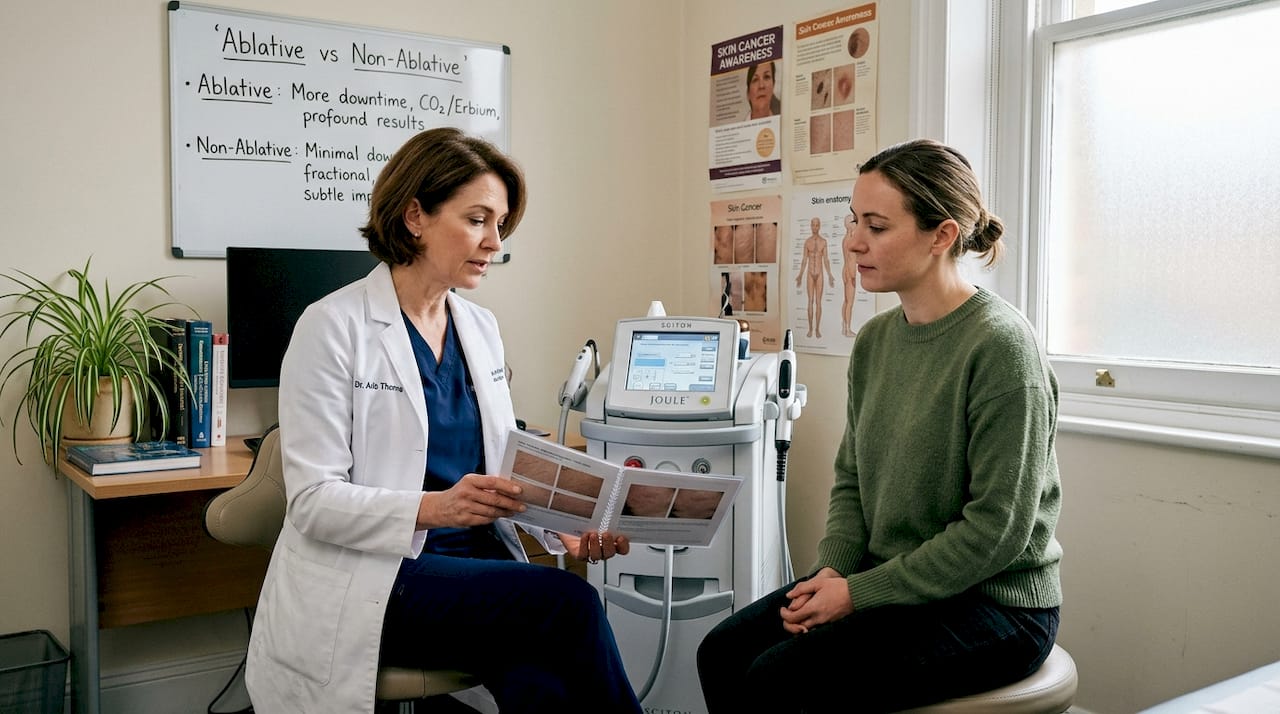
The two main ablative types are CO2 (10,600 nm wavelength) and Er:YAG (2,940 nm). Both vaporise skin layers, but Er:YAG is slightly gentler with less thermal spread. The ablative laser resurfacing approach delivers impressive results, often after just one or two sessions, but requires seven to fourteen days of downtime.
- Best for: deep wrinkles, acne scars, significant texture irregularities
- Sessions needed: typically 1 to 2
- Downtime: 7 to 14 days
- Not recommended for: darker skin tones due to pigmentation risk
“Ablative laser is the gold standard for severe concerns when downtime is acceptable.”
The laser skin rejuvenation benefits of ablative treatment are hard to match for those with significant scarring or deep lines. However, patient selection is critical. Darker skin types carry a higher risk of post-inflammatory hyperpigmentation, so thorough pre-treatment assessment is non-negotiable.
Pro Tip: If you have a Fitzpatrick skin type IV or above, always request a test spot before committing to a full ablative session.
Non-ablative lasers: gentle but effective
For those preferring minimal downtime, non-ablative lasers have become the modern go-to. Rather than removing skin, they heat the deeper dermis to stimulate collagen production while leaving the surface intact.
The main non-ablative types include Nd:YAG, diode, and Er:Glass lasers. Results are more gradual, typically requiring 3 to 6 sessions, but recovery is swift. Er:Glass, in particular, causes less redness and discomfort than CO2 alternatives.
Common concerns treated with non-ablative lasers:
- Mild fine lines and early wrinkles
- Uneven pigmentation and sun damage
- Enlarged pores
- Redness and diffuse flushing
“Non-ablatives let you refresh your skin without taking time off work.”
These devices are ideal for gentle facial rejuvenation and regular maintenance between more intensive treatments. If you are new to laser therapy or want to test the waters, a non-ablative option is an excellent starting point. You can also explore what facial rejuvenation involves to understand how these treatments fit into a broader skincare plan.
Fractional lasers: bridging recovery and results
To strike a balance between results and recovery, many are turning to fractional laser innovations. Rather than treating the entire skin surface, fractional lasers deliver energy in thousands of tiny columns called microthermal zones (MTZs), leaving surrounding skin intact to accelerate healing.
“Fractional is a best-of-both-worlds solution for busy Londoners.”
Fractional technology can be ablative, non-ablative, or a combination of both. Fractional CO2 resurfacing combines ablation and coagulation to address scars and wrinkles with faster recovery than full-field ablative treatment. An exciting development in London clinics is UltraClear, a cold ablative fractional laser that delivers effective results with minimal thermal damage.
| Laser type | Mechanism | Downtime | Sessions needed | Best for |
|---|---|---|---|---|
| Fractional ablative | MTZs + vaporisation | 3 to 7 days | 1 to 3 | Scars, deep lines |
| Fractional non-ablative | MTZs + heating | 1 to 2 days | 3 to 5 | Texture, mild lines |
| UltraClear | Cold ablative fractional | Minimal | 2 to 4 | All skin types, pigment |
For a detailed look at how these treatments are sequenced in practice, explore the advanced fractional laser workflow used by leading London practitioners.
Lasers for vascular and pigmentation concerns
Specialised lasers are available for targeting unwanted blood vessels and pigment. Here is how to differentiate them.
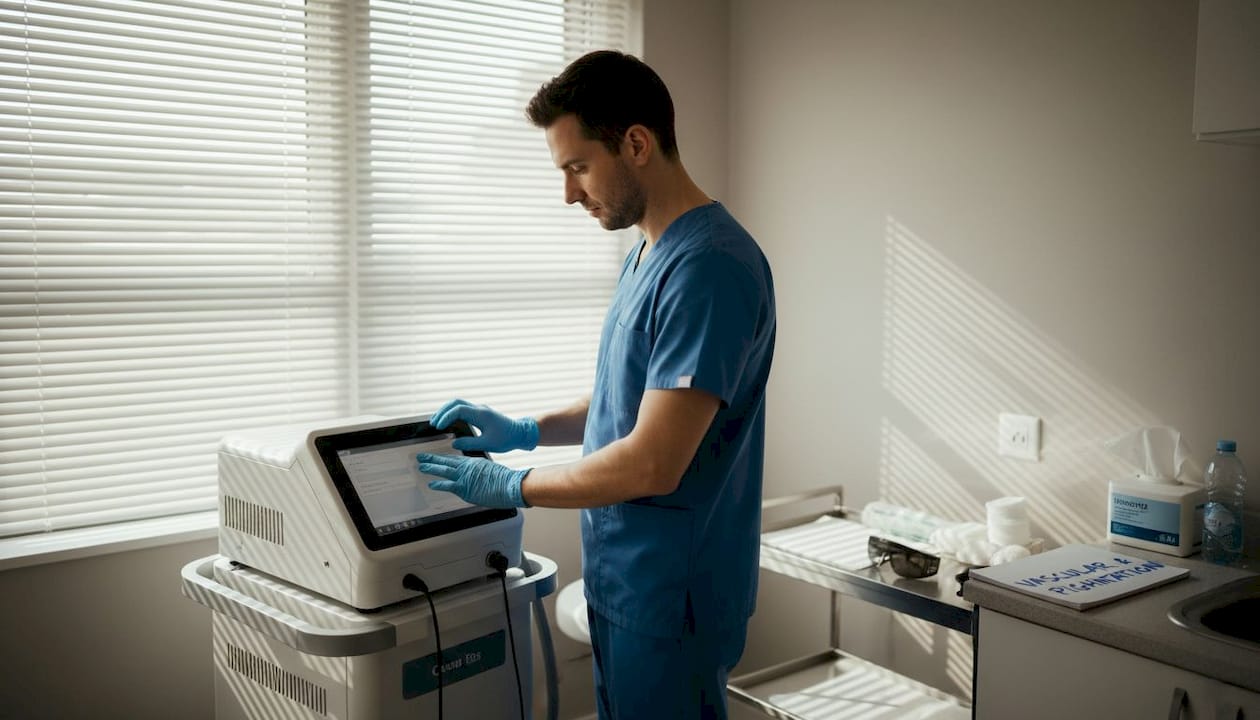
Vascular lasers work by targeting haemoglobin in blood vessels. Pulsed dye laser (PDL) is the gold standard for redness and broken veins, while KTP lasers are preferred for finer capillaries and facial redness.
Pigment lasers target melanin. Q-switched lasers are widely used for tattoo removal, while picosecond lasers are now preferred for stubborn pigmentation and melasma. Picosecond lasers achieve a 56% improvement rate in pigmentation versus 38% for Q-switched nanosecond devices, with fewer side effects.
Selective chromophore targeting is what makes these devices so precise. A quick comparison:
- PDL (585 to 595 nm): Redness, rosacea, broken capillaries
- KTP (532 nm): Fine facial veins, mild pigment
- Q-switched Nd:YAG: Tattoo removal, deeper pigment
- Picosecond (730 to 755 nm Alexandrite): Melasma, stubborn pigmentation, all skin types
For personalised advice on laser options for pigmentation, a specialist consultation is essential.
Pro Tip: If you have a darker skin tone, ask specifically about picosecond technology. Its photomechanical action generates less heat, significantly reducing the risk of post-inflammatory hyperpigmentation.
Intense pulsed light (IPL): the versatile multitasker
One device many Londoners hear about is IPL, so how does it measure up to dedicated lasers? IPL stands for intense pulsed light. Crucially, it is not technically a laser. It emits a broad spectrum of light rather than a single focused wavelength, which makes it versatile but less precise.
IPL treats sun damage, mild pigmentation, and diffuse redness effectively. It is a popular choice for photorejuvenation and is generally more cost-effective than laser alternatives.
- Pros: Versatile, treats multiple concerns in one session, lower cost
- Cons: Less effective for deep wrinkles, scarring, or stubborn pigment
- Safety note: Requires a well-trained practitioner due to the broad energy spread
For a clear IPL vs lasers comparison, it helps to think of IPL as a broad-brush tool and lasers as precision instruments. Both have their place, but the right choice depends entirely on your skin concern and goals.
Comparing the main types of aesthetic lasers
Here is a consolidated table to make comparing your laser options straightforward.
| Laser type | Key concern | Downtime | Skin type suitability | Sessions |
|---|---|---|---|---|
| CO2 ablative | Deep wrinkles, scars | 7 to 14 days | I to III | 1 to 2 |
| Er:YAG ablative | Texture, mild scars | 5 to 10 days | I to IV | 1 to 2 |
| Nd:YAG non-ablative | Redness, mild lines | Minimal | All types | 3 to 6 |
| Fractional CO2 | Scars, wrinkles | 3 to 7 days | I to IV | 1 to 3 |
| Picosecond | Pigment, melasma | 1 to 2 days | All types | 3 to 6 |
| IPL | Sun damage, redness | None to 1 day | I to IV | 3 to 6 |
| UltraClear | Texture, pigment, scars | Minimal | All types | 2 to 4 |
A meta-analysis of laser outcomes confirms that ablative lasers deliver the most dramatic results but carry greater downtime, while fractional and picosecond options offer a strong safety and efficacy balance. For a broader laser results overview, our team is always available to guide you through the options.
Special considerations: skin type, combinations, and the London edge
Your skin’s individual needs and your clinic’s expertise play a huge role in achieving safe, beautiful outcomes. Here is how to approach your treatment planning with confidence.
- Book a thorough consultation. Discuss your full skin history, including any previous treatments, medications, and concerns about pigmentation.
- Request a test spot. Particularly important for darker skin tones, where post-inflammatory hyperpigmentation risk is higher with certain ablative devices.
- Ask about combination therapies. Combining CO2 with a 1570 nm laser, for example, has shown a 39 to 60% improvement in scar reduction, a significant result for those with moderate to severe scarring.
- Ensure doctor supervision. All laser treatments should be overseen by a qualified medical professional, not just a technician.
- Explore the latest technologies. London clinics are now offering UltraClear and other next-generation fractional devices that minimise thermal risk across all skin types.
Personalisation is everything. Bring your specific concerns about skin type, recovery time, and desired outcomes to your consultation. For those with pigmentation concerns, reviewing laser safety for dark skin is a valuable first step. You may also benefit from exploring hybrid treatment options that combine laser with other modalities for enhanced results.
Next steps: find the best laser treatment for you
With a better understanding of the main laser types, you can now confidently approach your next step on the way to radiant, healthy skin.

At The Aesthetics Room, our specialists in Knightsbridge combine clinical expertise with the latest laser technologies to create truly bespoke treatment plans. Whether you are exploring skin rejuvenation in London for the first time or looking to upgrade your current routine, we will match you with the right laser for your skin type, concern, and lifestyle. Our hybrid aesthetic treatments combine laser with complementary modalities such as dermal fillers for a complete rejuvenation approach. Book a consultation today and let our team design a plan that delivers real, lasting results.
Frequently asked questions
Which type of aesthetic laser is best for acne scars?
Fractional CO2 and ablative lasers offer the strongest improvement for acne scarring by creating microthermal zones that trigger deep collagen remodelling. Individual suitability depends on skin type and scar severity, so a specialist assessment is always the first step.
Is IPL as effective as laser treatments?
IPL is effective for mild pigmentation and diffuse redness, but its broad-spectrum light lacks the precision of a true laser for deeper wrinkles, scarring, or stubborn pigment. For more complex concerns, a dedicated laser will consistently outperform IPL.
Are picosecond lasers safe for darker skin types?
Picosecond lasers are generally safer than Q-switched nanosecond devices for pigmentation in darker skin tones because their photomechanical action generates less heat. Expert consultation and a test spot remain essential before any full treatment.
How many sessions do I typically need for visible results?
Ablative lasers typically require just one to two sessions for significant improvement, while non-ablative and fractional lasers usually need three to six treatments to achieve the best outcomes. Your practitioner will advise based on your specific concern and skin response.
What is new or innovative in London aesthetic laser clinics in 2026?
UltraClear, a cold ablative fractional laser, is now available in leading London clinics and offers effective resurfacing results with minimal thermal damage, making it suitable for a wider range of skin types than traditional ablative devices.
Recommended
- Role of lasers in aesthetics: 50% wrinkle reduction proven – The Aesthetics Room
- Skin rejuvenation benefits: expert guide for Londoners – The Aesthetics Room
- Master your skin rejuvenation workflow in London 2026 – The Aesthetics Room
- Top 6 Skin Tightening Treatments in 2026 for Affluent Adults Seeking Quality Care – The Aesthetics Room
- Brightening Serum: What It Does for Your Skin – Didis Beauty Center