

TL;DR:
- Verify practitioner qualifications through official registers like GMC, NMC, or GDC before treatment.
- Choose clinics with CQC registration for regulated procedures and high standards of safety.
- Prioritize privacy, bespoke aftercare, and personalized experience over purely location or price.
Choosing a clinic for high-value cosmetic enhancements in London is not a decision to take lightly. The stakes are real: your safety, your results, and your confidence all depend on finding a practitioner and environment that meet the highest standards. Yet the market is crowded, and not every clinic offering luxury aesthetics truly delivers on that promise. The NHS advises that practitioners performing non-surgical aesthetics must hold recognised medical qualifications. This guide gives you a clear, evidence-backed framework to assess credentials, identify genuine luxury, ask the right questions, and avoid costly mistakes.
Table of Contents
- Assess practitioner credentials and clinic standards
- Identify luxury features and bespoke client care
- Ask critical questions before committing
- Avoid common pitfalls and make your choice with confidence
- Why conventional clinic selection fails luxury seekers
- Discover the ultimate clinic experience in London
- Frequently asked questions
Key Takeaways
| Point | Details |
|---|---|
| Verify credentials first | Always confirm practitioner registration and clinic regulation before exploring procedures. |
| Demand bespoke aftercare | Premium clinics offer tailored follow-ups, custom kits, and privacy for affluent clients. |
| Ask critical questions | Your consultation must cover experience, safety, insurance, aftercare, and product sourcing. |
| Luxury lies in details | Choose clinics with exclusive memberships, discreet ambience, and highly personalised treatments. |
| Avoid mass-market pitfalls | Steer clear of clinics prioritising volume over luxury; focus on bespoke, quality-driven results. |
Assess practitioner credentials and clinic standards
The single most important factor when selecting an aesthetics clinic is the qualifications of the person treating you. Many clinics present a polished exterior, but what truly matters is the clinical expertise behind the needle. Understanding how to verify medical credentials in aesthetics is your first line of defence.
For non-surgical procedures such as Botox and dermal fillers, your practitioner should be a GMC-registered doctor, a nurse with prescribing authority, a dentist, or a pharmacist prescriber. These are the professional bodies that regulate clinical practice in the UK. You can verify any practitioner’s status directly through the GMC, NMC, or GDC registers online, free of charge, in minutes. If a clinic is reluctant to share a practitioner’s registration number, treat that as a serious warning sign.
Beyond individual credentials, look at the clinic itself. The Care Quality Commission (CQC) is the independent regulator of health and social care in England. CQC registration is mandatory for clinics offering regulated procedures such as thread lifts and surgical interventions. For non-surgical treatments, registration is voluntary, but a clinic that chooses to register signals a commitment to higher standards of governance and patient safety. At The Aesthetics Room, CQC accreditation is central to how we operate.
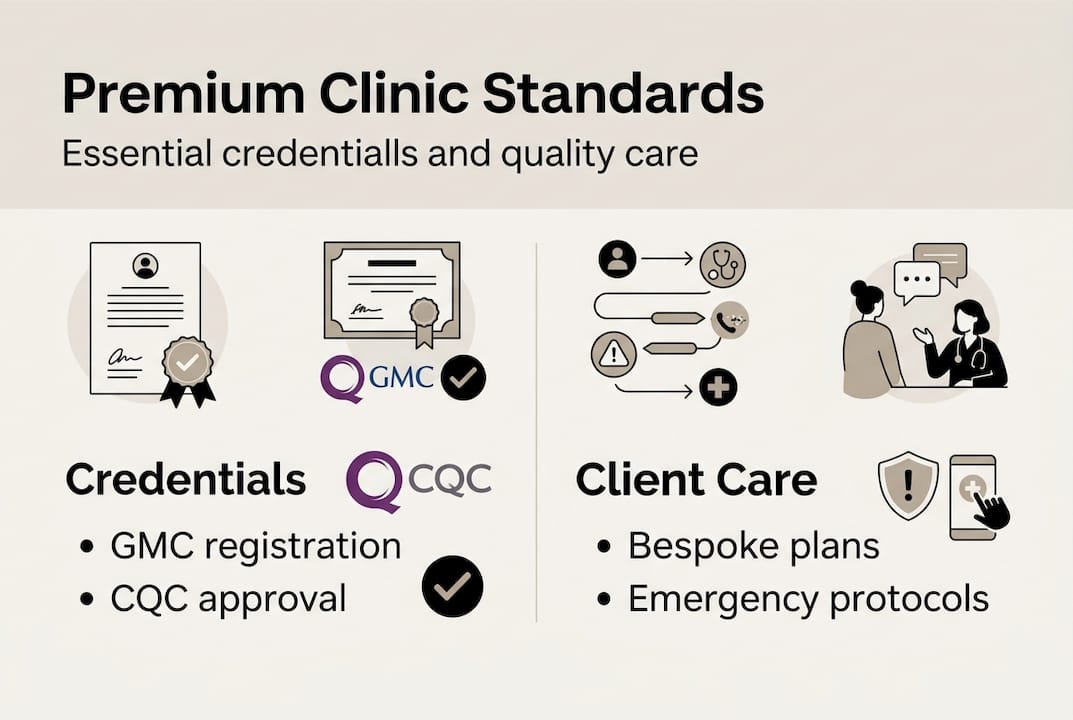
Here is a quick comparison to help you understand what regulation applies to different procedures:
| Procedure | CQC registration required? | Practitioner type required |
|---|---|---|
| Botox (anti-wrinkle injections) | No (voluntary) | Prescribing medical professional |
| Dermal fillers | No (voluntary) | Prescribing medical professional |
| Thread lifts | Yes | GMC-registered doctor |
| Surgical rhinoplasty | Yes | Specialist surgeon |
| Fat dissolving injections | No (voluntary) | Prescribing medical professional |
Key credentials to look for include:
- GMC, NMC, or GDC registration confirmed via official registers
- Independent prescribing authority for injectables
- CQC registration for regulated or surgical procedures
- Membership of professional bodies such as the ACE Group or BCAM
- Documented complication management training and access to reversal agents
Pro Tip: Before you even browse a clinic’s treatment menu, visit the GMC or NMC register and search the practitioner’s name. This takes under two minutes and could save you from a serious risk. Reviewing clinic safety tips and understanding peer review in aesthetic treatments will further sharpen your judgement.
Identify luxury features and bespoke client care
Once credentials and regulation are confirmed, the next layer is the experience itself. For affluent clients in London, a premium clinic should offer far more than a clinical room and a competent practitioner. The environment, privacy, and aftercare are what separate a truly exceptional clinic from a merely adequate one.

Location matters, but not simply for prestige. Clinics situated on Harley Street, in Mayfair, or in Chelsea tend to operate within professional ecosystems that attract highly trained specialists and maintain elevated standards of presentation and discretion. Premium London clinics in these areas typically offer discreet entrances, private consultation rooms, and staff trained in handling high-profile clientele with absolute confidentiality.
Here is what to expect from a genuinely luxury clinic:
| Feature | Standard clinic | Premium clinic |
|---|---|---|
| Consultation | Brief, generic | Bespoke, in-depth, unhurried |
| Aftercare | Basic verbal advice | Written plan, follow-up calls, custom kits |
| Privacy | Shared waiting area | Private suite or discreet entry |
| Membership | None | VIP programmes with priority booking |
| Practitioner access | Rotating staff | Named practitioner continuity |
Bespoke aftercare is particularly telling. A premium clinic will provide you with a written aftercare plan tailored to your specific treatment and skin type. Follow-up appointments should be offered as standard, not as an upsell. Understanding the role of aftercare in aesthetics is essential when evaluating any clinic’s long-term commitment to your results.
Other luxury features worth seeking include:
- Cooling-off periods allowing you to reconsider before treatment
- Emergency protocols with clear escalation plans if complications arise
- Exclusive VIP memberships offering priority access and loyalty benefits
- Personalised product recommendations and skincare support between visits
- Transparent pricing with no hidden consultation fees
Pro Tip: Ask specifically whether the clinic has a written emergency protocol and access to reversal agents such as hyaluronidase for filler complications. A confident, safety-focused clinic will answer this without hesitation. Exploring injectables explained will help you understand what responsible injectable practice looks like.
Ask critical questions before committing
Even the most beautifully appointed clinic must pass a rigorous verbal assessment. Your consultation is not just an opportunity for the practitioner to assess you; it is equally your opportunity to assess them. Arriving with prepared questions transforms a passive appointment into an informed decision.
BAPRAS recommends asking the following before committing to any procedure:
- How many times have you performed this specific treatment?
- What is your complication rate, and how do you manage adverse events?
- Are you insured for this procedure, and what does your insurance cover?
- What aftercare will I receive, and is a follow-up appointment included?
- Do you carry an emergency kit, including reversal agents?
- Where are your products sourced, and are they CE or UKCA marked?
- Is there a cooling-off period between consultation and treatment?
Volume of experience matters enormously. A practitioner who has performed a treatment hundreds of times will have encountered and resolved complications that a less experienced clinician may not recognise in time. Do not be embarrassed to ask directly.
Safety note: The use of unregistered or unqualified practitioners for injectable treatments carries serious risks, including vascular occlusion, tissue necrosis, and permanent scarring. Always confirm professional registration before proceeding.
Additional questions worth raising include:
- Does the clinic hold liability insurance specifically for aesthetic procedures?
- Can you speak with previous clients or review verified before-and-after imagery?
- Is the consultation genuinely independent from the sales process?
- What happens if you are unhappy with the results after treatment?
Reviewing dos and don’ts for clinic safety will give you further context on what responsible practice looks like. Understanding the dermal filler brand comparison is also valuable when assessing product sourcing transparency.
Avoid common pitfalls and make your choice with confidence
Knowing what to look for is only half the challenge. Equally important is knowing what to avoid. Many clients, even highly discerning ones, fall into predictable traps when selecting a clinic.
Here is a step-by-step approach to shortlisting with confidence:
- Search verified registers (GMC, NMC, GDC) for every practitioner you are considering
- Confirm CQC registration if any regulated procedures are involved
- Visit the clinic in person before booking a treatment appointment
- Ask all seven critical questions from the previous section during your consultation
- Compare at least two clinics before making a final decision
- Review aftercare policies in writing, not just verbally
The most common mistake is prioritising price or location above clinical excellence. A discounted treatment in a prestigious postcode is still a discounted treatment. Similarly, luxury clinic mechanics such as VIP memberships and subtle, natural-looking enhancements are hallmarks of clinics genuinely attuned to high-value clients, not mass-market operations.
Other pitfalls to avoid:
- Booking based on social media promotions alone without verifying credentials
- Accepting a same-day treatment without a prior consultation
- Ignoring negative reviews that mention communication or aftercare failures
- Choosing a clinic without named practitioner continuity
Pro Tip: Ask whether the clinic limits its client numbers deliberately. Exclusive clinics often cap appointments to maintain quality and personalised attention. A clinic eager to fill every slot may not be the right environment for bespoke care. Reviewing expert tips for clinic selection and exploring skin tightening treatments can also help you assess whether a clinic’s treatment range reflects genuine clinical depth.
Why conventional clinic selection fails luxury seekers
Most generic advice about choosing an aesthetics clinic focuses on credentials and price. That is necessary, but it is not sufficient for clients who expect a truly premium experience. Standard guidance rarely addresses the nuances that matter most to affluent Londoners: absolute privacy, named practitioner relationships, bespoke follow-up, and a clinic culture that respects your time and discretion.
We have seen clients arrive at The Aesthetics Room having previously attended well-reviewed clinics that ticked every regulatory box yet left them feeling like a number on a schedule. The difference between a good clinic and an exceptional one often lies in details that no register can measure: whether your practitioner remembers your previous treatment, whether aftercare feels genuinely personal, and whether the environment makes you feel genuinely valued.
True luxury in aesthetics is not about marble reception desks. It is about the quality of attention you receive from the moment you enquire to the moment your results settle. Choosing a practitioner with the right high-value practitioner qualities is where that journey begins.
Discover the ultimate clinic experience in London
If you are ready to move from research to results, The Aesthetics Room offers the gold standard in premium cosmetic enhancements across London. Our CQC-accredited clinic combines rigorous clinical expertise with a genuinely bespoke client experience.
Whether you are considering London dermal fillers, exploring fat dissolving treatments, or seeking premium Botox in London, our team of qualified medical professionals will guide you through every step with transparency and care. Book your bespoke consultation today and experience what genuinely luxury aesthetics feels like.
Frequently asked questions
How can I verify a practitioner’s credentials for aesthetic procedures?
You can check the GMC, NMC, or GDC registers online to confirm professional qualifications before booking any treatment.
Does a clinic need to be CQC registered for cosmetic treatments?
Clinics offering surgical or regulated procedures must be CQC registered; for non-surgical treatments, registration is voluntary but signals a higher commitment to patient safety.
What luxury amenities should I expect at a premium clinic in London?
Expect discreet privacy, exclusive memberships, bespoke aftercare, and prestigious locations such as Harley Street and Mayfair as standard features of a genuinely premium clinic.
Which questions are most important during my initial clinic consultation?
Ask about experience volume, complication rates, insurance, aftercare protocol, emergency kits, product sourcing, and cooling-off periods, as BAPRAS recommends for all cosmetic procedures.
Recommended
- Safe Cosmetic Procedures London 2026: 95% Satisfaction – The Aesthetics Room
- Medical Aesthetics Workflow Optimisation for Clinics – The Aesthetics Room
- How to set treatment pricing for premium aesthetics clinics 2026 – The Aesthetics Room
- Top 6 Skin Tightening Treatments in 2026 for Affluent Adults Seeking Quality Care – The Aesthetics Room
- How to optimise beauty and wellness business operations | Xolapp