
TL;DR:
- Facial harmonization enhances individual features by restoring balance and natural proportions.
- It involves personalized, minimally invasive treatments tailored to each person’s unique facial anatomy.
- Trend-focused procedures can cause unnatural results; bespoke plans promote natural, lasting confidence.
Many people assume facial harmonization is about achieving a flawless, perfectly symmetrical face. In reality, perfect symmetry is unrealistic because genetics and ageing create natural differences in every face. True facial harmonization is something far more nuanced and, frankly, far more exciting. It is about enhancing what makes you distinctly you, restoring balance where time or genetics have shifted proportions, and building genuine confidence through subtle, personalised adjustments. For those in London who hold high standards for their appearance and wellbeing, understanding what this approach truly involves is the first step toward making informed, empowering aesthetic decisions.
Table of Contents
- What facial harmonization really means
- How does facial harmonization work?
- Risks, realities and avoiding unnatural results
- Facial harmonization versus following trends
- Our take: Why going bespoke is always best
- Next steps: Explore your aesthetic options in London
- Frequently asked questions
Key Takeaways
| Point | Details |
|---|---|
| Not about perfection | Facial harmonization balances your features, not creating perfect symmetry. |
| Custom approach is vital | Personalised plans deliver safer and more natural-looking results. |
| Risks can be avoided | Choosing an expert reduces risks of overfilling and unnatural appearance. |
| Trends are risky | Following trends often leads to less satisfaction than bespoke enhancement. |
| Confidence boost | Harmonization should help you feel like the best version of yourself. |
What facial harmonization really means
Facial harmonization is the art and science of improving the visual balance between your facial features. It is not about erasing individuality or chasing an idealised standard of beauty. Instead, it focuses on how your features relate to one another, how proportions interact, and where subtle refinements can restore or enhance a naturally cohesive appearance.
A common myth is that aesthetic treatments aim to make everyone look the same. This could not be further from the truth. As practitioners, we work from the understanding that facial harmonization does not pursue perfect symmetry because genetics and ageing create natural differences that are part of what makes a face unique. The goal is never to override those differences but to work with them thoughtfully.
Here is what facial harmonization genuinely aims to achieve:
- Restoring volume lost through ageing in areas such as the cheeks, temples, and lips
- Improving proportions between the forehead, mid-face, and lower face
- Softening lines and shadows that create a tired or drawn appearance
- Enhancing definition in areas like the jawline or chin for a more structured look
- Boosting overall confidence by addressing features that cause self-consciousness
“The best aesthetic results are those that make you look like a well-rested, refreshed version of yourself, not a different person entirely.”
Understanding the facial rejuvenation benefits available today helps clarify why this approach is so powerful. When treatments are applied with balance in mind rather than isolated correction, the results feel natural and last far longer in terms of satisfaction. Facial harmonization is ultimately about confidence, not conformity.
How does facial harmonization work?
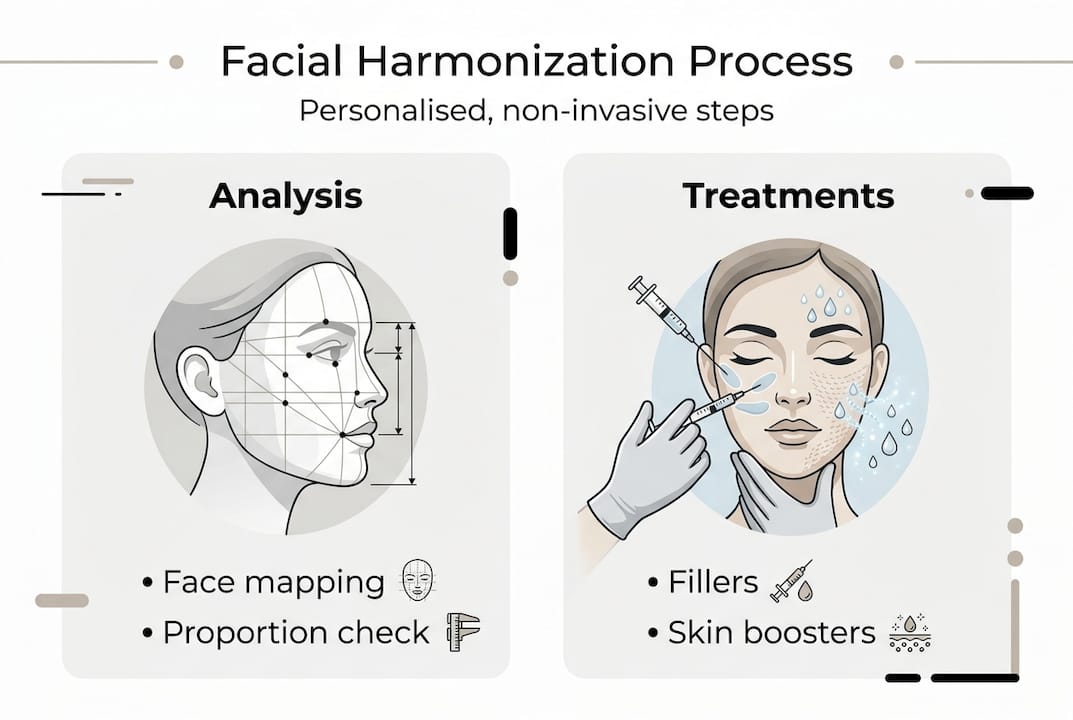
The process of facial harmonization follows a structured pathway, beginning well before any treatment is administered. Here is how a well-planned programme typically unfolds:
- Initial consultation to discuss your concerns, goals, and medical history
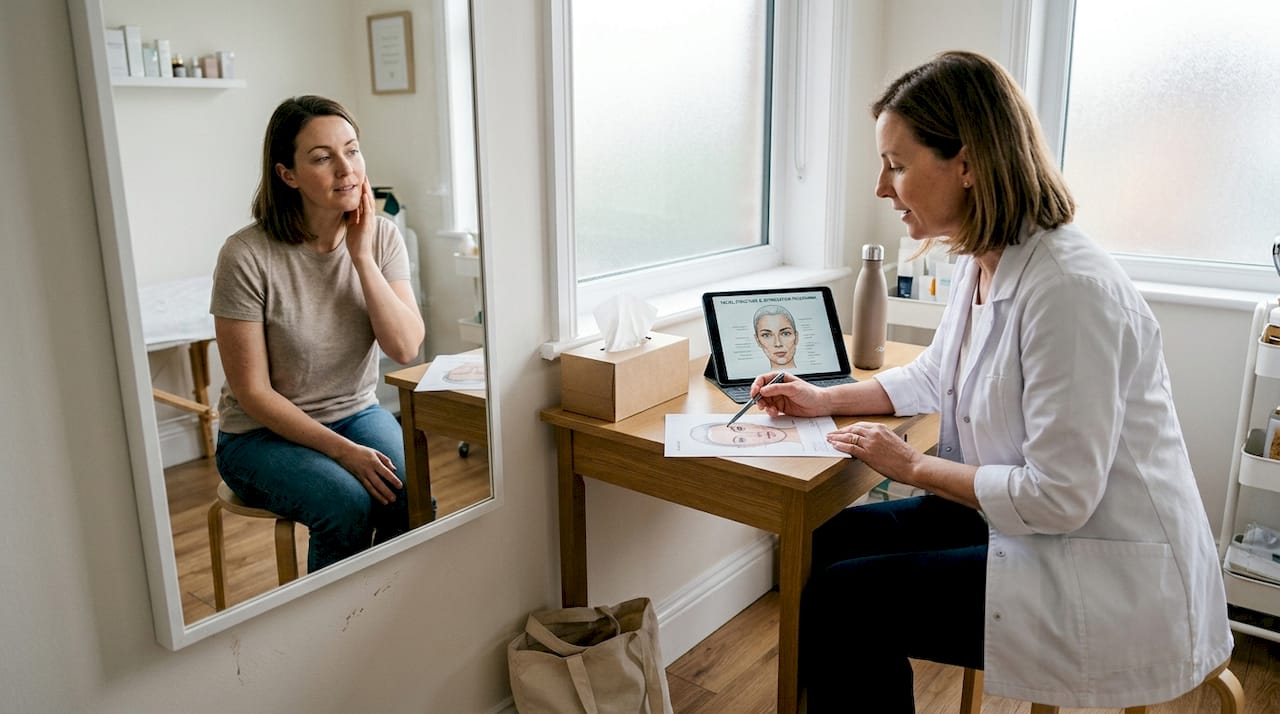
- Facial analysis using proportional assessment and photographic review
- Bespoke treatment planning based on your unique anatomy and desired outcomes
- Treatment delivery using minimally invasive, non-surgical techniques
- Follow-up review to assess results and refine if necessary
The analysis stage is particularly important. Personalised anthropometric analysis (the measurement of facial proportions) is essential to achieving safe and natural results. Without this step, treatments risk looking mismatched or disproportionate. A thorough skin analysis for aesthetics also informs which treatments will work best for your skin type and condition.
The core treatments used in facial harmonization include:
| Treatment | Primary purpose | Typical duration of results |
|---|---|---|
| Dermal fillers | Volume restoration and contouring | 9 to 18 months |
| Botox | Line relaxation and brow lifting | 3 to 6 months |
| Fat dissolving | Reducing localised fullness | Long-lasting |
| Skin rejuvenation | Texture, tone and radiance improvement | Varies by treatment |
Each treatment serves a distinct purpose, and the most effective plans compare facial treatments to determine the right combination for your individual needs. No single treatment suits every face or every concern.
Pro Tip: Always ask your practitioner to explain how each proposed treatment contributes to overall facial balance, not just what it does in isolation. This tells you a great deal about the quality of their approach.
Risks, realities and avoiding unnatural results
Facial harmonization, when done well, looks effortless. When done poorly, the results can be immediately obvious and difficult to reverse. Understanding the risks is not meant to discourage you; it is meant to empower you to choose wisely.

The most talked-about complication in aesthetic medicine is overfilling. Overfilling can cause an unnatural look, often described as ‘pillow face,’ where the face appears swollen, rounded, and lacking in natural definition. This happens when volume is added without regard for proportion or when a practitioner follows a trend rather than a personalised plan.
| Natural result | Unnatural result |
|---|---|
| Features look refreshed and balanced | Features look swollen or overfilled |
| Expression remains natural | Movement appears restricted |
| Proportions feel harmonious | One area dominates the face |
| Compliments focus on how well you look | Comments focus on obvious treatment |
Here are the key warning signs to watch for when assessing a practitioner or clinic:
- No formal consultation or facial analysis before treatment
- Pressure to purchase large volumes of filler in a single session
- Trend-led recommendations without reference to your individual anatomy
- Lack of clear aftercare or follow-up support
- No discussion of risks or realistic expectations
Reading natural filler tips before your appointment gives you a strong foundation for what to expect. It is also worth knowing how to prepare for fillers safely, as preparation significantly affects outcomes. If you are still weighing your options, exploring the reasons for choosing fillers in London with a qualified practitioner is always the right starting point.
Pro Tip: A confident, experienced practitioner will always tell you what you do not need, not just what they can offer. If every concern is met with an upsell, seek a second opinion.
Facial harmonization versus following trends
Social media has transformed how people think about aesthetics. Filters, editing apps, and celebrity transformations have created a visual culture where certain features, such as dramatically lifted brows, heavily contoured cheekbones, or exaggerated lips, are presented as aspirational. The problem is that these looks are often designed for a screen, not for real life.
Chasing an ‘Instagram face’ carries real risks. When treatments are chosen to replicate a trend rather than to enhance your own features, results can look incongruous and age poorly. Personalised approaches produce safer, more natural results than chasing beauty trends, and the long-term satisfaction data strongly supports this.
Consider the drawbacks of trend-led aesthetics:
- Trends change; your face should not have to change with them
- Features that suit one face type may look disproportionate on another
- Trend-inspired treatments often focus on one area, disrupting overall balance
- Reversing overfilled or mismatched treatments is costly and time-consuming
- Emotional dissatisfaction is far more common when the result does not feel like ‘you’
“Lasting confidence comes from looking like the best version of yourself, not a version of someone else.”
Staying informed about aesthetics trends in 2025 and beyond is useful for understanding what is available, but the wisest approach is always to filter trends through the lens of your individual anatomy. A skilled practitioner will help you distinguish between what is fashionable and what is genuinely right for your face.
Bespoke facial harmonization is not about ignoring what is current. It is about ensuring that any treatment, whether inspired by a trend or not, is adapted to serve your unique proportions and long-term aesthetic goals.
Our take: Why going bespoke is always best
After working with clients across London, we have seen the same pattern time and again. Clients who arrive with a photograph of a celebrity or a screenshot from social media and ask to replicate a specific look are the clients most likely to feel disappointed, regardless of how technically well the treatment is executed. The issue is not the treatment itself; it is the starting point.
Bespoke facial harmonization works because it begins with you, your anatomy, your proportions, your skin, and your lifestyle. A detailed skin analysis is not a luxury add-on; it is the foundation of every plan that delivers lasting, satisfying results. When practitioners skip this step, they are guessing, and guessing with your face is never acceptable.
Our honest advice is this: resist the urge to bring a reference image as a target. Bring it as a conversation starter instead. Use it to communicate the feeling or quality you are drawn to, then trust a qualified practitioner to translate that into something that genuinely suits your face. That is where the real transformation happens.
Next steps: Explore your aesthetic options in London
If this article has helped clarify what facial harmonization truly involves, the natural next step is a conversation with a qualified practitioner who can assess your individual needs.
At The Aesthetics Room, our team specialises in bespoke, non-invasive aesthetic treatments delivered with precision and care. Whether you are curious about our dermal fillers portfolio, interested in exploring Botox options, or considering fat dissolving treatments, every journey begins with a thorough consultation. We take the time to understand your goals, analyse your facial proportions, and recommend only what will genuinely enhance your natural appearance. Book a consultation at our Knightsbridge clinic and take the first step toward results that feel authentically yours.
Frequently asked questions
What are the main benefits of facial harmonization?
Facial harmonization aims for balance and confidence rather than perfection, enhancing your natural features through minimally invasive treatments tailored specifically to your individual anatomy.
Is facial harmonization safe?
Yes, when performed by qualified practitioners using personalised plans, risks are low. However, expert guidance and personalised planning are crucial, as trend-led or overfilled treatments significantly increase the risk of unnatural outcomes.
How long do facial harmonization results last?
Results typically last between 6 and 18 months, depending on the treatments used and personal factors such as skin type, metabolism, and the natural ageing process.
How is facial harmonization different from plastic surgery?
Facial harmonization is non-surgical and minimally invasive, focusing on subtle, reversible adjustments, whereas surgery involves permanent structural changes requiring significant recovery time.
Can facial harmonization be reversed or adjusted?
In many cases, yes. Non-surgical treatments, particularly those using hyaluronic acid-based fillers, can be dissolved or refined, giving you flexibility if your goals or preferences change over time.
Recommended
- Specialised Skin Treatments for Various Demographics – The Aesthetics Room
- Why tailored skincare transforms luxury skin health – The Aesthetics Room
- HOW CAN FILLER TRANFORM YOUR FACE? – The Aesthetics Room
- Step by step facial massage guide for radiant skin 2026 – The Aesthetics Room
- What is Facial Reconstruction? | Expert Guide by Dr Nayar