
There is no single best age to start Botox. The right time is when you have a defined concern that bothers you and a qualified prescriber agrees treatment is appropriate, never a birthday. In England, the legal minimum is 18, with verification and a proper prescription required before any injection. We always recommend a conservative first treatment and a clinician-led plan over chasing a number.
TL;DR:
- Preventative injections lack strong long term evidence, so daily sun protection, consistent retinoid use, and moisturizing remain reasonable first steps.
- Dynamic lines that appear only with expression prompt consultations in the 30s; lines visible at rest or volume loss may need fillers or resurfacing.
- Pregnancy, breastfeeding, injection site infection, certain neuromuscular disorders, or product allergy rule treatment out or require postponement; disclose anticoagulants because they can increase bruising.
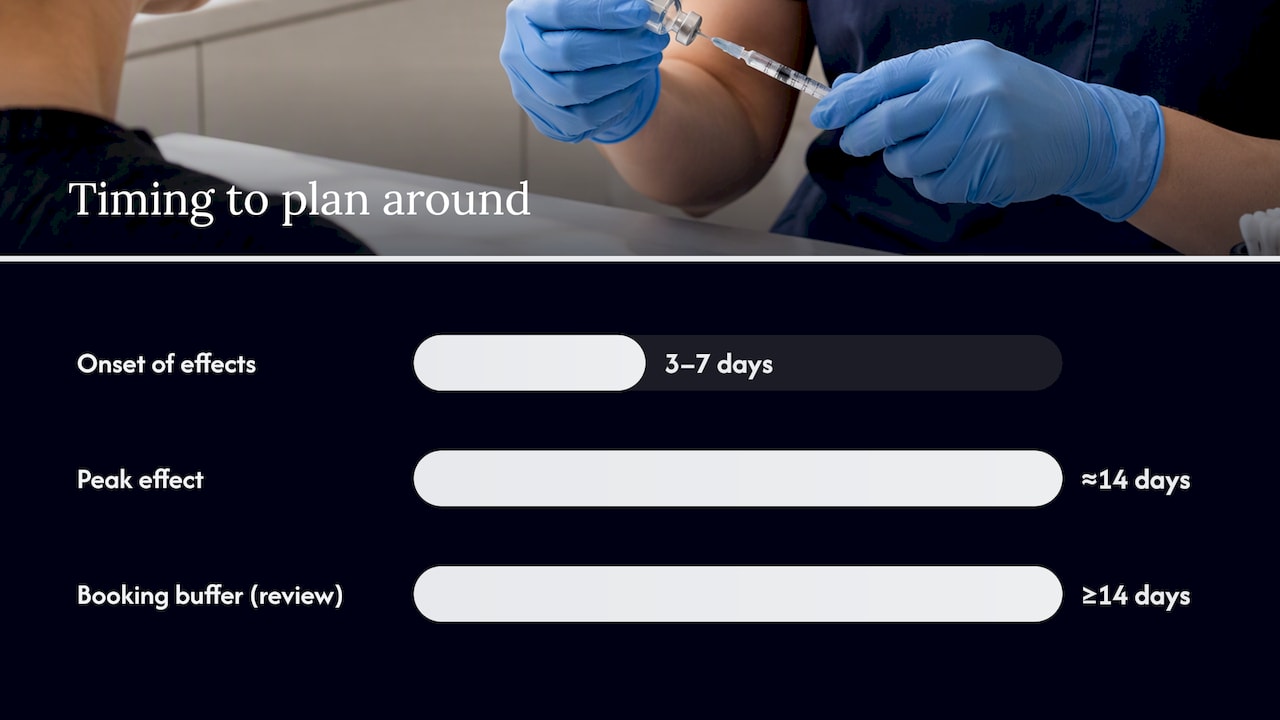
- Effects begin within 3 to 7 days, peak around two weeks, and last 3 to 4 months; book at least two weeks before an event.
- Before booking, confirm the prescriber and injector, check appropriate regulatory registration, and get written consent and aftercare instructions before treatment.
Table of Contents
- Preventative Botox versus treating existing lines
- How clinicians think about starting by life stage
- Who should not have Botox and screening points
- When results appear, how long they last and sensible aftercare
- Checklist for choosing a safe clinic
- Why provider quality matters more than age
- A conservative view on timing and safety
- How we can help you decide and take the next step
- FAQ
- Sources
Preventative Botox versus treating existing lines
Preventative Botox means starting before lines become visible at rest, on the theory that reducing repeated muscle movement early slows the lines that movement eventually causes. It is a reasonable idea in principle, but Gov does not set or endorse any particular preventative starting age, and the long-term evidence for true prevention remains limited. Nobody can honestly promise that starting at any specific age stops wrinkles that would otherwise appear later in life.
Before committing to injections, several non-injection habits support the same goal:
- Daily sun protection, since UV exposure drives most visible early ageing.
- A retinoid used consistently, which supports collagen turnover over months.
- Regular moisturising to maintain skin barrier function and reduce the appearance of fine lines.
Social media often pushes the idea that earlier is always better, but a concern worth treating should come from how you feel looking in the mirror, not from a trend.
Pro Tip: Write down the specific line or movement that bothers you before your consultation. It keeps the conversation focused on your actual goal rather than a generic treatment plan.
How clinicians think about starting by life stage
Age itself is not the deciding factor, but it does shape the kinds of concerns people bring to a consultation and the questions worth asking at each stage.
- 20s: usually elective, rarely necessary. Skin is typically still elastic, so treatment at this stage is almost always for a specific, self-identified concern rather than a general plan. Safeguarding matters here: clinics must verify age, and in England it is an offence to administer or arrange botulinum toxin for cosmetic purposes in anyone under 18, with narrow medical exceptions, according to GOV.UK guidance on under-18s.
- 30s: dynamic lines often prompt the first consultation. Lines around the eyes or forehead that appear only when you frown or smile, known as dynamic lines, are the most common trigger at this stage. A conservative first dose, assessed at follow-up, is the usual starting point.
- 40s and beyond: static lines and volume loss change the picture. Lines that remain visible even when your face is relaxed, alongside volume loss, often need a combined approach. Botulinum toxin works by reducing activity in the muscles that cause dynamic lines, so lines that persist at rest or lost volume typically respond better to fillers or resurfacing treatments alongside it, as a clinical review of botulinum toxin explains.
At each stage, ask your prescriber whether your concern is dynamic or static, since that answer shapes the whole plan.
Who should not have Botox and screening points
Clinical screening decides suitability, not self-assessment or age. Certain situations rule treatment out entirely, and others need careful disclosure first.
- Pregnancy or breastfeeding, where treatment should be postponed.
- Active infection at the injection site.
- Certain neuromuscular disorders, which can increase risk of complications.
- Known allergy to the product or its components.
Full medical history matters, including anticoagulant use, which can increase bruising risk and should always be disclosed before treatment, according to an NHS trust patient information leaflet on botulinum toxin. For anyone considering treatment during or around pregnancy, our detailed guidance on pregnancy and Botox safety covers the specific considerations involved. Common side effects include temporary bruising and mild swelling, but difficulty breathing or swallowing, or signs of a severe allergic reaction, need urgent medical attention.
When results appear, how long they last and sensible aftercare
Timing is predictable enough to plan around, which helps if you are booking ahead of an event.
- Onset: effects commonly begin within 3 to 7 days.
- Peak effect: full results are usually visible by around two weeks, according to patient information from UHSussex NHS.
- Duration: results typically last approximately 3 to 4 months, with retreatment generally not recommended sooner than every three months unless your prescriber advises otherwise.
Our guide on how long Botox lasts and how to extend it covers the factors that affect individual duration. A two-week review appointment is a genuine safety check, not a formality, since it is the point where your prescriber confirms symmetry and discusses whether any touch-up is needed. Avoid lying flat, touching the treated area, and strenuous exercise for the first 24 hours, and see our clinic-backed aftercare and downtime guidance for the full list. Contact your clinic immediately if you notice breathing or swallowing difficulty or severe allergic symptoms.
Pro Tip: Book your treatment at least two weeks before any event you are planning for, so the two-week review falls before the date and leaves room for a touch-up if needed.
Checklist for choosing a safe clinic
Because botulinum toxin is prescription-only, a proper consultation with a healthcare professional is required before anything else happens, as NHS guidance on choosing who performs your procedure sets out. Use this checklist before booking:
- Confirm who prescribed the toxin and who will actually inject it, since these can be different people, and ask about both their training and insurance.
- Check for clear written consent and aftercare instructions provided before treatment, not handed over afterwards.
- Look for regulatory registration appropriate to the clinic, such as CQC registration in England.
- Ask which product brand is used, what dose is planned, when your review is scheduled and how to reach the clinic in an emergency.
Red flags include no proper medical consultation, flash promotions that rush the process, and any reluctance to explain products or aftercare. Our guide to the informed consent process sets out exactly what paperwork and explanations you should expect.
Why provider quality matters more than age
Provider quality, not age, is what actually determines how safely and naturally Botox performs. CQC registration and membership of a recognised body such as the ACE Group are useful, checkable signals that a clinic takes safety seriously. At our clinic, treatments are delivered by trained practitioners who build a bespoke plan for each individual, across our Knightsbridge, Harley Street and Mayfair locations, with a conservative first dose and a scheduled follow-up as standard practice rather than an afterthought. Our guide to natural-looking, bespoke Botox results shows what this looks like in practice.
A conservative view on timing and safety
We would rather see someone wait and treat a real concern well than start early for the sake of it. Good skincare and a trustworthy provider outlast any rushed decision.
— Vishul
How we can help you decide and take the next step
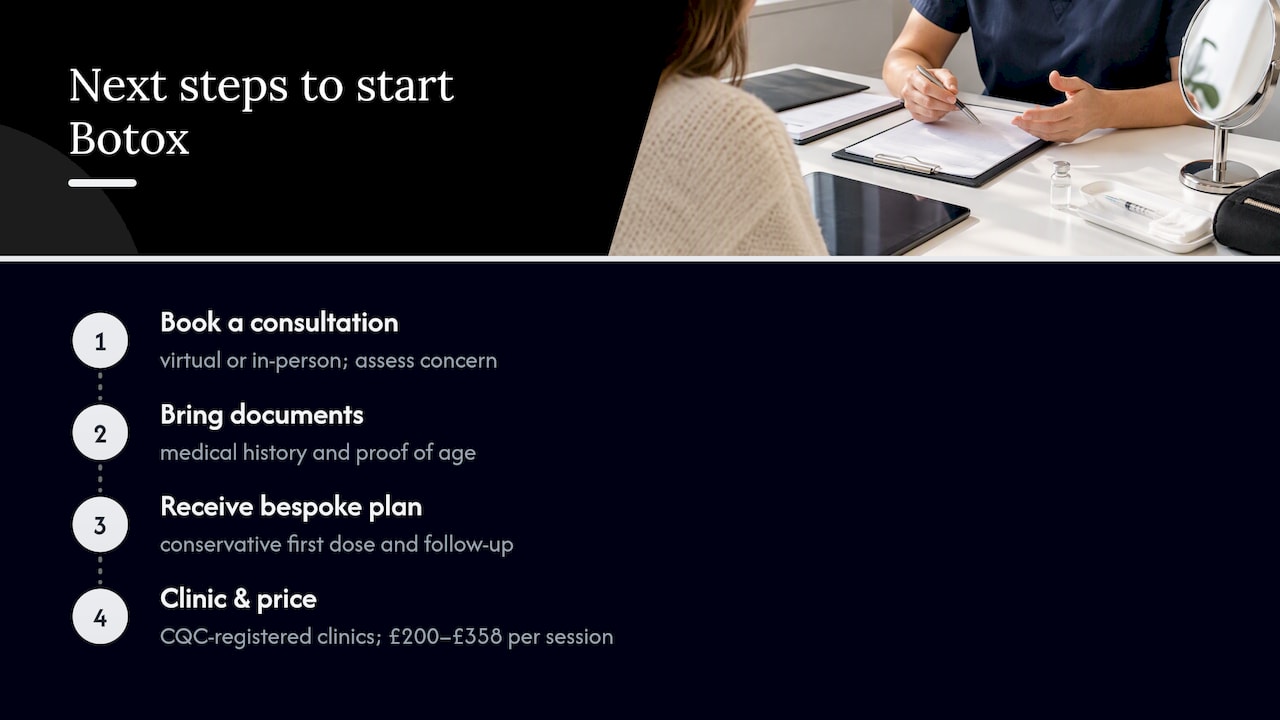
If you are weighing up when to start, we offer virtual and in-person consultations that assess your concern properly and explain exactly who prescribes and who injects, before anything is booked.
Our plans are bespoke to you, built around a conservative first dose and a follow-up review, at CQC-registered clinics. Anti Wrinkle treatment is priced at £200 to £358 per session. To get started, book a consultation through our Botox treatment page, and bring your medical history and proof of age along.
This article is general information, not a substitute for advice from a qualified doctor. Consult a qualified healthcare professional about your own circumstances before acting on anything here.
FAQ
What does Botox look like after 10 years?
Long-term appearance depends mainly on how consistently someone treats dynamic lines and on their own skin ageing, rather than on the toxin itself causing lasting change. Skipping retreatment simply lets muscle movement and natural ageing resume as before, so there is no single universal outcome after a decade.
What happens if you start Botox too early?
Starting before a genuine concern exists does not create new problems on its own, but it means paying for treatment that offers no evidence-based preventative guarantee, according to GOV.UK guidance. The bigger risk is choosing an unverified provider under social pressure rather than for a defined need, as our guide to Botox side effects explains.
How often should you get Botox in your 40s?
Retreatment is generally not recommended sooner than every three months, regardless of age, according to patient information from UHSussex NHS. In the 40s, combined treatment with fillers or resurfacing is more common because static lines and volume loss often need addressing alongside dynamic lines.
Can Botox look natural?
Yes, when dosing is conservative and tailored to your own facial movement rather than applied as a standard amount. A proper consultation and a two-week review, as recommended in NHS trust patient leaflets, are what keep results looking like your own face rather than an obviously treated one.
Sources
- Botulinum toxin and cosmetic fillers for under‑18s
- Choosing who will do your cosmetic procedure — NHS
- Adult botulinum toxin patient information (UHSussex)
- Treatment with botulinum toxin — HEY NHS patient leaflet
- Botulinum toxin A injections patient leaflet — Lancs Teaching Hospitals