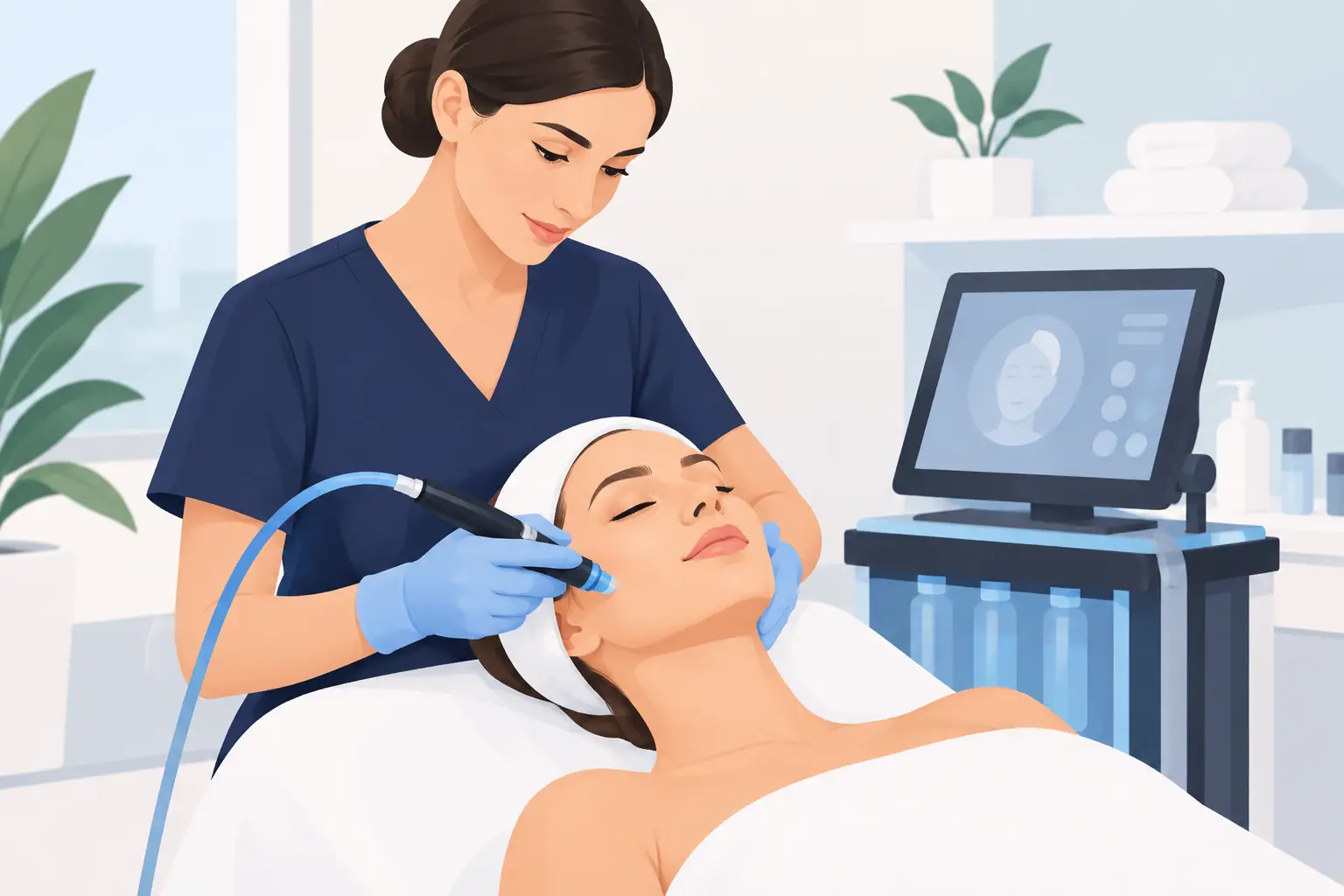


Most patients see Botox effects for several months, with meaningful variation by treated area, dose and formulation, according to a literature review of duration data. No approach makes results permanent, but sensible dosing, technique and aftercare can often stretch that window safely. Extending longevity is about working with your biology, not fighting it.
TL;DR:
- Longer-lasting Botox results depend on dosage, injection technique, treated area, and individual biology, with no method guaranteeing permanence.
- Higher doses may extend effects but risk an unnatural appearance and unwanted muscle spread, so precise delivery is crucial for optimal duration.
- Lifestyle factors such as sun protection, moderate alcohol intake, and avoiding smoking support the longevity of results without altering the toxin’s pharmacology.
- Resistance to Botox is rare but linked to high, frequent doses, with rotating formulations like Xeomin or Dysport considered if response diminishes unexpectedly.
- Choosing a licensed, experienced practitioner and scheduling treatments thoughtfully around events can maximize safety and help maintain natural results.
Table of Contents
- What the evidence says about Botox longevity
- Factors that alter how long Botox lasts
- Clinic-safe steps that can help Botox last longer
- Long-term effects and safety considerations
- Planning retreatment across multiple cycles
- Why clinic choice matters for safety and results
- Do stress, sleep and hydration affect how long Botox lasts?
- Why some patients build resistance to Botox over time
- How Botox, Dysport and Xeomin compare in real-world use
- Skincare habits that support your results between sessions
- A clinician-minded closing thought on Botox longevity
- Book a bespoke Botox consultation in London
- Sources
What the evidence says about Botox longevity
Patients typically retain visible improvement for a few months, though a systematic review found some studies report medians stretching longer for glabellar lines and certain crow’s feet trials.
Duration also depends on how you measure it. Trials often track “return to baseline maximal contraction” — essentially, when the muscle regains its pre-treatment strength on a machine. Patients, though, judge duration by what they see in the mirror at rest, which frequently outlasts the clinical endpoint. Phase 3 studies of onabotulinumtoxinA for crow’s feet found that patients who rated themselves highly at day 30 tended to report longer perceived durations, suggesting early response strength predicts how long the effect feels worthwhile.
Formulation matters too. Split-face trials comparing abobotulinumtoxinA against onabotulinumtoxinA at set dose ratios found abobotulinumtoxinA sometimes showed longer duration on frontalis muscle models, with differences in partial, full and complete efficacy measures. The contralateral frontalis study used one side of the face as an internal control, making the comparison unusually precise.
Factors that alter how long Botox lasts
Botox longevity is not a fixed number stamped on the vial. It shifts with several variables your practitioner should discuss before treating you.
- Dose and dilution. Higher doses generally correlate with longer effect in dose-response studies, but increasing units purely to buy more months risks an unnatural, frozen look and unwanted spread to nearby muscles.
- Injection technique. Precise placement into the target muscle belly, rather than a scattergun approach, improves both the result and how evenly it fades.
- Treated area. The glabella (frown lines) tends to hold results differently than crow’s feet or the forehead, because muscle strength and movement frequency vary by region.
- Individual biology. Metabolic rate, muscle mass and how many previous treatments you’ve had all influence how quickly your body clears the toxin’s effect.
- Combination treatments. Pairing Botox with dermal fillers or skin rejuvenation can make results look fresher for longer, even when the neuromodulator itself hasn’t changed its underlying timeline.
Clinic-safe steps that can help Botox last longer
You cannot out-lifestyle a biological clearance process, but you can avoid actively shortening it. The steps below are the ones supported by clinical aftercare guidance, not internet folklore.
Immediately after treatment:
- Avoid rubbing or massaging the treated area for at least 24 hours, since this can shift the product before it binds to the target muscle.
- Skip strenuous exercise for a day; raised heart rate and blood flow may encourage the toxin to migrate from the injection site.
- Stay upright for a few hours rather than lying face down, following the same logic.
In the days and weeks after:
- Use daily sun protection. UV damage accelerates collagen breakdown, which can make static lines reappear faster even where the muscle itself is still relaxed, per aftercare protocols outlined by the American Society of Plastic Surgeons.
- Moderate alcohol and avoid smoking, both of which impair circulation and skin repair.
- Choose gentle, non-irritating skincare rather than aggressive actives that stress the skin barrier during healing.
Pro Tip: Book your next appointment before the effect has fully worn off rather than after wrinkles have returned. Treating slightly early, on a consistent cycle, tends to produce smoother, more predictable results than always chasing full relapse.
Timing matters strategically too; for example, understanding factors like hair extension lifespan can help in planning your treatment schedule effectively. Schedule treatment several weeks ahead of events, not the week before, and discuss whether a conservative microdosing approach or a combination plan suits your goals better than a single larger dose. None of this works, though, without a legitimate, licensed practitioner sourcing genuine product. Counterfeit or mishandled toxin is where the real risk lives, not in careful, professionally dosed treatment.

Long-term effects and safety considerations
Botox’s effects are temporary and reversible, and current evidence does not support long-term systemic harm from cosmetic use, according to Cleveland Clinic. That reversibility is precisely why it remains a first-choice treatment for cautious patients.
- Repeated treatment over years can lead to mild muscle atrophy in the treated area, which some patients like (softer lines) and others find changes expression subtly.
- There’s a trade-off: less movement can mean fewer new wrinkles, but over-treatment risks compensatory frowning in untreated muscles nearby.
- Serious adverse events are uncommon, but reports linked to counterfeit or mishandled product underline why provenance matters as much as skill.
- Seek medical advice promptly if you notice drooping, breathing difficulty, or swallowing changes after treatment.
Planning retreatment across multiple cycles
Retreatment intervals vary by patient, but many settle into a several month rhythm, with some stretching longer as their body and expectations adjust.
- Track your face at rest and at maximum expression with consistent photos each visit; this reveals genuine duration trends better than memory alone.
- Discuss whether repeated, appropriately dosed cycles are lengthening your intervals, a pattern some patients experience over several years of consistent treatment.
- Weigh cost and convenience against the value of natural-looking movement. Chasing maximum longevity by over-dosing rarely pays off aesthetically.
- Revisit your plan at each consultation rather than assuming last year’s dose and schedule still fit this year’s goals.
Why clinic choice matters for safety and results
Theaestheticsroom is CQC-accredited and part of the ACE Group, both markers of a serious commitment to patient safety. Bespoke dosing from trained medical staff protects longevity and natural movement alike. At consultation, ask about product brand and origin, expected unit dosing and duration, and the follow-up plan should side effects occur.
Do stress, sleep and hydration affect how long Botox lasts?
Lifestyle factors don’t rewrite the pharmacology of botulinum toxin, but they influence the environment it’s working in. Chronic stress raises cortisol, which can accelerate collagen breakdown and dull skin quality, making static lines more visible even while the muscle itself remains relaxed from treatment.
Poor sleep compounds this. Skin repairs itself overnight, and consistently short sleep can leave the treated area looking less refreshed than the neuromodulator alone would suggest. Dehydration has a similar effect: skin that lacks moisture looks less plump and shows fine lines more readily, which can make results seem to fade faster than they actually are at the muscle level.
None of this means Botox “wears off quicker” because you had a stressful month. The toxin’s biological clearance follows its own timeline regardless of your cortisol levels. What changes is how the surrounding skin presents that underlying result. A patient sleeping well, managing stress and staying hydrated will generally look like their treatment is lasting longer, simply because the canvas around the treated muscle is in better condition.
This is worth raising at consultation if you’ve noticed results seeming shorter than a previous cycle. Sometimes the answer isn’t the dose or the formulation. It’s what’s happening in the months either side of the appointment.
Why some patients build resistance to Botox over time
A small proportion of patients develop neutralising antibodies against botulinum toxin after repeated exposure, which can blunt or eliminate the response to future treatments. This is more commonly documented with higher, more frequent dosing regimens than with the conservative schedules typical in cosmetic practice.
Antibody formation appears linked to total cumulative dose and how often booster treatments are given, rather than being random. Patients who receive large doses at short intervals, a pattern more associated with therapeutic (medical) use than cosmetic touch-ups, carry higher theoretical risk. This is one reason conservative, appropriately spaced dosing isn’t just about aesthetics. It may also protect your long-term responsiveness to treatment.
If you notice a previously effective dose suddenly doing far less, resistance is worth discussing with your practitioner, though it remains a less common explanation than simple under-dosing, technique variation or a formulation switch. Some clinicians consider rotating between formulations, such as moving between onabotulinumtoxinA and incobotulinumtoxinA, when resistance is suspected, since the proteins differ slightly in structure. This isn’t a guaranteed fix, but it’s a reasonable conversation to have if results have unexpectedly dropped off despite a consistent regimen.
How Botox, Dysport and Xeomin compare in real-world use
Three formulations dominate cosmetic practice: onabotulinumtoxinA (Botox), abobotulinumtoxinA (Dysport) and incobotulinumtoxinA (Xeomin). Each is a purified form of botulinum toxin type A, but they differ in molecular size, manufacturing process and the accessory proteins that surround the active toxin.
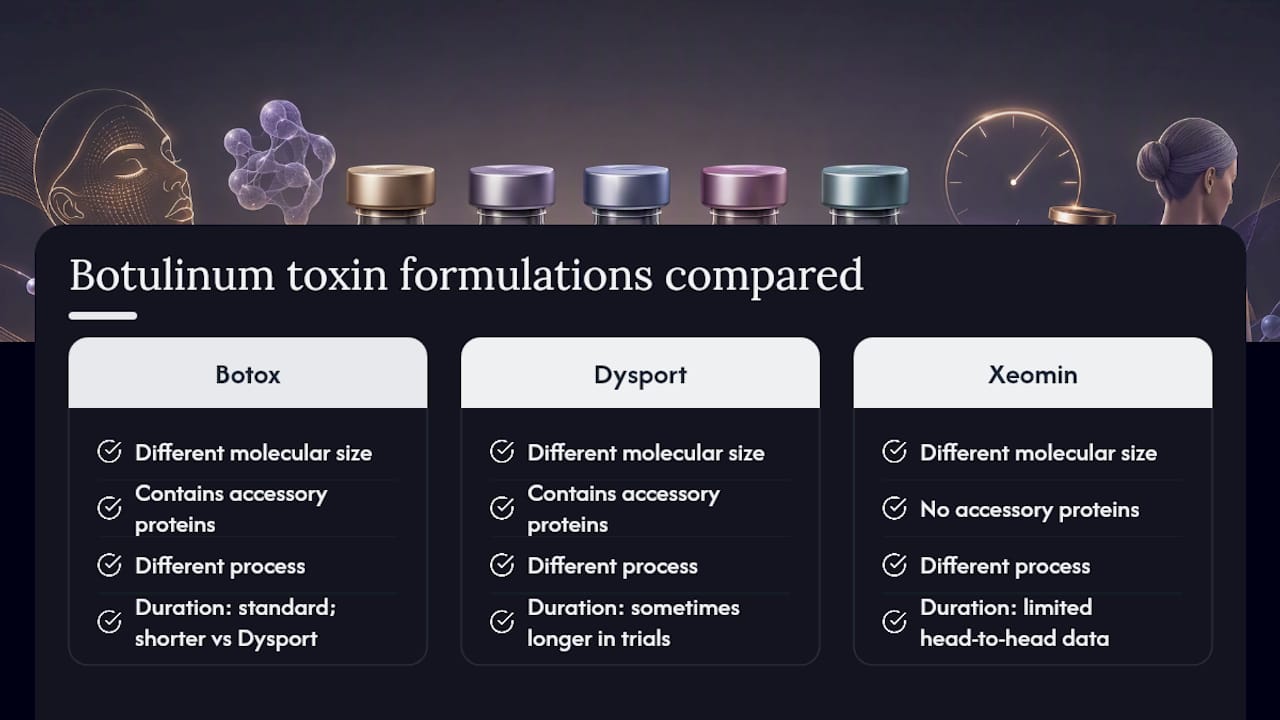
In practical terms, split-face trial data found abobotulinumtoxinA showed longer duration than onabotulinumtoxinA on frontalis muscle at certain dosing ratios, though results depend heavily on how doses are converted between products, since units aren’t directly interchangeable across brands. Xeomin, which lacks the accessory proteins found in the other two, is sometimes favoured by practitioners concerned about antibody formation, though robust head-to-head longevity data comparing it against the other two in cosmetic dosing remains more limited than for the Botox-Dysport comparison.
What this means practically: the brand name on the vial is a genuine variable, not just marketing. But it interacts with dose, dilution and technique in ways that make simple “X lasts longer than Y” claims unreliable outside controlled trial conditions. A skilled injector adjusting dose and placement for your anatomy will usually influence your result more than the formulation alone. This is why discussing formulation choice with your practitioner, rather than requesting a brand by name, tends to produce better-planned outcomes.
Skincare habits that support your results between sessions
What you put on your skin after treatment won’t extend the neuromodulator’s biological lifespan, but it can protect the appearance of your results for longer. Daily broad-spectrum sun protection is the single most impactful habit, since UV exposure breaks down collagen and deepens static lines independently of muscle activity.
Beyond sun protection, a few habits genuinely help. Retinoids and peptide-based serums, introduced gently and not immediately after injection, support collagen production over time, which softens the appearance of lines that Botox alone doesn’t address, particularly those caused by skin laxity rather than muscle movement. Consistent, gentle hydration, rather than harsh exfoliation or aggressive active ingredients straight after treatment, keeps skin looking plump and reduces the visual prominence of any early relapse in muscle movement.
Avoid introducing new, potentially irritating products in the first week after injection. Redness or swelling from a reaction can be mistaken for a treatment complication when it’s actually unrelated skincare. Patients combining Botox with a considered skin rejuvenation routine typically report their results look fresher for longer, even though the underlying muscle relaxation follows the same timeline it always would.
A clinician-minded closing thought on Botox longevity
Chasing maximum longevity at any cost misses the point. The best outcomes come from conservative, bespoke dosing that preserves natural movement, not from maximal units stretched to buy an extra month. Evidence-informed maintenance, reviewed regularly, beats a one-size approach every time.
— Vishul
Book a bespoke Botox consultation in London
Theaestheticsroom is the sensible alternative to guessing your way through dosing and timing on your own. Rather than a generic, one-size treatment, you get bespoke dosing planned around your muscle strength, treated area and previous history, delivered by CQC-registered practitioners who follow up as your results evolve.

A first consultation, available in person or virtually, covers product origin, expected unit dosing and a realistic duration estimate for your anatomy, along with a follow-up plan if anything needs adjusting. That’s the groundwork for genuinely longer-lasting, natural-looking results rather than a rushed, one-off appointment. If you’re ready to plan a schedule that fits your face and your calendar, book a Botox consultation with Theaestheticsroom and get a plan built around you rather than a standard dose sheet.
This article is general information, not a substitute for advice from a qualified doctor. Consult a qualified healthcare professional about your own circumstances before acting on anything here.
Sources
- Botulinum toxin: examining duration of effect in facial aesthetic applications – NCBI Bookshelf
- Duration of Clinical Efficacy of OnabotulinumtoxinA in Crow’s Feet Lines: Results from Two Multicenter, Randomized, Controlled Trials – PMC
- What Are the Long-Term Effects of Botox? – Cleveland Clinic