
Most Botox side effects are mild, local, and gone within a fortnight, think bruising, swelling, or a tension headache. Far more rarely, the toxin spreads beyond the injection site and causes iatrogenic botulism, which can be life-threatening and may not appear for up to four weeks. If you notice breathing or swallowing difficulty, slurred speech, or unexpected muscle weakness after treatment, treat it as a medical emergency and seek help immediately.
TL;DR:
- Most Botox side effects are mild, resolve within two weeks, and include pain, redness, bruising, and temporary headaches, mainly caused by injection trauma.
- Serious complications, such as breathing or swallowing difficulties, typically emerge between 4 and 8 days, but up to four weeks after treatment, requiring immediate medical attention.
- Higher doses, unlicensed products, off-label injection sites, and underlying neuromuscular conditions significantly increase the risk of dangerous toxin spread.
- Selecting a qualified prescriber, verifying product batch information, and avoiding informal treatment settings can greatly reduce the chance of adverse effects.
- Repeated Botox treatments at standard doses do not increase long-term risk, but patients with neuromuscular disorders or using unapproved products face substantially higher danger.
Table of Contents
- What are the common side effects of Botox?
- What are the serious side effects of Botox?
- Who is at higher risk from Botox treatment?
- How can you choose a safer Botox practitioner?
- What should you do after Botox treatment?
- How are Botox complications treated?
- Do Botox side effects get worse with repeated treatments?
- What does a safety-first Botox clinic actually look like?
- Where can you read more about Botox safety?
- Where can you get Botox done safely?
- Sources
What are the common side effects of Botox?
The vast majority of reactions after Botox fall into a predictable, unremarkable category. If you’ve had a flu jab or a blood test, you already understand the basic pattern: a needle goes in, the tissue reacts, and the reaction settles.
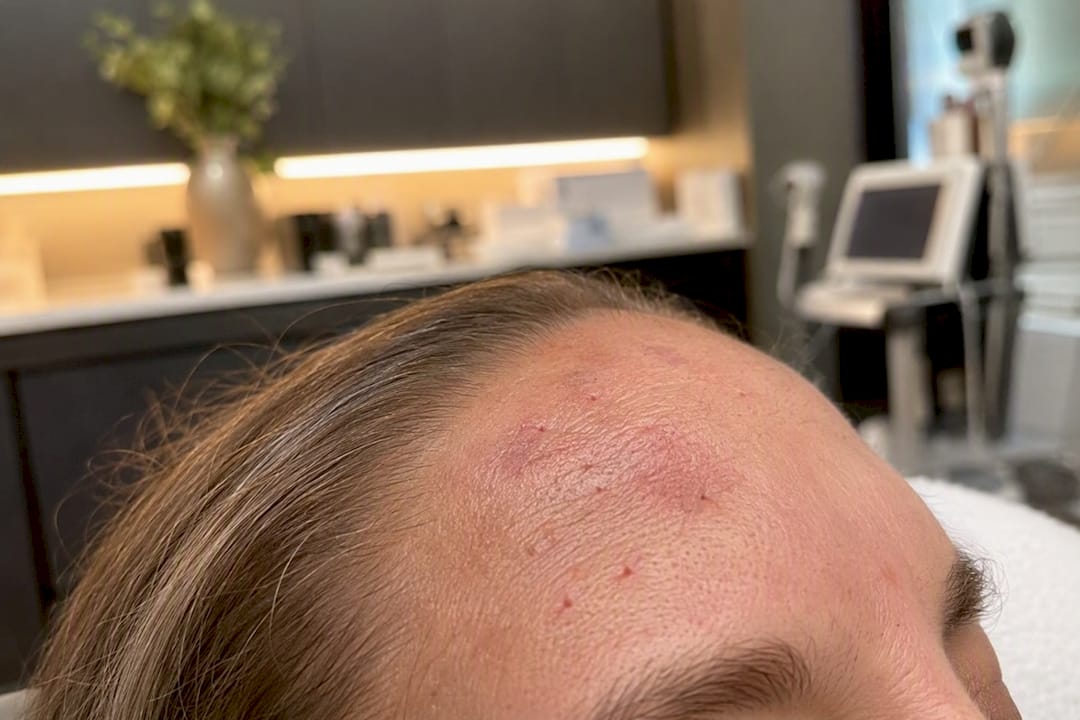
Injection-site trauma accounts for most of what people notice in the first 24 to 48 hours. That means:
- Pinpoint pain or tenderness at the injection sites
- Redness and mild swelling around the area
- Bruising, which can range from barely visible to a noticeable patch
- Small, temporary lumps under the skin where the needle entered
- A dull, tension-type headache that usually fades within a day or two
These effects come from the needle itself and the body’s normal inflammatory response, not from the botulinum toxin acting where it shouldn’t. That distinction matters when you’re trying to work out whether something is routine or worth flagging.
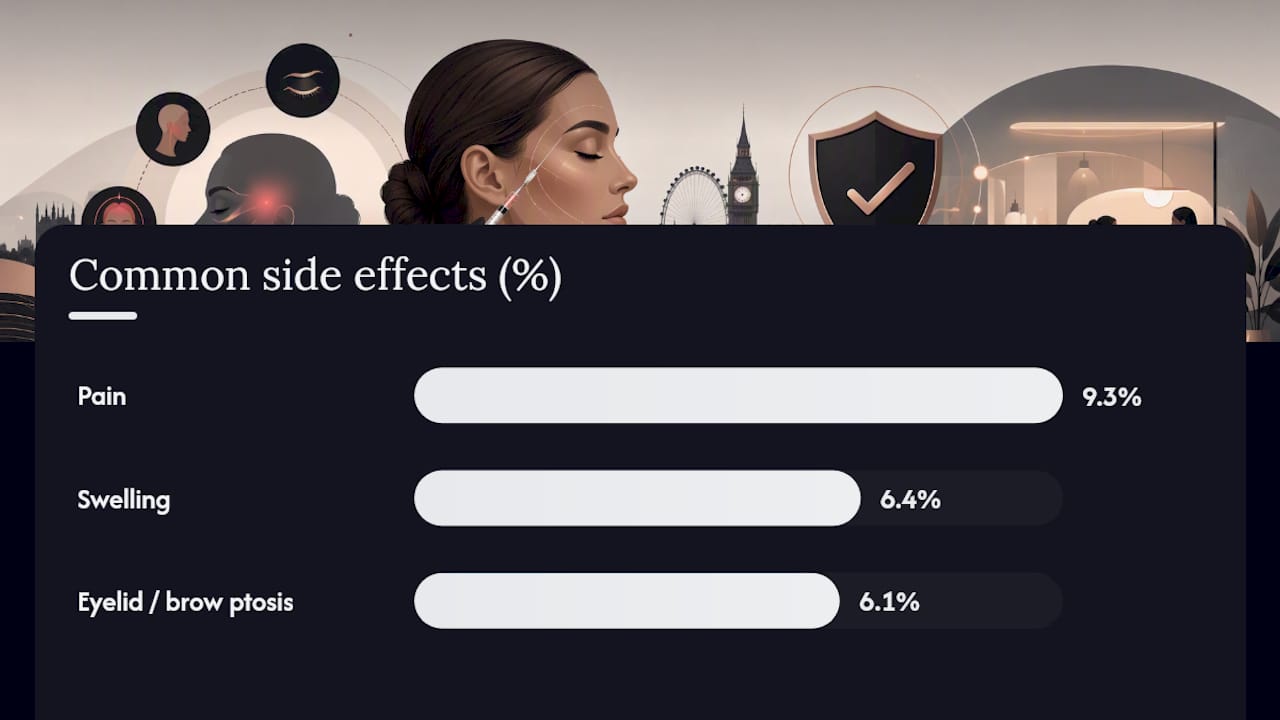
Statistic callout: A systematic review of complications with cosmetic botulinum toxin treatments found pain in 9.3% of cases, swelling in 6.4%, and eyelid or brow ptosis (drooping) in 6.1%. Serious outcomes were far more strongly associated with higher therapeutic doses or underlying medical conditions than with standard cosmetic dosing.
Timing follows a fairly consistent arc. Redness and pinpoint marks show up within hours. Bruising tends to peak around day two or three, then fades over one to two weeks, similar to any other bruise. Headaches, when they occur, are usually gone within 48 hours. Clinical overviews from StatPearls describe these as moderate and self-limited in the overwhelming majority of patients, requiring nothing beyond simple reassurance and basic aftercare.
Pro Tip: Cold compresses applied gently (never pressed hard) in the first few hours can reduce swelling and limit bruising without disturbing the toxin’s placement.
What are the serious side effects of Botox?
This is the part of the conversation that gets skipped too often, and it shouldn’t be. Botulinum toxin works by blocking nerve signals to muscles. When it stays exactly where it’s injected, that’s the treatment working as intended. When it spreads beyond that site into the wider body, the result is iatrogenic botulism, a rare but genuinely dangerous complication.
The MHRA’s updated drug safety guidance sets out the cardinal signs clearly:
- Difficulty swallowing (dysphagia)
- Slurred or altered speech
- Breathing difficulties
- Generalised or unexpected muscle weakness
- Double vision (diplopia) or drooping eyelids beyond the treated area
Statistic callout: According to the MHRA, symptoms of iatrogenic botulism typically emerge between 4 and 8 days after treatment, but the window extends to a full 4 weeks. That’s a long tail of risk most patients aren’t warned about, and it’s precisely why any new neurological symptom in that period deserves attention rather than a wait-and-see approach.
Certain contexts raise the odds of this happening. Higher doses, off-label injection sites, and treatments using unlicensed or counterfeit products all increase risk substantially. Public-health investigations reported by the MHRA and UKHSA have linked clusters of serious illness across England directly to unregulated cosmetic botulinum toxin, some involving products never authorised for use in the UK at all.
If you or someone you know develops breathing difficulty, swallowing problems, or sudden widespread weakness after a Botox treatment, this warrants a call to NHS 111 or, for anything severe, 999. Hospital teams manage suspected botulism with close monitoring, supportive care such as ventilation if breathing is affected, and antitoxin treatment where indicated. Time matters here. Delaying because a symptom feels “probably nothing” is the wrong instinct with a toxin-related complication.
Who is at higher risk from Botox treatment?
Some people carry a materially higher risk profile, and a proper consultation should surface this before a single needle comes near your skin.
Neuromuscular conditions sit at the top of the list. Patients with myasthenia gravis or Lambert-Eaton myasthenic syndrome already have compromised signal transmission between nerves and muscles, and introducing a toxin that blocks that transmission further can be genuinely dangerous. Clinical guidance from StatPearls treats these conditions as reasons for exclusion from cosmetic treatment in almost all cases.
Beyond that, watch for:
- A prior history of swallowing difficulty or aspiration, which raises the stakes if toxin spreads even slightly
- Active infection at the planned injection site
- Concurrent use of aminoglycoside antibiotics, which can potentiate the toxin’s neuromuscular effects
- Any planned surgery in the near term, which your practitioner and surgical team should both know about
Pregnancy and breastfeeding are areas where caution rather than certainty applies. Botox isn’t recommended during pregnancy or while breastfeeding, largely because robust safety data in these groups simply doesn’t exist. This is a case where “no evidence of harm” and “evidence of no harm” are different things, and clinics should treat it that way.
Where the toxin goes also changes the risk calculus. Guidance from UCLH notes that injections into neck muscles carry a higher likelihood of temporary swallowing or breathing difficulty than the small, superficial doses used for forehead lines or crow’s feet. Dose and indication both shift what “normal risk” actually means.
How can you choose a safer Botox practitioner?
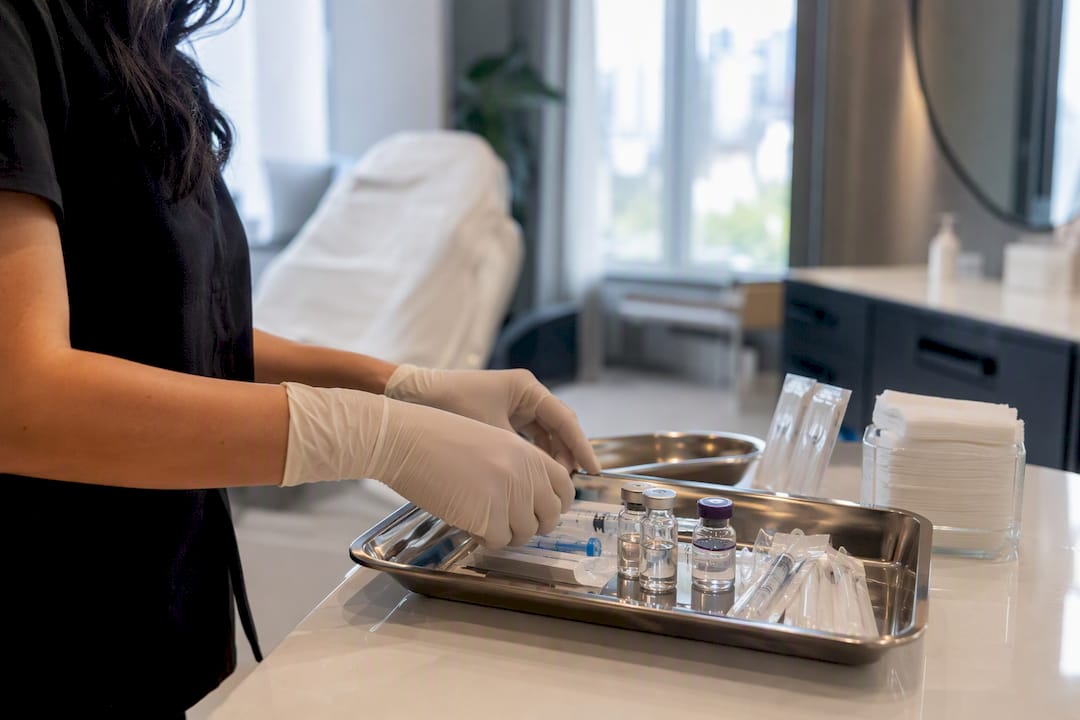
Reducing risk starts long before the needle appears, and most of it comes down to who is holding it. Recent MHRA enforcement action against unlicensed ‘Botox’ supply, reported alongside cases of serious illness, makes one thing painfully clear: the biggest avoidable risk in this entire treatment category is where and from whom you get it done.
- Check the practitioner’s qualifications. Prescribing rights for botulinum toxin sit with doctors, nurse prescribers, and pharmacist prescribers. Anyone offering to inject you without one of these qualifications is operating outside safe, legal practice.
- Confirm CQC registration where applicable. A clinic regulated by the Care Quality Commission has been assessed against defined safety and governance standards, not just self-declared ones.
- Ask to see the product packaging and batch number. MHRA guidance recommends practitioners record and share batch details, since this allows rapid tracing if a wider safety issue emerges. A reluctance to show you the box is a warning sign in itself.
- Avoid informal venues and social-media sourced deals. House parties, pop-up events, and DM-based bookings are exactly the settings UKHSA investigations have traced serious harm back to.
- Use the consultation properly. Ask about your medical history requirements, the planned dosing, any off-label risks, what the emergency plan looks like if something goes wrong, and what follow-up is included.
Understanding facial anatomy and how it affects injection safety is part of what separates a properly trained injector from someone working from a template.
Pro Tip: If a provider can’t tell you the exact product name, its UK licence status, and the batch number before treatment, that’s your cue to walk away, no matter how good the price looks.
What should you do after Botox treatment?
Aftercare for Botox is refreshingly simple, but the few rules that exist are there for a reason. Avoid rubbing, massaging, or applying pressure to the treated area for at least a few hours, since this can shift the toxin away from its intended target. Skip strenuous exercise for 24 hours, as raised blood flow and heat can encourage unwanted spread. Sleeping flat on your back rather than face-down on the treated side for the first night is a small precaution many clinics recommend.
Most of what you’ll notice in the days after treatment is entirely benign:
- Mild tenderness at injection points, resolving within a few days
- Small bruises, fading over one to two weeks
- A slight, temporary heaviness or tightness in the treated muscles as the effect sets in over the first week
Red flags look nothing like this, and they deserve a different response. Breathing or swallowing difficulty, severe or spreading muscle weakness, drooping that extends well beyond the treated area, or any persistent focal neurological symptom should prompt immediate contact with your clinic, and if severe, NHS 111 or emergency services rather than a wait-and-see approach. A structured aftercare guide is worth reading before treatment, not after, so you know what “normal” looks like in advance. For general skin protection in the days following any injectable procedure, this partner guidance on post-treatment care covers useful complementary habits.
How are Botox complications treated?
Minor complications rarely need active treatment. Bruising responds to cold compresses and patience. Swelling settles with time. Small lumps typically resolve as the product disperses evenly through the muscle over the following days. Clinics generally manage these with observation and simple symptomatic advice rather than intervention.
Suspected iatrogenic botulism is a different pathway entirely. UKHSA guidance advises clinicians to actively consider botulism in anyone presenting with compatible symptoms after a recent aesthetic procedure, not dismiss it as coincidence. Management typically involves:
- Urgent clinical assessment and, where needed, hospital admission
- Supportive care, including ventilatory support if breathing muscles are affected
- Antitoxin treatment where clinically indicated
- Reporting to public health authorities to identify wider clusters
Every UK practitioner and patient has a role in the reporting side of this too. Suspected adverse events, including anything from unexpected bruising patterns to systemic symptoms, should go through the MHRA’s Yellow Card scheme. This isn’t bureaucratic box-ticking; it’s the mechanism that let regulators spot the unlicensed-product clusters in the first place. Recovery from genuine systemic complications varies by severity, but most patients who receive prompt treatment recover fully, with follow-up arranged by the treating hospital team.
Do Botox side effects get worse with repeated treatments?
This is one of the most common worries among people who’ve had Botox before and are wondering whether to continue, and the evidence here is reassuring rather than alarming. At standard cosmetic doses, repeated treatment over years hasn’t been shown to produce cumulative systemic harm in the way some patients fear. The risk profile described in clinical reviews applies largely to single-treatment events, not a build-up effect across a treatment history.
One genuine long-term consideration is antibody formation. A small proportion of patients develop neutralising antibodies against the toxin over repeated exposure, which can reduce how well future treatments work. It’s a treatment-efficacy issue more than a safety one, but clinics that notice a pattern of diminishing results sometimes adjust dosing intervals or product choice in response. Spacing treatments appropriately, rather than topping up too frequently, is the practical safeguard most reputable clinics build into a treatment plan.
What does a safety-first Botox clinic actually look like?
Reading regulatory warnings is useful, but it only tells half the story. The other half is what a well-run clinic does differently, day to day, to keep those rare but serious outcomes rare.
At Theaestheticsroom, that starts with CQC accreditation and membership of the ACE Group, a body specifically focused on patient safety standards in aesthetics. Every consultation includes a full medical history review, checking for the neuromuscular conditions, medication interactions, and contraindications covered earlier in this piece. Product packaging and batch numbers are verified and recorded for every patient, precisely the traceability step the MHRA recommends. Dosing follows conservative, evidence-based protocols rather than guesswork, and practitioners are trained to recognise and respond to complications rather than simply hope they don’t occur.
If you’d like a personalised risk assessment before deciding on treatment, a consultation with Theaestheticsroom is the place to start that conversation properly.
— Vishul
Where can you read more about Botox safety?
For deeper reading beyond this guide, the MHRA’s drug safety update covers the regulatory detail on iatrogenic botulism risk. GOV.UK’s coverage of MHRA and UKHSA enforcement action explains the unlicensed-product problem in plain terms. For clinical depth, the StatPearls overview on NCBI remains one of the most complete peer-reviewed summaries available to the public.
Where can you get Botox done safely?
Everything covered above points to the same conclusion: the treatment itself carries a well-documented, manageable safety profile, but the outcome depends heavily on who administers it and how carefully they screen you beforehand. Theaestheticsroom exists precisely for readers who’ve done this research and want a provider that matches it, a CQC-registered clinic in Knightsbridge where every consultation includes proper medical history screening, transparent product verification, and dosing plans built around your individual risk factors rather than a one-size approach.

If you’re weighing up Botox after reading through the risks, the next sensible step isn’t guesswork, it’s a proper consultation. Theaestheticsroom offers both in-person appointments at its Knightsbridge location and virtual consultations for readers who want to ask questions and understand their personal risk profile before committing to anything. You can also explore related options, including dermal fillers if you’re comparing treatments, or read more on why Botox remains one of the most requested aesthetic treatments before you decide. Book a consultation with Theaestheticsroom to get a clear, personalised answer on whether Botox is right for you.
This article is general information, not a substitute for advice from a qualified doctor. Consult a qualified healthcare professional about your own circumstances before acting on anything here.
Sources
- Botulinum toxin type A products: updated warnings regarding risk of iatrogenic botulism
- Botulinum toxin – StatPearls – NCBI Bookshelf
- Botulinum toxin treatment : University College London Hospitals NHS Foundation Trust