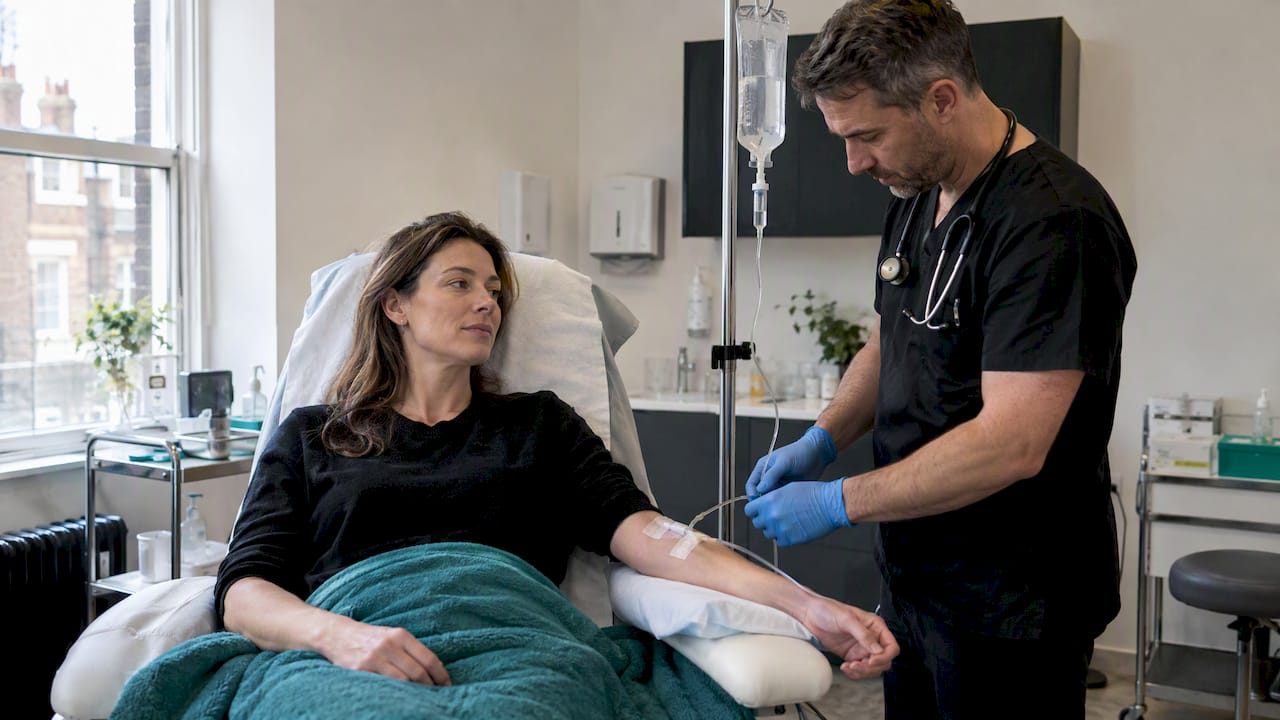


For most people, Botox carries minimal to no functional downtime. You can typically return to normal activities the same day, though visible results take a little longer to appear, usually within 3 to 5 days, reaching full effect by around 14 days. Effects generally last 3 to 6 months. The only immediate rule worth following strictly is avoiding vigorous rubbing or pressure on the treated area, and knowing that breathing or swallowing difficulties are a genuine emergency, not a side effect to wait out.
TL;DR:
- The full effects of Botox typically appear within two weeks, with initial changes starting around days 3 to 5, and effects lasting three to six months.
- The four-hour aftercare rule to avoid manipulating the treated area is a precaution but not strictly evidence-based; gentle facial movements are sometimes recommended if advised by your clinician.
- Strenuous exercise, alcohol, and heat exposure should be avoided for 24 hours to reduce the risk of bruising and product migration, with some activities like facials delayed up to two weeks.
- Most side effects, such as bruising, swelling, and mild headaches, are temporary and usually resolve within days to two weeks, while serious issues require immediate medical attention.
- Booking a local clinic with proper accreditation, clear aftercare guidance, and a two-week follow-up significantly improves safety and treatment satisfaction.
Table of Contents
- How long is Botox downtime, and when will you see results?
- What should you do in the first 4 hours after Botox?
- Exercise, alcohol and heat: the first 24 hours and first week
- What side effects are normal, and when should you seek help?
- What does good aftercare look like from a reputable clinic?
- The gap between what patients fear and what actually happens
- Book a consultation with The Aesthetics Room
- Sources
- FAQ
How long is Botox downtime, and when will you see results?
Botox downtime is really two separate timelines: how quickly you can resume normal life, and how quickly the treatment actually works. The first is fast. The second takes patience.
According to NHS guidance from Hull University Teaching Hospitals, visible changes usually begin within 3 to 5 days of injection, with the full effect settling in by roughly 14 days. That two-week window matters. Booking an event for day 6 and expecting the finished result is one of the most common scheduling mistakes patients make.
Typical Botox recovery timeline: first movement changes at 3 to 5 days, full effect by 14 days, results lasting 3 to 6 months before muscle activity gradually returns.
Duration varies from person to person. The treatment site plays a role, forehead lines and crow’s feet don’t always fade at the same rate as frown lines between the brows. Dose matters too, and so does treatment history. Some patients who’ve had repeated sessions over the years find the effect settles in faster and lasts a little longer, likely because the muscle has weakened with sustained reduced use. It’s also completely normal for one side of the face to soften slightly ahead of the other; facial muscles rarely respond in perfect symmetry, and this usually evens out by the two-week mark. If you’re curious about what shapes longevity further, the mechanics behind how long Botox actually lasts are worth a closer look.
What should you do in the first 4 hours after Botox?
The “4-hour rule” is the piece of aftercare advice almost every patient has heard, and almost nobody has heard explained. The idea is straightforward: for roughly four hours after injection, avoid actions that might encourage the product to spread beyond the intended muscle, or that increase bleeding and bruising at the injection sites.
It’s worth being honest about the evidence here. The rule is a sensible, precautionary convention rather than one backed by rigorous trial data, and clinical practice on how strictly to enforce it does vary between practitioners. Many clinics now frame it as a pragmatic precaution rather than an unbreakable law, one accidental brush of the forehead is not going to undo your treatment. That said, the rationale (less manipulation, less pressure, less chance of bruising) is sound enough that following it is simple insurance for very little inconvenience.
Practical steps for the first 4 hours:
- Stay reasonably upright; avoid lying flat or bending forward for long periods.
- Don’t rub, massage, or press firmly on the treated areas.
- If a needle mark bleeds slightly, apply gentle, still pressure rather than wiping or rubbing.
- Hold off on make-up application until after the 4-hour window has passed.
- Skip strenuous tasks, heavy lifting, or anything that flushes your face with blood.
- Keep a cold pack or clean tissue handy if you’re heading straight back to work or travelling home.
Pro Tip: If your clinician advises gentle facial expressions, frowning, raising your brows, a few times in the first hour, this is thought by some practitioners to help even product distribution. Only do this if it’s specifically suggested to you, not as a default.
Exercise, alcohol and heat: the first 24 hours and first week
The 4-hour window is the strictest part of Botox aftercare, but the precautions don’t stop there. Aftercare leaflets from Lancashire Teaching Hospitals recommend a slightly longer runway of sensible caution across the first day and week.
- Avoid strenuous exercise for 24 hours. Raising your heart rate and blood pressure increases the chance of bruising and can theoretically encourage product migration.
- Skip alcohol and heat exposure for 24 hours. Saunas, steam rooms, hot baths, and sunbathing all dilate blood vessels, which raises bruising risk in the same way exercise does.
- Don’t rub or massage the treated area for 24 to 72 hours. This extends beyond the initial 4-hour rule and covers ordinary habits like resting your chin on your hand or vigorous cleansing.
- Delay facials, laser treatments, or microneedling for 1 to 2 weeks. Combining treatments too soon can distort how the Botox settles or irritate skin that’s still adjusting.
- Check in with your clinician before stopping any prescribed medication. Some over-the-counter painkillers and supplements increase bruising risk, but medical advice always takes precedence over generic aftercare tips.
None of this amounts to a lost week. It’s a short list of things to schedule around, not a reason to clear your diary.
What side effects are normal, and when should you seek help?
Most Botox side effects are minor, local, and short-lived. Bruising, mild swelling at the injection site, and the occasional headache are the most commonly reported reactions, and NHS guidance from Doncaster and Bassetlaw Teaching Hospitals confirms these typically settle within a few days to two weeks.
- Bruising: usually fades within days, occasionally up to two weeks with concealer covering it in the interim.
- Swelling: mild and localised, generally gone within 48 hours.
- Headache: mild and short-lived, responds well to standard over-the-counter pain relief.
- Temporary eyelid or brow drooping (ptosis): uncommon, usually resolves as the treatment wears off over weeks.
Rarer, more serious effects need faster action. MedlinePlus warns that spread of the toxin beyond the treated muscle can cause breathing or swallowing difficulties, or widespread muscle weakness, and that these symptoms can appear anywhere from hours to several weeks after injection. If you notice difficulty breathing or swallowing, treat it as a medical emergency and call 999. For anything less severe but still concerning, unexpected drooping, weakness spreading beyond the treated area, or symptoms that feel disproportionate, contact your clinic promptly.
There’s no reversal agent for botulinum toxin. Management is supportive, which is exactly why a reputable clinic that answers the phone and knows your treatment history matters more than any home remedy. A closer look at Botox side effects and how UK clinics manage them covers this in more depth.
What does good aftercare look like from a reputable clinic?
Aftercare shouldn’t end when you leave the treatment room. A reputable clinic builds structure around the whole 14-day window, not just the injection itself.
That starts before treatment, with informed consent that actually explains realistic timelines rather than glossing over them. It continues with written aftercare instructions you can refer back to at home, rather than a rushed verbal summary, and a direct emergency contact route in case something feels wrong at 9pm on a Saturday. Clear consent and documented aftercare have been shown to improve patient confidence and make it considerably easier to manage the rare complication if one does arise.
Many clinics also build in a routine 2-week review, sometimes called a 14-day check, timed deliberately to land once the full effect has settled. This is when a practitioner can assess symmetry, address any touch-up needs, and confirm the treatment has behaved as expected.
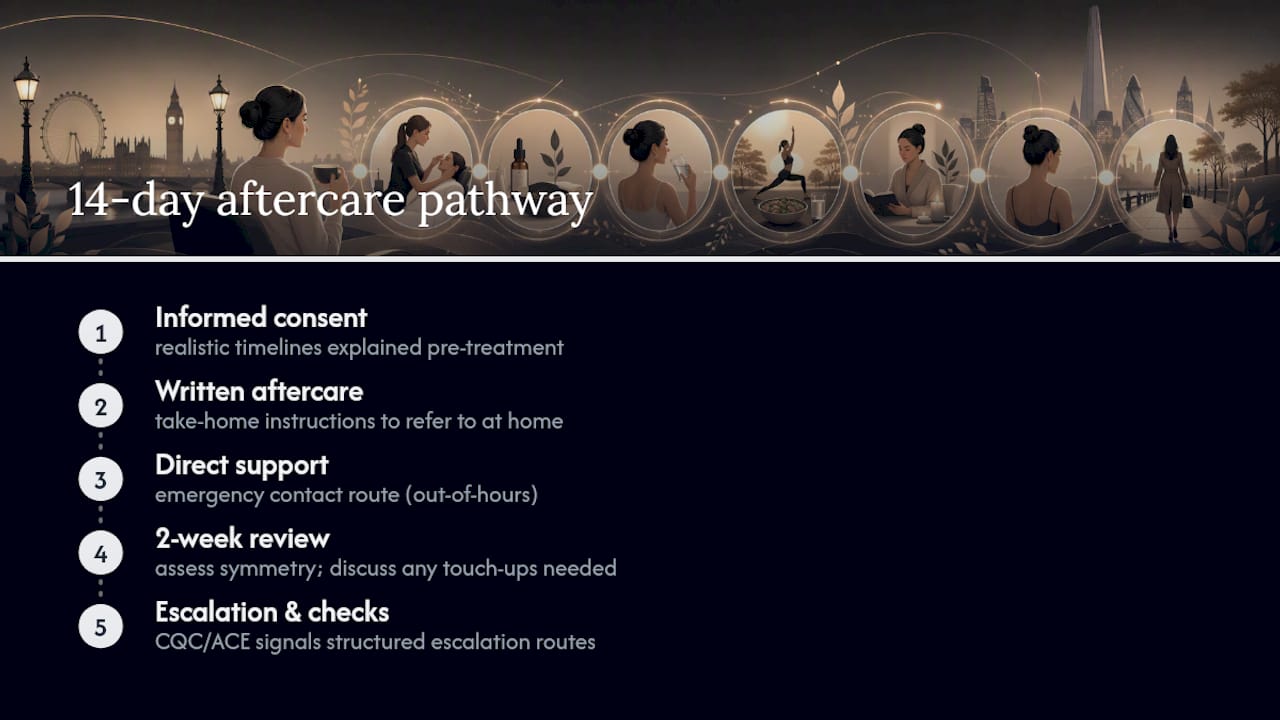
Accreditation is worth checking before you book anywhere. CQC registration and membership of bodies like the ACE Group (Aesthetic Complications Expert Group) signal that a clinic follows recognised safety protocols and has structured escalation routes if a complication occurs, rather than leaving patients to work it out alone. These aren’t formalities; they’re the difference between a clinic that can competently manage the unexpected and one that can’t.
The gap between what patients fear and what actually happens
Most anxiety around Botox downtime comes from a mismatch between expectation and reality. Patients brace for a week of visible bruising and social withdrawal; what they usually get is a slightly cautious 24 hours followed by an ordinary week where the only real change is watching lines soften gradually over a fortnight.
Where conventional advice falls short is treating every precaution with equal weight. The 4-hour window deserves real discipline. The looser guidance around exercise, alcohol, and facials over the following week deserves sensible judgement, not panic if you have one glass of wine on day two. Conflating the two makes people needlessly anxious about minor slip-ups while occasionally underestimating the genuine emergency signs, breathing or swallowing trouble, that need immediate action rather than a wait-and-see approach.
If there’s one thing worth prioritising, it’s choosing a clinic that will actually answer the phone if something feels off in week one. Recovery from Botox is rarely dramatic. But when questions come up, the quality of the aftercare support you have access to matters more than any leaflet.
— Vishul
Book a consultation with The Aesthetics Room
If you’ve read this far, you already know that a smooth Botox recovery has less to do with luck and more to do with who’s holding the needle and what happens after. The Aesthetics Room’s Botox service is built around exactly that: precise, personalised treatment plans and aftercare guidance that doesn’t leave you guessing between your appointment and your 2-week review.

A consultation starts with a proper safety check, your medical history, previous treatments, and any concerns you want addressed, before a tailored plan is discussed. You will receive clear aftercare instructions covering everything from the first 4 hours to the follow-up review, plus emergency contact details should anything feel unusual. It’s worth asking directly about your practitioner’s credentials, how rare complications are handled, and when your follow-up review is scheduled. Ready to find out what a treatment plan built around your face actually looks like? Book your consultation to get answers before you commit to anything.
This article is general information, not a substitute for advice from a qualified doctor. Consult a qualified healthcare professional about your own circumstances before acting on anything here.
Sources
- Hey
- Botox treatment – Doncaster and Bassetlaw Teaching Hospitals
- Botulinum toxin A injection leaflet | Lancashire Teaching Hospitals
- OnabotulinumtoxinA (MedlinePlus drug information)
FAQ
What is the 4-hour rule for Botox?
It’s the guidance to avoid rubbing, massaging, or applying pressure to treated areas for roughly 4 hours after injection, staying reasonably upright to reduce the chance of bruising or product spreading beyond the target muscle.
How many days should I rest after Botox?
Most people need no real rest at all beyond avoiding strenuous exercise, alcohol, and heat exposure for the first 24 hours; normal daily activities can usually continue straight away.
How long does it take to look normal after Botox?
Any mild redness or small bumps at injection sites typically settle within hours to a day, while the treatment’s actual smoothing effect takes 3 to 5 days to begin appearing and up to 14 days to fully develop.
What should you not do after Botox?
Avoid rubbing or pressing the treated area for 24 to 72 hours, skip strenuous exercise, alcohol and heat for the first 24 hours, and hold off on facials, laser treatments, or microneedling for 1 to 2 weeks.