
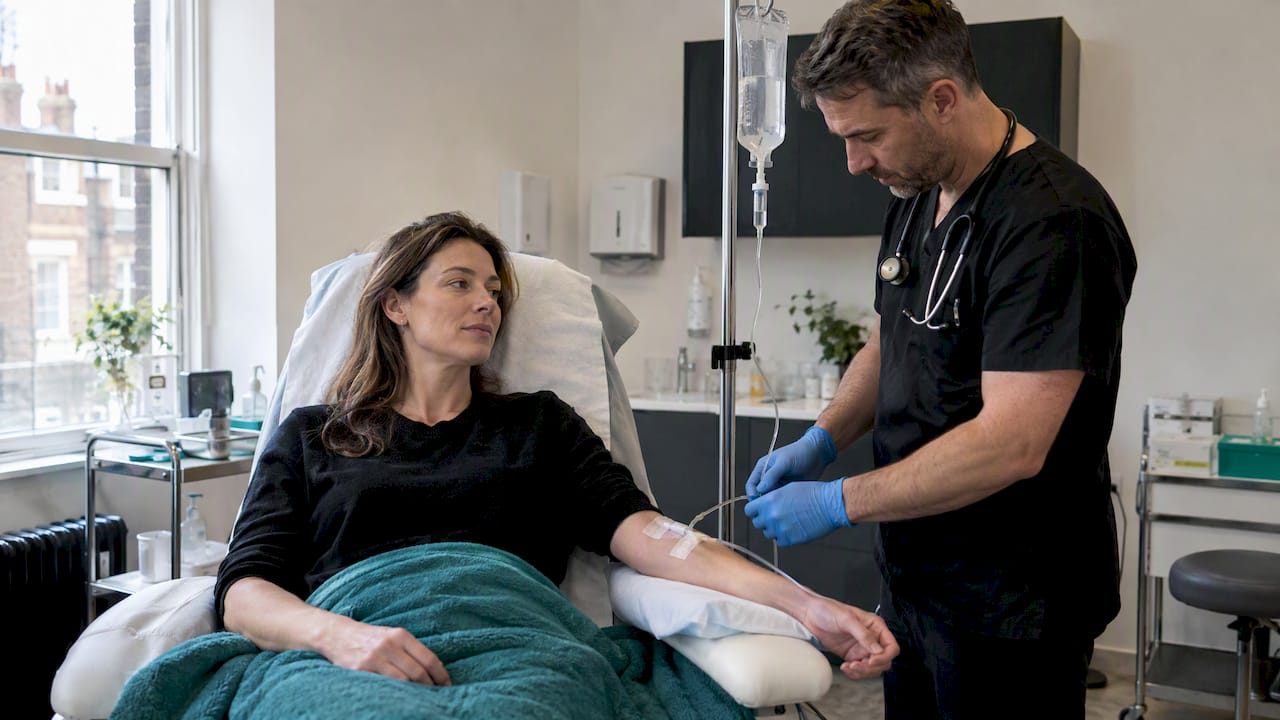

NAD IV therapy is an intravenous infusion intended to raise cellular NAD+ levels, and clinics commonly claim it supports energy, mental clarity and anti-ageing. The evidence behind these claims remains limited, and UK rules treat NAD products as unlicensed specials that require a prescription from an authorised healthcare professional. Before booking, we recommend discussing suitability with a medically qualified prescriber and checking that any clinic can demonstrate clear safety credentials.
TL;DR:
- NAD IV therapy may cause moderate to severe reactions such as nausea, abdominal cramps, or a rapid heartbeat, especially compared to milder effects from NR infusions.
- No NAD IV product has MHRA approval in the UK, so treatments must be legally supplied as unlicensed specials prescribed by a qualified healthcare professional.
- Currently, there is limited high-quality evidence confirming that NAD IV therapy reliably improves energy, cognition, or anti-ageing effects.
- Clinics offering NAD IV should adhere to strict safety standards, including trained staff, emergency protocols, and verified consent, with patients advised to verify these before treatment.
- Proper appointment processes include thorough medical assessments, clear information on infusion times and costs, and baseline blood tests, with overdose or unlicensed sales being red flags.
Table of Contents
- What NAD is and how IV delivery differs from oral supplements
- Claimed benefits versus the clinical evidence
- Safety, side effects and procedural risks
- What to expect during an appointment
- UK regulation and how NAD products are lawfully supplied
- How to decide: a checklist before you book
- Clinic evidence and safety commitments
- A cautious, evidence-led view worth taking seriously
- Medically supervised NAD IV therapy at The Aesthetics Room
- FAQ
- Sources
What NAD is and how IV delivery differs from oral supplements
NAD+ (nicotinamide adenine dinucleotide) is a molecule every cell needs to convert food into usable energy. It also plays a role in DNA repair and activates a family of proteins called sirtuins, which are linked to how cells age and respond to stress. These functions explain why NAD has become a focus for clinics promoting energy and longevity treatments.
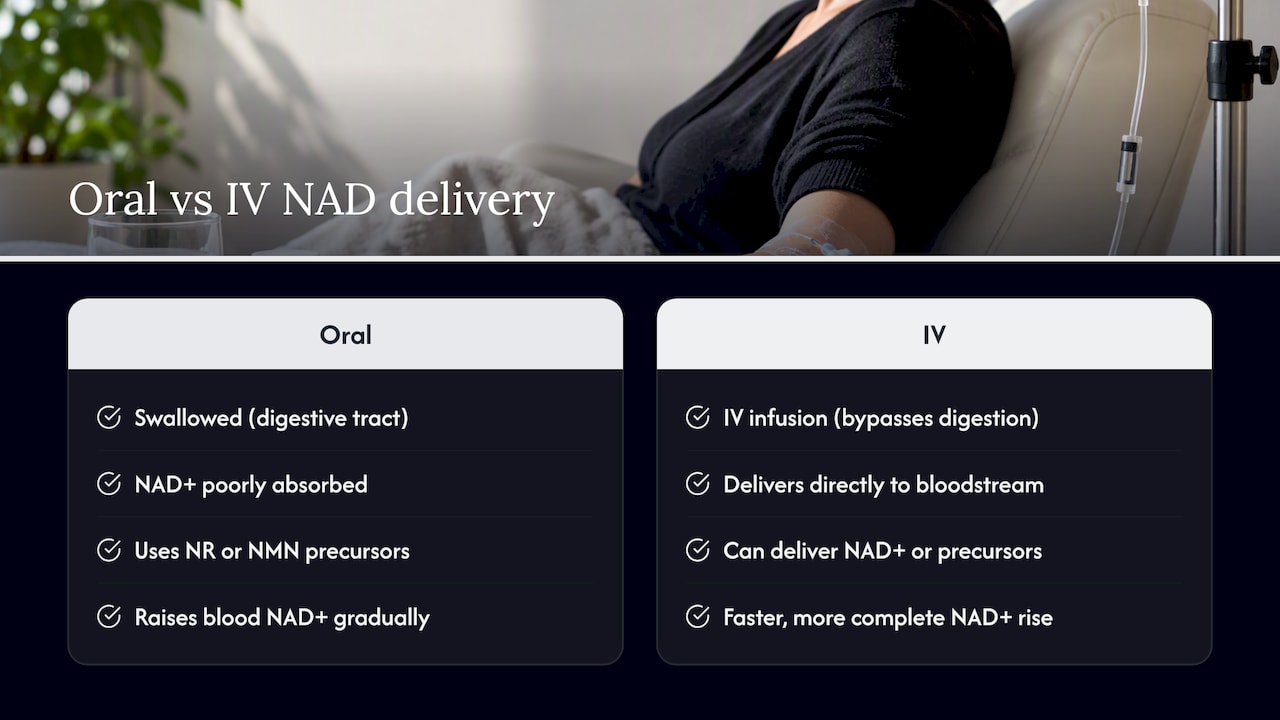
The challenge is getting NAD+ into the body in a form the body can use. Taken orally, NAD+ itself is poorly absorbed, which is why many supplement brands and clinics instead use precursor molecules such as nicotinamide riboside (NR) or nicotinamide mononucleotide (NMN). These precursors can raise whole-blood NAD+ levels gradually over days or weeks once taken consistently, rather than producing an immediate change.
IV administration bypasses the digestive system altogether, delivering NAD+ or a precursor directly into the bloodstream. In theory, this gives a faster and more complete rise in circulating NAD+ than swallowing a tablet. That is the rationale clinics use to justify the treatment: a quicker route to higher NAD+ levels than oral options allow. Whether that translates into a noticeable clinical benefit is a separate question, and one the current evidence has not fully settled.
Claimed benefits versus the clinical evidence
Clinics offering NAD IV therapy typically point to a cluster of benefits:
- Energy and reduced fatigue, framed as a direct result of improved cellular metabolism.
- Sharper focus and mental clarity, often marketed to professionals and those managing demanding schedules.
- Anti-ageing effects, linked to NAD’s role in DNA repair and sirtuin activity.
- Support during addiction recovery, a claim seen in some specialist clinics.
- Faster athletic recovery, aimed at people training intensively.
The research available to date falls well short of proving these claims. Most published data comes from small studies, observational reports or commercial clinic datasets rather than large randomised, placebo-controlled trials with defined clinical endpoints. A 2026 retrospective tolerability study comparing NAD+ IV infusions with NR IV infusions over a four-day course gives useful real-world detail on how people respond to the two approaches, but it was designed to assess tolerability and safety signals rather than to confirm benefits for energy, cognition or longevity.
What would count as persuasive proof is clear: randomised trials with a placebo arm, pre-registered outcomes, and measurable clinical endpoints rather than self-reported wellbeing scores. Until that evidence exists, the honest position is that NAD IV therapy may offer a subjective lift for some people, but it is not an established or guaranteed treatment for fatigue, cognitive decline or ageing.
Safety, side effects and procedural risks
Infusion reactions differ by product. The 2026 tolerability study found that NAD+ IV infusions were associated with more moderate to severe reactions, including nausea, abdominal cramping and a faster heart rate, compared with NR IV infusions, which tended to produce milder effects. Neither product showed clinically significant short-term changes in liver enzymes in that dataset, though it remains a relatively small, real-world sample rather than a controlled trial.
Beyond the specific reactions to NAD or NR, any IV procedure carries general risks that have nothing to do with the infused substance itself:
- Infection at the cannula site if aseptic technique is not followed correctly.
- Extravasation, where fluid leaks into surrounding tissue instead of the vein.
- Air embolus, a rare but serious risk if air enters the line.
- Anaphylaxis or another acute allergic reaction to the infused product.
NHS trust IV administration policies set out the standards that manage these risks: trained, competency-assessed staff, controlled preparation environments, and monitoring throughout the infusion. A reputable clinic should be able to show the same standard applies to any NAD IV service it offers, including visible monitoring equipment and a documented emergency protocol.
Pro Tip: Ask whether the clinic can show you its emergency protocol before you consent to treatment: a straight answer with specifics is a good sign, hesitation is not.
What to expect during an appointment
A proper NAD IV appointment starts before the needle goes in. Expect a consultation covering your medical history, current medication and reasons for seeking treatment, with written consent and any relevant preliminary assessments.
- Infusion length varies significantly by product: the same 2026 study recorded average infusion times of around 97 minutes for NAD+ over a four-day course, compared with around 37 minutes for NR.
- Slower infusion rates for NAD+ are a deliberate choice by clinics, used to reduce the risk of the moderate to severe reactions noted above.
- You should be monitored throughout, with staff checking for signs of discomfort or an adverse reaction.
- Afterwards, most people can resume normal activities fairly quickly, though any noticeable change in energy or focus, if it occurs at all, tends to build gradually across a course of sessions rather than appearing after a single visit.
Our IV therapy overview covers how this fits within a wider aesthetic and wellbeing setting.
UK regulation and how NAD products are lawfully supplied
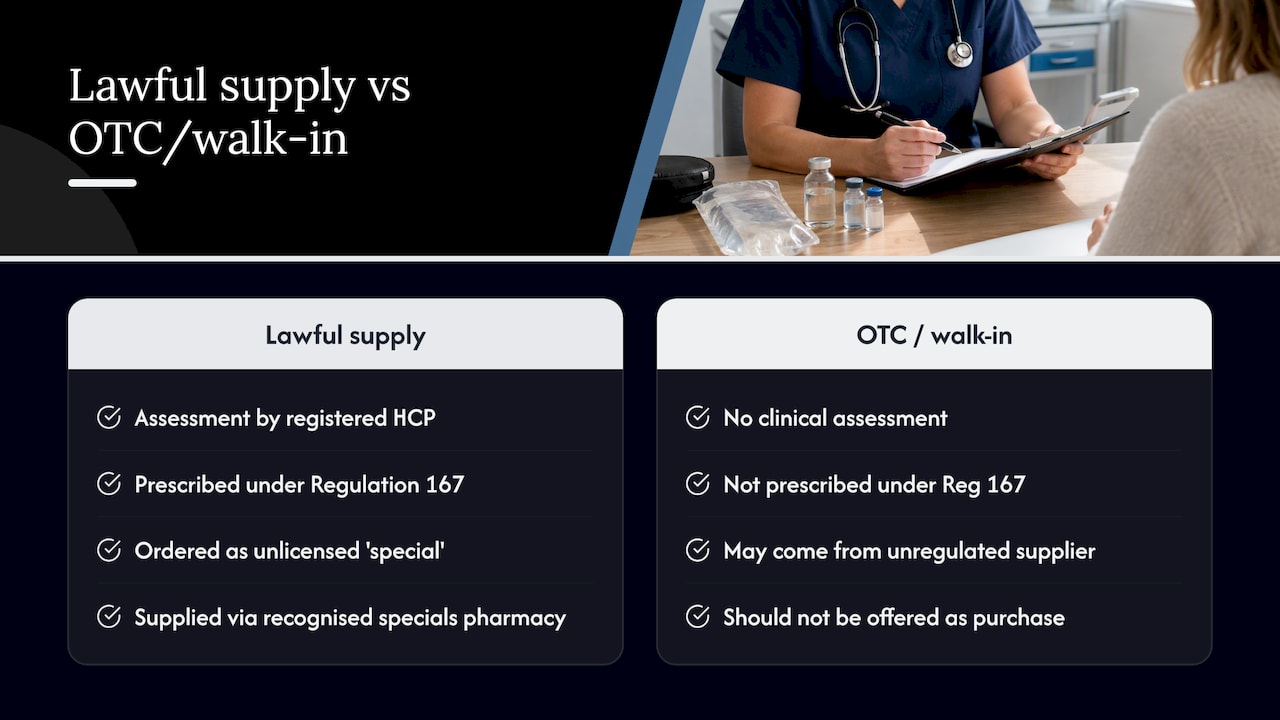
No NAD+ IV product currently holds MHRA marketing authorisation in the UK. That means any NAD preparation offered in a clinic must be supplied as an unlicensed ‘special’, ordered under Regulation 167 of the Human Medicines Regulations 2012 by a registered healthcare professional who has assessed the individual patient.
For the patient, this means NAD IV therapy should never be offered as an over-the-counter purchase or a walk-in treatment without clinical assessment. A genuine prescriber must judge that the treatment is clinically justified for you specifically, and the product must come through a recognised specials pharmacy rather than an unregulated supplier.
Advertising is governed separately. The Advertising Standards Authority expects robust, methodologically sound clinical evidence before a clinic can make specific health claims about IV nutritional therapies, and it has previously ruled against unsubstantiated claims in this space. A clinic that promises guaranteed anti-ageing or energy results without qualifying the evidence is stepping outside what regulators consider acceptable marketing.
How to decide: a checklist before you book
Before booking NAD IV therapy anywhere, work through a short checklist:
- Confirm the clinic is CQC registered and ask who the prescriber is, including their professional registration.
- Ask whether the product is NAD+ or an NR-based formulation, since tolerability and infusion time differ between the two.
- Request details of concentration, infusion time and the number of sessions typically recommended.
- Check whether baseline blood tests are offered or required before treatment begins.
- Ask about cost per session and the total cost of any recommended course before committing.
Watch for red flags too: a clinic that promises a cure for fatigue or ageing, has no named prescriber, keeps no written treatment records, or pressures you to book immediately is not operating to the standard the specials framework requires. Our guide to IV vitamin therapy benefits sets out further questions worth asking any provider.
Clinic evidence and safety commitments
The Aesthetics Room is registered with the CQC and is a member of the ACE Group, both of which signal independent oversight of patient safety standards. Consultations are doctor-led, with documented consent, emergency readiness and structured aftercare built into every appointment. You can read more about what CQC registration does and does not guarantee, and book a consultation to discuss whether a medical prescription for NAD IV therapy is appropriate for you.
A cautious, evidence-led view worth taking seriously
The honest position on NAD IV therapy is that safety and evidence should lead every decision, not marketing language. Use the checklist above, and speak to an authorised prescriber before you commit to a course.
— Vishul
Medically supervised NAD IV therapy at The Aesthetics Room
Choosing where to have NAD IV therapy matters as much as deciding whether to try it. At The Aesthetics Room, every IV treatment sits within a doctor-led consultation process, with CQC-backed governance and documented consent rather than a quick walk-in service. You can read more about our NAD drip benefits and safety approach before you book.
- A doctor-led consultation to assess whether NAD IV therapy is clinically appropriate for you.
- Transparent information on what any unlicensed special requires before it can be supplied.
- Aftercare guidance so you know what to expect once the infusion is complete.
Browse our full price list to see our current treatments, or get in touch to arrange a consultation and find out whether a prescription for NAD IV therapy is right for you.
This article is general information, not a substitute for advice from a qualified doctor. Consult a qualified healthcare professional about your own circumstances before acting on anything here.
FAQ
Does NAD IV therapy really work?
Some people report feeling more energised after NAD IV therapy, but robust, placebo-controlled evidence for lasting benefits is limited. A 2026 real-world study looked at tolerability rather than proving benefit, so claims of guaranteed results are not supported by current research.
Is NAD legal in the UK?
NAD+ IV products have no MHRA marketing authorisation, so they can only be supplied lawfully as an unlicensed special ordered by a registered healthcare professional for a specific patient. It is not something that can be legally sold or administered without that clinical oversight.
Is NAD similar to Ozempic?
No. NAD IV therapy targets cellular energy metabolism and is marketed for fatigue, cognition and anti-ageing, while medicines like Ozempic work through a completely different mechanism aimed at blood sugar control and appetite regulation. They are not interchangeable and are not prescribed for the same purpose.
What is NAD in IV therapy?
NAD, or NAD+, is a molecule every cell uses to produce energy and support DNA repair. In IV therapy, it is delivered directly into the bloodstream rather than taken as a tablet, since NAD+ itself is poorly absorbed through the digestive system.
How is NAD IV therapy different from an over-the-counter NAD booster?
An over-the-counter product, such as a commercial NAD booster supplement, is taken orally and absorbed gradually, with no clinical oversight involved. NAD IV therapy is delivered intravenously under medical supervision and, in the UK, must be supplied as an unlicensed special prescribed for that individual.
Sources
- Gov
- Intravenous infusion of NAD+ versus NR: a retrospective tolerability pilot study (Frontiers / PMC)
- Advertising Standards Authority guidance: healthcare intravenous nutritional therapy
- IV medicine and flush administration policy (Right Decisions / NHS guidance)