
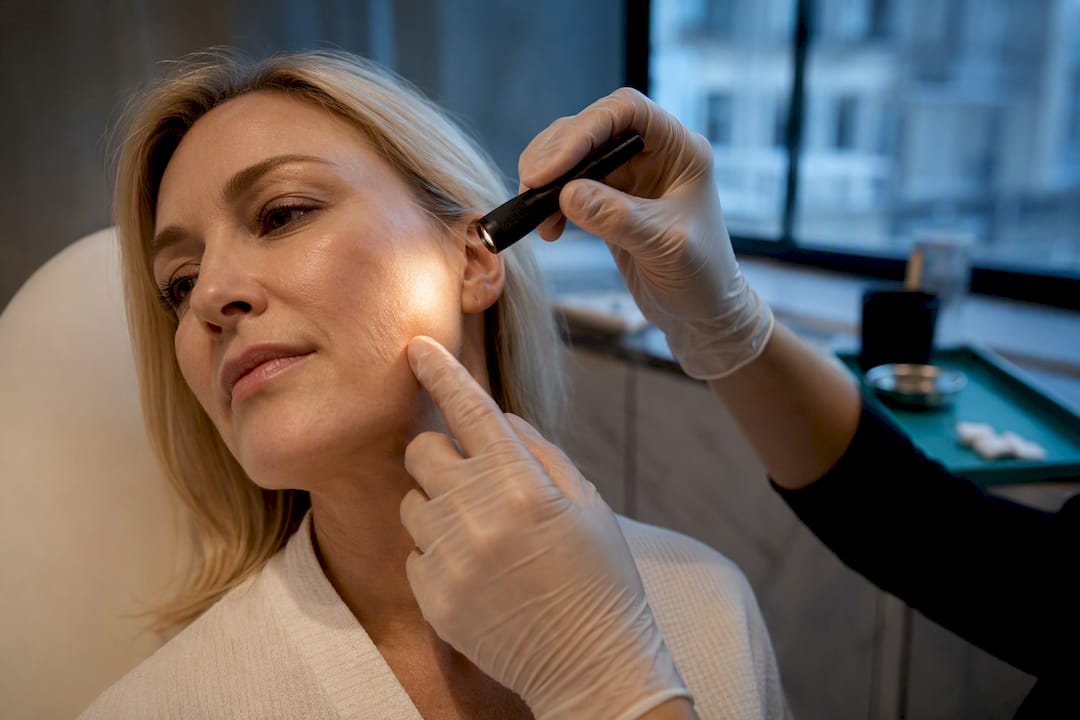

Most reactions to dermal fillers are mild and settle within days: redness, swelling, bruising, and tenderness at the injection site. Serious complications, including vascular occlusion and infection, are rare but time-critical. If you notice severe pain, skin discolouration, blistering, or sudden visual changes, seek urgent medical help immediately. For hyaluronic acid fillers, hyaluronidase can often reverse the product and resolve the emergency.
TL;DR:
- Swelling occurs in up to 87% of patients and is influenced by injection technique, hydrophilic properties of the filler, and treatment area.
- Severe complications like vascular occlusion require immediate recognition and treatment with hyaluronidase within hours to prevent tissue necrosis or vision loss.
- Late-onset nodules, granulomas, or migration often appear weeks or months after treatment and may need specialized diagnosis and intervention, including ultrasound assessment.
- A proper consultation should involve verifying practitioner expertise, product traceability, and clear emergency protocols to minimize risks.
- Choosing a CQC-accredited clinic ensures adherence to safety protocols such as on-site hyaluronidase availability and documented treatment procedures.
Table of Contents
- Common filler side effects: what to expect and how to manage them
- What are the rare but serious filler complications?
- How long do filler side effects last?
- How are filler complications treated?
- How can you reduce your risk before treatment?
- What should you cover before treatment starts?
- What does a CQC-accredited clinic do differently?
- Why the safety conversation around fillers needs to change
- Book a filler consultation with a CQC-accredited clinic
- Sources
- FAQ
Common filler side effects: what to expect and how to manage them
Almost everyone who has dermal filler experiences some form of injection-site reaction. This is not a sign that something has gone wrong. It’s the expected biological response to a needle passing through skin and tissue.
The most frequently reported effects include:
- Redness at the injection points, usually fading within a couple of days
- Swelling, which can range from barely noticeable to quite pronounced depending on the area treated
- Bruising, particularly around the lips, under-eye area, and anywhere with thinner skin
- Tenderness or mild soreness when the area is touched
- Itching, especially as swelling begins to subside
- Small, temporary lumps or bumps, which usually smooth out as the product settles
One study on Restylane injections found swelling in up to 87% of patients. Many clinicians now treat a degree of oedema as an expected part of the healing process rather than a complication to be alarmed by. That figure surprises a lot of people, who assume swelling only happens when something has gone wrong. In reality, it’s more common than not.
Technique plays a bigger role in swelling severity than most patients realise. The way a practitioner injects, including how much product they use, how fast they inject it, and whether they fan the needle across a wider area, all affect how much oedema you’re likely to see afterwards. Some fillers are also more hydrophilic than others, meaning they attract more water into the tissue, which is why areas like the tear troughs tend to swell more noticeably than firmer areas such as the jawline.
So what can you actually do about it? Aftercare for these common effects is straightforward:
- Apply cold packs to the treated area for short periods during the first day or two
- Avoid alcohol, strenuous exercise, and excessive heat (saunas, hot showers) for a short period after treatment
- Take paracetamol if needed for discomfort, and avoid aspirin or ibuprofen unless cleared by your practitioner, since these can increase bruising
- Sleep with your head slightly elevated if the treated area is on your face
- Avoid touching, massaging, or applying makeup to the area for the first 24 hours unless instructed otherwise
Pro Tip: Ice packs make you more comfortable, but the evidence for them actually reducing swelling volume is limited. Use them for comfort, not as a guaranteed fix for puffiness.
Contact your practitioner if swelling worsens after the initial phase rather than improving, if bruising spreads significantly, or if you notice asymmetry that doesn’t resolve within a week or two. Our dermal filler aftercare guide covers day-by-day expectations in more detail if you want a fuller picture before treatment.
What are the rare but serious filler complications?
The reactions above account for the overwhelming majority of what people experience after filler. But a small number of complications fall into a different category entirely: rare, sometimes serious, and occasionally requiring emergency treatment.
Vascular occlusion happens when filler is accidentally injected into or compresses a blood vessel, cutting off blood supply to the surrounding tissue. This is the complication practitioners worry about most, because the consequences escalate quickly if it isn’t caught and treated within hours.
Warning signs of vascular occlusion include:
- Skin that turns unusually pale, white, or dusky in colour
- Pain that’s disproportionate to what you’d expect from the injection itself
- A mottled, lace-like (livedo or reticulated) pattern appearing on the skin
- Skin that feels cold to the touch compared to surrounding areas
- Delayed capillary refill, where pressing the skin doesn’t restore colour quickly
If the arterial supply to tissue is compromised and not restored promptly, the result can be skin necrosis, meaning tissue death, or in the most severe cases involving vessels near the eye, vision loss. This is why prompt recognition and treatment of vascular occlusion is considered a genuine emergency in aesthetic medicine, not something to “wait and see” about. The window for reversing arterial compromise is narrow, often measured in hours rather than days.
Certain treatment areas carry higher inherent risk. The nose, glabella (the area between your eyebrows), and periocular region (around the eyes) all have dense, interconnected blood vessel networks with limited alternative routes for blood flow if one vessel becomes blocked. Filler in these areas demands more caution and, frankly, more experience from the injector.
Beyond vascular events, other rare complications include:
- Infection, ranging from mild localised infection to biofilm formation, where bacteria form a protective layer around the filler that can cause low-grade inflammation for weeks or months
- Delayed granulomas, inflammatory nodules that can appear weeks, months, or even years after treatment, often triggered by minor trauma, illness, or an immune response to the filler material
- Allergic reactions, which are uncommon with modern hyaluronic acid products but can occur
Pro Tip: If you notice a lump appearing months after treatment that wasn’t there before, particularly if it’s warm, tender, or growing, don’t assume it’s “just old filler settling.” Late-onset nodules can indicate a low-grade infection or granuloma and are worth a professional review.
Understanding these risks isn’t meant to frighten you away from treatment. It’s meant to help you recognise the difference between a normal bruise and something that needs immediate attention, which is exactly the distinction that saves skin and, in the rarest cases, sight.
How long do filler side effects last?
Knowing what to expect at each stage helps you judge whether your recovery is following a normal path or whether something needs a second look.
-
Immediate phase (0 to 48 hours). This is when swelling and bruising typically peak. Redness and tenderness are at their most obvious here, and mild asymmetry is common because swelling doesn’t always distribute evenly. Most people can return to normal daily activities, though visible bruising may mean avoiding social events for a day or two.
-
Early phase (3 to 14 days). Swelling and bruising steadily reduce during this window. Lumps or areas of firmness usually begin to soften as the product integrates with surrounding tissue and any residual fluid resolves. If a lump is still hard, tender, or clearly visible at the two-week mark, it’s reasonable to book a review with your practitioner rather than assuming it will simply disappear.
-
Late phase (beyond 14 days). This is where late-onset nodules, granulomas, and filler migration can appear. Filler migration, where product shifts away from the original injection site, often happens gradually and is more common with overfilling, poor technique, or using a product not suited to the treatment area. Late nodules that appear weeks or months after treatment warrant assessment, sometimes including ultrasound imaging, to determine whether they’re inflammatory, infective, or simply a firm pocket of product.
Our guide on lip filler swelling timelines breaks this down further for lip-specific treatment, where swelling patterns can look more dramatic than other facial areas even when everything is progressing normally.
How are filler complications treated?
The right treatment depends entirely on what’s actually happening, which is why an accurate diagnosis matters more than a quick fix.
For vascular occlusion involving hyaluronic acid fillers, hyaluronidase is the frontline treatment. This enzyme dissolves the hyaluronic acid, relieving pressure on the compressed vessel and restoring blood flow. Speed matters enormously here. A practitioner who suspects occlusion should administer hyaluronidase promptly rather than waiting to see if symptoms improve on their own, and clinical guidance is unambiguous that this is not a “monitor and wait” situation.
For infection, treatment typically starts with oral or, in more serious cases, intravenous antibiotics. If an abscess has formed, incision and drainage may be necessary. Established biofilm infections can be more stubborn and occasionally require removal of the filler material itself alongside antibiotic therapy.
For inflammatory nodules and granulomas, treatment often involves corticosteroid injections directly into the nodule to calm the immune response, sometimes combined with other immunomodulating medications for more persistent cases. Where the swelling is caused by hyaluronic acid filler itself rather than pure inflammation, hyaluronidase can also help dissolve the underlying product.
- Hyaluronidase: dissolves HA filler, used for occlusion, overcorrection, or lumps
- Antibiotics: oral or IV depending on severity, for suspected infection
- Steroid injections: for inflammatory nodules and granulomas
- Incision and drainage or debridement: for abscesses or significant infection
- Surgical removal: occasionally needed for permanent filler complications, since these products can’t be dissolved with hyaluronidase
Permanent fillers deserve a specific mention here. Unlike hyaluronic acid, they can’t simply be dissolved if something goes wrong. Case reports involving permanent filler complications describe patients presenting to specialist NHS craniofacial services years after treatment, sometimes requiring surgical intervention to manage long-term sequelae. This unpredictability is a significant part of why many clinicians now favour reversible hyaluronic acid products over permanent alternatives.
Pro Tip: If your practitioner suspects vascular occlusion, referral to ophthalmology or emergency services should happen immediately, not “if it doesn’t improve tomorrow.” Any sudden visual disturbance following filler, particularly around the nose or between the eyebrows, is a genuine emergency requiring same-day assessment.
How can you reduce your risk before treatment?
Prevention starts long before the needle touches your skin, with the choices you make about who treats you and what they use.
Start with the practitioner. There’s no legal requirement in the UK for someone injecting filler to be a doctor, which means the burden of verifying competence often falls on the patient. Ask directly about their training level, how many years they’ve been injecting, and whether they undergo regular auditing or peer review. A practitioner confident in their skills won’t dodge these questions.
Product matters just as much as the person administering it. Always ask to see the product packaging and batch number before treatment, and confirm the filler is CE-marked as a medical device. Because fillers are classified as medical devices rather than prescription medicines, their supply chain works differently, which makes sourcing from authorised distributors especially important for safety.
Look for these signs of a properly run clinic:
- Clear infection-control protocols, including single-use needles and proper skin preparation
- Immediate on-site availability of hyaluronidase in case of emergency
- A documented emergency escalation protocol, not just a vague assurance that “we’ll sort it out”
- A follow-up policy that includes checking in after treatment, not just after payment clears
Certain red flags should make you walk away entirely: prices that seem too low to cover proper training and product costs, a practitioner who skips your medical history, no written consent form, or reluctance to show you product packaging and batch details. These aren’t minor inconveniences to overlook. They’re signals about how seriously the provider takes patient safety.
Professional standards guidance recommends full traceability of every product used, meaning the batch number, product name, and manufacturer should be documented and available to you on request. A clinic that can’t or won’t provide this information isn’t meeting the basic standard the aesthetics industry has set for itself.
Our guide to choosing a dermal filler clinic in London walks through these checks in more depth, including specific questions worth asking at consultation.
What should you cover before treatment starts?
A thorough consultation is where most risk gets managed, long before any injection happens. Skipping this stage, or having it rushed, is one of the clearest warning signs of a clinic cutting corners.
-
Disclose your full medical history. Tell your practitioner if you’re pregnant, breastfeeding, taking anticoagulants, managing an autoimmune condition, or have had recent dental work or an active infection anywhere in your body. Each of these can affect either your safety or how well the filler settles.
-
Ask about product identification. Request the brand name, batch number, and confirmation that the product is CE-marked. A responsible practitioner will show you the packaging without hesitation.
-
Request baseline photographs. These give both you and your practitioner an objective reference point to assess results and, if needed, investigate any later concerns.
-
Have a proper consent conversation. This should cover realistic outcomes for your specific concern, alternative treatment options, expected recovery timeline, and clear emergency contact details should something feel wrong afterwards.
-
Know when treatment should be postponed. Active skin infections, unmanaged autoimmune flare-ups, pregnancy, and breastfeeding are all situations where a responsible practitioner should recommend waiting rather than proceeding.
Our page on dermal fillers: what to know first covers additional groundwork worth reviewing before your appointment, particularly if this is your first time considering treatment.
What does a CQC-accredited clinic do differently?
Safety in aesthetic medicine isn’t a marketing phrase. It’s a set of specific, repeatable protocols that either exist or don’t.
A CQC-accredited clinic typically adheres to strict safety protocols and some clinics hold membership with the ACE Group, a professional body dedicated to managing aesthetic complications safely. In practice, this translates into product traceability for every treatment, documented consent at every stage, and hyaluronidase kept on-site for immediate use if a vascular event were ever suspected.

One case highlight illustrates why this matters: a patient presenting with visible, asymmetric lip filler migration months after treatment elsewhere was assessed, had the underlying hyaluronic acid product dissolved, and received a corrected treatment plan once swelling and displacement had fully resolved. The details here are necessarily general rather than identifying, but the pattern reflects a broader truth about complications: they’re manageable when caught early by someone who knows what they’re looking at, and considerably harder to reverse the longer they go unaddressed.
Why the safety conversation around fillers needs to change
The conventional advice on filler safety focuses almost entirely on the product, whether it’s hyaluronic acid or something else, how it’s marketed, how “natural” it looks in before-and-after photos. That misses the point. The evidence consistently points to practitioner skill and clinic protocol as the real determinants of risk, not the syringe’s contents alone.
What gets underestimated is how much power sits with the patient before treatment even starts. Asking to see a batch number, asking how many years someone has been injecting, asking whether hyaluronidase is on-site: these aren’t awkward questions. They’re the exact questions a competent practitioner expects and welcomes.
If there’s one thing worth prioritising above all else, it’s this: treat the consultation as seriously as the treatment itself. A rushed fifteen-minute chat before you’re injected is not a consultation. It’s a missed opportunity to catch the handful of situations, an unmanaged medical condition, an unsuitable product, a practitioner without the right training, where real harm tends to originate.
— Vishul
Book a filler consultation with a CQC-accredited clinic
Everything covered above points to one conclusion: outcomes come down to the practitioner and the protocol behind them, not just the product. Some clinics offer evidence-based dermal filler treatments with documented safety protocols at every stage, from product traceability through to aftercare.

A thorough consultation typically includes a full assessment of your goals and medical history, an open discussion of which product suits your anatomy and desired outcome, a proper consent process covering realistic expectations and recovery, and a personalised aftercare plan you leave with in writing. Nothing is rushed, and nothing is assumed. If you’re ready to move forward with a provider that treats consultation as seriously as treatment, explore Theaestheticsroom’s dermal filler service and book your consultation directly online.
Sources
This article draws on peer-reviewed clinical reviews and established UK professional guidance, including:
- Review of the adverse effects associated with dermal filler treatments: Part I
- British Cosmetic Dermatology Group — dermal filler risks and guidance
- NHS guidance — choosing who will do your cosmetic procedure
- ACE Group — management of oedema guidance
For any concern specific to your situation, consult a qualified practitioner directly, and attend emergency services immediately for any symptom suggesting vascular compromise or sudden vision changes.
This article is general information, not a substitute for advice from a qualified doctor. Consult a qualified healthcare professional about your own circumstances before acting on anything here.
FAQ
What are the long-term side effects of fillers?
For hyaluronic acid fillers, long-term issues are uncommon and usually limited to late-onset nodules, granulomas, or migration, most of which respond to hyaluronidase. Permanent fillers carry a higher long-term risk, with case reports describing complications persisting for years and sometimes requiring surgical correction.
Why are people moving away from fillers?
Growing awareness of complications like migration, granulomas, and the difficulty of reversing permanent products has pushed both patients and practitioners toward more cautious use of hyaluronic acid fillers, valued specifically because they can be dissolved if something goes wrong.
Who should avoid fillers?
Filler is generally not advised during pregnancy or breastfeeding, and treatment should be deferred if you have an active infection, an unmanaged autoimmune condition, or are taking anticoagulant medication without medical clearance. A proper consultation should always screen for these factors before treatment proceeds.
Does filler age you over time?
Poor technique, overfilling, or repeated treatment without adequate recovery time can lead to filler migration or a stretched, less natural appearance over the years, but this reflects technique and product choice rather than an inevitable effect of filler itself. Choosing an experienced practitioner and a sensible treatment plan is the strongest safeguard against this outcome.
What’s the first sign that filler has gone wrong?
Disproportionate pain, skin that turns pale or dusky, or a mottled discolouration pattern near the injection site are the earliest warning signs of vascular occlusion and require urgent same-day assessment, not a wait-and-see approach.