
Over 900,000 British residents underwent non-surgical cosmetic treatments last year, yet many people overlook the crucial first days of aftercare that shape their final results. Good aftercare after dermal fillers can mean the difference between glowing confidence and unwanted side effects. This guide brings you clear, step-by-step instructions on how to navigate each stage safely so your skin stays healthy, comfortable, and vibrant.
Table of Contents
- Step 1: Prepare for Immediate Aftercare Post-Procedure
- Step 2: Apply Essential Care Techniques at Home
- Step 3: Manage Swelling and Discomfort Safely
- Step 4: Avoid Common Aftercare Mistakes
- Step 5: Monitor Progress and Seek Professional Advice
Quick Summary
| Key Insight | Explanation |
|---|---|
| 1. Immediate Care is Crucial | Avoid touching the treated areas and gently apply a cool compress to reduce swelling and support healing immediately after treatment. |
| 2. Minimal Skincare for 24 Hours | Skip makeup and harsh products for the first day to allow your skin to recover naturally without interference. |
| 3. Stay Hydrated and Upright | Drink plenty of water and stay upright for at least four hours after treatment to facilitate proper settling of the filler. |
| 4. Monitor Symptoms Closely | Keep track of recovery symptoms like swelling or bruising and consult your practitioner for any unusual changes or concerns. |
| 5. Avoid Common Aftercare Mistakes | Be mindful of aftercare instructions, including avoiding extreme temperatures and certain medications, to ensure a successful recovery. |
Step 1: Prepare for Immediate Aftercare Post-Procedure
Navigating the first few hours after your dermal filler treatment requires strategic care to support optimal healing and maintain your stunning results. Your immediate aftercare plan will significantly influence how quickly and smoothly you recover, minimising potential complications and ensuring your skin looks radiant.
Immediately following your procedure, avoid touching or pressing the treated areas. Your skilled practitioner will have carefully placed hyaluronic acid fillers with precision, and unnecessary contact could disrupt the product’s placement or introduce bacteria. Apply a cool compress gently to reduce potential swelling, using a clean soft cloth for no more than 10 minutes at a time. Proper skin protection helps prevent unnecessary inflammation and supports your skin’s natural healing mechanisms.
Stay upright for at least 4 hours post treatment to allow the dermal filler to settle correctly. This means avoiding lying down flat or engaging in strenuous activities that might increase blood flow to the face. Hydration is crucial during this period drink plenty of water and avoid alcohol or intense heat such as saunas or hot showers which could impact the filler’s integration.
Expert Tip: Keep your skincare routine minimal for the first 24 hours. Skip makeup, avoid harsh skincare products, and let your skin rest and recover naturally.
Step 2: Apply Essential Care Techniques at Home
Now that your dermal filler treatment is complete, establishing a thoughtful home care routine becomes crucial for maintaining your results and supporting your skin’s healing process. Your at-home care will help protect the investment you have made in your aesthetic treatment and promote optimal recovery.
Gentle skincare is paramount during the first few days post procedure. Skin healing strategies recommend avoiding direct sunlight and using mineral based sunscreen with at least SPF 30 if you must go outside. Clean your face with lukewarm water and a mild, fragrance free cleanser recommended by your aesthetic practitioner. Pat your skin dry with a soft clean towel instead of rubbing, which could potentially disrupt the filler placement or cause unnecessary irritation.
Manage potential side effects by keeping the treated area cool and calm. Slight swelling or bruising is normal and can be minimised by applying a cold compress intermittently. Stay hydrated by drinking plenty of water and avoid alcohol and strenuous exercise for at least 24 to 48 hours. This allows your body to heal and the dermal filler to settle correctly into the targeted areas.
Expert Tip: Keep a clean, soft pillow case on hand and consider sleeping slightly elevated to reduce potential swelling and support optimal healing during the first nights after your treatment.

This table provides a reference guide to care products suitable after dermal filler treatments:
| Product Type | Safe to Use Post-Treatment | Avoid Post-Treatment |
|---|---|---|
| Cleanser | Mild, fragrance free | Scrubs, products with alcohol |
| Moisturiser | Simple, gentle formula | Strong actives, retinoids |
| Sunscreen | Mineral-based SPF 30+ | Chemical, fragranced options |
| Makeup | After 24 hours, minimal | Within first 24 hours |
Step 3: Manage Swelling and Discomfort Safely
After your dermal filler treatment, understanding how to effectively manage post procedure swelling and discomfort will ensure a smooth recovery and maintain the quality of your aesthetic results. Your body needs gentle care and strategic management during the initial healing phase.
Recovery protocols for dermal fillers recommend specific techniques to minimise inflammation and support healing. Apply a cool compress to the treated area for 10 to 15 minutes each hour during the first day to reduce swelling and provide natural pain relief. Use a soft clean cloth and avoid applying direct pressure or excessive coldness that might shock the skin. Select a clean compress that has been refrigerated rather than frozen to prevent potential tissue damage.
Pay close attention to your body’s signals during recovery. Slight bruising and tenderness are normal responses to the treatment. Avoid taking anti inflammatory medications without consulting your aesthetic practitioner as some can increase bruising risk. Wear loose comfortable clothing that does not press against treated areas and maintain a calm environment to support your skin’s natural healing mechanisms.
Expert Tip: Keep a detailed recovery journal noting any unusual symptoms or changes in the treated area to discuss with your practitioner during follow up consultations.
Here is a summary comparing common post-dermal filler symptoms and when to seek professional advice:
| Symptom | Normal Response | Requires Professional Advice |
|---|---|---|
| Mild swelling | Lasts 1-3 days | Severe or persistent beyond 1 week |
| Mild bruising | Fades gradually within a week | Expanding or very dark bruises |
| Redness at injection site | Temporary, resolves in hours | Increasing redness or warmth |
| Tenderness | Slight discomfort for a few days | Sharp pain, heat, or hard nodules |
| Asymmetry | Minor, should improve quickly | Worsens after 48 hours or with severe swelling |
Step 4: Avoid Common Aftercare Mistakes
Preventing potential complications after your dermal filler treatment requires understanding the most frequent missteps clients unintentionally make during their recovery. Your informed approach can significantly impact the longevity and quality of your aesthetic results.
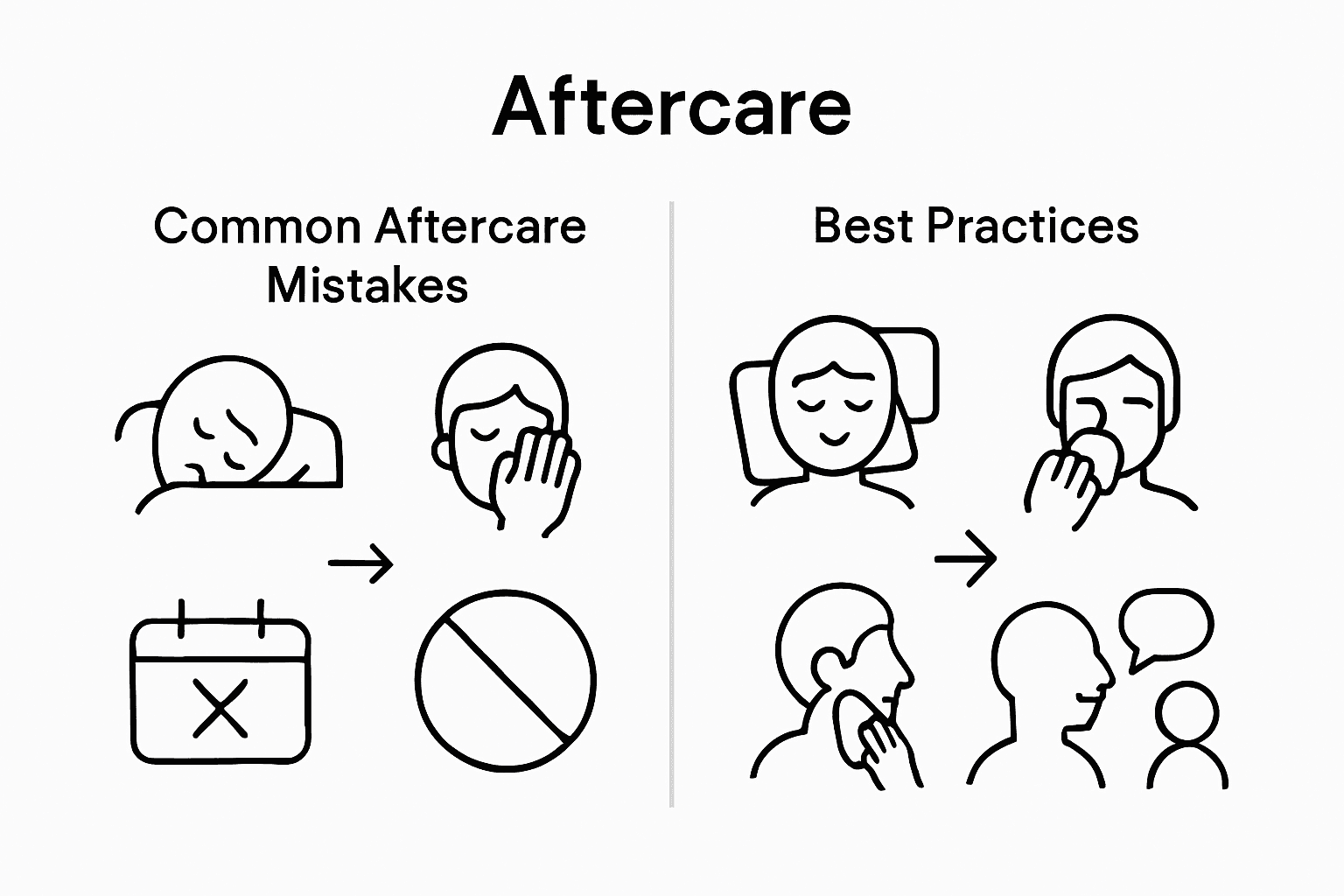
One critical mistake many individuals make is underestimating the importance of precise aftercare instructions. Patient safety guidelines emphasise avoiding extreme temperatures and vigorous activities that could compromise your treatment. This means steering clear of hot saunas, intense workouts, and direct sun exposure for at least 48 hours post procedure. Your newly placed dermal fillers need a calm environment to settle correctly and integrate seamlessly with your natural facial tissues.
Another common error is neglecting to communicate with your aesthetic practitioner about existing health conditions or medications. Some supplements like vitamin E or omega 3 fatty acids can increase bruising potential, while certain medications might interact unexpectedly with the healing process. Always disclose your full medical history and current medication regime to ensure a safe and smooth recovery. Remember that transparency with your practitioner is key to achieving optimal aesthetic outcomes.
Expert Tip: Create a dedicated recovery space at home with clean, soft towels, a gentle cooling compress, and a list of your practitioner’s contact details to manage any unexpected concerns quickly and effectively.
Step 5: Monitor Progress and Seek Professional Advice
Tracking your dermal filler recovery requires careful observation and proactive communication with your aesthetic practitioner. Understanding the nuanced healing process empowers you to recognise normal recovery patterns and identify any potential concerns that might require professional intervention.
Documenting your healing journey through systematic observations is critical. Clinical recovery monitoring recommends maintaining a detailed recovery journal noting specific changes in swelling, bruising, symmetry, and overall treatment area appearance. Take clear photographs from multiple angles under consistent lighting to help track subtle changes. Pay close attention to any unexpected sensations like persistent pain, unusual firmness, asymmetrical swelling, or skin discolouration that deviates from your practitioner’s initial recovery predictions.
Establish clear communication channels with your aesthetic professional during the recovery period. Schedule a follow up consultation approximately two weeks post treatment to review your healing progress. Prepare a comprehensive list of observations including any concerns or questions about your recovery. Your practitioner can assess whether the healing trajectory matches expected outcomes and provide personalised guidance if any adjustments are necessary.
Expert Tip: Set smartphone reminders for your follow up appointment and keep all relevant treatment documentation easily accessible to facilitate a thorough and efficient consultation.
Elevate Your Dermal Filler Experience with Expert Aftercare Support
Achieving flawless results from dermal filler treatments goes beyond the procedure itself. As this guide outlines, meticulous aftercare plays a crucial role in managing swelling, preventing complications, and ensuring your natural beauty shines through. At The Aesthetics Room, we understand the pain points of uncertain recovery and the desire for personalised care that respects your unique skin needs and lifestyle.
Discover our specialised Dermal Fillers treatments backed by professional advice and a caring team dedicated to your safety and satisfaction. Whether you need guidance on gentle recovery protocols or want to explore complementary Skin Treatments to enhance your results, our clinic in London’s prestigious Knightsbridge area offers bespoke solutions tailored just for you.

Take the next step towards confident, radiant skin with trusted experts who prioritise your wellbeing and beautiful outcomes. Book your personalised consultation today through The Aesthetics Room and let us help you maintain and elevate your dermal filler results with safe, effective aftercare and advanced aesthetic treatments.
Frequently Asked Questions
What should I do immediately after my dermal filler treatment?
To optimise your results, avoid touching or pressing the treated areas for at least a few hours. Instead, apply a cool compress gently for up to 10 minutes to help reduce swelling.
How do I care for my skin at home after receiving dermal fillers?
Focus on gentle skincare by using a mild, fragrance-free cleanser and a simple moisturiser for the first few days. Cleanse your face with lukewarm water and avoid harsh products to support healing effectively.
What are the signs that I should seek professional advice after my filler treatment?
Monitor for any severe or persistent swelling, unusual firmness, or significant asymmetry that worsens after 48 hours. If you experience sharp pain or increased redness, contact your practitioner immediately.
How can I minimise bruising and swelling after my dermal filler procedure?
Apply a cold compress to the treated area for 10 to 15 minutes each hour during the first day. This can help reduce inflammation and provide pain relief while keeping the area calm.
When is it safe to resume my normal skincare routine and wear makeup?
It’s typically safe to wear makeup and resume your regular skincare routine 24 hours after your treatment. However, to ensure optimal results, keep makeup minimal and choose non-irritating products for at least a week.
How should I track my recovery progress after dermal fillers?
Maintain a detailed recovery journal noting any changes in swelling, bruising, and overall appearance. Taking clear photographs from multiple angles can help you observe subtle changes and discuss them with your practitioner.