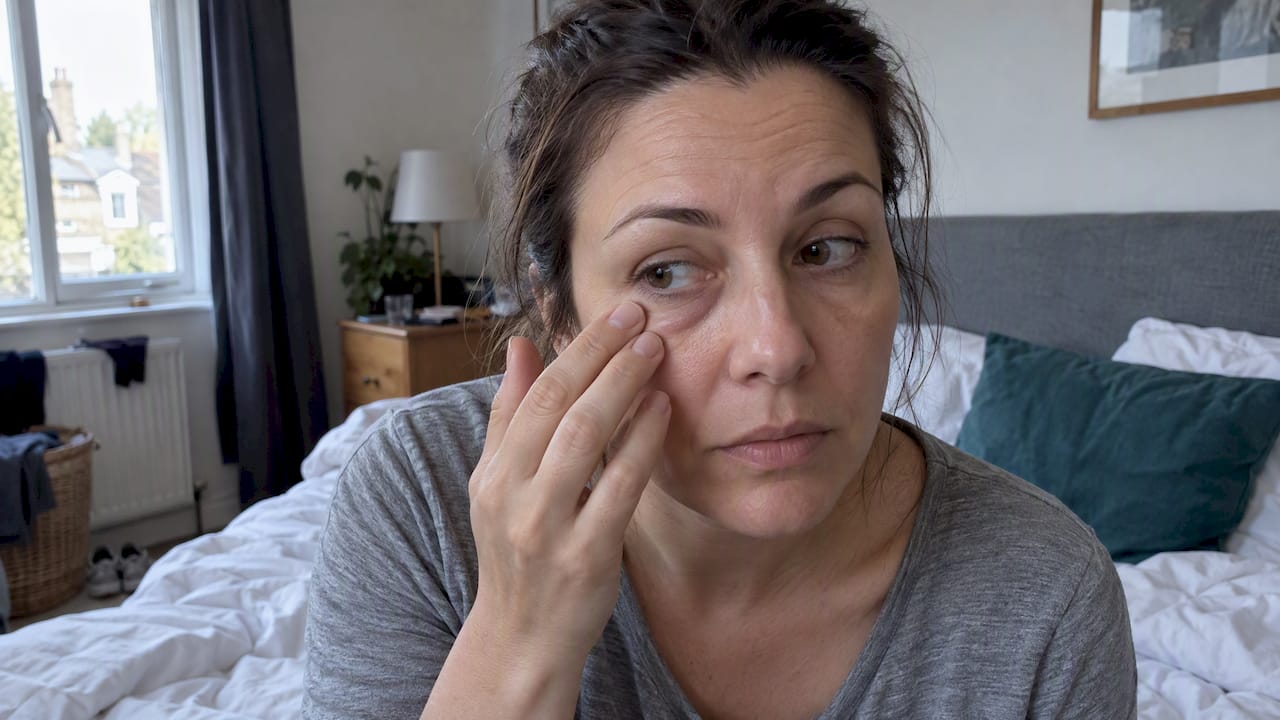
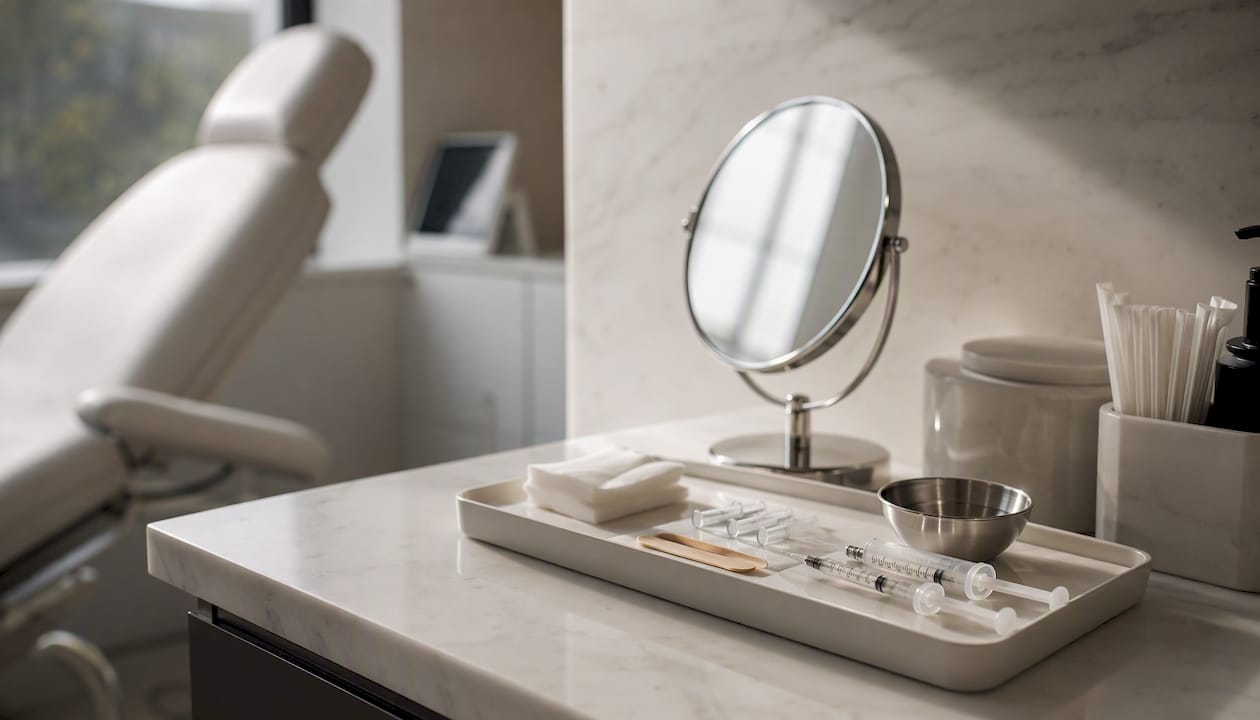

A clinic’s informed consent process should do three things before you agree to any treatment: give you clear, honest information about what will happen to your body; assess whether the procedure is genuinely right for you; and give you enough time to decide without pressure. Every reputable UK clinic follows a structured consent process that covers practitioner qualifications, procedure details, realistic outcomes, risks, total cost, and a cooling-off period. The Royal College of Surgeons recommends a cooling-off period between your consultation and treatment to think things through, and the CQC echoes this as a widely adopted safeguard for new patients.
Before you book, a well-run clinic should provide:
- The practitioner’s name, qualifications, and registration details
- A clear description of the procedure and the product or device used
- Honest discussion of risks, side effects, and how complications would be managed
- Realistic expected outcomes, not aspirational promises
- A transparent total cost, including likely maintenance sessions
- A cooling-off period before any treatment begins
- Written aftercare instructions and a named contact for complications
Key takeaways
Informed consent in UK medical aesthetics is an ongoing, practitioner-led process that must cover qualifications, procedure details, realistic outcomes, risks, total cost, and a cooling-off period before any treatment begins.
| Point | Details |
|---|---|
| Consent is a process, not a form | The GMC requires ongoing discussion, not just a signature; the practitioner remains responsible at every stage. |
| Two-week cooling-off period | The RCS and CQC both support a minimum two weeks for new patients to reflect before committing to treatment. |
| Red flags to act on | Walk away from time-limited offers, group events with alcohol, or any practitioner who dismisses your questions. |
| Ask the right questions | Use the checklist in this guide to verify qualifications, product details, risks, costs, and aftercare contacts. |
| Theaestheticsroom as a benchmark | As a CQC-registered, ACE Group member clinic, Theaestheticsroom follows structured consent, cooling-off, and written aftercare as standard. |
Table of Contents
- What does the informed consent process mean in UK cosmetic practice?
- How to prepare before your consultation
- What should the practitioner cover during your consultation?
- Why a cooling-off period protects you, and what red flags to avoid
- What consent forms and records should you expect?
- Questions to ask at your consultation
- Aftercare, complications, and who to contact
- How Theaestheticsroom implements informed consent in practice
- What patients often underestimate about the consent process
- Book a consultation that meets this standard
- Sources
What does the informed consent process mean in UK cosmetic practice?
Informed consent is not a form you sign at the door. The GMC is explicit: consent is an ongoing exchange of information, and the practitioner carries personal responsibility for ensuring you understand what you are agreeing to at every stage.
The Care Quality Commission (CQC) registers and inspects clinics that provide certain regulated activities. CQC registration signals that a provider meets baseline safety standards. The ACE Group (Aesthetic Complications Expert Group) takes this further, focusing specifically on patient safety and complication management in aesthetics. Membership of either body is a meaningful trust signal, not a marketing badge.
Practically, this means:
- The practitioner must assess your psychological readiness, not just your physical suitability
- They may decline to treat you if they believe the procedure would not benefit you
- Consent given at one appointment does not automatically carry forward if your circumstances change
How to prepare before your consultation
Preparation materially improves the quality of the consent conversation. The NHS advises researching the procedure thoroughly, discussing your motives with a professional, and choosing a practitioner whose qualifications you have verified before booking.
Bring to your consultation:
- A written summary of your medical history and current medications
- Any known allergies, including previous reactions to injectables or anaesthetics
- Photographs of your concern area (useful for realistic goal-setting)
- A clear, written statement of what you want to achieve
- Questions prepared in advance (use the checklist in Section 7)
Check the clinic’s CQC registration status on the CQC website before you attend. Verify the practitioner’s registration with the GMC, NMC, or GDC depending on their profession. Ask whether the clinic carries professional indemnity insurance.
Pro Tip: When researching outcomes, search for before-and-after photographs from the specific practitioner you will see, not just the clinic’s general gallery. Results vary by individual technique, and you want to assess that practitioner’s work specifically.
What should the practitioner cover during your consultation?
The NHS guidance is specific: your practitioner must explain the exact product or device being used, the realistic risks and how they would be managed, the recovery period, and the full transparent cost including any future maintenance. A consultation that skips any of these is incomplete.
Expect the practitioner to cover:
- Their qualifications, registration, and experience with this specific procedure
- The named product or device (for example, which hyaluronic acid filler brand, or which botulinum toxin formulation)
- Likely outcomes for your anatomy, not a generic result
- Specific risks, including rare but serious complications and how the clinic manages them
- Recovery timeline and any activity restrictions
- Total cost, including follow-up appointments and potential top-up sessions
Trust signals to look for: CQC registration certificate displayed or available on request, ACE Group membership, and before-and-after photographs from the practitioner’s own patients. Ask whether the practitioner carries personal indemnity insurance and who to contact out of hours if a complication develops.
Why a cooling-off period protects you, and what red flags to avoid
You should leave your consultation with time to reflect, not a payment request. The RCS advises a cooling-off period after your consultation to consider the decision, and warns specifically against special offers that pressure rapid consent. The CQC notes that many UK clinics adopt a minimum cooling-off period for new patients as standard practice.
Red flags that should make you pause or walk away:
- Time-limited offers or discounts tied to same-day booking
- Pressure to pay a deposit before you have had time to consider
- Group treatment events where alcohol is present
- Mobile or home-visit treatments without a registered clinical setting
- A practitioner who dismisses or minimises your questions about risks
- No written information provided after the consultation
If you encounter any of these, ask for written details of the treatment plan and take them away. Seek a second opinion from a different registered practitioner. Walking away from a pressured situation is always the right decision.
What consent forms and records should you expect?
Paperwork confirms a conversation that should already have happened. The GMC guidance is clear that consent documentation records an informed discussion, not replaces it.
A well-run clinic will provide:
- A signed consent form that references the specific procedure and product
- A written treatment plan with the device or product named
- Photographs taken before treatment (with your permission)
- Clear information about how your records are stored and for how long
- A privacy notice explaining who can access your records
On confidentiality: your records are yours. You can consent to your GP being informed of your treatment, or decline. A reputable clinic will explain this choice rather than assume. Under UK GDPR, you have the right to access your records and to request corrections.
Questions to ask at your consultation
Bring this checklist and work through it during your appointment. A practitioner who welcomes these questions is demonstrating the standard of care you should expect. You can also use the aesthetic consultation checklist from Theaestheticsroom as a companion reference.
- ☐ What are your qualifications, and are you registered with the GMC, NMC, or GDC?
- ☐ How many times have you performed this specific procedure?
- ☐ Which exact product or device will you use, and why?
- ☐ What results are realistic for my anatomy?
- ☐ What are the most common risks, and how would you manage a serious complication?
- ☐ What is the full cost, including any follow-up or maintenance sessions?
- ☐ What is your cooling-off policy for new patients?
- ☐ Who do I contact if I have concerns after treatment, including out of hours?
- ☐ Can I have written information to take away today?
- ☐ Will you share my treatment details with my GP, and can I choose?
Aftercare, complications, and who to contact
Safe clinics give you written aftercare instructions before you leave and a named contact for complications, including an out-of-hours route. This is not optional; it is part of the consent process itself.
Common short-term effects after non-surgical procedures include:
- Swelling, redness, or bruising at the treatment site
- Tenderness or mild discomfort for 24–72 hours
- Temporary asymmetry as swelling resolves
If you experience any of the following, act promptly:
- Severe or worsening pain beyond the first 48 hours
- Skin colour changes (white, blue, or mottled patches near the treatment site)
- Vision changes after facial filler treatment
- Signs of infection: increasing redness, heat, or discharge
Contact your clinic’s named complication contact first. If you cannot reach them, contact your GP. For urgent symptoms such as vision changes or suspected vascular occlusion after filler, go directly to A&E and tell the team what product was used and when. For serious safety concerns about a registered provider, you can report to the CQC or the GMC.
Clear post-treatment instructions and a named escalation contact are hallmarks of a clinic that takes aftercare as seriously as the procedure itself.
How Theaestheticsroom implements informed consent in practice
Theaestheticsroom, a CQC-registered clinic with locations in Knightsbridge, Harley Street, and Mayfair, demonstrates the standard described throughout this guide. The clinic’s consent process follows a structured sequence: a pre-consultation health and goals assessment, a face-to-face or virtual consultation with a qualified medical practitioner, a cooling-off period for new patients, and a signed consent record before any treatment proceeds.
The clinic’s ACE Group membership reflects a commitment to complication management that goes beyond the consultation itself. Practitioners are trained to recognise and respond to adverse events, and patients receive a named contact for post-treatment concerns. Before-and-after photographs are taken with patient consent and stored securely as part of the clinical record.
Practical steps Theaestheticsroom follows:
- Pre-consultation medical history and goals review
- Practitioner-led discussion of procedure, product, risks, and realistic outcomes
- Cooling-off period offered to all new patients
- Signed consent form referencing the specific treatment and product
- Written aftercare instructions and named complication contact provided at discharge
What patients often underestimate about the consent process
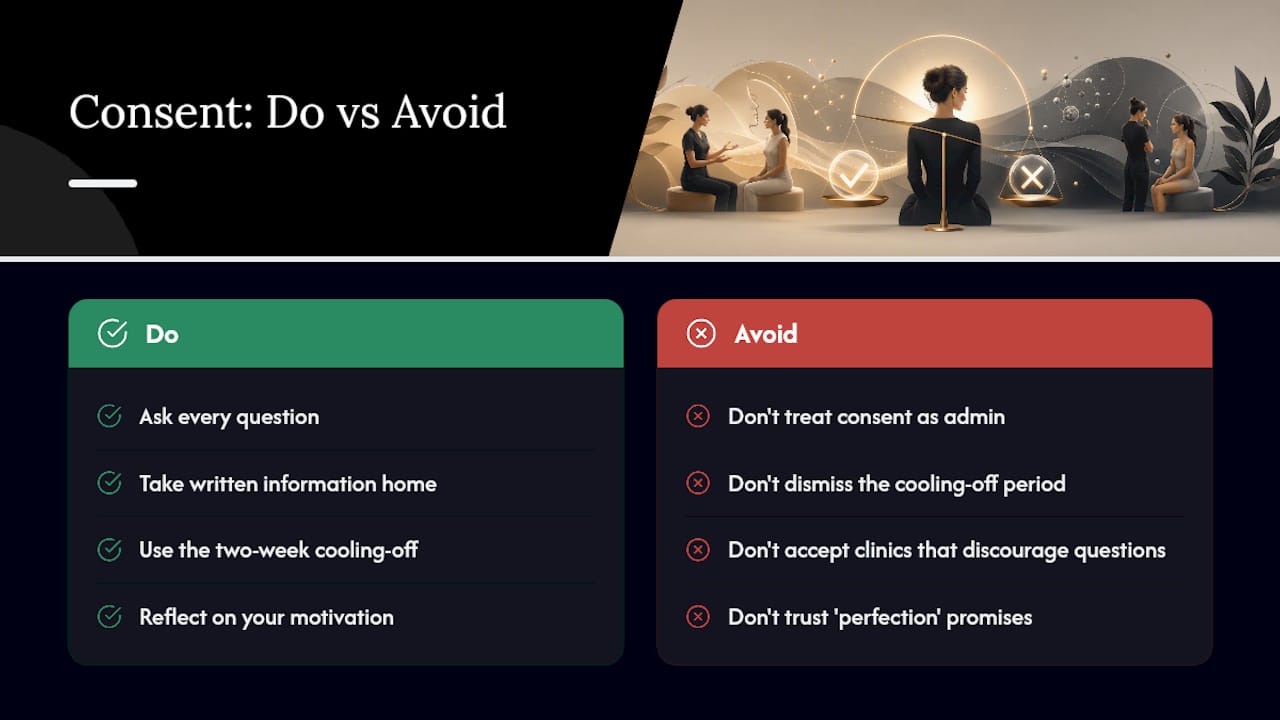
The consent conversation is the most important part of any aesthetic appointment, yet many patients treat it as an administrative hurdle before the treatment they actually came for. That instinct is understandable, but it misses the point entirely.
A practitioner who takes time to explore your motivations, ask about your medical history, and discuss what is realistically achievable for your anatomy is not being slow or cautious. They are doing their job properly. The GMC’s decision-making and consent guidance frames managing expectations as a primary aim of the process, and that framing matters. A clinic that promises perfection has already failed the consent standard before the needle is uncapped.
The two-week cooling-off period is similarly undervalued. Patients sometimes interpret it as a bureaucratic delay. In practice, it is the interval in which many people realise they had questions they forgot to ask, or that their motivation was momentary rather than considered. That reflection is the process working as intended.
Ask every question on your checklist. Take the written information home. If a clinic makes you feel that asking questions is an inconvenience, that response tells you everything you need to know about how they will treat you if something goes wrong.
Book a consultation that meets this standard
Theaestheticsroom offers both in-person and virtual consultations across its London locations in Knightsbridge, Harley Street, and Mayfair. Every new patient receives a pre-consultation health assessment, a practitioner-led consent discussion, and a cooling-off period before any treatment is confirmed. Written treatment plans and named aftercare contacts are provided as standard.
Whether you are considering Botox or dermal fillers, your first appointment is a conversation, not a commitment. Book a virtual or in-person consultation with Theaestheticsroom to experience the informed consent process described in this guide, and to receive written information you can review before deciding.
Sources
The following authoritative sources underpin the guidance in this article. We recommend consulting them directly to verify current standards.
- Choosing cosmetic surgery – Care Quality Commission (CQC)
- Cosmetic interventions – professional standards – GMC
- Your consultation with the surgeon – Royal College of Surgeons (RCS)
This article provides general information about the informed consent process for cosmetic and aesthetic procedures in the UK. It is not a substitute for professional medical advice. Confirm current regulatory requirements and your suitability for any procedure with a qualified, registered practitioner.
Recommended
- Role of Consent in Aesthetics – Ensuring Patient Safety – The Aesthetics Room
- Patient follow-up workflow for UK aesthetic patients – The Aesthetics Room
- How to create before and after galleries for UK clinics – The Aesthetics Room
- Ensure safety in cosmetic procedures London 2026 – The Aesthetics Room