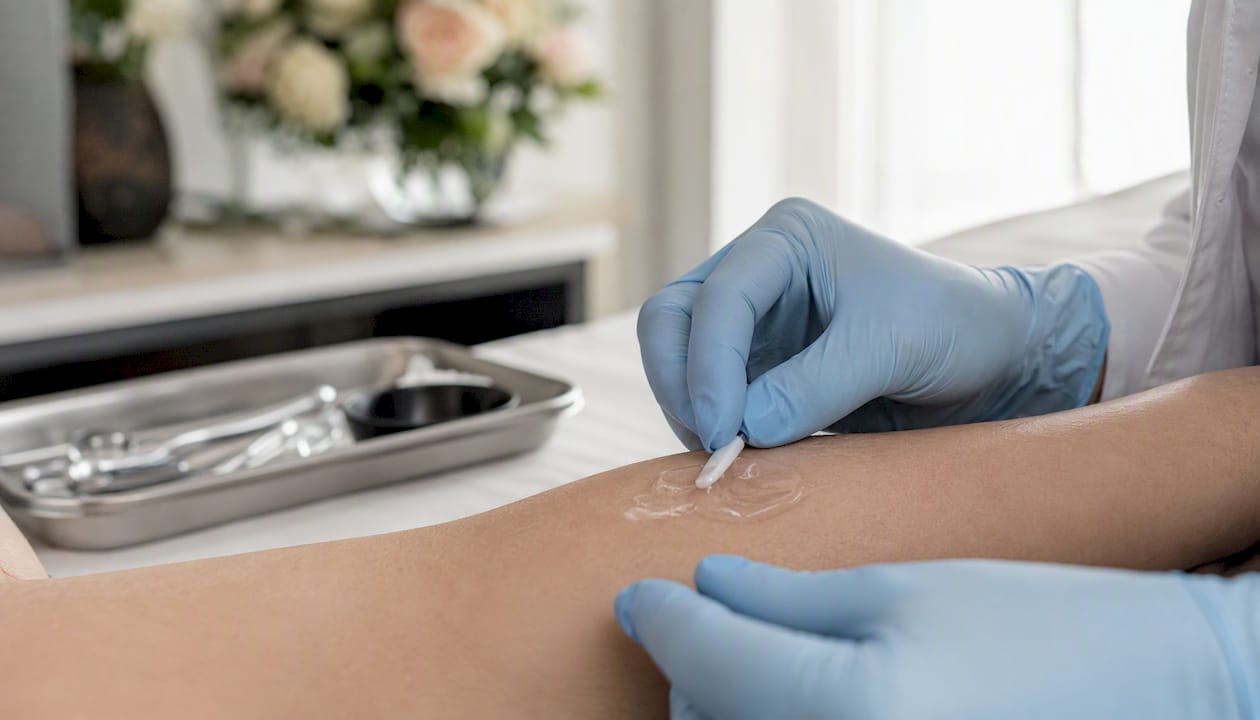

Scar revision is a collective term for the surgical and non-surgical procedures used to improve the appearance, texture, or function of an established scar. It is used when a scar causes cosmetic distress, restricts movement, or behaves pathologically, as with hypertrophic or keloid scars. The goal is meaningful improvement, not eradication. As peer-reviewed clinical literature confirms, revision can make a scar significantly less noticeable and restore function, but no technique removes a scar entirely.
Common scar revision techniques include:
- Topical silicone gel or sheets for early scar management
- Corticosteroid injections to flatten raised or thickened scars
- Laser therapy (vascular or fractional) for colour and texture
- Microneedling to stimulate collagen remodelling
- Surgical excision or reorientation (Z-plasty, W-plasty) for wide or tethered scars
- Dermal fillers to restore volume in atrophic scars
Pro Tip: Unless a scar is restricting movement or growing rapidly, most clinicians recommend waiting for full maturation before elective revision. Treating too early, while the scar is still actively remodelling, can worsen the outcome.
Key takeaways
Scar revision improves the appearance, texture, and function of established scars through surgical and non-surgical techniques, but no procedure eliminates a scar entirely.
| Point | Details |
|---|---|
| Definition and goal | Scar revision improves, not erases; meaningful improvement in appearance, texture, or mobility is the realistic aim. |
| Timing guidance | NHS commissioning guidance advises waiting 12–24 months for scar maturation before elective revision, except where function is impaired. |
| Main treatment options | Options range from silicone and steroid injections to laser, microneedling, fillers, and surgical excision or reorientation. |
| Keloid risk | Keloid scars require multimodal treatment; surgery alone carries a high recurrence risk without adjuvant therapy. |
| Choosing a clinic | Verify CQC registration and GMC credentials; Theaestheticsroom offers CQC-registered, ACE Group-accredited scar revision assessments in London. |
Table of Contents
- What does scar revision actually aim to change?
- What types of scars can be revised?
- Who is a suitable candidate for scar revision in the UK?
- What treatment options are available for scar revision?
- How to prepare for scar revision and what to expect
- What are the realistic benefits and risks of scar revision?
- What does recovery look like, and how long do results last?
- How to choose the right UK clinic or specialist
- How Theaestheticsroom approaches scar revision assessments
- When is scar revision genuinely worth doing?
- Scar revision assessments at Theaestheticsroom
- Sources
What does scar revision actually aim to change?
Scarring is the body’s repair mechanism, not a flaw in it. After injury, the skin moves through overlapping phases: haemostasis, inflammation, proliferation, and remodelling. The remodelling phase, during which collagen fibres reorganise and the scar softens, can continue for several months to a couple of years after the original wound closes. A scar that looks thick and red at six months may be considerably flatter and paler at eighteen months without any intervention.
Revision works by targeting the specific properties that make a scar visible or problematic:
- Colour: excess pigmentation (hyperpigmentation) or persistent redness (erythema)
- Height: raised hypertrophic or keloid tissue, or depressed atrophic pitting
- Texture: roughness, firmness, or irregular surface
- Width: a broad, spread scar that draws the eye
- Mobility: tethering or contracture that pulls the skin and limits movement
Timing matters. Clinicians typically advise waiting until a scar has fully matured before planning elective revision, because the natural remodelling process may resolve many of the features that initially concern patients.
The practical implication is clear: a scar assessed at three months looks very different from the same scar at eighteen months. Patience, combined with early supportive care such as silicone sheeting and sun protection, often reduces the extent of revision needed later.
What types of scars can be revised?
Identifying your scar type is the first step, because each behaves differently and responds to different treatments.
Hypertrophic scars are raised, firm, and often red or pink, but they remain within the original wound boundary. They tend to improve with time and respond well to corticosteroid injections, silicone therapy, and laser treatment.
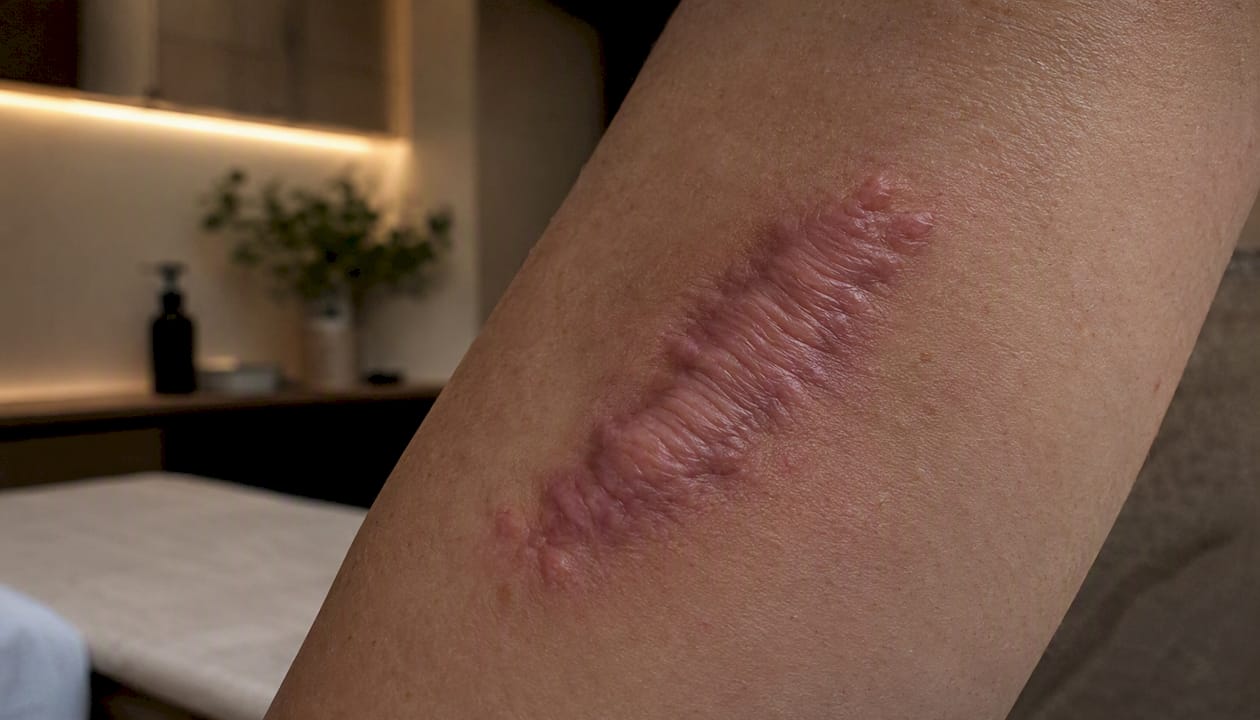
Keloid scars grow beyond the wound margin and do not regress spontaneously. They are more common in people with darker skin tones and on sites such as the chest, shoulders, and earlobes. Recurrence after treatment is a genuine risk, which is why keloid management almost always requires a multimodal approach combining surgery, intralesional steroids, and often laser or radiotherapy.
Atrophic scars sit below the skin surface, creating pitting or depressions. The three subtypes are:
- Ice-pick scars: narrow, deep channels, typically from acne
- Boxcar scars: broad, flat-bottomed depressions with defined edges
- Rolling scars: undulating surface caused by fibrous tethering beneath the skin
Fractional laser, microneedling, and dermal fillers are the most commonly used approaches for atrophic scars, with fillers particularly useful for restoring volume in deeper depressions. You can read more about acne scar treatment options for a closer look at non-surgical modalities.
Contracture scars form when large areas of skin are lost, typically after burns. As the scar tightens, it can pull joints and limit movement. Surgical release, sometimes with skin grafting or flap reconstruction, is often necessary.
Pigmented or erythematous scars are flat but discoloured. Vascular lasers target redness; pigment-specific lasers and topical agents address hyperpigmentation.
Pro Tip: Skin type and scar location significantly influence which technique is appropriate. Darker skin tones carry a higher risk of post-inflammatory hyperpigmentation after laser treatment, so a qualified clinician will adjust energy settings or choose alternative modalities accordingly.
Who is a suitable candidate for scar revision in the UK?
The typical candidate is an adult with a mature scar who has realistic expectations about what revision can achieve. Medical fitness for minor procedures, stable skin health, and the absence of active infection or inflammation at the scar site are baseline requirements.
NHS commissioning guidance is explicit: elective scar revision is not routinely commissioned and is generally offered only after a scar has had sufficient time to mature, commonly 12–24 months. This reflects the evidence that many scars improve substantially through natural remodelling alone, making early surgery unnecessary and potentially counterproductive.
Exceptions exist. Contractures that restrict joint movement, rapidly enlarging keloids, or scars causing significant psychological distress may warrant earlier assessment. In these cases, a clinician can justify intervention before full maturation.
Before your consultation, consider the following:
- Are you a non-smoker, or willing to stop smoking before and after the procedure? Smoking impairs wound healing and increases complication risk.
- Are you taking anticoagulants, aspirin, or supplements that affect clotting? These may need to be paused.
- Have you had the scar for at least 12 months (or longer for surgical scars)?
- Are your expectations focused on improvement rather than complete removal?
- Do you have a history of keloid formation? This affects technique selection and recurrence planning.
What treatment options are available for scar revision?
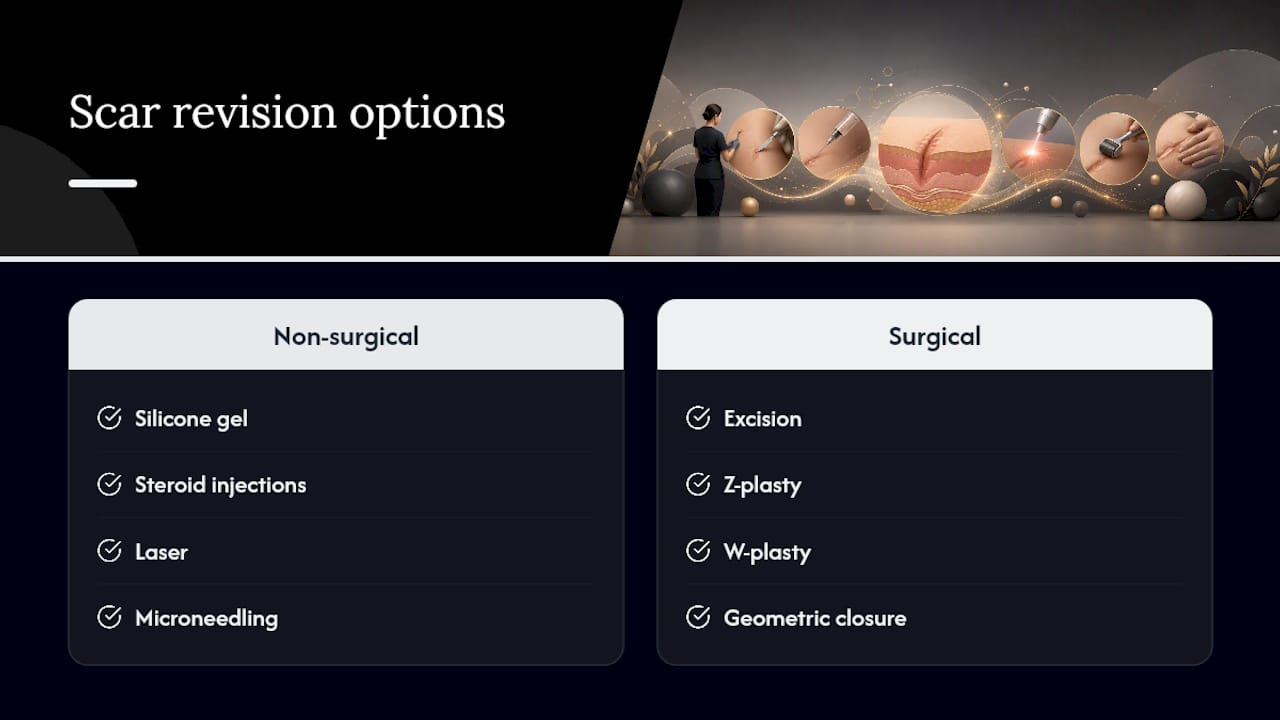
Scar revision encompasses both non-surgical and surgical approaches, and the two are frequently combined for the best outcome.
Non-surgical treatments
Silicone gel and sheets are the first-line option for hypertrophic and early raised scars. Applied daily over several months, they hydrate the scar and reduce collagen overproduction.
Corticosteroid injections (intralesional triamcinolone) flatten hypertrophic and keloid scars by suppressing collagen synthesis. A course typically involves three to five sessions spaced four to six weeks apart. Clinical evidence supports their use as a standalone and adjunctive treatment.
Laser therapy covers a broad range of devices. Vascular lasers (such as pulsed dye laser) target redness and erythema. Fractional ablative and non-ablative lasers resurface texture and stimulate collagen remodelling. Downtime ranges from a few days for non-ablative treatments to one to two weeks for ablative sessions. Read more about laser therapy in aesthetic practice for a fuller picture of what to expect.
Microneedling uses fine needles to create controlled micro-injuries, triggering collagen and elastin production. It suits rolling and boxcar atrophic scars particularly well and typically requires three to six sessions. Explore the benefits of microneedling for detail on session expectations and results.
Chemical peels improve superficial scar texture and pigmentation. Medium-depth peels (trichloroacetic acid) can address mild atrophic scarring, while superficial peels maintain skin quality between treatments.
Dermal fillers (hyaluronic acid or calcium hydroxyapatite) restore volume beneath depressed scars, lifting them to the level of surrounding skin. Results are immediate but require maintenance.
Light therapy is an emerging adjunctive option. Post-surgical light therapy for scar reduction uses red and near-infrared wavelengths to support tissue repair and reduce inflammation, and is increasingly used alongside other modalities.
Surgical treatments
Excision and reclosure removes the scar entirely and closes the wound under minimal tension, ideally along natural skin tension lines. It suits wide or irregular scars where a finer linear scar is a realistic outcome.
Z-plasty and W-plasty reorient the scar so it lies along natural skin creases, making it less visible. Z-plasty also lengthens contracture scars to release tightness.
Geometric broken line closure breaks a straight scar into an irregular pattern that is harder for the eye to follow.
Skin grafting and flap procedures are reserved for large contractures or areas where local tissue is insufficient for closure.
Pro Tip: For keloid scars, surgery alone carries a high recurrence risk. A multimodal plan, combining excision with immediate post-operative corticosteroid injections and sometimes laser or radiotherapy, significantly reduces the chance of the keloid returning larger than before.
How to prepare for scar revision and what to expect
Pre-procedure checklist
- Disclose your full medical history, including previous keloid formation, autoimmune conditions, and any history of poor wound healing.
- Review all medications with your clinician: anticoagulants, aspirin, non-steroidal anti-inflammatory drugs, and high-dose vitamin E or fish oil supplements may need to be paused.
- Stop smoking at least four weeks before and after any surgical procedure.
- Avoid sun exposure to the scar site for at least four weeks before laser treatment.
- Bring photographs of the scar’s history if available, as progression images help the clinician assess maturation.
What happens on the day
For non-surgical sessions (laser, injection, microneedling), a topical anaesthetic cream is applied 30–60 minutes before treatment. The session itself typically lasts 20–45 minutes. You leave the clinic the same day with written aftercare instructions.
For minor surgical revision, local anaesthetic is injected around the scar. The procedure takes 30–90 minutes depending on complexity. Sutures are usually removed within five to fourteen days. General anaesthesia is reserved for larger or more complex reconstructions.
Before committing to any procedure, ask to see:
- The clinician’s GMC registration number or relevant professional registration
- The clinic’s CQC registration certificate
- A written aftercare plan and complication management protocol
- Before-and-after photographs of comparable cases
What are the realistic benefits and risks of scar revision?
Benefits
- Improved cosmetic appearance: reduced visibility, smoother texture, better colour match
- Reduced itch, tightness, or discomfort associated with hypertrophic or keloid scars
- Restored mobility when contracture is surgically released
- Psychological benefit from reduced self-consciousness
Limitations
Scars cannot be erased. The aim is to produce a less noticeable scar, not a scar-free surface. Results vary with scar age, skin type, scar location, and the technique used. Scars on the chest, shoulders, and jaw tend to be more resistant to treatment than those on the face.
Risks
- Recurrence: keloid scars have a significant recurrence rate after surgery without adjuvant treatment
- Infection: any breach of the skin carries infection risk, managed with sterile technique and aftercare
- Wound breakdown: particularly in smokers or those with poor circulation
- Altered sensation: numbness or hypersensitivity around the revised area
- Pigment changes: hyperpigmentation or hypopigmentation, especially in darker skin tones after laser treatment
- New scar formation: any surgical revision creates a new wound, which itself must heal well
Keloid management carries the highest recurrence risk of any scar type. A clinician who offers surgical excision alone, without a plan for adjuvant therapy, is not following best practice. Ask specifically what happens if the keloid returns, and what the post-operative protocol includes.
What does recovery look like, and how long do results last?
Recovery timelines vary considerably by treatment type.
- Corticosteroid injections: minimal downtime; mild swelling or bruising resolves within a few days
- Laser sessions: redness and swelling for two to seven days depending on device and intensity
- Microneedling: skin pinkness and mild sensitivity for two to five days
- Surgical revision: return to normal daily activity within one to two weeks; suture removal at five to fourteen days; the revised scar continues to mature and improve for six to twelve months
Statistic callout: NHS commissioning guidance notes that the natural healing process takes up to 24 months to complete, which is why post-revision scar maturation is expected to continue well beyond the initial recovery period.
Durability depends on several factors. Sun exposure without protection can darken a revised scar permanently. Wound tension, particularly over joints, increases the risk of the scar widening again. Skin type influences collagen behaviour long after the initial revision.
Immediate aftercare steps that support the best outcome:
- Apply SPF 30 or higher to the scar site daily, even in winter
- Use silicone gel or sheets as directed by your clinician
- Begin gentle scar massage (when the wound is fully closed and your clinician approves) to soften the tissue
- Attend all follow-up appointments; early signs of recurrence are far easier to manage than an established keloid
- Follow the before and after care guidance provided by your clinic
How to choose the right UK clinic or specialist
Who should you see?
The appropriate specialist depends on the scar type and the treatment required. A plastic surgeon is the right choice for contracture release, complex surgical revision, or skin grafting. A consultant dermatologist is well placed to manage keloids and hypertrophic scars, particularly where laser and intralesional therapy are the primary tools. An experienced aesthetic clinician working within a CQC-registered clinic can appropriately manage many non-surgical scar revision treatments, including laser, microneedling, and filler for atrophic scars.
The PSF (Patient Safety Federation) provides guidance on verifying clinician credentials and understanding patient safety standards, which is a useful starting point when researching providers.
Red flags and trust signals
- No CQC registration displayed or verifiable
- Clinician unable or unwilling to provide a GMC number or equivalent professional registration
- No written aftercare plan or complication protocol
- Before-and-after images that appear heavily filtered or unverifiable
- Guarantees of complete scar removal
Questions to bring to your consultation
- What type of scar do I have, and which treatments are most appropriate for it?
- What realistic improvement can I expect, expressed as a percentage or descriptive outcome?
- What is the recurrence risk for my scar type, and what is the plan if it recurs?
- What anaesthesia will be used, and what are the risks?
- How many sessions will I need, and what is the total cost including follow-up?
- What does your aftercare protocol include, and who do I contact if I have concerns?
How Theaestheticsroom approaches scar revision assessments
Theaestheticsroom operates from Knightsbridge, with additional locations on Harley Street and in Mayfair. The clinic holds CQC registration and is a member of the ACE Group, a network dedicated to patient safety standards in medical aesthetics.
The typical patient pathway at Theaestheticsroom begins with a structured assessment: photographic documentation of the scar, classification by type and maturation stage, and a review of the patient’s medical history and skin type. From this, the clinical team builds a treatment plan that may involve a single modality or a staged, combined approach, depending on the scar’s complexity.
Key features of the clinic’s approach:
- Informed consent and realistic counselling: patients receive a clear explanation of expected improvement ranges, not promises of perfection
- Multimodal planning: non-surgical options (laser, microneedling, fillers, injections) are considered alongside or in advance of any surgical pathway
- Virtual and in-person consultations: available for initial assessment, making it straightforward to begin the process before committing to treatment
- Follow-up and aftercare: structured follow-up appointments to monitor scar maturation and adjust the treatment plan as needed
Before booking, confirm the treating clinician’s professional registration, ask to see the clinic’s CQC certificate, and request a written aftercare plan. These are non-negotiable standards for any scar revision provider.
When is scar revision genuinely worth doing?
The most common mistake patients make is expecting revision to erase a scar rather than improve it. Revision is worth pursuing when a scar causes functional restriction, significant psychological distress, or persistent symptoms such as itch or tightness that have not resolved through natural maturation and conservative care. It is less clearly indicated when the scar is cosmetically mild and the patient’s expectations exceed what any technique can realistically deliver.
The value of staged, combined treatments is frequently underestimated. A single round of corticosteroid injections may flatten a hypertrophic scar by a meaningful degree, making subsequent laser treatment far more effective. Approaching revision as a process rather than a single event tends to produce better outcomes and fewer disappointments. Patients who engage with follow-up, protect the revised scar from sun exposure, and use silicone therapy consistently get more from their treatment than those who treat it as a one-off procedure.
Scar revision assessments at Theaestheticsroom
Theaestheticsroom offers a structured pathway from initial assessment through to treatment and follow-up, delivered by CQC-registered practitioners at its Knightsbridge, Harley Street, and Mayfair locations. For patients exploring non-surgical scar revision, the clinic provides laser therapy, microneedling, corticosteroid injections, and dermal fillers for atrophic scars, with each plan tailored to the scar type, skin tone, and treatment history.

ACE Group membership and CQC accreditation mean that every treatment is delivered within a governed, patient-safety framework, with written aftercare and clear escalation protocols. Virtual consultations are available for those who want to discuss their scar and treatment options before attending in person. To begin your assessment, visit Theaestheticsroom and book a consultation online.
Sources
The following resources were used in preparing this article and are recommended for further reading:
- HWE clinical guidance — Scar revision
- Surgical Scar Revision: An Overview — PMC (NIH)
- PubMed article (ID 24761092)
- PubMed article (ID 2373734)
- The PSF — patient safety and professional standards
This article is general information, not a substitute for advice from a qualified doctor. Consult a qualified healthcare professional about your own circumstances before acting on anything here.