
A toned midsection, firmer glutes or more definition through the arms can be difficult to achieve, even when you exercise regularly. Muscle sculpting treatment London offers a non-surgical way to support those goals, using targeted technology to stimulate muscle contractions in areas that may not respond as you would like to training alone.
This is not a shortcut to fitness, nor is it a substitute for a balanced lifestyle. It is a considered body-contouring treatment for people who are already invested in their wellbeing and would like to refine their shape with a bespoke, clinically led approach. The right plan starts with understanding what you want to improve, whether the treatment is appropriate for you, and what realistic results look like for your body.
What is muscle sculpting treatment?
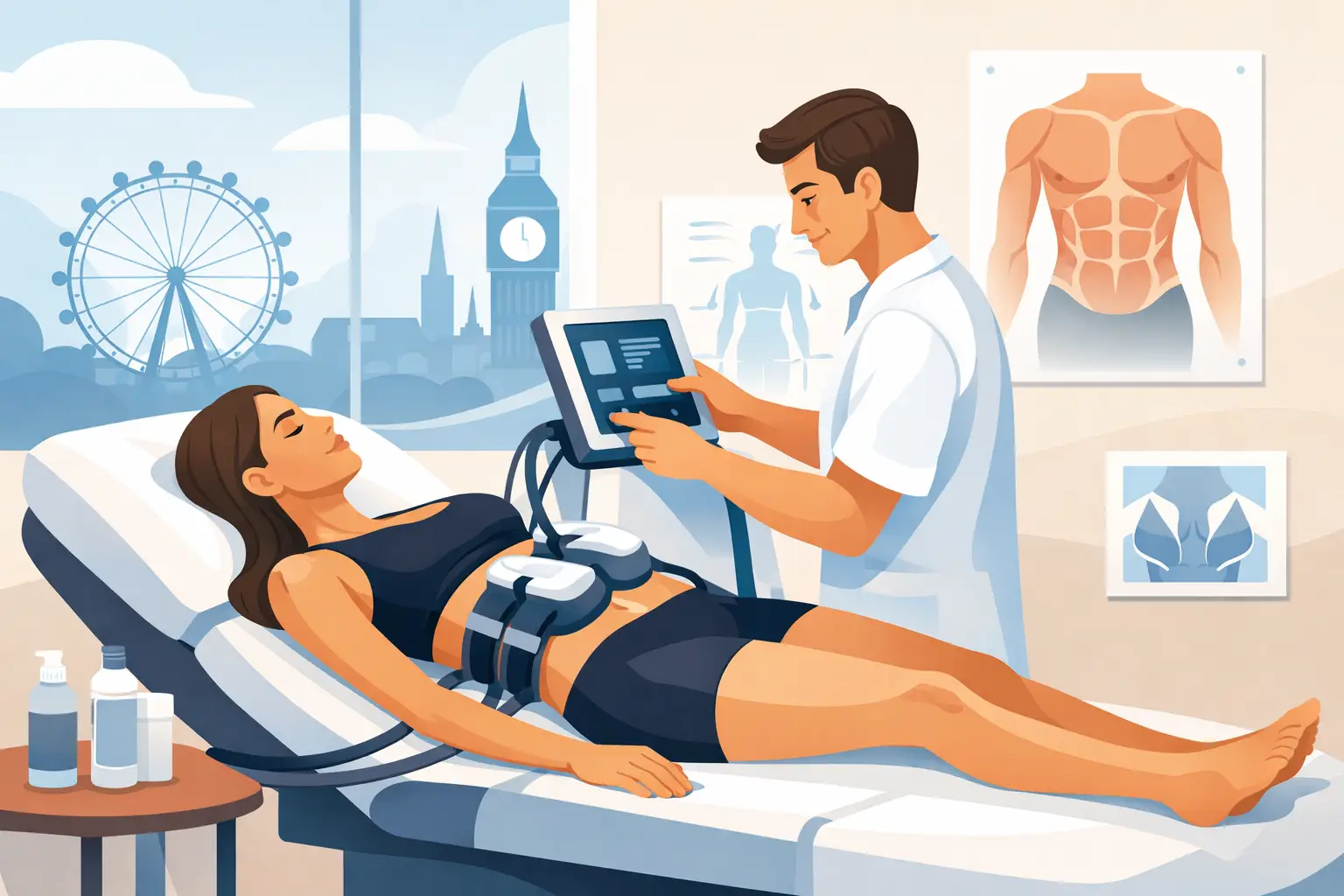
Muscle sculpting uses advanced electromagnetic technology to create powerful, repeated muscle contractions in a chosen treatment area. These contractions are more intensive than those achieved during voluntary exercise, encouraging the muscles to work at a high level over a focused session.
Depending on the device and the area being treated, this process can support muscle conditioning and may also contribute to a more defined appearance in the surrounding area. Common treatment zones include the abdomen, buttocks, thighs, arms and calves. The treatment is non-invasive: there are no needles, incisions or anaesthetic, and sessions are typically designed to fit around a busy London schedule.
The sensation is distinctive rather than painful. You will feel firm, rhythmic contractions and may experience periods of tapping or vibration as the treatment progresses. A trained practitioner should explain what to expect before beginning, monitor your comfort throughout, and adjust the treatment where appropriate.
What can muscle sculpting help with?
Muscle sculpting is most often chosen by people who want to enhance definition rather than make a dramatic change to their weight. Someone who has worked hard on their fitness but still feels their abdominal area lacks tone may be a good example. Others seek more lift and firmness in the gluteal area, or want their arms and thighs to look more conditioned.
Results vary according to your starting point, body composition, lifestyle and treatment area. If a concern is primarily excess body fat, skin laxity or a major weight change, muscle sculpting alone may not be the most suitable option. A tailored plan may instead include fat-burning or body-contouring treatments, alongside guidance on maintaining results through movement, nutrition and hydration.
That distinction matters. Premium aesthetic care should never promise a one-size-fits-all answer. A consultation allows your practitioner to assess whether the treatment can meaningfully support your goals or whether another approach would be more appropriate.
Muscle sculpting is not a replacement for the gym
The best outcomes tend to complement an active lifestyle. Regular resistance training, walking, sufficient protein and consistent sleep all influence how your body looks and feels over time. Muscle sculpting can provide focused stimulation to support definition, but it cannot replace the broader health benefits of exercise or compensate for significant changes in diet and activity.
For some clients, that is precisely its appeal. It can help bridge the gap between the effort they are already making and the refined result they want to see in the mirror, without surgery or prolonged downtime.
What happens during a muscle sculpting treatment in London?
Your appointment should begin with a proper consultation. This is where you can discuss the area you would like to treat, your medical history, previous treatments, exercise routine and expectations. A reputable clinic will ask questions that go beyond aesthetics, because safety and suitability are central to the treatment decision.
Once a plan has been agreed, the applicator is positioned over the selected area. You remain comfortably dressed or appropriately prepared while the treatment takes place. A session commonly lasts around 30 minutes, although timings and protocols depend on the technology used and your individual plan.
There is usually no downtime. Most people return to work, social plans or light activity straight afterwards. The treated muscles may feel as though they have completed an intensive workout, with temporary tenderness or fatigue possible in the following day or two. This is generally manageable, but your practitioner will advise you on what is normal and when to get in touch.
A course of treatments is usually recommended rather than a single session. The number, spacing and choice of areas should be based on your assessment, not a generic package. Your plan may also include review appointments to consider your response and decide whether maintenance sessions would be beneficial.
Is muscle sculpting treatment London suitable for everyone?
Although non-surgical treatments can feel straightforward, they are not automatically suitable for every person. This is why medical oversight and transparent consultation are so valuable.
You should disclose any relevant health conditions, recent surgery, implanted electronic or metal devices, pregnancy, breastfeeding, skin concerns in the treatment area, or a history of hernia. Certain medical circumstances may mean the treatment should be postponed or avoided entirely. Your practitioner should provide clear guidance rather than minimise those considerations.
It is also worth being honest about the outcome you want. If you are looking for substantial weight loss, a treatment aimed at muscle conditioning may not meet that expectation. If your goal is subtle definition, a firmer appearance or support for an already healthy routine, it may be a far better fit. The consultation is not a hurdle before treatment – it is the point at which a safe and intelligent plan is made.
How to get the most from your treatment plan
Preparation is uncomplicated, but consistency makes a difference. Arrive well hydrated, follow any pre-treatment advice given to you, and wear clothing that allows easy access to the area being treated. Your practitioner may recommend avoiding certain activities or products depending on your individual circumstances.
Afterwards, maintain your usual healthy habits unless you are advised otherwise. Hydration, movement and a stable routine can all support your wider body-contouring goals. Avoid treating the procedure as a reason to overtrain an already sore muscle group. Listen to your body, particularly after your first session.
Photographs and measurements may be used as part of a professional treatment journey, with your consent. They can offer a more objective view of progress than day-to-day mirror checking, when small changes are easy to overlook. Results tend to develop over time, rather than appearing immediately after the first appointment.
Choosing a clinic for muscle sculpting
When selecting a provider, look beyond a convenient appointment slot or a headline offer. Ask who will carry out the treatment, how suitability is assessed, what technology is being used and what support is available if you have questions after your session.
A premium clinic should make you feel informed, never rushed. You should receive an honest discussion of benefits, limitations, expected sensations and possible side effects, as well as a personalised recommendation. Medical standards, trained practitioners and a calm, discreet environment all matter when you are investing in your confidence.
At The Aesthetics Room, body treatments are approached as part of a wider conversation about how you want to feel in your body. That may mean muscle sculpting is the right choice, or it may mean combining carefully selected treatments within a plan designed around your goals, schedule and wellbeing.
The most rewarding result is not simply a more defined outline. It is the confidence that comes from choosing a treatment that suits you, delivered with the care and clinical judgement your body deserves.