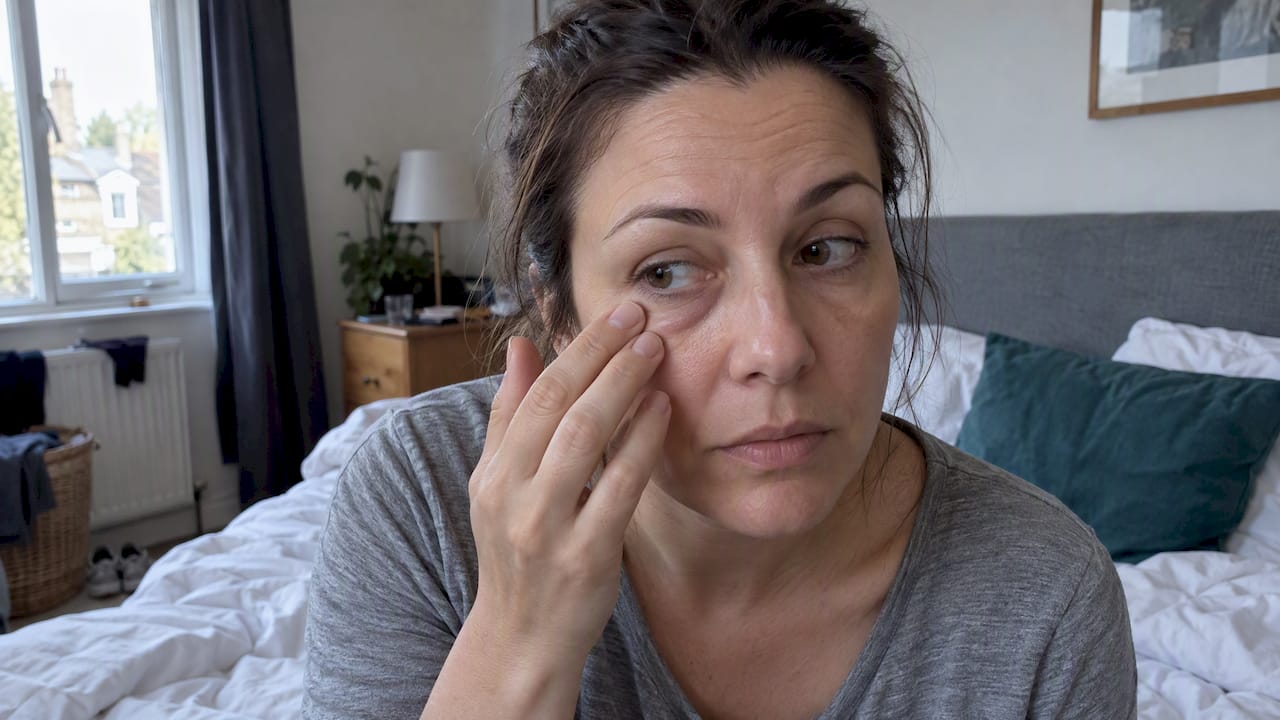
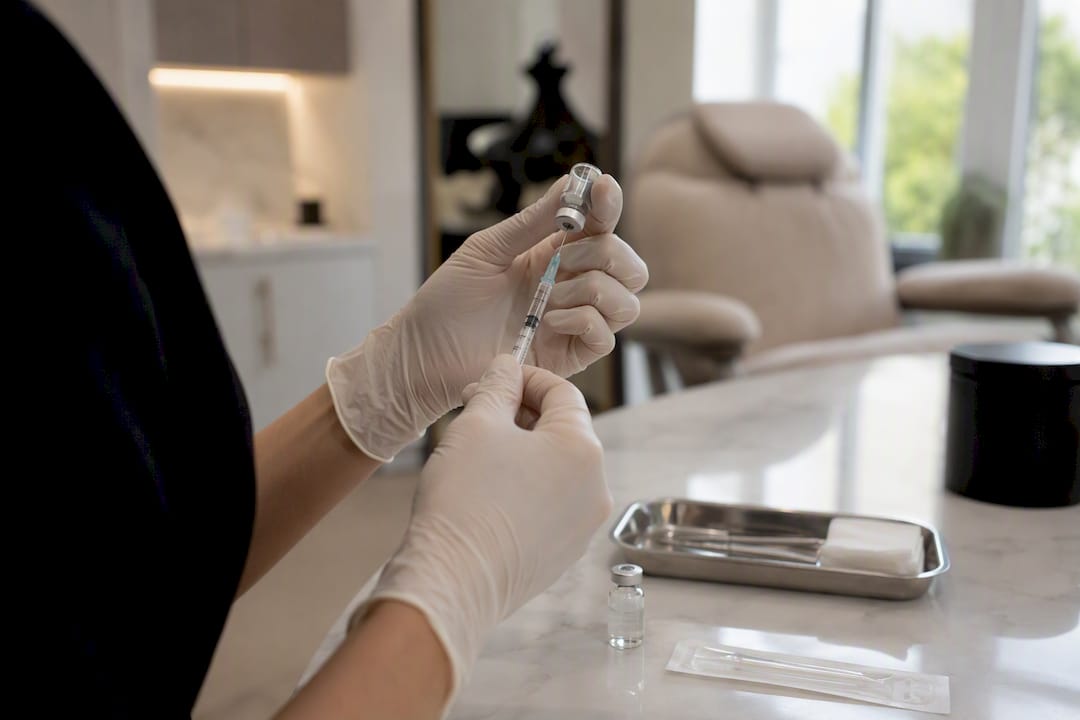

Elective cosmetic Botox is not recommended during pregnancy or breastfeeding. That is the settled precautionary position across UK clinical guidance, and it holds even though the human evidence gathered so far has not identified a clear pattern of harm.
The distinction matters. Observational data on women who received botulinum toxin injections before realising they were pregnant do not point to increased birth defects above background rates. But that reassurance comes from limited, imperfect data, not from trials designed to prove safety. Where botulinum toxin type A (BoNT‑A) has a genuine medical indication, such as chronic migraine or severe muscle spasticity, clinicians may still consider it case-by-case, weighing the benefit against the alternative of untreated disease or systemic medication.
Here is the position in brief:
- Cosmetic use: avoid during pregnancy and breastfeeding, as a precaution rather than a proven-harm finding.
- Accidental exposure: UKTIS advises most women can be reassured, provided there were no systemic side-effects after injection.
- Medical indications: assessed individually, usually alongside your obstetric team.
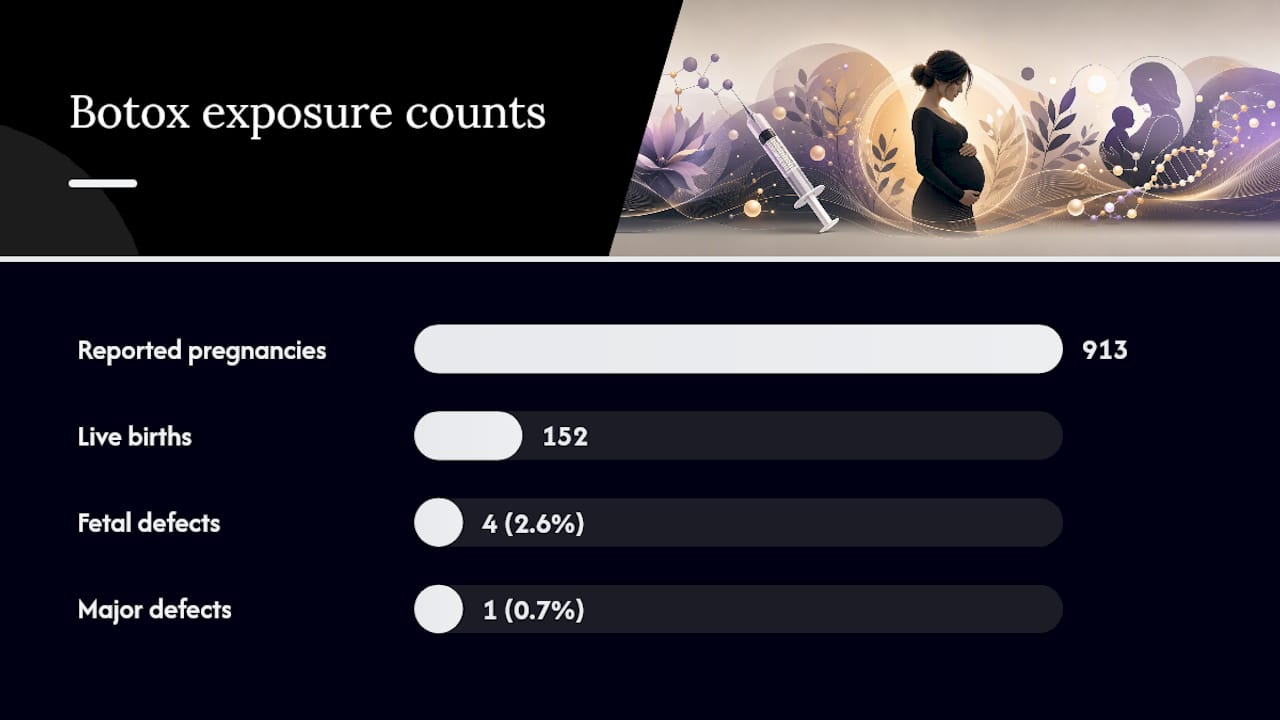
A key figure to hold onto: a cumulative 29-year safety analysis of onabotulinumtoxinA exposures found major fetal defects in 0.7% of live births (1 in 152), a rate in line with what you would expect in the general population, though the dataset carries real limitations.
Key Takeaways
Cosmetic Botox is avoided during pregnancy and breastfeeding on precautionary grounds, even though existing human data have not shown a clear pattern of fetal harm.
| Point | Details |
|---|---|
| Cosmetic use is a clear no | Elective Botox is not recommended during pregnancy or breastfeeding under UK clinical guidance. |
| Human data are reassuring but limited | Major fetal defects occurred in 0.7% of live births in the largest safety dataset, matching background rates, but the sample remains small. |
| Accidental exposure rarely needs extra action | UKTIS advises most women can be reassured; routine antenatal care, including the 20-week scan, is usually sufficient. |
| Medical indications are assessed individually | Conditions like chronic migraine or spasticity may justify BoNT‑A use with multidisciplinary risk-benefit review. |
| Document everything before conceiving | Record your last treatment date and dose, and discuss timing with both your injector and GP. |
Table of Contents
- What the studies show: human data, key findings and limits
- What UK guidance says: official advice and manufacturer precautions
- Can you have Botox while breastfeeding?
- Had Botox and just found out you’re pregnant: what now?
- When Botox might be medically necessary during pregnancy
- Planning pregnancy: timing your last Botox treatment
- How a CQC-registered clinic handles pregnancy and Botox
- The evidence points to caution, not certainty, and that distinction should guide every decision here
- Sources
What the studies show: human data, key findings and limits
The single most substantial piece of evidence on this topic is the cumulative 29-year onabotulinumtoxinA safety update, published in Neurology and available via PMC. It pooled 913 reported pregnancies with onabotulinumtoxinA exposure and analysed a prospective cohort of 152 live births. Overall fetal defects appeared in 2.6% of live births (4 out of 152), and major fetal defects in 0.7% (1 out of 152), broadly matching background population rates for major congenital anomalies.

That sounds reassuring, and in one sense it is. But read the fine print. A dataset of 152 live births is nowhere near large enough to detect a rare or moderate increase in risk with statistical confidence. It also relies heavily on voluntary reporting, which introduces bias: women who experienced normal, uneventful pregnancies after exposure are less likely to have their case documented than someone who noticed a problem. A separate systematic review reached a similarly cautious conclusion, synthesising hundreds of reported pregnancies while stopping short of declaring the treatment proven safe, calling instead for larger, better-designed studies.
There is another pattern worth knowing about: most documented exposures happened before conception or during the first trimester, often because a woman had cosmetic treatment and only discovered the pregnancy afterwards. Data on exposure during the second and third trimesters remain sparse, so the reassurance from existing studies applies most confidently to early, incidental exposure rather than deliberate treatment throughout pregnancy.
Animal studies add a further wrinkle. High-dose toxicity studies in animals have shown adverse developmental effects, but those doses are far beyond anything used in human cosmetic or even most therapeutic injections. UKTIS notes that properly administered cosmetic-dose injections are expected to act locally, with negligible systemic absorption, which is the pharmacological reasoning behind the low-risk message for accidental exposure. Extrapolating animal high-dose findings directly to a 20 to 50-unit cosmetic treatment simply is not scientifically valid, but it also cannot be used to declare the human dose definitively risk-free. The honest summary: no red flags so far, insufficient data to close the question.
What UK guidance says: official advice and manufacturer precautions
Three sources shape the clinical consensus in the UK, and they broadly agree while framing things slightly differently.
- UKTIS advises pregnant women who received unintended botulinum toxin exposure can usually be reassured that fetal risk is low in the absence of systemic side-effects, while explicitly recommending that cosmetic use be avoided during pregnancy given how limited the data remain.
- Medicines in Pregnancy, which summarises manufacturer product information and patient leaflets, states plainly that Botox is not recommended for cosmetic use during pregnancy or in women not using reliable contraception.
- NHS trust and tertiary-centre patient information, such as guidance published by UCLH, commonly states that botulinum toxin is not advised in pregnancy or breastfeeding because safety has not been formally established, which is a different claim to saying it has been shown to cause harm.
That wording gap trips people up constantly. “Not recommended” and “not established as safe” reflect an absence of proof either way, applied through the precautionary principle you will see across most areas of prescribing in pregnancy. Because cosmetic Botox delivers no medical benefit, there is no upside to offset even a theoretical risk, so clinicians default to caution rather than reassurance.
Pro Tip: If you are mid-treatment course and discover you are pregnant, do not panic and do not schedule a “correction” appointment. Pause treatment, tell your maternity team, and let your injector know at your next contact so your records stay accurate.
In practice, this means reputable clinics screen for pregnancy status before treatment and document dates and doses carefully, part of the same governance approach The Aesthetics Room applies to every Botox consultation.
Can you have Botox while breastfeeding?
The evidence base here is thinner than for pregnancy, but the reasoning follows the same logic. Botulinum toxin, correctly injected at cosmetic doses, is expected to act locally at the injection site with very limited systemic absorption, so transfer into breast milk in meaningful quantities is considered unlikely. That said, “unlikely based on pharmacology” is not the same as “confirmed by trial data,” and no robust lactation studies exist to close that gap definitively.
Some practitioners take a belt-and-braces approach anyway, suggesting mothers express and discard milk for 24 to 48 hours after treatment. It is worth being clear-eyed about this: the evidence supporting that specific precaution is weak, and it is offered as extra reassurance rather than something backed by pharmacokinetic data showing meaningful transfer.
- Discuss your breastfeeding status with your injector before any treatment.
- Ask what precautionary window, if any, they recommend, and why.
- Continue your baby’s routine health checks as normal; no additional monitoring is typically needed.
Had Botox and just found out you’re pregnant: what now?
Discovering a pregnancy shortly after a cosmetic Botox appointment is more common than most people admit, and it rarely calls for panic. The observational evidence, imperfect as it is, has not shown a clear signal of harm from this kind of incidental early exposure.
- Tell your midwife or obstetrician at your next contact, and mention the approximate date and, if you know it, the dose.
- Continue your routine antenatal schedule, including the 20-week anomaly scan; Medicines in Pregnancy confirms that extra monitoring is not usually required for this exposure alone.
- Seek specialist input if you experienced systemic symptoms after injection (such as unusual weakness or breathing difficulty), or if you have a complex medical history or take other medications that might interact.
For most people, step one and step two are the whole story. Routine antenatal care already does the heavy lifting.
When Botox might be medically necessary during pregnancy
Cosmetic use sits in a different category to genuine medical need, and the calculus changes considerably once BoNT‑A is treating a diagnosed condition rather than smoothing a frown line.
- Chronic migraine prophylaxis, where severe, disabling headaches are otherwise treated with medications that carry their own placental exposure concerns.
- Spasticity management, particularly where muscle stiffness affects mobility, pain or care needs.
- Strabismus (squint) correction, an ophthalmic use where Moorfields reports no complications in its modest case series, using low doses with individualised risk assessment.
These decisions go through a multidisciplinary process involving the treating specialist and, where relevant, the obstetric team, with documented informed consent and a preference for the lowest effective dose. One argument in favour of local BoNT‑A over systemic drugs is precisely that it stays local. Avoiding a daily oral medication that crosses the placenta can sometimes be the more cautious route, not the riskier one.
Pro Tip: If you are already receiving BoNT‑A for a medical condition and become pregnant, do not stop treatment abruptly on your own initiative. Speak to your specialist first; untreated spasticity or migraine can carry its own risks to you and your pregnancy.
Planning pregnancy: timing your last Botox treatment
If you are actively trying to conceive, the conservative approach is to pause elective cosmetic injections rather than time them precisely around ovulation or a specific calendar window. There is no universally mandated waiting period; this comes down to clinician discretion and your own risk tolerance rather than a fixed rule stamped on a leaflet.
- Ask your injector to record the date and dose of your last treatment clearly.
- Discuss your family planning timeline with both your aesthetic practitioner and your GP.
- If you rely on BoNT‑A for a therapeutic condition, coordinate future treatment planning with your obstetric team well before conception where possible.
Contraceptive reliability matters too: Medicines in Pregnancy specifically flags that cosmetic Botox is not recommended for women not using effective contraception, precisely because early pregnancy can go undetected for several weeks.
Questions worth asking your clinician before treatment
Bring a short list to your consultation and ask your injector to talk you through each point.
- What is the specific reason for this treatment, cosmetic or medical, and are there non-drug alternatives?
- Will you consult my GP or obstetric team if I am pregnant or trying to conceive?
- What dose and technique will you use, and how will that be documented?
- What monitoring, if any, would you recommend if treatment is judged essential?
Pro Tip: Ask for a brief written summary of your treatment, including date, product and dose, plus a contact number for follow-up questions. It takes two minutes and becomes genuinely useful if your circumstances change.
How a CQC-registered clinic handles pregnancy and Botox
Governance is not paperwork for its own sake; it is what stands between a patient and a preventable mistake. Accreditation with the Care Quality Commission and membership of the ACE Group, a body focused specifically on patient safety in aesthetics, mean a clinic has committed to documented protocols, not just good intentions.
At a practical level, that translates into:
- Pregnancy status screening as a standard part of pre-treatment consultation.
- Clear record-keeping of treatment dates, products and doses for every patient.
- Clinicians trained to recognise when a case needs referral beyond aesthetic practice.
Safety in aesthetic medicine is not a single checkbox. It is the accumulation of small, consistent decisions: asking the right question at consultation, documenting it properly, and knowing when the answer is “not today.”
If you are pregnant, breastfeeding, or planning a pregnancy and want personalised advice on your aesthetic treatment options, The Aesthetics Room offers virtual consultations to talk through what is appropriate for your circumstances and timeline.
The evidence points to caution, not certainty, and that distinction should guide every decision here
The instinct in aesthetic medicine writing is to reach for a clean verdict: safe, or not safe. This topic does not offer one, and pretending otherwise does readers a disservice. The 29-year safety update is genuinely useful data, but 152 live births is a small window onto a question that deserves a much larger one. Treat the reassurance it offers as provisional, not final.
Where I think conventional advice sometimes falls short is in conflating “not recommended” with “known to cause harm”. Those are different claims, and blurring them either frightens people needlessly after accidental exposure or, worse, makes some dismiss the precaution altogether because it sounds like bureaucratic caution rather than genuine risk management. Both readings miss the point.
If you take one thing from this article, prioritise the conversation over the calendar. A clinician who asks about your pregnancy status, documents your last treatment properly, and knows when to loop in your obstetric team is doing more for your safety than any specific waiting period ever could.
Sources
- Pregnancy outcomes in patients exposed to onabotulinumtoxinA treatment: a cumulative 29‑year safety update — PMC (Neurology)
- Exposure to botulinum toxin in pregnancy — UKTIS
- Botox (botulinum toxin) — Medicines in Pregnancy
- Botulinum toxin for squint during pregnancy and breastfeeding — Moorfields
- Botulinum toxin treatment — UCLH patient information
This article is general information, not a substitute for advice from a qualified doctor. Consult a qualified healthcare professional about your own circumstances before acting on anything here.
Recommended
- BOTOX BOOM – WHY IS BOTOX IS ONE OF THE MOST POPULAR AESTHETIC TREATMENTS? – The Aesthetics Room
- 7 Benefits of Botox for Appearance and Confidence – The Aesthetics Room
- Luxurious Step by Step Botox Guide for Radiant Results – The Aesthetics Room
- Botox London for Natural-Looking Bespoke Results – The Aesthetics Room