

TL;DR:
- Skin profiling uses objective data and advanced technology for personalized skin assessment.
- It improves cosmetic outcomes by accurately identifying skin concerns invisible to the naked eye.
- Regular, expert interpretation of profiling results enhances treatment safety, effectiveness, and prevention.
Glowing, healthy skin is not a matter of luck or guesswork. Many people assume that choosing the right cosmetic treatment comes down to a practitioner’s eye or a client’s personal wish list. In reality, the science of skin profiling has changed everything. By using objective measurement tools, advanced imaging, and expert clinical interpretation, it is now possible to understand your skin at a level that no mirror or naked-eye assessment can match. This guide covers what skin profiling entails, how it works, what evidence supports it, and why it is fast becoming the standard of care for discerning clients across London.
Table of Contents
- What is skin profiling and why does it matter?
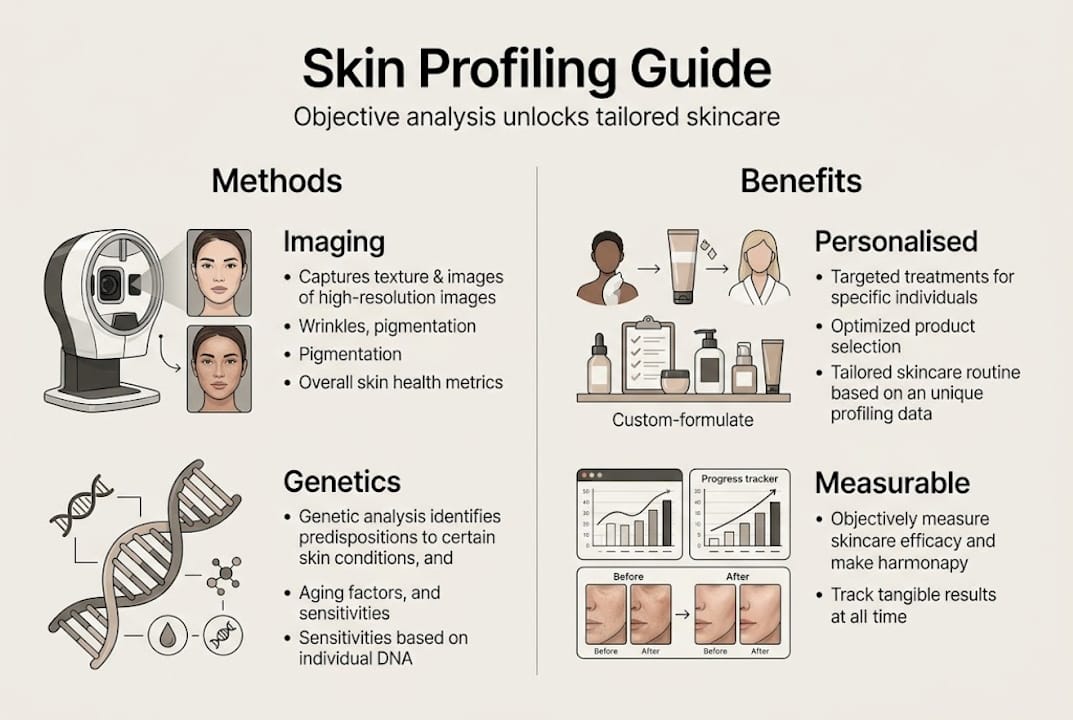
- How does skin profiling work? Core methods and technologies
- Evidence-based benefits: why affluent clients prefer skin profiling
- Limitations, risks, and why expert interpretation matters
- Why skin profiling is changing the face of cosmetic care in London
- Experience personalised skin profiling at The Aesthetics Room
- Frequently asked questions
Key Takeaways
| Point | Details |
|---|---|
| Objective over guesswork | Skin profiling replaces subjective assessment with evidence-based insights for tailored results. |
| Imaging boosts results | Modern imaging such as VISIA enables accurate tracking of progress and visible improvements. |
| Safety and personalisation | Skin profiling is safe for all skin types and helps prevent ineffective or unsuitable treatments. |
| Expertise is vital | The best outcomes come from combining technology with skilled clinical interpretation. |
| Evolving landscape | Cutting-edge advances like 3D and genetic profiling are enhancing what is possible for London clients. |
What is skin profiling and why does it matter?
Skin profiling is a structured, data-driven process that uses quantitative tools, imaging technologies, and clinical expertise to build an accurate picture of your skin’s health and characteristics. It goes far beyond a practitioner looking at your face under a bright light. The process captures measurable information about pore size, pigmentation, sebum levels, texture, elasticity, and tone uniformity, all of which guide precise, safe treatment decisions.
A common misconception is that advanced skin analysis is only necessary for people with serious dermatological conditions, or that only a consultant dermatologist can identify problem areas. Neither is true. Skin assessment transforms results for anyone considering aesthetic treatment, whether that is addressing fine lines, uneven tone, or early signs of ageing. Profiling can reveal underlying issues entirely invisible to the naked eye, including subclinical pigmentation, early collagen loss, and compromised barrier function.
For clients investing in premium cosmetic care, the practical value is significant:
- Eliminates guesswork by replacing subjective judgement with measurable data
- Prevents wasted investment on products or treatments poorly matched to your skin’s actual needs
- Guides safer choices by identifying skin sensitivities or structural issues before treatment begins
- Enables progress tracking so improvements are visible and quantifiable over time
- Supports preventive care rather than reactive fixes after problems worsen
Objective skin data consistently outperforms subjective visual assessment, driving measurably better cosmetic outcomes and improving treatment precision across skin types.
Understanding key to effective results starts with recognising that your skin is unique, dynamic, and responds to treatment based on factors you cannot see with the naked eye. Profiling captures all of it.
How does skin profiling work? Core methods and technologies
A well-structured skin profiling appointment follows a clear and reassuring sequence. Knowing what to expect makes the experience both productive and comfortable.
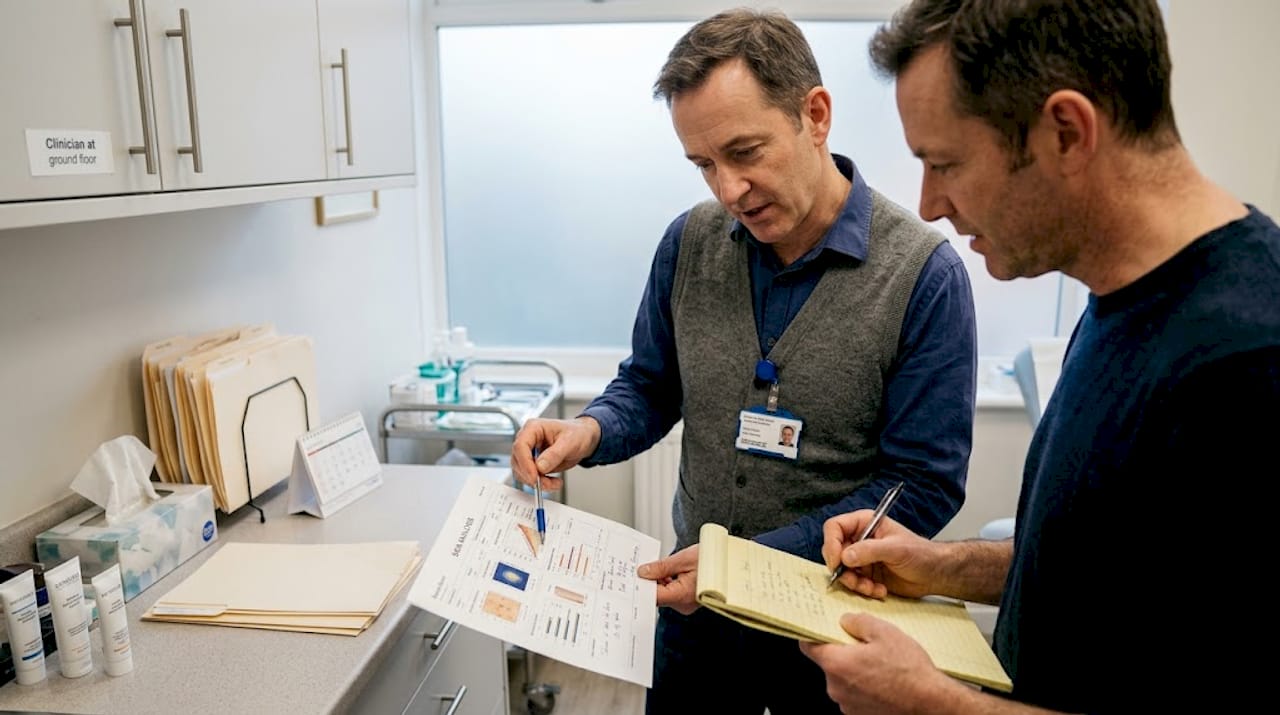
- Initial consultation: Your clinician discusses your skin concerns, health history, lifestyle, and aesthetic goals. This provides the clinical context that informs how imaging data is interpreted.
- Imaging and measurement: Advanced tools are applied to capture detailed skin data. Each technology measures different parameters, so the best clinics use a combination for a complete picture.
- Data interpretation: Your clinician reviews the results, identifies priorities, and presents personalised recommendations based on what the data reveals, not just what is visible.
- Treatment planning: A bespoke plan is agreed upon, with clear timelines, expected outcomes, and progress review points built in.
The tools used vary by clinic and purpose. Here is how the leading technologies compare:
| Technology | What it measures | Best used for | Depth of analysis |
|---|---|---|---|
| VISIA imaging | Pores, spots, texture, UV damage, red areas | Pigmentation, sun damage, acne | Surface to sub-surface |
| RCM (Reflectance confocal microscopy) | Cellular structure, inflammation, melanin | Detailed skin texture and tone | Cellular level |
| 3D facial mapping | Volume, contour, symmetry | Ageing, filler planning, surgical assessment | Structural depth |
| Genetic profiling | DNA markers for skin tendencies | Preventive, long-term personalisation | Molecular level |
Research confirms that VISIA and RCM methodologies deliver significant, measurable improvements in acne, pigmentation, and skin ageing, with measurement precision within 2%. That level of accuracy is simply not achievable through visual inspection alone.
Pro Tip: When booking your cosmetic consultation, ask specifically whether both 2D and 3D imaging are available. Two-dimensional imaging captures tone, pigmentation, and surface quality, while 3D mapping reveals depth, volume loss, and structural changes that affect how treatments should be approached.
A skilled clinician combines these data streams into a coherent narrative about your skin. The technology provides the evidence; clinical expertise provides the meaning. That pairing is what separates outstanding results from average ones, and it is exactly what a personalised facial assessment should deliver.
Evidence-based benefits: why affluent clients prefer skin profiling
Skin profiling is not merely a luxury add-on. The evidence supporting its clinical value is robust, and the practical advantages for clients who invest in quality cosmetic care are substantial.
A clinical study using the APIA (Applied Professional Intelligent Assessment) methodology demonstrated that 74 participants showed significant improvements in stratum corneum thickness, pore appearance, skin elasticity, and pigmentation spot results after profiling-guided treatment. These are measurable, objective changes, not subjective impressions.
Here is a summary of outcomes observed across evidence-based skin profiling studies:
| Skin parameter | Improvement observed | Assessment method |
|---|---|---|
| Acne and blemishes | Significant reduction | VISIA, APIA |
| Pigmentation and spots | Measurable lightening | RCM, VISIA |
| Pore visibility | Reduced appearance | APIA methodology |
| Skin elasticity | Quantifiable increase | APIA methodology |
| Tone uniformity | Improved consistency | VISIA, 3D mapping |
For clients who value their time and investment, the advantages extend well beyond clinical data:
- Reduced product waste: Treatments are matched to your actual skin profile, removing the trial-and-error approach
- Greater confidence: Knowing your skincare plan is evidence-based rather than guesswork builds genuine trust in the process
- Preventive focus: Early identification of collagen loss or pigmentation changes allows proactive intervention before problems deepen
- Safety and repeatability: Regular profiling establishes a baseline, so future treatments are safer and more predictable
- Long-term value: Tailored skincare consistently delivers better return on investment than generic protocols
No major safety concerns have been identified with modern skin profiling methods, making them superior to subjective clinical assessment in both accuracy and client safety.
The AMA advises patients to prioritise clinics that use evidence-based assessment before recommending any cosmetic procedure. Skin profiling is precisely that: the evidence-based foundation for every recommendation that follows. If you are planning your skin health journey, reviewing your 2026 skin health checklist alongside a profiling appointment is an excellent starting point.
Limitations, risks, and why expert interpretation matters
Skin profiling is powerful, but it is not without boundaries. Realistic expectations and the right clinical environment are both essential for getting the most from the process.
Key limitations to be aware of include:
- Non-invasive depth limits: Even the most advanced imaging cannot visualise structures deep within the dermis or subcutaneous tissue; it analyses surface to sub-surface layers
- Operator dependence: The quality of results depends heavily on the skill and training of the clinician performing and interpreting the analysis
- Not a medical diagnostic tool: Skin profiling is designed for cosmetic assessment; it cannot and should not be used to diagnose or rule out medical conditions
- Variable clinic standards: Not all clinics use calibrated equipment or follow validated protocols; the technology is only as reliable as the process around it
- Emerging methods need context: Newer approaches such as genetic profiling are promising and distinct from imaging techniques, but their clinical application in cosmetic settings is still developing
RCM is non-invasive and suitable for all skin types, but it remains operator dependent and cannot be used to diagnose skin cancer or other diseases. That distinction matters enormously. Clients who notice unusual lesions or changes should always seek a qualified medical opinion independently of any cosmetic assessment.
Genetic profiling approaches represent a genuinely exciting frontier, analysing DNA markers that reveal inherited tendencies towards pigmentation, collagen breakdown, or sensitivity. However, these are distinct from imaging-based methods and should be understood as complementary rather than interchangeable.
Pro Tip: Before committing to any clinic, ask how they explain their profiling results to you. A practitioner who takes time to walk you through the data and link it clearly to their recommendations is demonstrating exactly the standard of expertise that safety and tailored results require. If the explanation is rushed or vague, that is a signal worth heeding.
Why skin profiling is changing the face of cosmetic care in London
We have seen something shift noticeably in how London’s most discerning clients approach cosmetic care. It is no longer simply about correcting a concern. It is about understanding your skin deeply and investing in it intelligently.
The arrival of reliable, objective data has made genuinely transformative results the norm rather than the exception. When clinicians can show clients exactly what is happening beneath the surface, and track the improvements over time, the entire relationship changes. There is less anxiety, more trust, and far better outcomes.
Savvy clients are no longer satisfied with reactive treatments. They want a preventive, personalised approach that respects their skin’s evolution over years, not just weeks. Profiling supports that ambition directly. It positions personalised outcomes in London as the benchmark, not the exception.
The clinics that are setting the standard are those pairing advanced technology with genuine human expertise, honest conversations about expectations, and a commitment to ongoing skin health rather than one-off treatments. That, in our view, is the future of cosmetic care in this city.
Experience personalised skin profiling at The Aesthetics Room
If you are ready to move beyond guesswork and invest in your skin with confidence, The Aesthetics Room offers exactly the expert-led journey this article has described. Our team in Knightsbridge combines advanced imaging assessment with personalised treatment planning, so every recommendation is grounded in your skin’s actual data.

From initial assessment through to targeted treatment, we guide each client through a seamless, bespoke process. Explore our skin rejuvenation options to see how profiling can inform and enhance every step of your care. For clients seeking structural refinement alongside skin health, our safe dermal fillers complement profiling beautifully. Book a consultation today at The Aesthetics Room and discover what your skin is truly capable of.
Frequently asked questions
Is skin profiling suitable for all skin types?
Yes, modern skin profiling techniques are safe for all skin types, though results are best when interpreted by an experienced clinician who understands individual skin characteristics and history.
Can skin profiling diagnose medical conditions like cancer?
No. Skin profiling is designed exclusively for cosmetic assessment; as confirmed in clinical reviews, it cannot diagnose cancer or other medical diseases and should not replace medical examination.
How often should I have my skin profiled?
Most experts recommend annual or bi-annual profiling, as objective tracking improves adherence to skincare regimens and enables timely adjustments as your skin changes with age or lifestyle.
What technologies are used in modern skin profiling?
Leading options include VISIA imaging, reflectance confocal microscopy, 3D facial mapping, and emerging genetic profiling. VISIA, RCM, and genetic profiling together offer exceptional precision and depth across different skin analysis needs.
Recommended
- Skin analysis: The key to radiant, effective results – The Aesthetics Room
- Your 2026 skin health checklist for radiant skin – The Aesthetics Room
- Step by step facial massage guide for radiant skin 2026 – The Aesthetics Room
- Why professional skin assessment transforms cosmetic results – The Aesthetics Room