
TL;DR:
- Non-invasive treatments like RF microneedling and Botox effectively reduce fine lines with personalized plans.
- Proper preparation, consultation, and aftercare are essential for optimal, long-lasting results.
- Personalization considering skin type, age, and lifestyle yields better outcomes than trend-driven approaches.
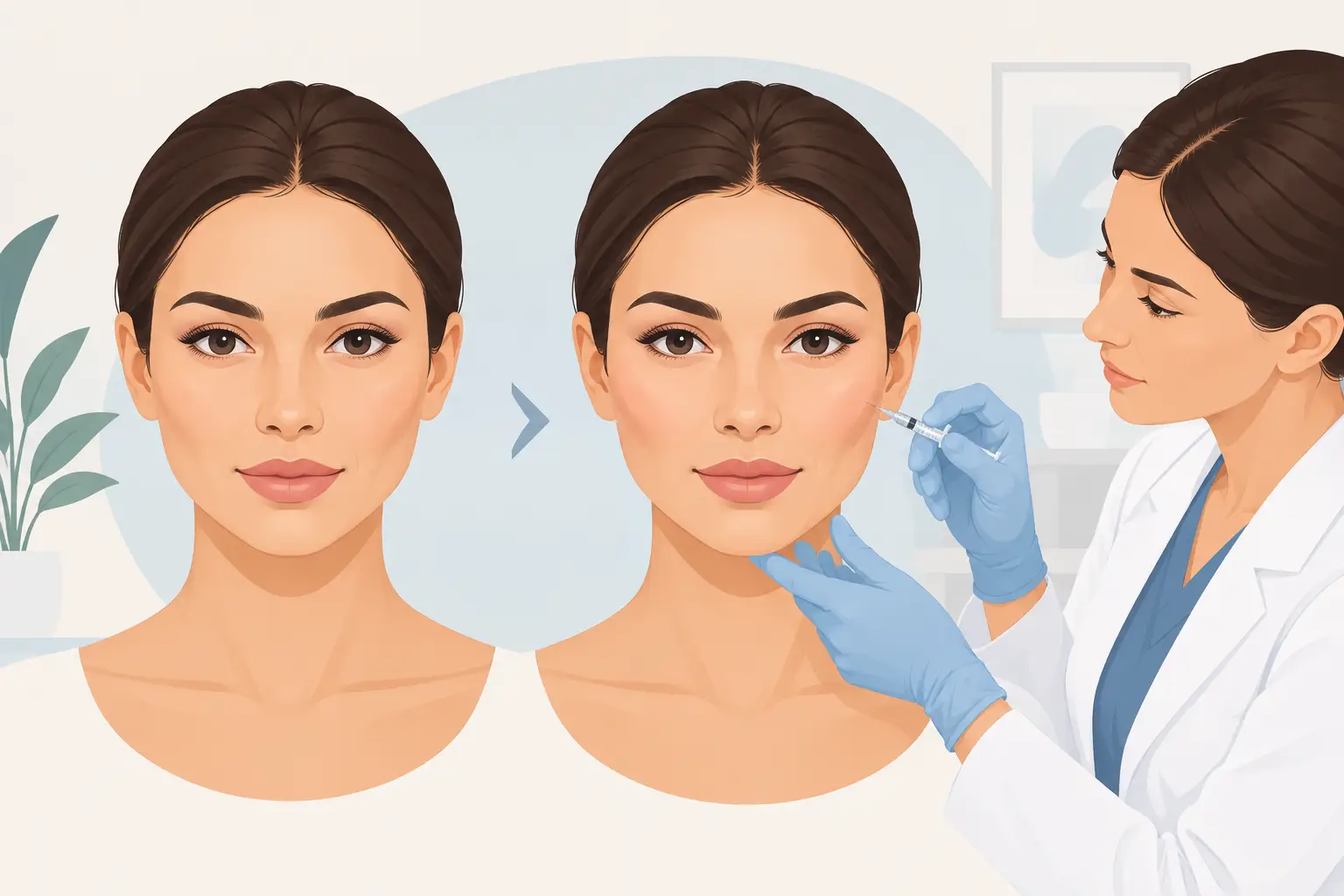
Fine lines have a way of appearing at the most inconvenient times, often despite a disciplined skincare routine, SPF diligence, and a healthy lifestyle. If you are in your 30s, 40s, or 50s and finding that your usual products are no longer delivering visible results, you are not alone. The good news is that today’s non-invasive aesthetic treatments offer genuinely impressive, evidence-backed outcomes, without surgery or lengthy recovery. This guide walks you through the causes of fine lines, how to prepare for treatment, the most effective options available in London, and how to maintain your results for the long term.
Table of Contents
- Understanding fine lines and why they form
- Preparation: What to consider before choosing a fine line treatment
- Step-by-step: The most effective evidence-based treatments for fine lines
- Aftercare and optimising results: Keeping fine lines at bay
- A fresh perspective: Why personalisation trumps trends in skin rejuvenation
- Next steps: Expert help for long-lasting fine line results
- Frequently asked questions
Key Takeaways
| Point | Details |
|---|---|
| Personalisation matters | The best results for fine lines come from tailored treatment plans—not a one-size-fits-all approach. |
| Evidence-based treatments | RF microneedling, Botox, and combination therapies have high satisfaction and safety profiles. |
| Aftercare is crucial | Proper post-procedure care maximises results and reduces risk for every treatment. |
| Ongoing maintenance | Long-term benefits require repeat sessions and vigilant skincare, guided by expert advice. |
Understanding fine lines and why they form
Fine lines and deeper wrinkles are often grouped together, but they are not the same. Fine lines are shallow surface creases, typically the first visible sign of skin ageing. Deeper wrinkles involve structural changes to the dermis and subcutaneous tissue. Treating them effectively requires understanding which category you are dealing with.
Fine lines are an early sign of skin ageing and occur due to cumulative reduction in collagen, environmental exposure, and muscle movements. Collagen, the protein that keeps skin firm and plump, declines by roughly 1% per year after your mid-20s. UV exposure accelerates this process significantly. Repeated facial expressions, dehydration, and poor sleep compound the effect over time.
For Londoners specifically, urban pollution adds another layer of challenge. Particulate matter and nitrogen dioxide penetrate the skin barrier, generating free radicals that break down collagen and elastin faster than in less polluted environments. Lifestyle factors such as stress, irregular sleep, and dietary choices further influence how quickly fine lines develop.
Why does a one-size-fits-all approach fall short? Consider the following:
- Skin type: Oily, dry, and combination skin respond differently to treatments and products.
- Age: A 35-year-old and a 55-year-old have very different collagen reserves and skin laxity profiles.
- Ethnicity: Melanin-rich skin types carry a higher risk of post-inflammatory hyperpigmentation with certain treatments.
- Gender: Men’s skin is typically thicker and oilier, requiring adjusted treatment protocols.
- Lifestyle: Smoking, alcohol consumption, and sun exposure history all shape the treatment plan.
Exploring skin treatments by age can help you understand which approach suits your profile. A bespoke plan, informed by your unique biology and history, will always outperform a generic routine. If you are unsure where to begin, reviewing anti-ageing essentials gives a useful overview of the landscape.
Pro Tip: Keep a simple skin diary for two weeks before your consultation. Note how your skin behaves in different weather, after certain foods, and at different points in your cycle. This information is genuinely useful to your practitioner.
Preparation: What to consider before choosing a fine line treatment
With an understanding of why fine lines develop, it is critical to prepare before jumping into any treatment. Rushing into a procedure without proper assessment is one of the most common mistakes, and it is entirely avoidable.

Start with your personal health history. Inform your practitioner of any allergies, sensitivities, or skin conditions such as rosacea or eczema. Certain medications, including blood thinners and retinoids, can affect treatment safety and outcomes. Hormonal changes, particularly around the perimenopause, also influence how skin responds to injectables and energy-based treatments.
Here is a summary of who typically qualifies for the most popular non-invasive treatments:
| Treatment | Ideal candidate | Key contraindications |
|---|---|---|
| Botox | Adults 30-60 with expression lines | Pregnancy, neuromuscular disorders |
| Profhilo | Skin laxity, dehydration | Active infection, allergy to HA |
| RF microneedling | Texture, fine lines, mild laxity | Active acne, blood thinners |
| Dermal fillers | Volume loss, deeper lines | Autoimmune conditions, allergy |
London’s diverse population means practitioners must be particularly attentive to skin type. Safety is high across treatments: Botox carries minimal downtime, Profhilo may cause mild swelling, and RF microneedling has low adverse events, but personalising for skin type and age between 30 and 60 is essential to avoid edge cases such as pigmentation.
“A thorough consultation is not a formality. It is the foundation of every successful aesthetic outcome.”
When you attend your consultation, ask these questions:
- What specific results can I realistically expect?
- How many sessions will I need, and how far apart?
- What is the downtime, and how should I manage it?
- What are the risks for my particular skin type?
- Are you CQC-registered and what qualifications do you hold?
Understanding proper aftercare before your appointment also helps you plan your schedule and set realistic expectations from day one.
Step-by-step: The most effective evidence-based treatments for fine lines
Once you have prepared and considered key factors, here is how to select and proceed with today’s most effective fine line treatments.
Step 1: Choose the right treatment for your concern
Different treatments target different mechanisms. Here is a quick comparison:
| Treatment | Mechanism | Sessions needed | Downtime |
|---|---|---|---|
| RF microneedling | Collagen via heat and micro-injury | 2-4 | 1-3 days |
| Classic microneedling | Collagen induction | 3-6 | 24-48 hours |
| Botox | Muscle relaxation | 1, then maintenance | Minimal |
| Dermal fillers | Volume restoration | 1-2 | Minimal |
| Profhilo | Bioremodelling, hydration | 2 | Minimal |
| Exosomes | Cellular regeneration | 1-3 | Minimal |
Step 2: Understand the evidence
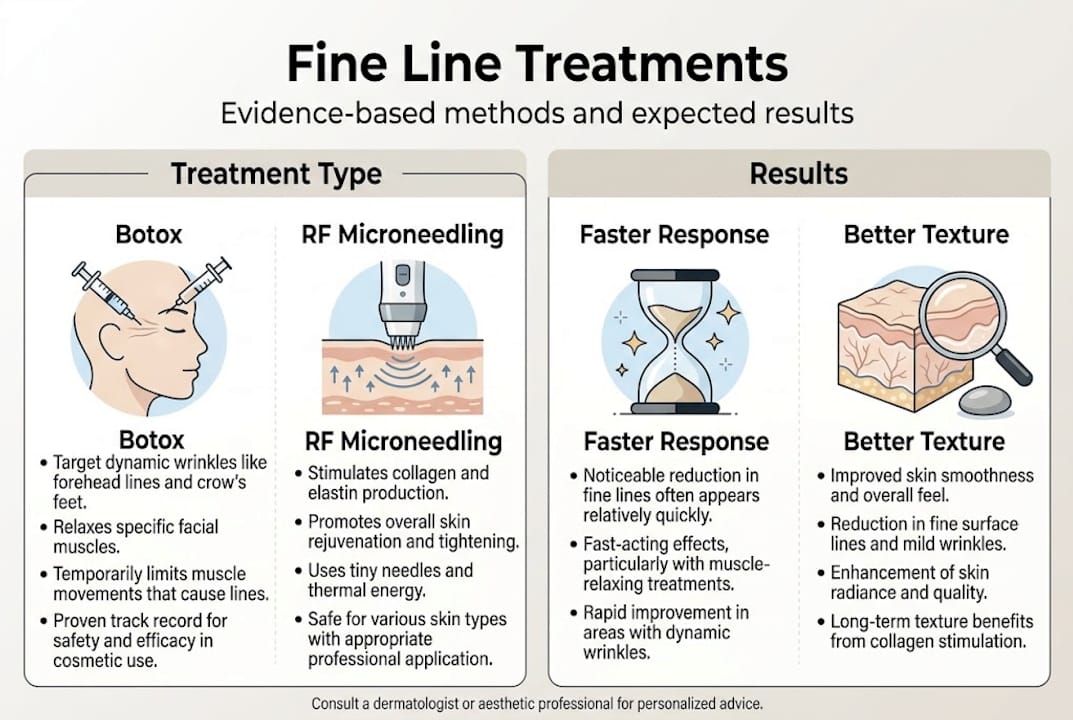
RF microneedling stimulates collagen via micro-injuries and radiofrequency heat, and is effective for fine lines across 2 to 4 sessions, with results developing over 3 to 6 months. A systematic review of microneedling found 83% patient satisfaction and low adverse events, with erythema occurring in just 6.8% of cases, and effectiveness confirmed for wrinkling in 71% of studies. These are reassuring figures for anyone weighing up their options.
For those concerned about lower face lines, research confirms that combination Botox and fillers are superior to monotherapy for lower face rejuvenation. Using both together addresses muscle movement and volume loss simultaneously, which is why multimodal treatment strategies are increasingly the standard at leading London clinics.
Step 3: Book in the correct sequence
If you are combining treatments, sequencing matters. Energy-based treatments like RF microneedling are typically scheduled before injectables. Your practitioner will advise on the optimal timeline.
Learn more about about dermal fillers and explore anti-wrinkle methods to understand how each fits into a broader plan.
Pro Tip: Always verify your practitioner’s specific experience with the device or product being used, not just their general qualifications. RF microneedling and exosome therapies require specialist training to deliver safely and effectively.
Aftercare and optimising results: Keeping fine lines at bay
Successful fine line reduction does not stop after your procedure. Here is how to protect and maintain your investment.
The first 72 hours after treatment are the most critical. Your skin is in active repair mode, and what you do, or avoid, during this window directly affects your outcome.
Key aftercare steps:
- Avoid direct sun exposure for at least 7 days and apply SPF 50 daily without exception.
- Use gentle, fragrance-free cleansers and moisturisers only.
- Stay well hydrated. Aim for at least 2 litres of water daily.
- Avoid strenuous exercise, saunas, and steam rooms for 48 hours.
- Do not apply makeup for at least 24 hours after microneedling or RF treatments.
- Avoid retinoids, AHAs, and BHAs for one week post-treatment.
Knowing when to contact your clinic is equally important. Mild redness, swelling, and sensitivity are normal. Persistent swelling beyond 5 days, unusual bruising, or any signs of infection warrant a call to your practitioner immediately.
For long-term results, scheduling is everything. Botox achieves an 89% response rate at Day 30, and microneedling delivers 83% satisfaction, with multimodal approaches consistently outperforming single-treatment plans for nuanced ageing. Most clients benefit from Botox maintenance every 3 to 4 months, microneedling every 4 to 6 weeks initially, and fillers every 9 to 18 months depending on the product used.
London’s climate, with its low winter humidity and high summer UV index, means year-round SPF and regular hydration treatments are non-negotiable. Explore proper aftercare and filler aftercare details for treatment-specific guidance, and browse recommended anti-ageing products to build a supporting home routine.
A fresh perspective: Why personalisation trumps trends in skin rejuvenation
Social media has made aesthetic treatments more visible than ever, but it has also created a culture of trend-chasing that can lead to poor outcomes. We see it regularly: clients who arrive requesting a specific treatment they saw on Instagram, only to discover it is not the right fit for their skin type, age, or concern.
The data tells a more nuanced story. Cumulative Botox effects, RF superiority for texture and laxity over Botox alone, and London’s high-end focus on regenerative treatments such as exosomes and Profhilo all point to the same conclusion: staged, personalised, multi-technique plans deliver the best results. No single treatment is universally superior.
At the highest level of aesthetic medicine, the focus is on ongoing monitoring, technology integration, and adapting the plan as your skin evolves. A treatment that worked brilliantly at 38 may need adjusting at 48. Prioritising a consultation with a practitioner who considers your full profile, including your lifestyle, skin history, and long-term goals, will always outperform any trending protocol. Explore regenerative treatments like PRP as part of a forward-thinking, personalised strategy.
Next steps: Expert help for long-lasting fine line results
The evidence is clear: the most effective outcomes come from personalised, expert-led treatment plans that combine the right techniques in the right sequence.

At The Aesthetics Room, our CQC-accredited practitioners in Knightsbridge design bespoke plans tailored to your skin type, age, and aesthetic goals. Whether you are exploring advanced Botox options, considering dermal fillers, or simply want to understand your options, we are here to guide you. Book a consultation at The Aesthetics Room and take the first step towards clearer, firmer, more radiant skin, with the safety and personalisation you deserve.
Frequently asked questions
How soon will I see results from non-invasive fine line treatments?
Results can appear from around three weeks with Botox, which achieves an 89% response at Day 30, while RF microneedling delivers progressive improvement over 3 to 6 months across 2 to 4 sessions. A series of treatments consistently produces the most visible and lasting outcomes.
Are fine line treatments safe for all skin types?
Most treatments are safe when properly personalised, but expert assessment is essential. Personalising for skin type and age between 30 and 60 is critical to avoiding edge cases such as post-inflammatory pigmentation, which is particularly relevant in London’s ethnically diverse population.
Which is better for fine lines: Botox or RF microneedling?
Botox is most effective for expression-driven lines, while RF excels for texture and laxity compared to Botox alone. Combining both approaches within a staged plan typically delivers the most satisfying and comprehensive result.
How many sessions are needed to reduce fine lines?
RF microneedling and classic microneedling typically require 2 to 4 sessions spaced several weeks apart, with results continuing to develop over months. Botox and dermal fillers require maintenance appointments every 3 to 6 months to sustain their effects.