
TL;DR:
- Many adults in London experience persistent skin redness, irritation, and tightness due to a damaged barrier, which is often reparable with proper care. Restoring the skin barrier through targeted ingredients like ceramides, cholesterol, and fatty acids can resolve sensitivity and improve skin health long-term. Personalized treatments and professional assessments ensure effective recovery, especially for aging or sensitive skin, rather than relying on ineffective over-the-counter products.
Many adults in London live with persistent redness, tightness, or irritation and assume their skin is simply reactive by nature. That belief is one of the most common and costly misconceptions in skincare. Research strongly suggests that barrier restoration often resolves these symptoms entirely, meaning sensitivity is frequently a repairable condition rather than a fixed trait. In this article, we break down exactly what the skin barrier is, why it fails, and which evidence-backed strategies genuinely restore and maintain it for lasting skin health.
Table of Contents
- What is the skin barrier and why does it matter?
- Common causes and signs of skin barrier damage
- How skin barrier repair works: science and best ingredients
- Tailoring skin barrier repair to your age and skin type
- Why skin barrier repair is misunderstood — and what really works
- Expert skin barrier repair and bespoke treatments in London
- Frequently asked questions
Key Takeaways
| Point | Details |
|---|---|
| Barrier health is vital | A healthy skin barrier keeps moisture in and irritants out, making it essential to skin comfort and appearance. |
| Ceramides accelerate repair | Using creams with the right ceramide ratios can boost recovery by up to 40% and greatly improve hydration. |
| Not all products work | Many commercial creams do not truly repair the barrier; evidence matters more than marketing. |
| Tailor your approach | Age, skin type, and microbiome health affect repair needs—bespoke care achieves the best results. |
What is the skin barrier and why does it matter?
The skin barrier refers specifically to the stratum corneum, the outermost layer of your skin. Think of it as a tightly organised wall of flattened cells held together by a lipid matrix (a blend of ceramides, cholesterol, and fatty acids). This structure performs three critical functions:
- Moisture retention: It keeps water locked inside the skin, preventing dehydration at a cellular level.
- Protection from irritants and allergens: It acts as a physical filter, stopping environmental aggressors from penetrating deeper layers.
- Defence against pathogens: It provides a biochemical barrier against bacteria, fungi, and viruses.
When this layer is intact, skin feels smooth, comfortable, and looks even in tone. When it breaks down, the consequences are immediate and visible.
“A compromised skin barrier does not just cause cosmetic concerns — it fundamentally alters how your skin responds to everything around it, from weather to skincare products to stress.”
Transepidermal water loss (TEWL) is the gold standard measurement for barrier health. TEWL quantifies how much water evaporates through the skin per unit of time. Elevated TEWL indicates a compromised barrier, while reduced TEWL following treatment signals recovery. Ceramide formulations accelerate recovery, as confirmed by empirical data measuring both TEWL reduction and hydration increases over time.
Understanding your barrier status is where personalised care begins. Seeking professional skin analysis methods ensures that your repair plan is guided by actual measurement rather than guesswork.
| Indicator | Healthy barrier | Compromised barrier |
|---|---|---|
| TEWL level | Low | Elevated |
| Skin hydration | High | Low |
| Sensitivity to products | Minimal | Frequent |
| Appearance | Smooth, even | Dry, flaky, red |
Common causes and signs of skin barrier damage
Understanding what damages your barrier is just as important as knowing how to repair it. The causes are often everyday habits and environmental factors that accumulate over time.
Common causes of barrier damage include:
- Over-cleansing or using harsh, high-pH cleansers that strip the lipid matrix
- Overuse of exfoliants, including acids (AHAs, BHAs) and physical scrubs
- Prolonged exposure to urban pollution, particularly particulate matter common in London
- Chronological ageing, which naturally reduces lipid production
- Inflammatory skin conditions such as eczema, psoriasis, and rosacea
- Low humidity environments, including air-conditioned offices and centrally heated homes
The symptoms that follow barrier damage are equally recognisable:
- Persistent dryness and flaking that does not respond to standard moisturisers
- A tight or uncomfortable feeling, particularly after cleansing
- Stinging or burning sensations when applying skincare products
- Redness, blotchiness, or uneven skin tone
- Heightened sensitivity to weather changes, fabrics, or fragrances
One important reality to acknowledge: not all products marketed for sensitive skin actually help. Many rely on soothing agents that mask discomfort without addressing the underlying lipid deficiency. Knowing how to calm sensitive skin with targeted approaches is far more effective than switching between generic “sensitive” labelled products.
Pro Tip: Before investing in a new product range for sensitive skin, assess whether your current routine includes anything that could be actively damaging your barrier. Often, removing an irritant produces faster results than adding a new product.
Critically, the science here provides a useful warning. Short-term TEWL reduction may overestimate efficacy, as not all commercial creams deliver meaningful, sustained barrier improvement. Some products show impressive early measurement changes without producing long-term repair. This is exactly why understanding ineffective skin creams saves both money and skin health.
Understanding the causes and symptoms gives you clarity. The next step is understanding the repair process itself.
How skin barrier repair works: science and best ingredients
Barrier repair is not instantaneous. It follows a predictable, stepwise biological process that begins within hours of removing an irritant or applying a reparative formulation, but full structural recovery takes weeks.
The typical repair sequence looks like this:
- Inflammatory response: The skin signals damage through mild inflammation, triggering lipid synthesis.
- Lamellar body secretion: Cells release lipid-packed structures to begin rebuilding the intercellular matrix.
- Ceramide and lipid reorganisation: The barrier structure is rebuilt layer by layer using available lipids.
- Normalisation of TEWL and hydration: As the barrier strengthens, water loss drops and skin moisture levels rise.
- Maintained resilience: With consistent support, the barrier sustains its recovered function long-term.
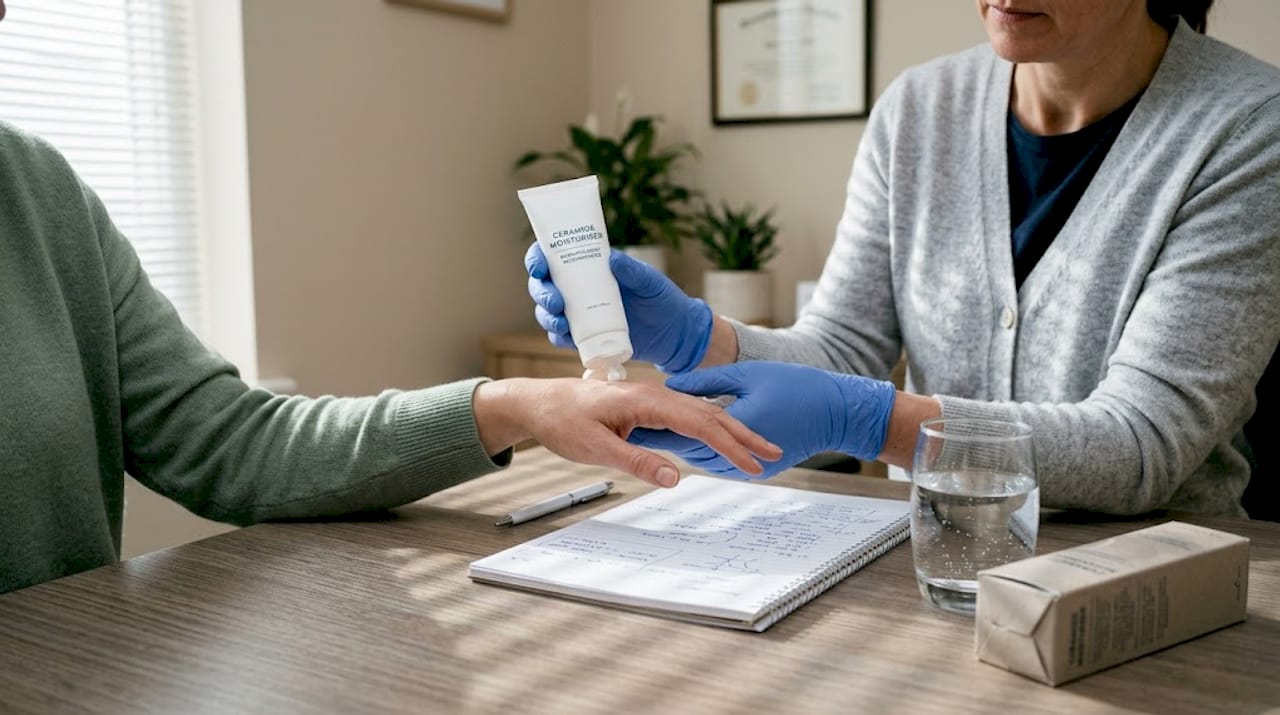
The most clinically significant ingredient in this process is ceramide. Ceramides are lipids that naturally form roughly 50% of the skin’s lipid matrix. When they are depleted through ageing, over-exfoliation, or cleansing, the barrier literally loses its structural cement. Ceramide formulations with physiological ratios accelerate recovery by up to 40%, and longer acyl chain ceramides (specifically C24 to C30) are superior in their ability to rebuild barrier integrity compared to shorter-chain versions.
The ideal ceramide product does not contain ceramides alone. It delivers them in the correct ratio alongside cholesterol and fatty acids, approximating the skin’s own natural composition. Products that deviate significantly from this ratio are less effective.
| Ingredient | Role in barrier repair | Evidence strength |
|---|---|---|
| Ceramides (C24-C30) | Primary structural lipid; rebuilds intercellular matrix | High |
| Cholesterol | Speeds early repair phase | High |
| Fatty acids (linoleic acid) | Fills lipid gaps; anti-inflammatory | Moderate to high |
| Microbiome prebiotics | Supports antimicrobial peptide production | Emerging |
| Anti-inflammatory agents (niacinamide) | Reduces barrier-disrupting inflammation | Moderate |
Beyond ceramides, microbiome support is increasingly validated as a meaningful adjunct to barrier repair. A balanced skin microbiome (particularly adequate Lactobacillus and Staphylococcus epidermidis populations) produces compounds that reinforce the acid mantle and stimulate ceramide synthesis. Probiotic and prebiotic topical formulations can support this process.
Pro Tip: When selecting a barrier-repair moisturiser, check for ceramides listed individually (e.g., Ceramide NP, Ceramide AP, Ceramide EOP) rather than a blanket “ceramide complex.” Individual ceramides at correct concentrations are far more effective.
Making informed choices about choosing effective ingredients is essential. Seasonal changes also affect barrier integrity significantly. Incorporating autumn skin barrier tips into your routine helps maintain repair gains as temperatures drop. Additionally, the impact of nutrition on the barrier is substantial — essential fatty acids from foods like salmon, walnuts, and flaxseed directly support lipid matrix replenishment from within.
Tailoring skin barrier repair to your age and skin type
Barrier repair is not a one-size-fits-all process. Your age, skin type, and any underlying conditions all shape which approach will be most effective for you.
Ageing skin faces a distinct challenge. Ceramide production declines measurably with age, and this reduction is closely tied to the thinning, dryness, and increased reactivity that many people notice from their forties onwards. In ageing skin, ceramide production declines, requiring ongoing supplementation rather than a short course of treatment. Emollients containing ceramides consistently improve both hydration scores and eczema severity ratings in older adults, confirming that supplementation must be a continuous commitment rather than a reactive measure.
Atopic or eczema-prone skin has a genetically influenced barrier deficiency, often related to mutations in the filaggrin gene, which reduces the production of natural moisturising factors. These individuals require richer, more occlusive formulations, typically in cream or ointment form, applied directly after bathing to lock in moisture before TEWL can occur.
Sensitive or reactive skin (without a clinical diagnosis) most commonly responds to gentle simplification. Reducing the number of active ingredients in your routine and focusing on a barrier-supportive cleanser, a ceramide moisturiser, and a broad-spectrum SPF is often more transformative than any treatment protocol.
| Skin profile | Priority repair strategy | Key ingredient focus |
|---|---|---|
| Ageing (40s and beyond) | Ongoing ceramide supplementation | Ceramides C24-C30, peptides |
| Atopic or eczema-prone | Occlusive barrier emollients | Ceramides, petrolatum, colloidal oat |
| Sensitive or reactive | Routine simplification | Ceramides, niacinamide, thermal water |
| Post-procedure skin | Accelerated repair protocol | Ceramides, panthenol, zinc |
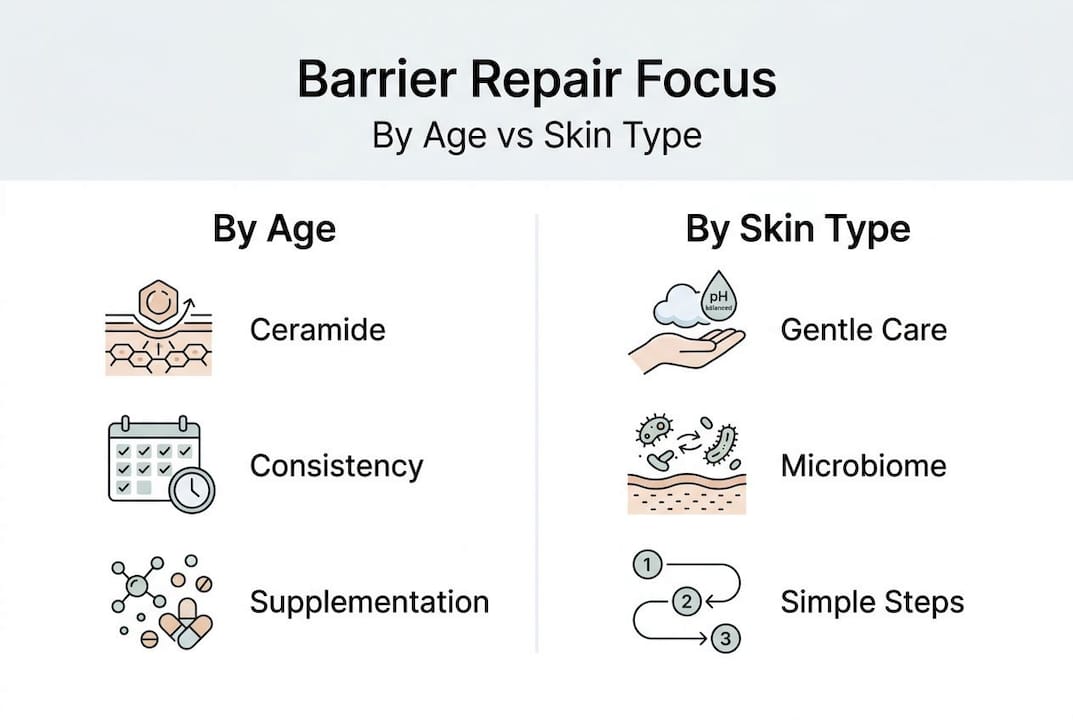
Microbiome health interplays meaningfully with all of these profiles. A disrupted skin microbiome (known as dysbiosis) reduces the production of ceramides and antimicrobial peptides, creating a feedback loop in which barrier damage worsens microbiome balance and vice versa. Choosing gentle, pH-balanced products helps sustain the microbiome’s contribution to barrier integrity.
If you are concerned about skincare for ageing skin, a bespoke assessment is the most efficient starting point. Combining a robust at-home routine with an informed anti-ageing workflow produces significantly better outcomes than either approach alone.
Why skin barrier repair is misunderstood — and what really works
We see this regularly in clinic: clients who have spent years and significant money trying to “fix” sensitive or reactive skin with an ever-rotating shelf of products, none of which produced lasting change. The fundamental error in this approach is treating symptoms rather than root cause.
The skin care industry profits substantially from the idea that sensitivity is a permanent skin type requiring endless management. In reality, most sensitivity and irritation is a direct consequence of a compromised barrier. Once the barrier is repaired with scientifically sound formulations, the sensitivity often resolves completely. That is not a minor distinction. It is the difference between managing a symptom indefinitely and actually solving a problem.
The measurement tools available are genuinely useful but imperfect. TEWL and transepidermal electrical resistance (TEER) provide objective data on barrier function, yet some commercial products show no TEWL/TEER improvement in ex vivo (laboratory skin models) testing, despite being marketed as barrier-repairing. This gap between marketing claims and measurable performance is larger than most consumers realise.
We advocate strongly for medical-grade skincare precisely because the formulations are held to a higher standard of evidence. The concentration and delivery of active ingredients in professional-grade products is validated in ways that many retail products simply are not. When you are investing time and money in your skin, the evidence behind the product matters as much as the product itself.
The most pragmatic advice we can offer is this: prioritise a small number of products with proven barrier-supportive ingredients, assess your results over at least four weeks, and consider professional measurement if you are uncertain. Real results are measurable, reproducible, and, for most people, very achievable.
Expert skin barrier repair and bespoke treatments in London
If home routines are not producing the results you expect, or if you are dealing with persistent barrier issues that have not responded to over-the-counter products, professional guidance makes a significant difference.

At The Aesthetics Room in Knightsbridge, we offer expert-led skin assessments and bespoke treatment plans specifically designed to restore and maintain your skin’s protective function. Whether you are seeking an in-depth expert skin rejuvenation guide to understand the full scope of available treatments, or you need specialised skin treatments tailored to your skin type, age, and lifestyle, our team of trained specialists is here to help. For clients exploring volumisation alongside barrier repair, our dermal fillers treatments offer complementary benefits. Book a consultation today and take a confident, evidence-led step towards healthier, more resilient skin.
Frequently asked questions
How long does it take to repair the skin barrier?
Visible improvements are often seen in one to two weeks with targeted ceramide creams. Full repair may take up to one month, with studies demonstrating TEWL reductions of up to 72.5% in hydration increase over four weeks.
Can skin barrier damage cause persistent redness or sensitivity?
Yes. A compromised barrier is a very common cause of chronic sensitivity and redness. As confirmed by research, barrier restoration often resolves these symptoms entirely rather than simply masking them.
Do all moisturisers help repair the skin barrier?
No. Only formulations containing optimal ratios of ceramides, cholesterol, and fatty acids are proven to accelerate repair. Some commercial products show no TEWL improvement in laboratory models despite their marketing claims.
Does age affect how well my skin barrier repairs?
Yes. Ceramide production declines with age, meaning older skin needs more consistent, ongoing supplementation and generally recovers more slowly than younger skin without targeted support.
What role does the skin microbiome play in barrier repair?
A healthy skin microbiome supports ceramide and antimicrobial peptide production. Microbiome dysbiosis impairs repair and can heighten sensitivity, making microbiome-supportive skincare an important part of a complete barrier repair approach.