

TL;DR:
- Proper skin assessment is essential for safe, effective, and personalized cosmetic treatments.
- Advanced, non-invasive tools improve accuracy and inclusivity, especially for darker skin tones.
- An expert-led evaluation leads to better results, increased confidence, and longer-lasting improvements.
Most people invest in skincare products, treatments, or cosmetic procedures with genuine hope, yet walk away disappointed. The reason is rarely the treatment itself. It is the absence of a proper foundation: an accurate, expert-led skin assessment. Your skin is not like anyone else’s. Its structure, tone, pigmentation, and underlying concerns are entirely unique to you. Relying on generic advice or high-street recommendations is a bit like asking a stranger to choose your prescription glasses. In this article, we explain what professional skin assessment actually involves, why it matters more than most people realise, and how it directly boosts your cosmetic results and confidence.
Table of Contents
- Why accurate skin assessment is foundational for results
- The process: What happens during a professional skin assessment
- Modern technologies that change the game
- Personalised treatments: How expert assessment boosts appearance and confidence
- Why DIY and quick fixes miss the mark: An expert’s view
- Unlock your best results with professional guidance
- Frequently asked questions
Key Takeaways
| Point | Details |
|---|---|
| Expert assessment matters | It reveals unique needs and creates a roadmap for visible, lasting improvements. |
| Technology drives accuracy | Modern non-invasive tools provide safer and more precise recommendations. |
| Personalisation boosts results | A bespoke plan increases satisfaction and confidence compared to guesswork. |
| Confidence starts with understanding | Knowing your skin’s real condition empowers you to make better beauty decisions. |
Why accurate skin assessment is foundational for results
When cosmetic treatments fall short of expectations, the culprit is almost always a mismatch between the treatment chosen and the skin’s actual needs. Effective skin analysis is not a luxury add-on. It is the clinical backbone of any successful aesthetic plan.
Skin is far more complex than a simple “type.” The familiar categories of oily, dry, combination, and sensitive only scratch the surface. Beneath what you can see in a mirror lies a world of structural variation: collagen density, elasticity levels, sun damage accumulated over years, pigmentation irregularities, and vascular concerns. None of these are visible to the naked eye, and none respond to the same treatments.
“Knowing your skin’s full picture is the difference between a treatment that transforms and one that disappoints.”
Professional assessment identifies these underlying concerns precisely. A trained practitioner uses clinical tools to measure moisture levels, map pigmentation, assess pore structure, and evaluate tissue laxity. This goes well beyond what any app or high-street consultation can offer. A personalised facial assessment considers your entire health profile, lifestyle factors, and aesthetic goals before a single recommendation is made.
Here is why this matters so much:
- Skin uniqueness: No two clients present with identical concerns, even if their complaints sound the same.
- Hidden risks: Early-stage sun damage and pigmentation changes are only detectable with the right tools. Early detection boosts melanoma survival to 99%, which illustrates just how much precision matters.
- Safety: Treatments applied without proper assessment can worsen pigmentation, trigger inflammation, or cause lasting harm.
- Efficiency: Targeted plans save you money and time by eliminating guesswork from the start.
- Confidence: Knowing your plan is built on clinical evidence rather than guesswork is reassuring.
Pro Tip: Before booking any cosmetic treatment, ask your clinic whether a full skin assessment is included. If it is not, that is a red flag worth taking seriously.
The impact of a well-conducted assessment extends beyond aesthetics. It shapes the safety and effectiveness of every subsequent step, from the products recommended to the procedures performed.
The process: What happens during a professional skin assessment
Understanding what to expect during an expert-led assessment removes the mystery and helps you arrive prepared. The process at a reputable London clinic is structured, evidence-based, and far removed from the quick questionnaires you might encounter elsewhere.
Here is how a thorough assessment typically unfolds:
- Skin history and lifestyle review: Your practitioner begins by gathering information about your medical history, current skincare routine, diet, sun exposure habits, and any previous treatments. This context shapes every decision that follows.
- Visual examination: A trained eye evaluates your skin’s surface, noting texture, tone, visible pigmentation, redness, and early signs of ageing.
- Device-assisted analysis: Specialist tools measure moisture content, sebum levels, and elasticity. Advanced light-based devices reveal sub-surface concerns that are invisible under normal conditions.
- Pigmentation and sun damage mapping: Specific imaging identifies UV damage, uneven melanin distribution, and areas of concern that may not yet be visible to you.
- Elasticity and laxity evaluation: Tissue firmness is measured objectively, providing a baseline for tracking improvement after treatment.
- Bespoke plan creation: Based on all findings, a tailored treatment plan is built around your specific goals, timeline, and budget.
The contrast with high-street methods is stark. Most over-the-counter consultations skip steps two through five entirely, relying instead on self-reported concerns and product upselling. A professional bespoke consultation process uses scientific metrics to guide every recommendation.
| Assessment step | High-street approach | Professional clinic |
|---|---|---|
| Skin history review | Rarely included | Always included |
| Device-assisted analysis | Not available | Standard practice |
| Pigmentation mapping | Not available | Included |
| Personalised treatment plan | Generic recommendations | Evidence-based and bespoke |
The results speak for themselves. HIFU post-assessment shows an 18 to 30% improvement in skin laxity and 78 to 80% client satisfaction in London clinics, figures that simply cannot be achieved without a proper diagnostic foundation.
Pro Tip: Bring a list of every product you currently use to your consultation experience. Ingredient interactions can significantly affect treatment outcomes.
Modern technologies that change the game
The tools available to aesthetic practitioners today bear little resemblance to those used even five years ago. Non-invasive diagnostic technology has transformed what is possible, making assessments faster, more accurate, and more inclusive.
Reflectance confocal microscopy (RCM) is one of the most significant advances. It allows practitioners to visualise skin layers below the surface without any incision or discomfort. Think of it as a microscope that sees through your skin in real time. This is particularly valuable for identifying early cellular changes that would previously have required a biopsy.
3D mapping technology creates a detailed topographical image of your skin’s surface, capturing fine lines, pore distribution, and volume loss with extraordinary precision. Fluorescence lifetime imaging microscopy (FLIM) adds another layer by analysing how skin components respond to light, revealing photoageing and pigmentation patterns that standard cameras cannot detect. Non-invasive tech like RCM, 3D mapping, and FLIM enhance precision and replace the need for biopsy in many cases.
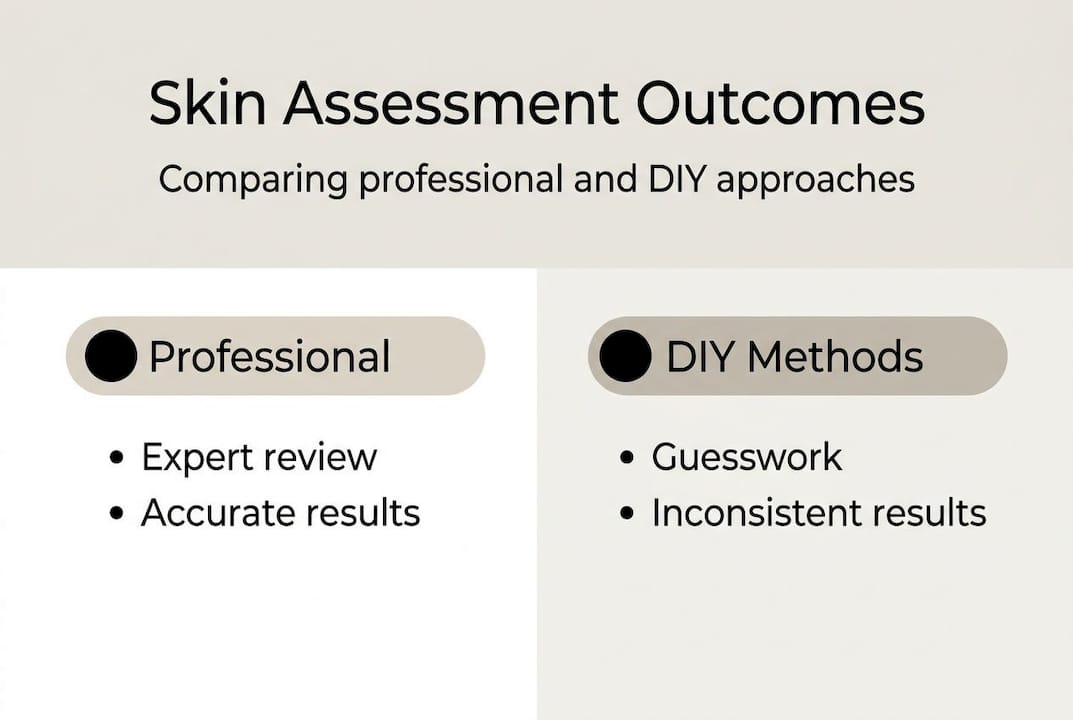
These advances are particularly important for clients with darker skin tones. Traditional assessment methods have historically struggled with detection in darker skin, leading to missed diagnoses and poorly matched treatments. Modern imaging corrects this imbalance by providing objective, colour-independent data.
Key benefits of advanced diagnostic technology:
- Greater accuracy: Objective measurements replace subjective judgements.
- Improved inclusivity: Effective for all skin tones and types.
- Reduced risk: Eliminates the need for invasive diagnostic procedures in most cases.
- Better baselines: Provides measurable starting points to track treatment progress.
- Faster results: Practitioners can make confident decisions without lengthy trial and error.
The top skincare devices used in leading London clinics combine several of these technologies into a single assessment session. Aesthetic ultrasound further complements imaging by revealing deeper tissue structures, while aesthetic lasers can be calibrated precisely based on the data gathered.
Personalised treatments: How expert assessment boosts appearance and confidence
The evidence for personalised, assessment-led treatment is compelling. Clients who receive bespoke plans based on thorough diagnostic data consistently report better outcomes, higher satisfaction, and a meaningful boost in confidence.
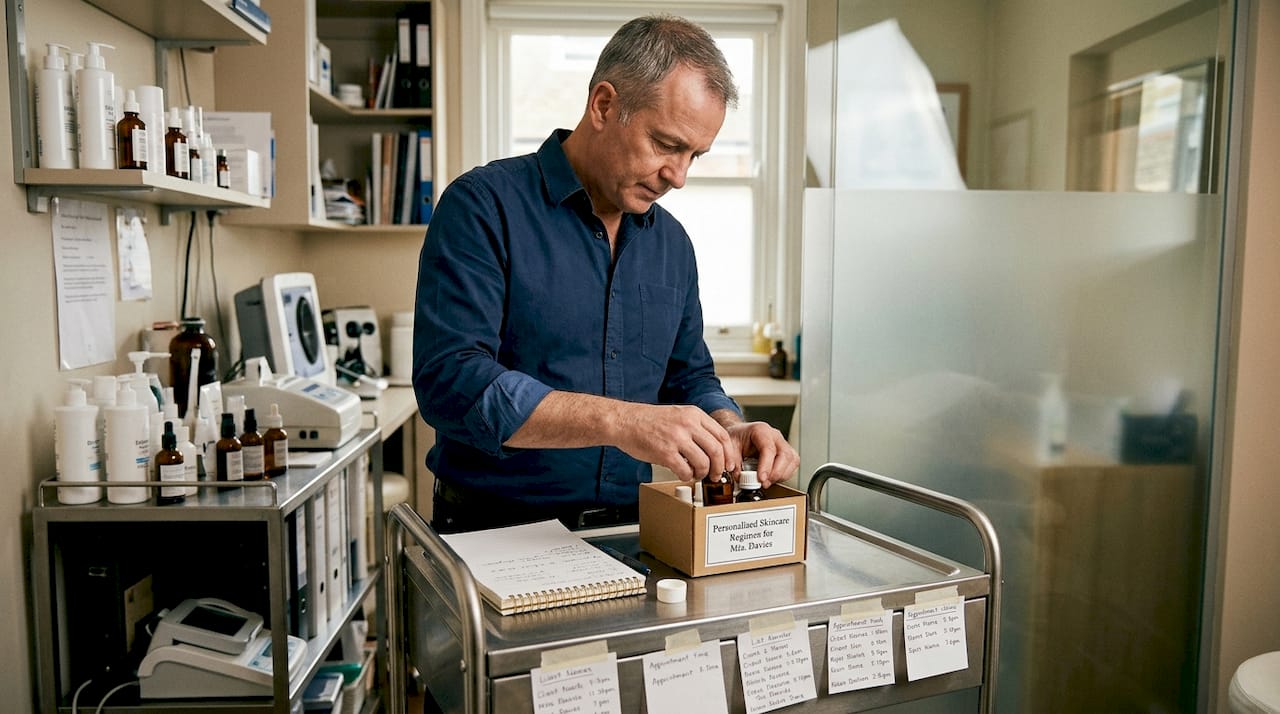
The DLQI validates quality of life improvement across a validated study of 3,408 patients, confirming that targeted treatment benefits extend well beyond the surface. Skin concerns carry a genuine psychological weight, and resolving them with precision has measurable effects on emotional wellbeing.
Assessments enable targeted cosmetics that improve appearance, quality of life, and confidence, with research showing a correlation of r=0.409 between DLQI scores and overall wellbeing measures. This is not anecdotal. It is clinically validated.
“When your treatment plan is built around your actual skin rather than a generic profile, results are not just better. They are lasting.”
Here is what personalised, assessment-led treatment delivers:
- Visible improvement: Treatments matched to your specific concerns produce faster, more noticeable results.
- Longevity: Targeted plans address root causes rather than surface symptoms, so results last longer.
- Safety: Knowing your skin’s sensitivities prevents adverse reactions.
- Financial efficiency: No more wasted spend on products or procedures that were never right for your skin.
- Emotional confidence: Seeing real, measurable change builds self-assurance that generic treatments rarely achieve.
| Outcome measure | Without assessment | With professional assessment |
|---|---|---|
| Client satisfaction | Variable | 78 to 80% reported high satisfaction |
| Skin laxity improvement | Unpredictable | 18 to 30% measurable improvement |
| Quality of life (DLQI) | Minimal change | Validated significant improvement |
| Treatment safety | Higher risk | Substantially reduced |
Your aesthetic journey consultation is the starting point for all of this. The role of consultation in aesthetics is not administrative. It is the single most important clinical step. Understanding who benefits from skin clinics helps clarify that this approach is not reserved for those with serious concerns. Anyone wanting to look and feel their best stands to gain. Research also confirms the link between skin and wellbeing, reinforcing the case for professional-led care.
Why DIY and quick fixes miss the mark: An expert’s view
We see it regularly. Clients arrive having spent months and considerable money on at-home devices, trending serums, and app-guided skincare routines, only to find their concerns have barely shifted or have worsened. The appeal of DIY is understandable. It feels convenient, private, and affordable. But it sidesteps the one thing that makes cosmetic results reliable: clinical expertise.
At-home tools and quick-fix solutions cannot account for your full health picture. They do not know your hormonal history, your medication interactions, your underlying tissue structure, or your risk profile. A skin analysis guide built on clinical data considers all of these factors. A trending app does not.
The uncomfortable truth is that shortcuts in aesthetics rarely save time or money in the long run. They often create new concerns that then require corrective treatment. Reliable, visible, lasting change comes from in-depth, hands-on expertise. There is simply no substitute for a trained practitioner who has assessed thousands of clients and can read your skin with genuine precision.
Unlock your best results with professional guidance
You now understand why professional skin assessment is not optional. It is the foundation of every result worth having.
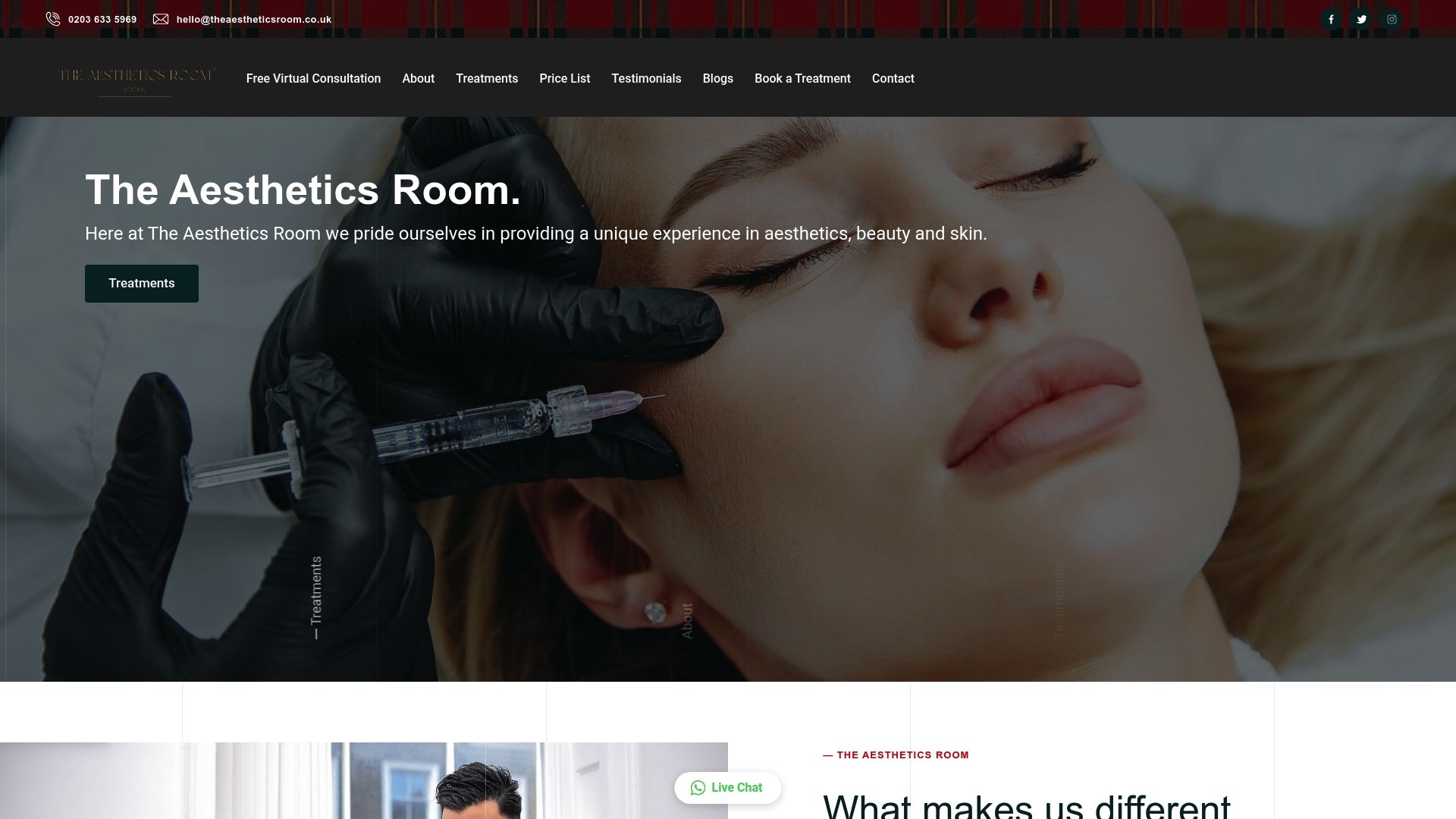
At The Aesthetics Room, every client receives an expert-led assessment and a bespoke plan tailored to their individual needs, goals, and lifestyle. Whether you are exploring skin rejuvenation for the first time, considering dermal fillers in London, or curious about Botox treatments, your journey begins with a thorough, personalised consultation. Our practitioners combine clinical rigour with genuine care, so every recommendation is built on evidence, not guesswork. Book your consultation today and discover what your skin is truly capable of.
Frequently asked questions
What is a professional skin assessment?
A professional skin assessment uses in-depth tools and clinical expertise to understand your skin’s unique needs, providing a foundation for safe, effective cosmetic treatments. Professional tools detect risks early, including concerns that are invisible without specialist equipment.
Who should get a professional skin assessment in London?
Anyone aged 25 to 45 considering cosmetic enhancement or wanting to maximise their skin’s potential will benefit, especially those with unique concerns or uncertain results from generic methods. Assessment identifies underlying concerns not visible to the naked eye, making it valuable for all skin tones and types.
What technology is used for advanced skin assessments?
Clinics use non-invasive devices such as RCM, 3D imaging, and FLIM to visualise structural changes and detect pigmentation or sun damage without the need for biopsies. RCM, 3D mapping, FLIM provide precise data on photoageing and pigmentation that standard methods cannot match.
How does assessment impact cosmetic results and confidence?
Evidence shows targeted, personalised plans boost satisfaction, confidence, and quality of life, reducing wasted resources and disappointment. Targeted cosmetics improve appearance, wellbeing, and confidence with clinically validated outcomes.
Recommended
- Holistic facial assessment for truly personalised beauty – The Aesthetics Room
- Skin analysis: The key to radiant, effective results – The Aesthetics Room
- Why Skin Maintenance Matters for Lasting Confidence – The Aesthetics Room
- Medical-grade skincare explained: unlock transformative results – The Aesthetics Room