
Yes. When chin dimpling comes from an overactive mentalis muscle, targeted botulinum toxin injections performed by a regulated clinician commonly smooth the texture within days. Most patients notice a difference in 3 to 5 days, with full effect at around two weeks and a typical total dose near 10 units. The sections below cover suitability, technique and how to choose a safe practitioner.
TL;DR:
- Botox typically produces visible chin smoothing within 3 to 5 days, with full effects appearing around two weeks and lasting about three months.
- Precise injection placement is critical to avoid affecting nearby muscles responsible for lip movement, speech, and oral control.
- Most side effects are minor and temporary, including bruising, swelling, and occasional asymmetry, with serious complications being very rare.
- The treatment is most suitable for dynamic dimpling caused by muscle overactivity, not static skin conditions like scars or sun damage.
- Choosing a regulated, experienced clinician and ensuring proper assessment reduces risks and improves the likelihood of satisfactory results.
Table of Contents
- What causes a pebbly or dimpled chin
- How Botox smooths the chin
- What the treatment involves
- How long results take and how long they last
- Side effects: what’s common, what’s rare
- Who suits Botox and when to combine treatments
- Aftercare and what to do about bumps
- Choosing a safe clinic for chin Botox
- A conservative view on treating chin dimpling
- How we can help with chin Botox
- FAQ
- Sources
What causes a pebbly or dimpled chin
The chin’s dimpled, “orange peel” texture comes from the mentalis, a small muscle running from the jawbone to the chin skin that lifts the lower lip and wrinkles the chin when it contracts. In people prone to this pattern, the muscle fires more forcefully or more often than it needs to, pulling the overlying skin into visible puckers, sometimes called a cobblestone or pebble chin.
It helps to separate two types of texture:
- Dynamic dimpling appears or worsens when you purse your lips, speak or show emotion, and eases when the muscle relaxes, which is the pattern Botox treats.
- Static texture persists even at rest and can stem from acne scarring, sun damage or skin laxity, where botulinum toxin alone is unlikely to make much difference.
- Chin retrusion, a weaker or recessed chin profile, can make dimpling look more pronounced and sometimes needs a separate approach.
A practitioner assessing your chin at rest and in motion can usually tell which pattern is driving the appearance before recommending treatment.
How Botox smooths the chin
Botulinum toxin works by blocking the release of acetylcholine at the neuromuscular junction, the point where nerve signals tell a muscle to contract. Without that signal, the mentalis relaxes, the skin it was bunching up smooths out, and the pebbled texture fades.
Precision matters here more than in many other areas of the face. The mentalis sits close to the orbicularis oris, which closes the lips, and the depressor anguli oris, which pulls the mouth corners down. Injecting too high or too laterally risks diffusion into either muscle, which can affect lip movement, speech clarity or the ability to hold fluids in the mouth, so an experienced clinician plans injection points with that anatomy in mind rather than treating the chin as a single uniform target.
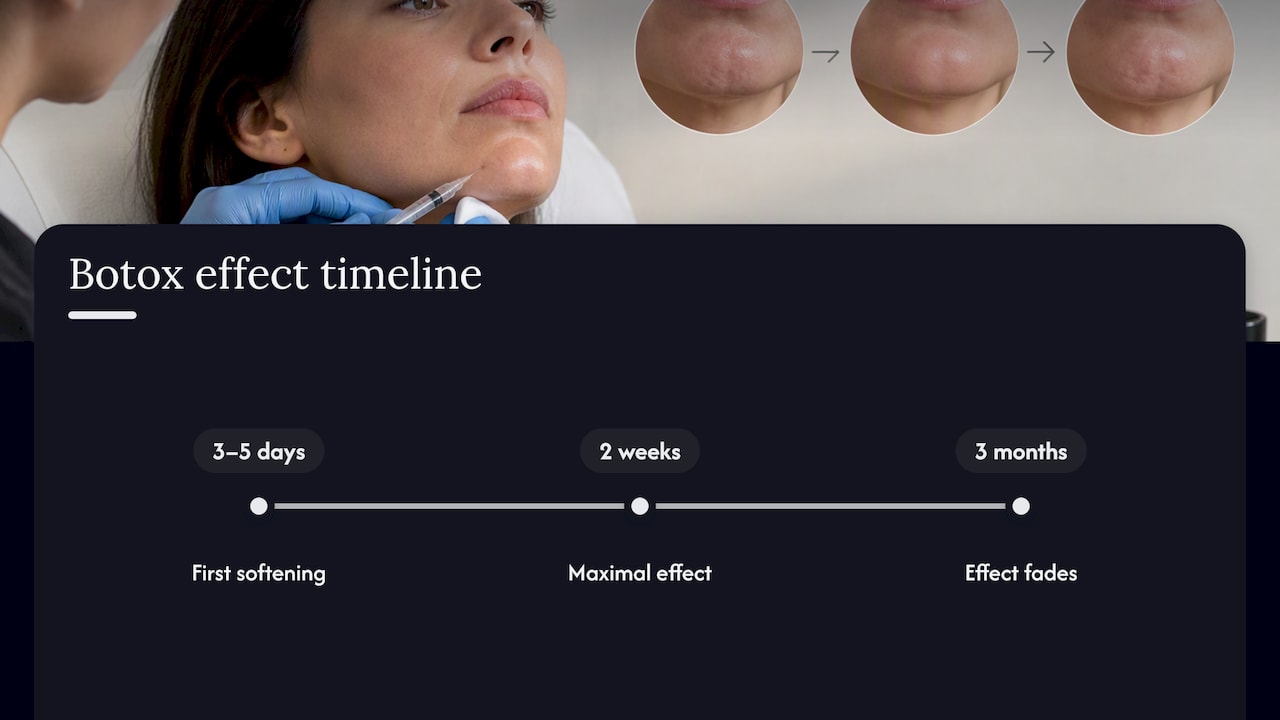
Timing follows a fairly predictable pattern across patients. Hospital and clinical patient information consistently describes onset within 3 to 5 days, a peak effect at roughly two weeks, and an average duration of about three months before the muscle gradually regains activity and dimpling can return.
What the treatment involves
A proper consultation comes before any injection. Your practitioner should take a medical history, check for contraindications, discuss realistic outcomes, photograph the chin at rest and in motion, and talk you through consent before anything happens.
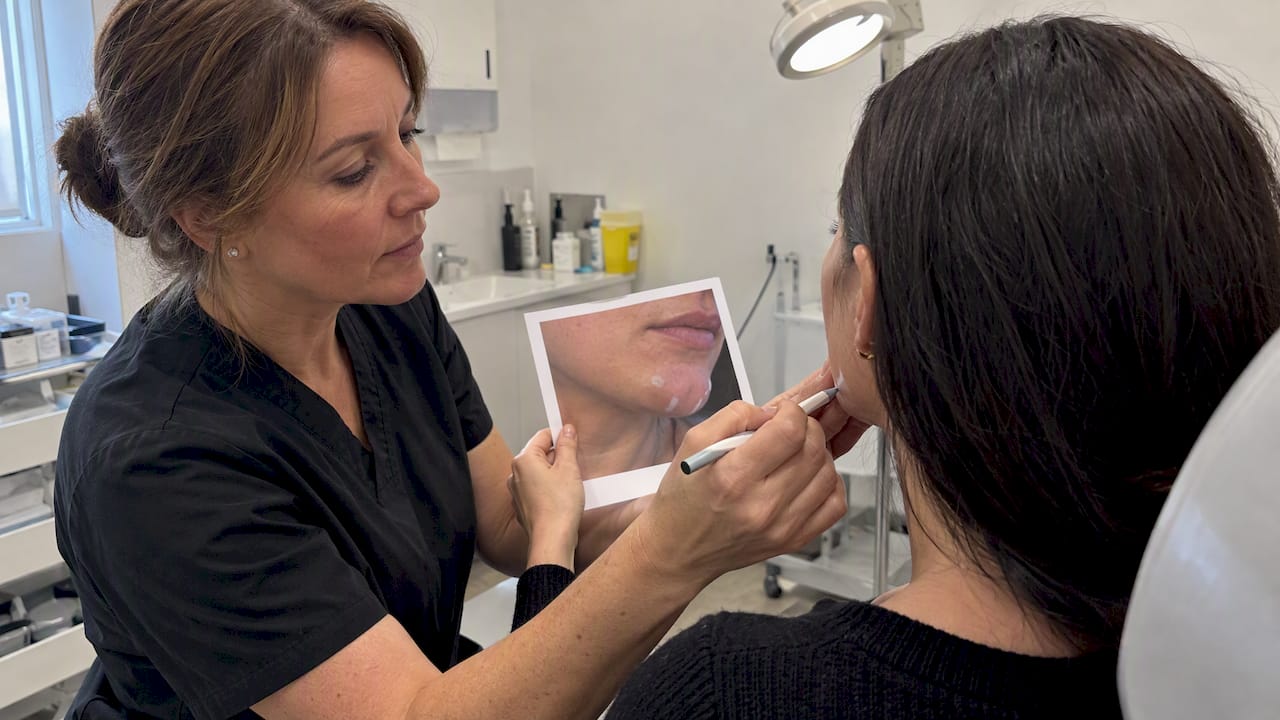
- Assessment: the clinician identifies the mentalis at rest and during contraction, marking injection points relative to the mental sulcus, the crease beneath the lower lip.
- Injection: treatment typically uses two injection points within the muscle belly, staying at least 1 centimetre below the mental sulcus to avoid diffusion into neighbouring muscles.
- Dosing: a total dose of around 10 units is commonly referenced for this area, though the final amount is a clinical judgement based on muscle strength and chin size.
- Aftercare instructions: you’re told how to care for the area over the following days before you leave.
The appointment itself is quick, usually ten to fifteen minutes once assessment is done, with no need for anaesthetic beyond the fine needle itself. Mild stinging is normal; significant pain is not. If one side of the chin shows more movement than the other at follow-up, a conservative touch-up on the weaker side can even things out rather than redoing the whole treatment. Our step-by-step Botox guide walks through what a typical visit looks like from booking to aftercare.
Pro Tip: Ask your practitioner to show you their injection points on a photo of your own chin before they begin: it’s a quick way to confirm they’ve mapped your anatomy rather than working from a generic template.
How long results take and how long they last
Expect the first softening of dimples within 3 to 5 days, with the fullest effect visible at around the two-week mark. From there, most patients enjoy a smooth chin for roughly three months before the muscle’s activity gradually returns and touch-ups become worth considering.
A large retrospective review of botulinum toxin for lower-face rejuvenation across 400 patients found progressive improvement with repeated sessions, suggesting the muscle can become easier to control over successive courses. Clinicians typically track progress through before-and-after photography alongside your own feedback on texture and movement, rather than relying on a single visual check.
Side effects: what’s common, what’s rare
Most reactions to chin Botox are minor and short-lived. Bruising, mild swelling, a passing headache or temporary local weakness around the injection site are the most frequently reported, and research on botulinum toxin in the lower face puts common, temporary side effects at 1 to 10% of patients, with serious complications rare.
- Bruising or swelling usually settles within a few days and responds well to gentle icing.
- Temporary local weakness affecting lip movement or speech is uncommon and resolves as the toxin wears off.
- Asymmetry, where one side relaxes more than the other, is usually correctable with a conservative touch-up rather than a full retreatment.
- Difficulty swallowing or breathing is rare but requires urgent medical attention if it occurs.
If you notice sudden difficulty swallowing, speaking clearly, or breathing after treatment, this needs emergency medical assessment rather than a wait-and-see approach.
Diffusion into the orbicularis oris or depressor anguli oris, which can cause lower lip weakness, is the main technical risk, and it’s why practitioners deliberately stay clear of the mental sulcus when placing injections. For a deeper look at UK-specific safety considerations, our guide to Botox side effects covers what to watch for across different treatment areas.
Who suits Botox and when to combine treatments
Botox for a pebbly chin works best for a specific profile of patient, and a proper assessment should confirm fit before booking.
- You show dynamic dimpling that worsens with lip movement or expression rather than texture that’s present at rest.
- You have realistic expectations about a temporary result lasting around three months rather than a permanent fix.
- You have no contraindications, such as neuromuscular conditions or pregnancy, that would rule out botulinum toxin.
- Your chin profile is otherwise proportionate, without significant retrusion driving the appearance.
Where the chin is also recessed or lacks volume, Botox alone may smooth the texture without addressing the underlying shape. Randomised, evaluator-blinded research on combining botulinum toxin with hyaluronic acid filler for chin retrusion found better outcomes in selected patients than filler alone, which is why some practitioners suggest pairing the two rather than treating dimpling in isolation. Our overview of dermal fillers explains how that volumising approach works alongside muscle-relaxing treatment.
Pro Tip: If your chin looks recessed as well as dimpled, raise this at consultation: treating the muscle without addressing shape can leave you smooth but still unsatisfied with profile.
Aftercare and what to do about bumps
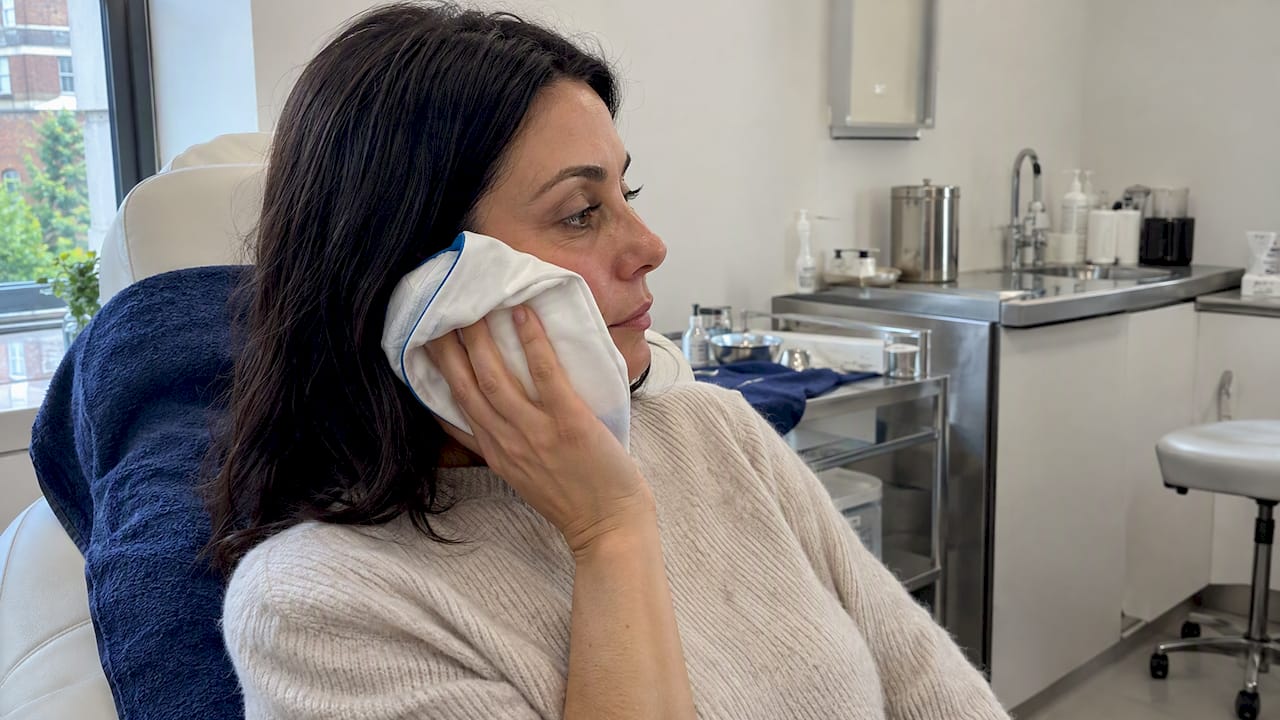
Good aftercare reduces the odds of migration and keeps results predictable. For the first 24 to 72 hours, avoid massaging or rubbing the treated area, skip vigorous exercise for a few hours, and use ice if swelling appears. Arnica is commonly recommended to reduce bruising.
- A small bump at the injection site is usually localised swelling or a temporary nodule from the injection itself and tends to settle within a day or two.
- Persistent lumps beyond a week are worth mentioning to your clinic rather than massaging yourself, since manipulation can encourage the toxin to spread beyond the target muscle.
- Visible asymmetry at the two-week mark, once full effect has set in, is the right time to book a review, where a conservative touch-up on the under-treated side is the standard correction.
Choosing a safe clinic for chin Botox
Credentials matter as much as technique when it comes to botulinum toxin near the mouth. Before booking, check that your practitioner is a regulated medical professional such as a GMC-registered doctor or NMC-registered nurse, that the premises are CQC-registered, and that they take you through proper written consent, documented emergency protocols and clear aftercare guidance before treating you.
- Confirm the injector’s professional registration and specific experience with perioral and chin anatomy.
- Ask whether the clinic is CQC-registered and what emergency protocols are in place.
- Expect a written consent process and a printed or digital aftercare sheet, not just verbal advice.
The UK government has been tightening oversight of non-surgical cosmetic procedures, moving towards mandatory licensing for treatments including botulinum toxin, which makes checking a practitioner’s regulation and a clinic’s CQC status more relevant than ever. We operate from CQC-registered premises and are members of the ACE Group, a body focused on patient safety standards in aesthetic medicine, and our practitioners are medically trained specialists rather than generalist beauty therapists.
A conservative view on treating chin dimpling
Chin dimpling responds well to Botox, but the margin for error near the mouth is narrower than in many other treatment areas. We’d rather see a practitioner start with a cautious dose, then bring a patient back for a small top-up than risk overcorrecting and affecting lip movement. Choose a regulated clinician who documents their plan and talks you through realistic timelines before you book.
— Vishul
How we can help with chin Botox
We treat pebbly and dimpled chins regularly, using a conservative, anatomy-led approach with two mentalis injection points planned around your own chin shape rather than a fixed template.

Booking is straightforward, whether you’d prefer an in-person consultation or a virtual one first to discuss suitability before committing to a date.
- Our Anti Wrinkle treatments, which cover chin dimpling, are priced at £200 to £358 per session depending on the areas treated.
- Consultations can be booked virtually or in person with our medically trained team.
- Full details on our approach to natural-looking results sit on our Botox service page.
If chin retrusion or volume loss is part of what’s bothering you, we can discuss adding filler at the same visit rather than treating the dimpling in isolation. Book a consultation through our Botox page to get a personalised assessment and a clear quote before you commit to anything.
This article is general information, not a substitute for advice from a qualified doctor. Consult a qualified healthcare professional about your own circumstances before acting on anything here.
FAQ
Why do I have a bump on my chin after Botox injections?
A small bump straight after injection is usually localised swelling or a tiny fluid bump from the needle itself, and it typically settles within a day or two. If a lump persists beyond a week, contact your clinic rather than massaging the area, since this can encourage the product to spread beyond the muscle it was meant to treat.
What is the riskiest place for Botox?
Areas near the mouth, including the chin and lips, carry more risk than regions like the forehead because nearby muscles control speech and the ability to hold fluids in the mouth. This is why staying at least 1 centimetre below the mental sulcus matters so much for chin treatment specifically.
What causes deep chin wrinkles?
Deep chin wrinkles and dimpling most often come from an overactive mentalis muscle pulling repeatedly on the skin, though static creases can also reflect skin laxity, scarring or sun damage that persist even when the muscle is at rest. A practitioner assessing the chin both still and in motion can usually tell which factor is driving the appearance.
Can Botox be used to treat a wrinkled chin?
Yes, botulinum toxin is a well-established treatment for chin dimpling caused by mentalis overactivity, with visible smoothing typically appearing within 3 to 5 days of treatment. Where wrinkling comes from static skin changes rather than muscle movement, Botox alone may offer limited improvement and a combined approach could suit better.
Sources
- BCAM — muscle relaxing injections patient information
- PMC article on botulinum toxin safety and satisfaction
- Cosmetic treatment using botulinum toxin in the oral and maxillofacial area: narrative review
- The long-term efficacy of botulinum toxin type A for lower facial rejuvenation in 400 patients
- UK government statement on cosmetic-procedure safety