
Acne scar treatments are not about chasing poreless, filtered skin. They are about improving texture, softening visible indentations and helping your skin look more even, healthy and confident in real life. The right approach starts by identifying what is actually present, because a mark left after a spot and a true acne scar require very different treatment plans.
For many patients, acne may have cleared years ago, yet the reminders remain every time light catches the skin from a certain angle or make-up settles unevenly. A considered clinical assessment can establish the type of scarring, your skin tone, your history of acne and how much downtime you are comfortable with before recommending a route forward.
Why a personalised approach to acne scar treatments matters
Acne scarring is rarely uniform. One person may have narrow, deep ice-pick scars alongside wider boxcar scars, while another has rolling scars that create a soft, uneven texture across the cheeks. Some patients are primarily concerned by persistent red or brown marks rather than a change in the skin’s surface.
This distinction matters. Post-inflammatory redness or pigmentation can often respond well to targeted skincare and carefully selected energy-based or peel treatments. Indented scars, however, are caused by changes beneath the skin and usually need treatments that stimulate collagen, release tethered tissue or resurface the upper layers of skin. Treating all concerns with one modality can be disappointing and, in some cases, unnecessarily irritating.
Your consultation should also consider skin type and tone. Darker skin tones can be more prone to post-inflammatory hyperpigmentation, particularly if treatments are too aggressive or skin preparation is overlooked. A premium treatment plan should balance visible improvement with the protection of your skin barrier and long-term skin health.
Understanding the main types of acne scarring
Atrophic scars
The most common acne scars are atrophic scars, which sit below the surrounding skin. Ice-pick scars are small and narrow but extend deeply into the skin. Boxcar scars are broader, with more defined edges, while rolling scars create a wave-like or shadowed appearance, often on the cheeks.
Atrophic scars may need a combination of treatments because their depth and structure vary even within one area of the face. Improvement is typically gradual. The aim is to make scars less noticeable, rather than promise their complete removal.
Raised scars
Hypertrophic and keloid scars are raised rather than indented. They are more commonly found on the jawline, chest, back and shoulders, and need specialist assessment before treatment. Approaches suitable for indented facial scars are not necessarily appropriate for raised scars, so this is an area where medical oversight is particularly valuable.
Marks that are not scars
Flat red, pink, brown or grey marks after acne are frequently mistaken for scars. These marks can fade over time, but the process may be slow. Sun exposure, active breakouts and unsuitable skincare can prolong their appearance. Establishing whether the concern is colour, texture or both is one of the most useful first steps in creating an efficient treatment plan.
Treatments that may be included in a bespoke plan
Medical-grade skincare and skin preparation
Skincare is not a substitute for every procedure, but it is the foundation of responsible scar treatment. A tailored routine may support cell turnover, pigmentation management, collagen production and barrier repair. It can also help control ongoing acne, which is essential before investing in scar correction.
Ingredients such as retinoids, azelaic acid, vitamin C and pigment-regulating formulations may be appropriate for some patients, depending on sensitivity, skin tone and active acne. Strong products are not automatically better. Over-exfoliation can inflame the skin, worsen pigmentation and make future treatments harder to tolerate.
Microneedling and radiofrequency microneedling
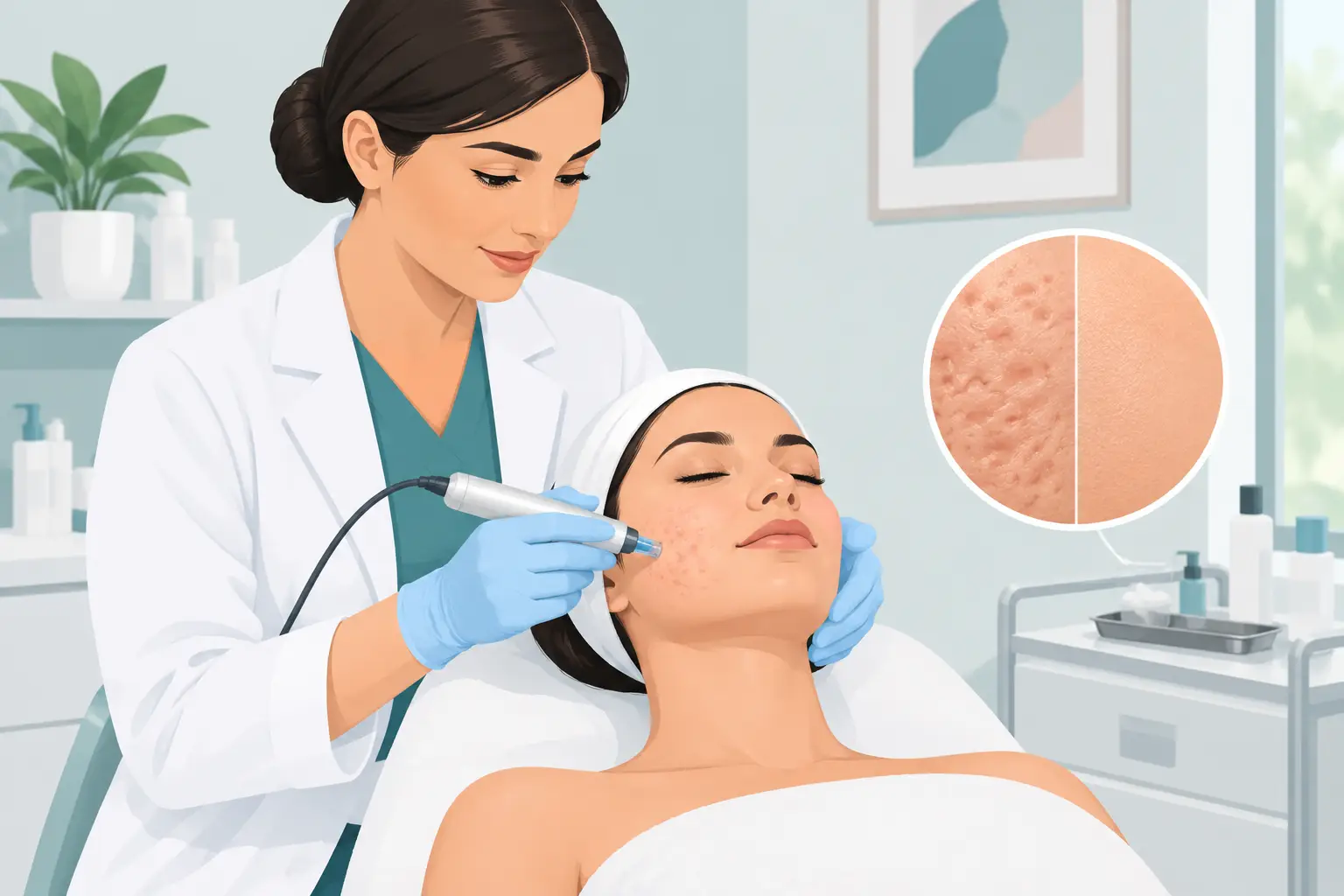
Microneedling creates controlled micro-injuries that encourage the skin’s natural repair response and collagen production. It can be a valuable option for mild to moderate textural irregularity, particularly rolling scars and some shallow boxcar scars.
Radiofrequency microneedling combines needling with heat delivered beneath the skin’s surface. It may offer a more intensive collagen-stimulating option for appropriate candidates. Results develop over a series of treatments and continue to evolve as new collagen forms. Expect a temporary period of redness and sensitivity, rather than an overnight transformation.
Chemical peels
A professionally selected chemical peel can improve dullness, uneven tone, post-acne marks and superficial texture. The depth and formulation must be chosen carefully. Lighter peels generally involve less downtime but may require a course of treatments, while stronger peels can create more noticeable peeling and need more careful aftercare.
Peels are often most effective as part of a wider skin optimisation plan. They can refine the skin’s surface, but they will not lift deep, tethered scars on their own.
Subcision
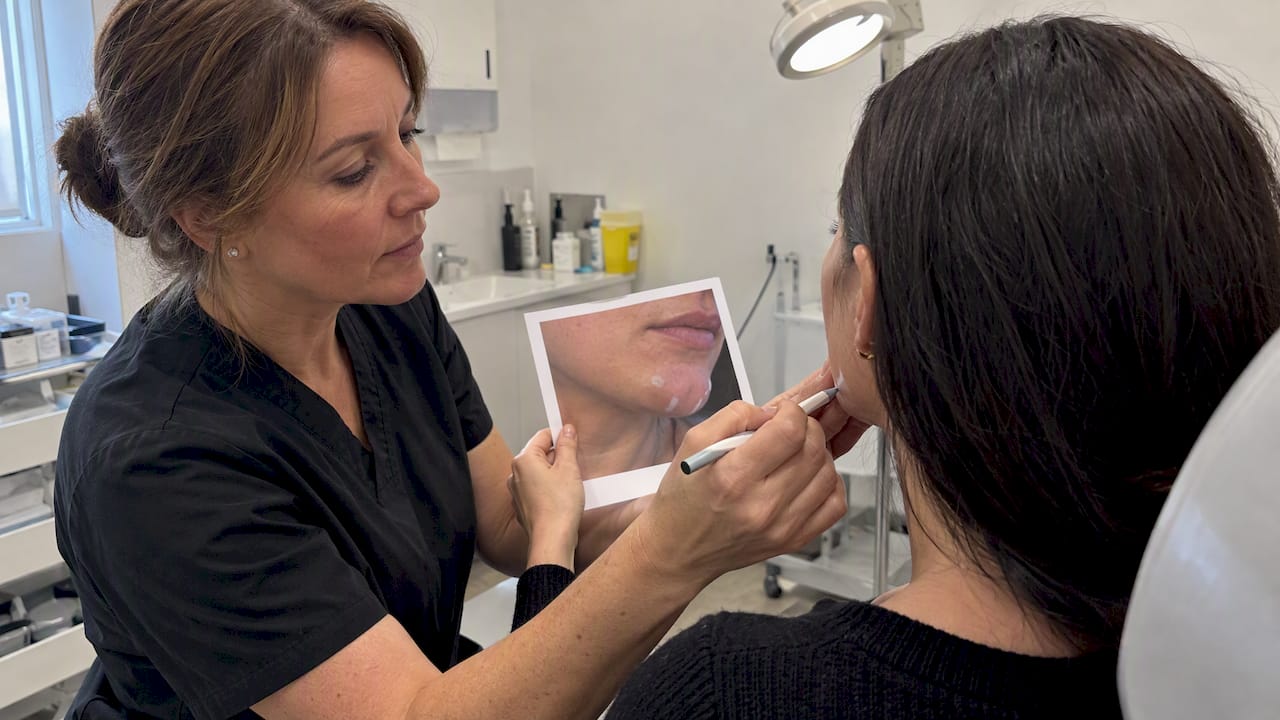
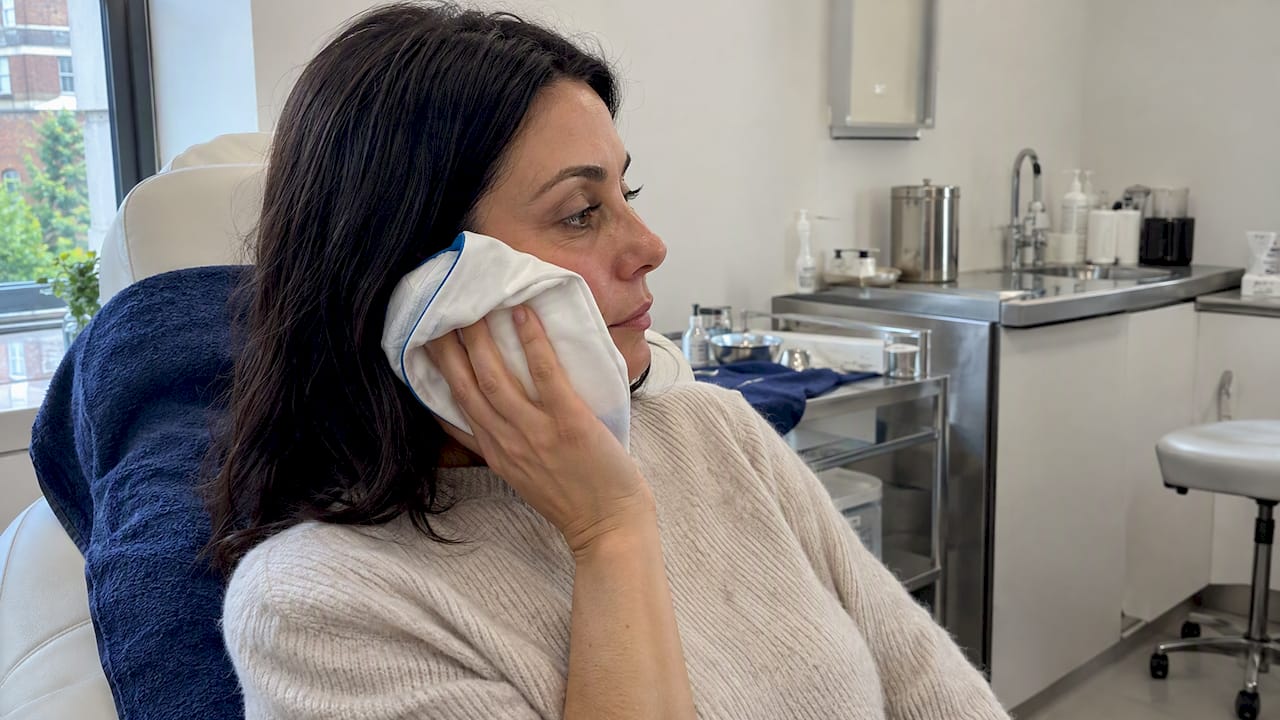
Rolling scars can be tethered to deeper structures beneath the skin. Subcision is a technique used to release these fibrous bands, allowing the depressed area to lift and settle more smoothly over time. Bruising and swelling can occur, and treatment should be performed by an experienced medical practitioner who understands facial anatomy.
Subcision is commonly paired with collagen-stimulating treatments or, in selected cases, carefully placed dermal filler. This can provide support while the skin remodels, but suitability depends on the scar pattern, facial structure and individual treatment goals.
Targeted resurfacing and scar techniques
Fractional laser treatments, TCA CROSS and other focal scar techniques can be appropriate for certain scar types, including more defined boxcar and ice-pick scars. These treatments are highly technique-dependent and are not right for every skin type or concern.
The trade-off is often greater downtime and a more demanding aftercare period. Patients who can commit to meticulous sun protection, prescribed skincare and recovery guidance may be better candidates than those looking for a quick treatment before an event.
What results can you realistically expect?
The most credible answer is that it depends on the type of scarring, the treatment selected and how your skin responds. Many patients see meaningful improvements in smoothness, light reflection and overall skin quality, particularly after a course of combined treatments. Deep scars may become softer and less visible, but they may not disappear completely.
Photographs taken in consistent lighting are useful for tracking progress. Acne scars can look very different in daylight, overhead lighting and close-up photography, so a professional assessment should focus on the skin itself rather than a single image or social media comparison.
Collagen remodelling takes time. Depending on the procedure, results may build over several weeks or months, and a plan may be adjusted as your skin progresses. This slower approach can be reassuring: it allows treatments to be refined rather than pushing the skin too hard in pursuit of speed.
Safety, aftercare and choosing the right practitioner
Scar treatment should always begin with a thorough consultation. Your practitioner should ask about active acne, previous treatments, medication, history of cold sores, sensitivity, pigmentation changes and scarring tendencies. They should also explain expected downtime, likely side effects, alternative options and when treatment should be delayed.
Do not treat active, inflamed acne as an afterthought. Controlling breakouts first reduces the risk of creating new scars while treating old ones. Likewise, avoid introducing unadvised acids, scrubs or retinoids immediately before and after procedures. Your aftercare may include gentle cleansing, barrier-supportive hydration, daily broad-spectrum SPF and a temporary pause on active ingredients.
For patients seeking acne scar treatments in London, a consultation-led clinic offers the advantage of a plan built around skin safety as well as visible refinement. At The Aesthetics Room, this means considering your skin concerns within a broader, bespoke skin optimisation protocol rather than treating one scar in isolation.
The most satisfying results tend to come from patience, precision and a plan that respects your skin. A thoughtful consultation can turn a frustrating, long-standing concern into a realistic pathway towards clearer, smoother-looking skin and renewed confidence.