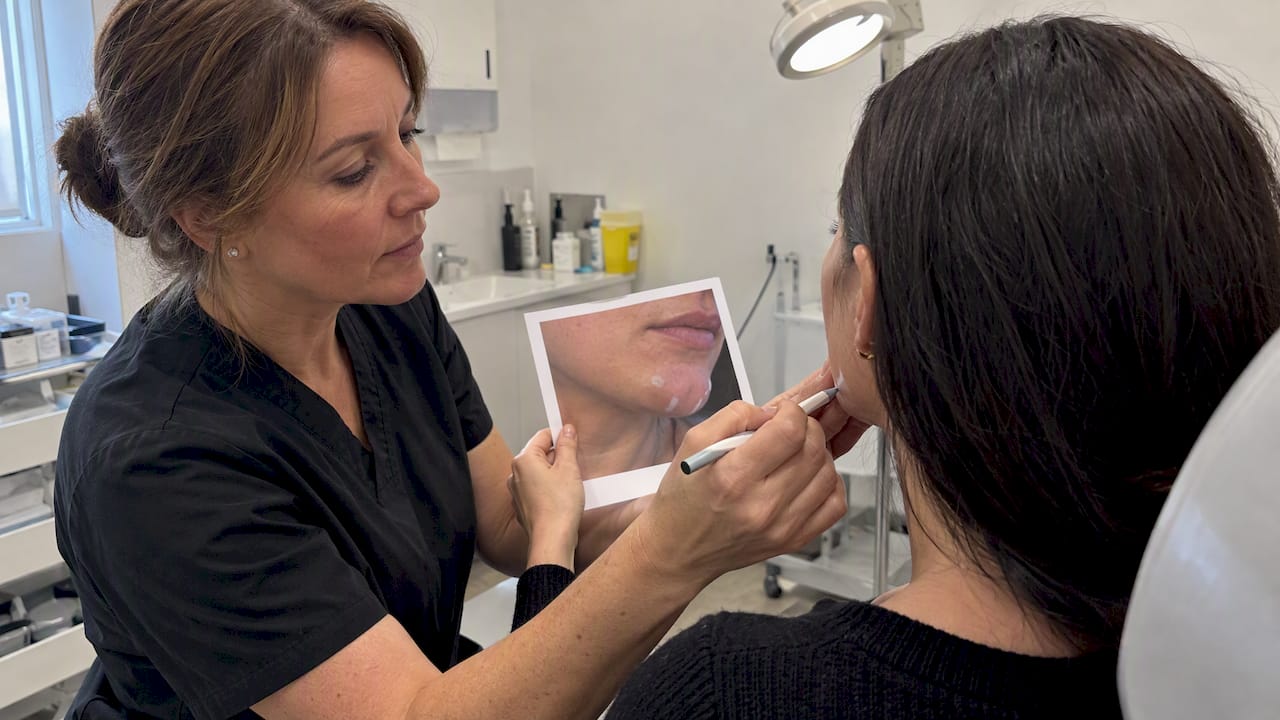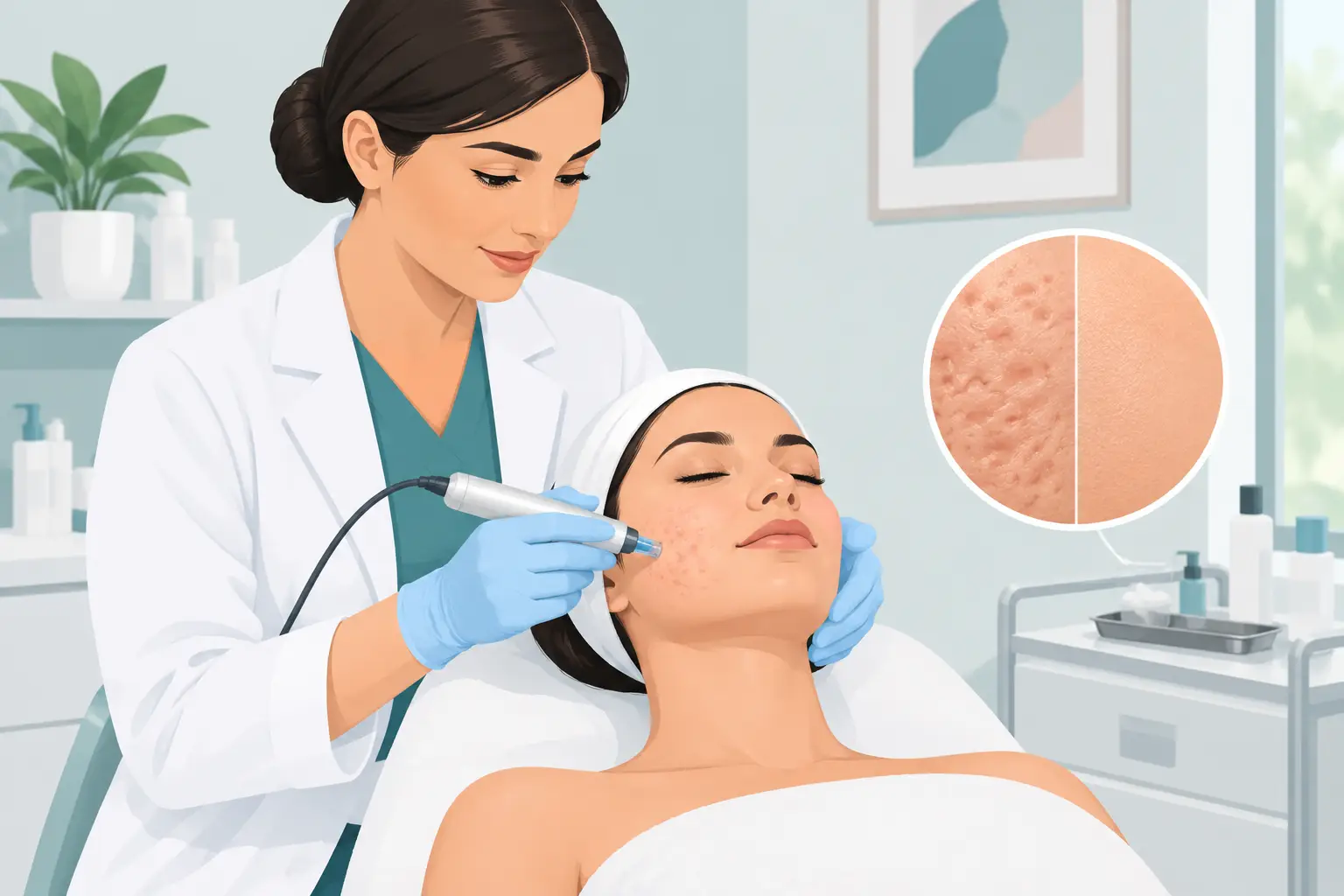
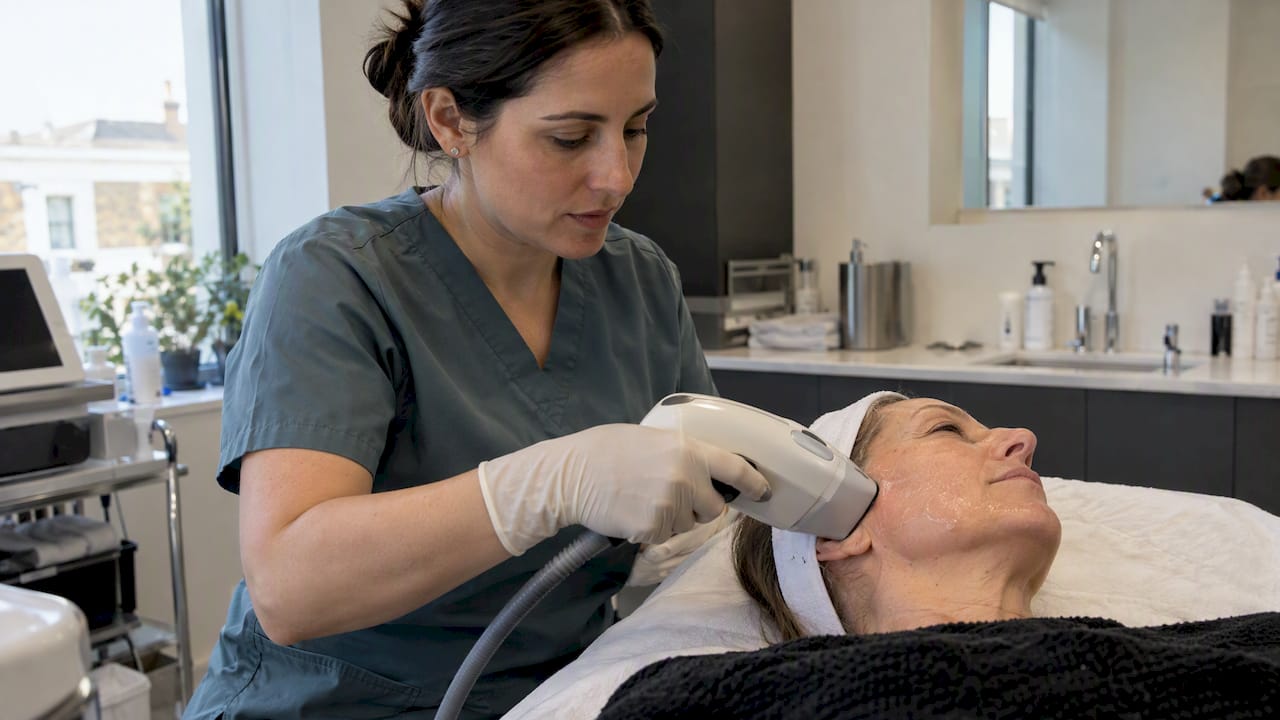

Yes, for mild to moderate skin laxity, non-surgical techniques such as radiofrequency and microfocused ultrasound can produce measurable tightening. They work gradually as collagen remodels over three to twelve months, and for severe sagging, surgery remains the more predictable route.
TL;DR:
- Non-surgical skin tightening effectively improves mild to moderate laxity through collagen remodelling, but results take up to a year to fully develop.
- Microfocused ultrasound shows most patients experience skin tightening or wrinkle reduction within 90 days, with gradual improvements up to 12 months.
- Risks are generally low, with major complications in about 2% of cases, mainly transient, and treatments require proper practitioner qualification and safety protocols.
- Effectiveness depends on skin quality and laxity severity, with severe sagging better addressed through surgical options.
- Most treatments involve minimal downtime, with post-procedure care emphasizing sun protection and gentle cleansing, while home remedies cannot substitute clinical energy-based devices.
Table of Contents
- How these treatments work: heat, collagen and what the evidence shows
- Main non-surgical options compared
- Who benefits most, and what results realistically look like
- Choosing a clinic and practitioner safely
- Aftercare, side effects and downtime by treatment
- The Aesthetics Room: how we assess suitability
- Do natural and home remedies actually tighten skin?
- What I’d tell a friend weighing their options
- Book a consultation at our clinic
- FAQ
- Sources
How these treatments work: heat, collagen and what the evidence shows
Most non-surgical tightening devices share one principle: controlled heat. Radiofrequency and microfocused ultrasound (MFU) deliver energy to precise depths in the dermis and underlying tissue, creating small, deliberate zones of thermal injury. The body responds to this controlled damage by producing new collagen and elastin, a process called neocollagenesis and neoelastinogenesis. This is why results build over weeks rather than appearing overnight.
A 2021 systematic review of non-surgical skin tightening technologies confirmed that both radiofrequency and MFU work this way, heating the dermis and subdermal layers to stimulate remodelling, and found the approach effective for mild to moderate laxity rather than advanced sagging. The energy is targeted at specific depths, often 1.5mm, 3mm and 4.5mm beneath the surface, so the heat reaches the layers where collagen actually lives rather than just warming the skin’s surface.
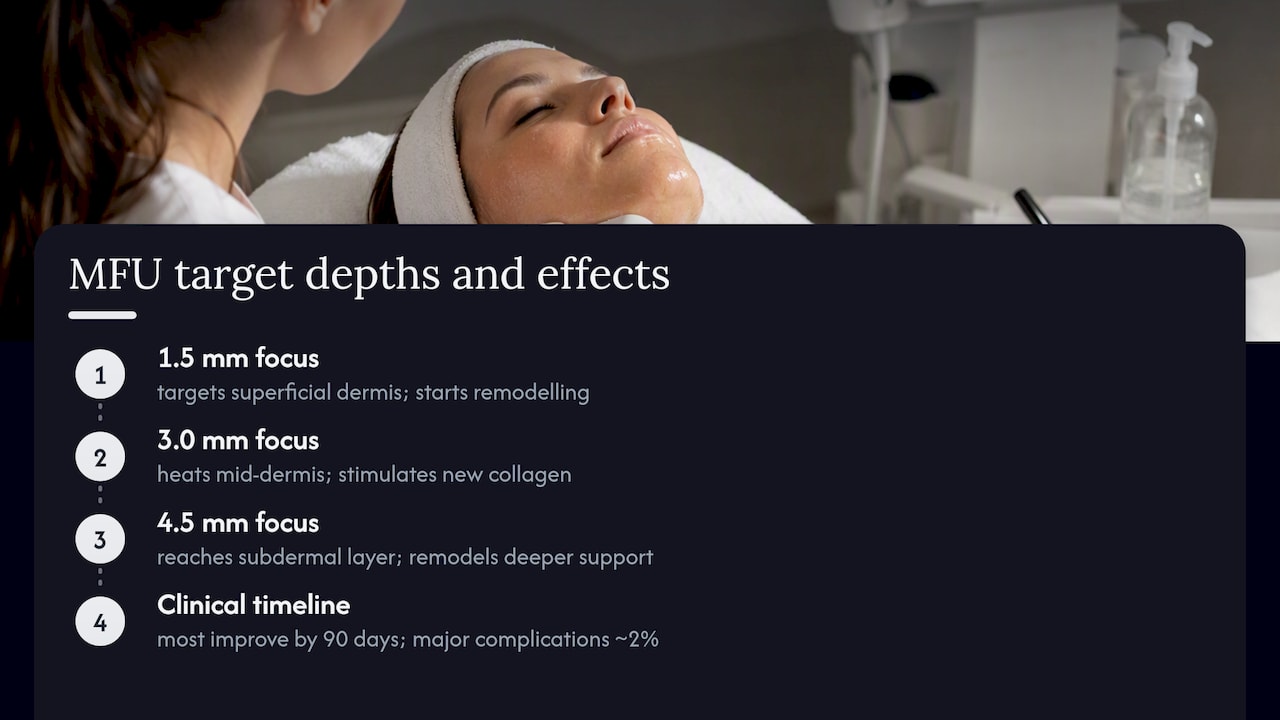
One of the clearest data points comes from MFU. A 2023 pooled analysis of microfocused ultrasound studies found that the vast majority of patients showed improvement in skin tightening or wrinkle reduction by 90 days, with subjective improvements continuing to build for up to a year. That slow build matters: collagen remodelling is a biological process, not a switch, so patience is part of the treatment.
Adverse events in the pooled MFU data were generally transient, with major complications recorded in roughly 2% of pooled reports, which gives a reasonable sense of the risk profile against the benefit.
Main non-surgical options compared
Several technologies fall under the non-surgical skin tightening umbrella, and each suits a slightly different concern.
- Radiofrequency (RF): monopolar and bipolar RF devices heat the dermis to stimulate collagen, typically over three to six sessions, with little to no downtime; a systematic review of RF applications found measurable improvement in facial and body laxity with an acceptable complication profile.
- MFU/HIFU: ultrasound energy targets deeper layers, including the SMAS, the same fibrous layer surgeons tighten during a facelift, which is why it is often described as the closest non-surgical equivalent; treatment can feel uncomfortable but usually needs just one session with results building for up to 12 months.
- Microneedling, including RF microneedling: fine needles create micro-channels that trigger a wound-healing response; adding radiofrequency through the needles reaches deeper tissue without breaking the surface as aggressively as laser.
- Lasers (non-ablative and fractional ablative): effective for texture and mild tightening together, but fractional ablative lasers carry a higher risk of post-inflammatory hyperpigmentation and more noticeable downtime.
- Thread lifts and minimally invasive lifts: these use dissolvable sutures to mechanically reposition tissue for an immediate lift, which is a different mechanism from device-based remodelling and carries its own set of risks, including thread migration and asymmetry.
A 2024 comparative meta-analysis of fractional microneedle radiofrequency against fractional CO2 laser found the two approaches had comparable clinical effectiveness, but RF microneedling carried a significantly lower risk of pigmentation problems, which matters particularly for darker skin tones where PIH risk is a bigger factor in choosing a treatment.
Pro Tip: If you are unsure which technology suits your skin, ask your practitioner which depth of tissue they are targeting and why, since depth is what separates a surface refresh from genuine structural tightening.
Anyone wanting more detail on how energy-based devices work can read our breakdown of radiofrequency treatment for skin.
Who benefits most, and what results realistically look like
Non-surgical tightening suits people with mild to moderate laxity, reasonably elastic skin, and realistic goals rather than a surgical-equivalent transformation. It tends to work less well where skin has become very loose and heavy, often from significant weight loss, or where the degree of laxity is already severe. Body mass and skin quality both influence outcomes, which is why a proper assessment of your skin laxity matters before choosing a treatment path.
Expect visible change from around three months, with results continuing to build for up to a year as collagen remodels. Most protocols involve one to several sessions depending on the technology, and maintenance treatments every one to two years help sustain the effect once natural collagen production slows again with age.
Choosing a clinic and practitioner safely
Safety starts with who is holding the device, not just which device it is. Seek out regulated healthcare professionals and check that the clinic carries CQC registration where relevant, since UK regulators have been developing a licensing scheme and extending CQC oversight specifically for higher-risk non-surgical procedures to improve patient safety.
Before booking, watch for these warning signs:
- No proper consultation or medical history review before treatment.
- No written consent form or explanation of risks.
- Pressure to buy bundled packages before you have decided on one treatment.
- No aftercare advice or way to contact the clinic if something feels wrong.
- No verifiable before-and-after images or contactable clinic address.
Reading more on why registered practitioners matter is worth doing before your first consultation, not after.
Aftercare, side effects and downtime by treatment
Most non-surgical tightening treatments cause only mild, short-lived side effects: redness, swelling or tenderness in the treated area. NHS patient guidance on microneedling notes the area may feel painful and tight for one to three days, and that following aftercare advice reduces the risk of complications.
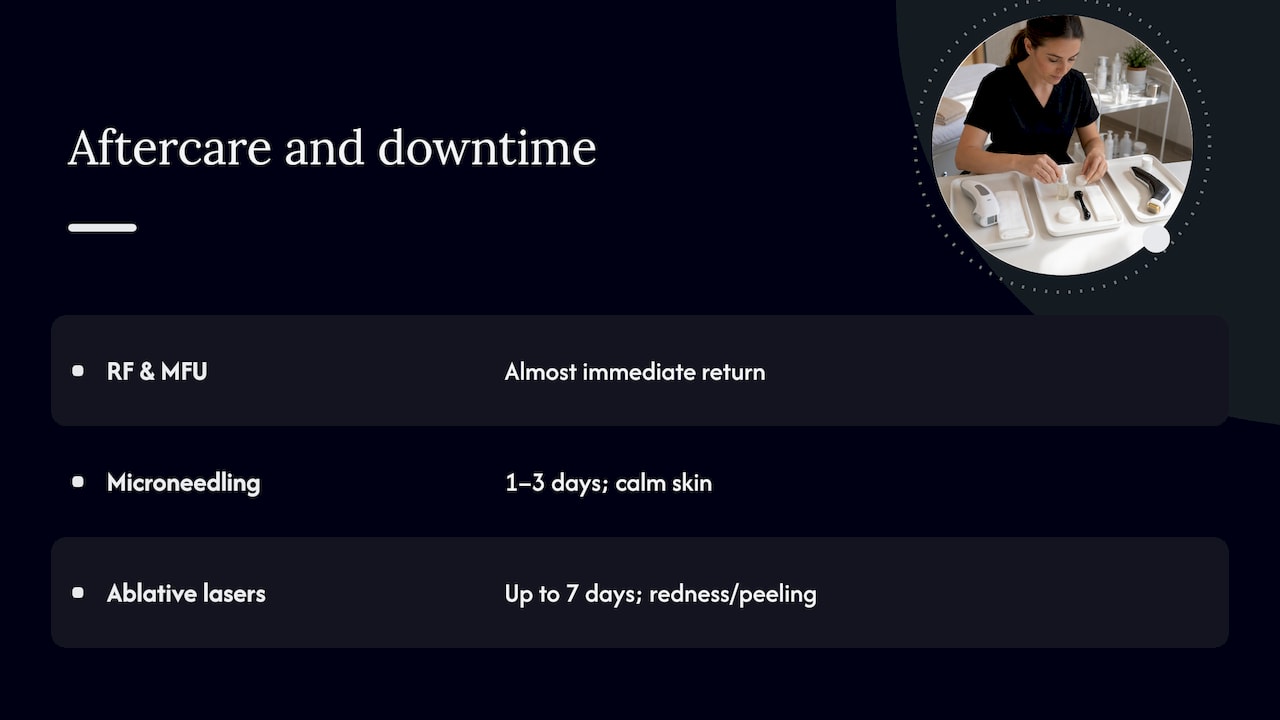
A simple aftercare routine covers most bases: avoid direct sun exposure, cleanse gently rather than scrubbing, skip saunas and strenuous exercise for around 72 hours, and contact the clinic if swelling or pain worsens rather than improves. Downtime is generally minimal across the board: RF and MFU allow an almost immediate return to normal activity, microneedling needs a day or two of calm skin, and ablative lasers carry the longest recovery, sometimes up to a week of visible redness or peeling.
The Aesthetics Room: how we assess suitability
We operate as a clinic that prioritises patient safety standards in aesthetic medicine. Our non-invasive treatment range spans skin rejuvenation, microneedling and bespoke protocols built around your specific pattern of laxity rather than a single fixed package. Every assessment starts with your medical history and a physical examination of the areas of concern, because the right technology depends entirely on what we find. You can view our full price list for current treatments.
Do natural and home remedies actually tighten skin?
Topical products and home routines can support skin health, but they work on a different scale from clinical devices. Ingredients such as retinoids, vitamin C and peptide serums can help support the skin’s own collagen production over time, and a consistent skincare routine is a reasonable complement to in-clinic treatment rather than a replacement for it. Our partners at Cosmedica Skincare cover practical approaches to supporting collagen through topical care, which is worth reading if you want to understand what a serum can and cannot do.
Facial massage, dry brushing and at-home microcurrent devices are popular home remedies, but none of them reach the depth or intensity of heat that clinical RF or MFU devices deliver, and none trigger the same scale of controlled thermal injury that drives genuine remodelling. Hydration, a balanced diet and avoiding excess sun exposure all support skin quality generally, which makes any treatment, clinical or otherwise, more likely to hold its result. Think of home care as groundwork rather than a tightening treatment in its own right: it keeps skin in better condition, but it will not reverse established laxity the way a targeted energy-based device can.
What I’d tell a friend weighing their options
Choose non-surgical treatment for modest, natural-looking improvement, and ask for a surgical opinion if your laxity is marked or your goals go beyond what remodelling can deliver. Insist on a proper consultation and written consent either way.
— Vishul
Book a consultation at our clinic
A consultation with us starts with a review of your medical history and an examination of the areas you want to address, followed by a tailored plan rather than a one-size package. We talk you through realistic timelines and the technology best suited to your skin before anything is booked. Browse our price list to see current treatments and get in touch to arrange a consultation.
This article is general information, not a substitute for advice from a qualified doctor. Consult a qualified healthcare professional about your own circumstances before acting on anything here.
FAQ
Can you tighten saggy skin without surgery?
Yes, for mild to moderate laxity, technologies such as radiofrequency and microfocused ultrasound stimulate collagen remodelling that visibly firms skin over several months. Severe sagging generally responds better to surgical correction, since non-surgical devices cannot remove excess skin.
Is there a skin tightener that actually works?
Radiofrequency and MFU devices have the strongest evidence behind them, with pooled data showing most patients see improvement within 90 days that continues building for up to a year. Results depend heavily on your starting degree of laxity and skin quality.
Can sagging skin be firm again?
Skin can become noticeably firmer through treatments that trigger new collagen and elastin production, though the result is improvement rather than a full reversal to younger skin. A systematic review of these technologies found this kind of remodelling effective specifically for mild to moderate laxity.
What vitamin tightens saggy skin?
No vitamin tightens skin on its own, though topical vitamin C and retinoids can support the skin’s natural collagen production as part of a broader skincare routine. They work best alongside, not instead of, a clinical treatment aimed at existing laxity.
Sources
- PubMed: Non-surgical skin tightening technologies (2021 systematic review)
- A systematic review of microfocused ultrasound efficacy (2023)
- Comparative meta-analysis: FMR vs fractional CO2 laser (2024)
- UK government consultation: licensing of non‑surgical cosmetic procedures (2023)