
TL;DR:
- Choosing a medical spa requires verifying proper medical oversight, documentation, and facility standards to ensure safety and legal compliance.
- Thorough face-to-face consultations with licensed providers, qualified staff, and clear consent processes are essential for patient protection.
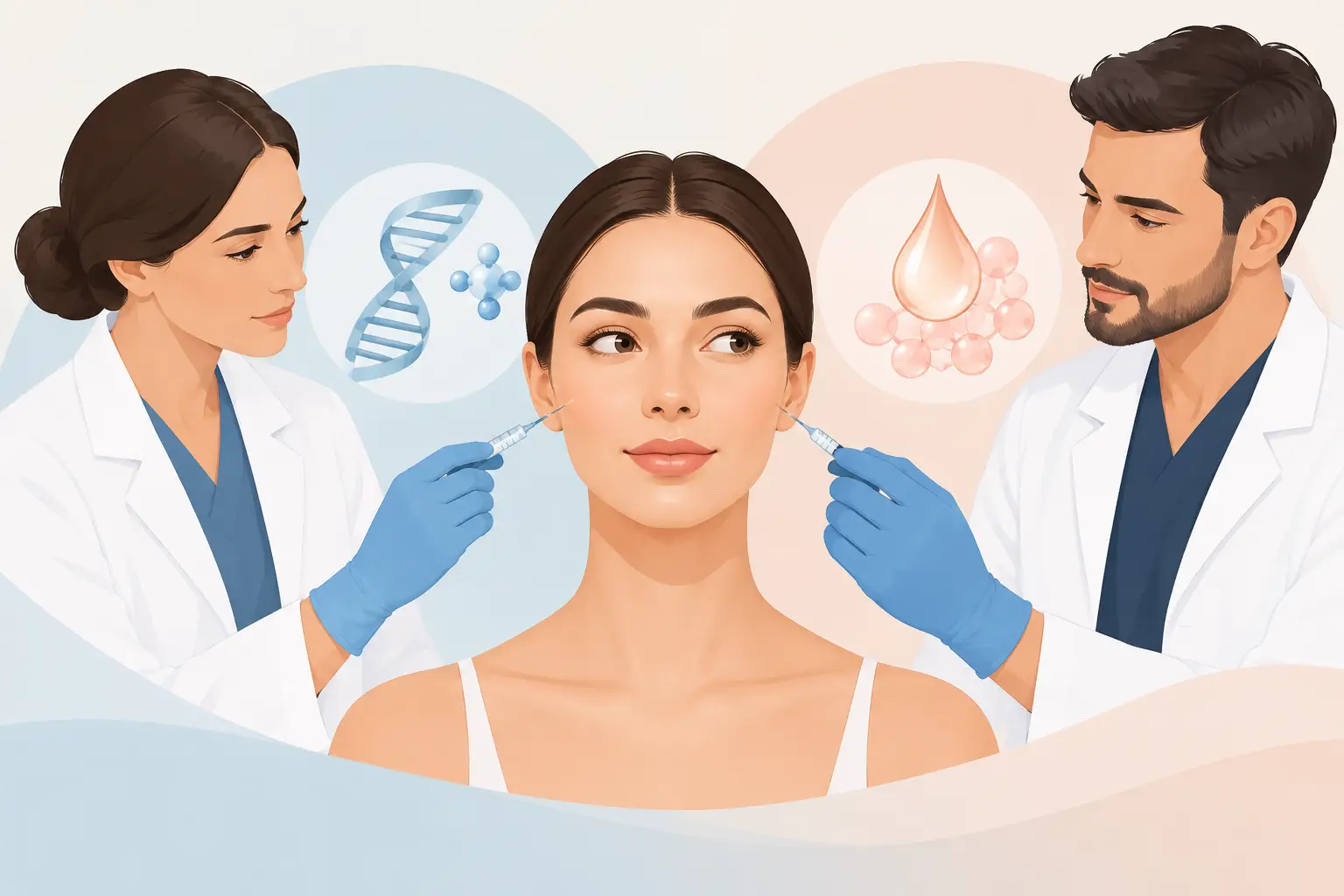
Choosing a medical spa is a decision that carries real clinical weight. Unlike a traditional beauty salon, a medical spa (also referred to as a med spa or medical aesthetics clinic) offers treatments that cross into regulated medical territory, from injectable neurotoxins to laser resurfacing. That distinction matters enormously. A well-constructed medical spa checklist helps you ask the right questions before you book, covering everything from the qualifications of the person holding the syringe to whether your health data is properly protected. Use it, and you turn an emotional decision into an informed one.
Table of Contents
- Key takeaways
- 1. Use a medical spa checklist as your starting framework
- 2. Verify medical oversight and provider credentials
- 3. Confirm a proper intake and informed consent process
- 4. Assess facility standards and operational essentials
- 5. Evaluate the consultation process before committing
- 6. Review staff qualifications and continuing education
- 7. Compare the full checklist before making your final decision
- My honest take on choosing a med spa
- Why Theaestheticsroom sets the standard for compliant care
- FAQ
Key takeaways
| Point | Details |
|---|---|
| Medical oversight is non-negotiable | Confirm a licensed medical director and supervising physician are formally attached to the clinic. |
| Separate forms signal proper practice | A compliant clinic uses distinct intake and informed consent documents, not a single generic form. |
| Facility standards protect you | Clean treatment rooms, emergency equipment, and verified data privacy measures are baseline requirements. |
| Staff qualifications vary widely | Check that your treating practitioner holds the correct licence for the specific procedure you want. |
| Your checklist should compare multiple clinics | Assessing more than one med spa against the same criteria gives you a reliable basis for decision-making. |
1. Use a medical spa checklist as your starting framework
The term “medical spa checklist” is widely used by prospective patients, but the formal industry equivalent is a medical aesthetics compliance assessment. Think of it as the structured framework professionals use to audit whether a clinic meets clinical and legal standards. For patients, applying the same logic means evaluating a clinic across five domains: medical oversight, documentation processes, facility standards, staff qualifications, and patient experience. Med spas operate under regulatory frameworks similar to doctors’ offices, where state boards enforce licensing, conduct standards, and practice requirements. Entering any clinic without verifying these areas is a genuine risk.
2. Verify medical oversight and provider credentials
This is the single most important item on any spa treatment guide. A legitimate medical aesthetics clinic must have a licensed medical director, typically a physician, who provides clinical oversight for all treatments. Without this, the entire operation may be operating outside the law.
What to check before you book:
- Is there a named, licensed medical director attached to the clinic?
- Is there a documented supervision agreement between the director and treating practitioners?
- Who will actually perform your treatment? A registered nurse, nurse practitioner, physician assistant, or aesthetician?
- Does the scope of that person’s licence cover the treatment you want?
The roles matter. Registered nurses and nurse practitioners can administer injectables in most jurisdictions, but only under defined supervision conditions. Aestheticians, regardless of their experience, are not medically licensed and cannot legally perform injectable or energy device treatments in regulated states or territories. Physician involvement via written agreements is required for injectable and energy device use in every regulated state, with specific models varying by location.
Pro Tip: Ask the clinic directly: “Who is your medical director, and will they be on-site or available during my treatment?” A hesitant or vague answer is a red flag.
State-by-state differences in medical director requirements mean you must confirm compliance based on your specific location. Do not assume that what is legal in one city or country applies universally.
3. Confirm a proper intake and informed consent process
Paperwork tells you a great deal about a clinic’s professionalism. A thorough medical aesthetics checklist always includes scrutiny of the documentation process, and specifically whether the clinic uses separate intake and informed consent forms.
Your intake form should collect:
- Full medical history, including chronic conditions and prior surgeries
- Current medications, including supplements and blood thinners
- Known allergies, particularly to anaesthetics or previous filler components
- Previous aesthetic treatments and any adverse reactions
- Your current skincare routine (relevant for laser and chemical treatments)
The informed consent document is legally and clinically distinct. It must outline specific treatment risks, realistic alternatives, and your authorisation to proceed. A clinic that hands you a single generic form covering all treatments at once is cutting clinical corners. A generic single form cannot replace the separate clinical and legal purposes of distinct intake and consent documents.
Pro Tip: If the consent form does not mention the specific product being used (including brand and concentration for injectables), ask for an updated document before proceeding.
Many clinics treat the clinical record itself as their primary risk-control document, documenting individualised assessment and specific treatment authorisation. This is good practice. It is also what a compliant clinic looks like from the inside.
4. Assess facility standards and operational essentials
The physical environment of a medical spa communicates its operational standards before a single treatment begins. When you visit for a consultation, observe the following.
What a compliant facility looks like:
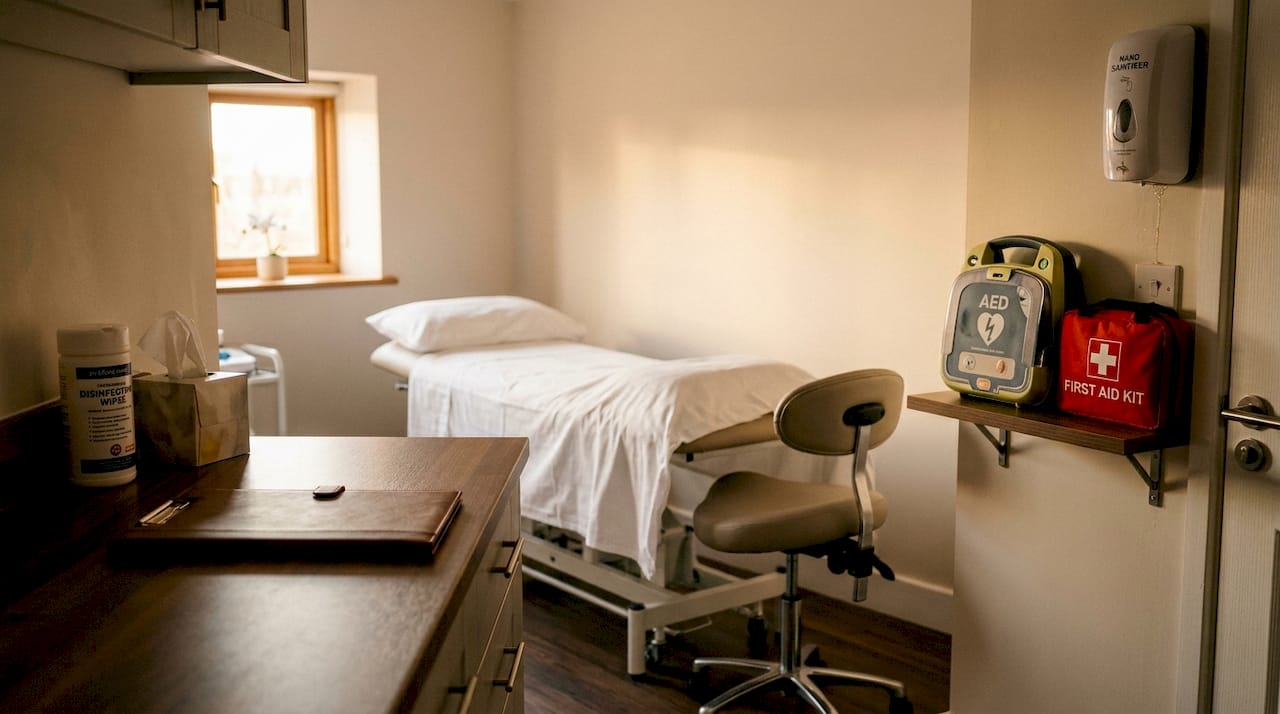
- Treatment rooms are clean, well-lit, and free of clutter
- Single-use disposables are used and disposed of visibly
- Emergency equipment, including an AED and first aid kit, is accessible on-site
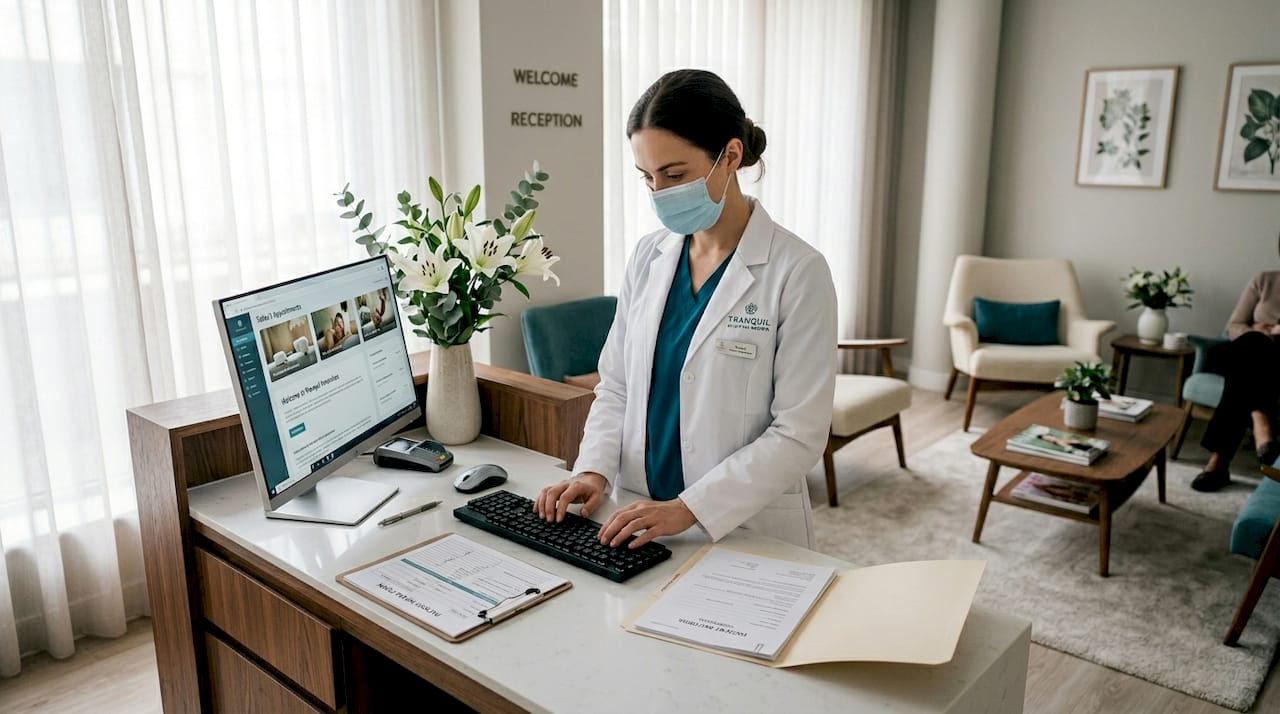
- Reception staff can explain the clinic’s privacy and data protection policy clearly
- Patient records are managed digitally, with secure access controls
Treatment rooms should include AEDs, first aid kits, and ergonomic setup as standard operational requirements. This is not optional; it is the baseline for any clinic performing medical procedures.
Data privacy is another critical area. In many jurisdictions, vendors who handle patient health information must have signed HIPAA Business Associate Agreements (BAAs) in place. BAAs specify permitted uses, safeguards, and breach responsibilities for any third party accessing patient data, including the booking software and electronic records systems a clinic uses. Electronic health records and digital booking systems must have proper BAAs in place due to the extent of patient health information they access.
| Facility element | Must-have | Nice to have |
|---|---|---|
| Licensed medical director | Yes | N/A |
| Emergency equipment on-site | Yes | N/A |
| Digital records with secure access | Yes | N/A |
| BAA with digital vendors | Yes (where required by law) | N/A |
| Dedicated aftercare room | No | Yes |
| Extended evening appointments | No | Yes |
Regulatory compliance is tightening. New state-level registration laws such as Indiana’s rules effective 2027 require med spas to register formally, designate a responsible practitioner, and comply with advertising standards. Unregistered clinics face significant fines. Checking whether a clinic is registered and current with evolving regulations is increasingly important when building your checklist.
5. Evaluate the consultation process before committing
An initial face-to-face consultation with a prescribing provider is not a sales meeting. It is a clinical assessment. Most regulated jurisdictions require that a licensed MD, NP, or PA evaluates your candidacy and prescribes treatment before any procedure is performed. A face-to-face consultation with a prescribing provider is mandatory for tailored, safe treatments and cannot be replaced by a photo submission or brief online questionnaire.
During your consultation, a good clinic will:
- Review your intake form in detail, not just skim it
- Assess your skin type, medical history, and treatment goals together
- Offer realistic expectations, not just the best-case scenario
- Present at least one alternative if the requested treatment is not suitable
- Explain the aftercare protocol before you decide
Medical oversight including initial exams by prescribing providers is the biggest safety differentiator in the med spa patient experience. If a clinic skips this step or offers to proceed without it, walk away.
6. Review staff qualifications and continuing education
A medical spa services list only means something if the practitioners delivering those services are qualified to do so. Beyond checking initial credentials, ask about ongoing training.
The aesthetic medicine field evolves quickly. New filler formulations, updated injection techniques, and advanced laser protocols emerge regularly. A practitioner who completed their training five years ago and has not updated their skills since may be using outdated methods. Look for evidence of:
- Membership in recognised professional bodies (such as the ACE Group or equivalent)
- Attendance at industry conferences or advanced training courses within the last 12 to 18 months
- Specific certification for the treatments they perform, particularly for energy device use
Continuing education is not just a nice credential on the wall. It directly affects treatment outcomes and your safety.
7. Compare the full checklist before making your final decision
Use this comparison framework as a final filter when assessing two or more clinics. Spa management tips from industry professionals consistently point to the same conclusion: the clinics with the best patient outcomes are those that treat compliance as a minimum standard, not a marketing point.
| Checklist criterion | Must-have | Green flag |
|---|---|---|
| Named, licensed medical director | Yes | Director available for queries |
| Separate intake and consent forms | Yes | Forms treatment-specific |
| Face-to-face prescribing consultation | Yes | Consultation with treating provider |
| Emergency equipment on-site | Yes | Staff trained in emergency response |
| Transparent pricing policy | Yes | Written quotations provided |
| Before/after gallery with real patients | No | Yes, with verified testimonials |
| Tailored aftercare protocol | Yes | Written aftercare instructions |
Pro Tip: Visit at least two clinics before deciding. The quality of the consultation experience alone will tell you more than any brochure.
What distinguishes a compliant clinic from a non-compliant one is rarely obvious from the website. The details emerge in the consultation room, in the paperwork, and in how staff respond to direct questions about their credentials.
My honest take on choosing a med spa
I’ve spent considerable time evaluating medical aesthetics clinics, and the pattern I keep seeing is this: the clinics that invest heavily in marketing often invest the least in compliance. Glossy before-and-after images and a Knightsbridge postcode do not guarantee a licensed medical director or a proper consent process.
What I’ve found actually works is asking two specific questions before you book anything. First: “Can I see documentation of your medical director’s involvement in treatments?” Second: “Will the practitioner performing my treatment review my medical history in person before we proceed?” The responses reveal more about a clinic’s standards than any accreditation badge displayed in the reception area.
The most common overlooked red flag? A clinic that rushes the consultation. When a practitioner spends less than ten minutes on your initial assessment, it signals that the intake process is a formality rather than a genuine clinical evaluation. That shortcuts your safety.
My experience tells me that price is almost never a reliable indicator of quality in this sector. I’ve seen premium-priced clinics cut corners on documentation and budget-friendly ones follow exemplary protocols. The checklist cuts through the noise. Use it on every clinic you consider, without exception.
— Vishul
Why Theaestheticsroom sets the standard for compliant care
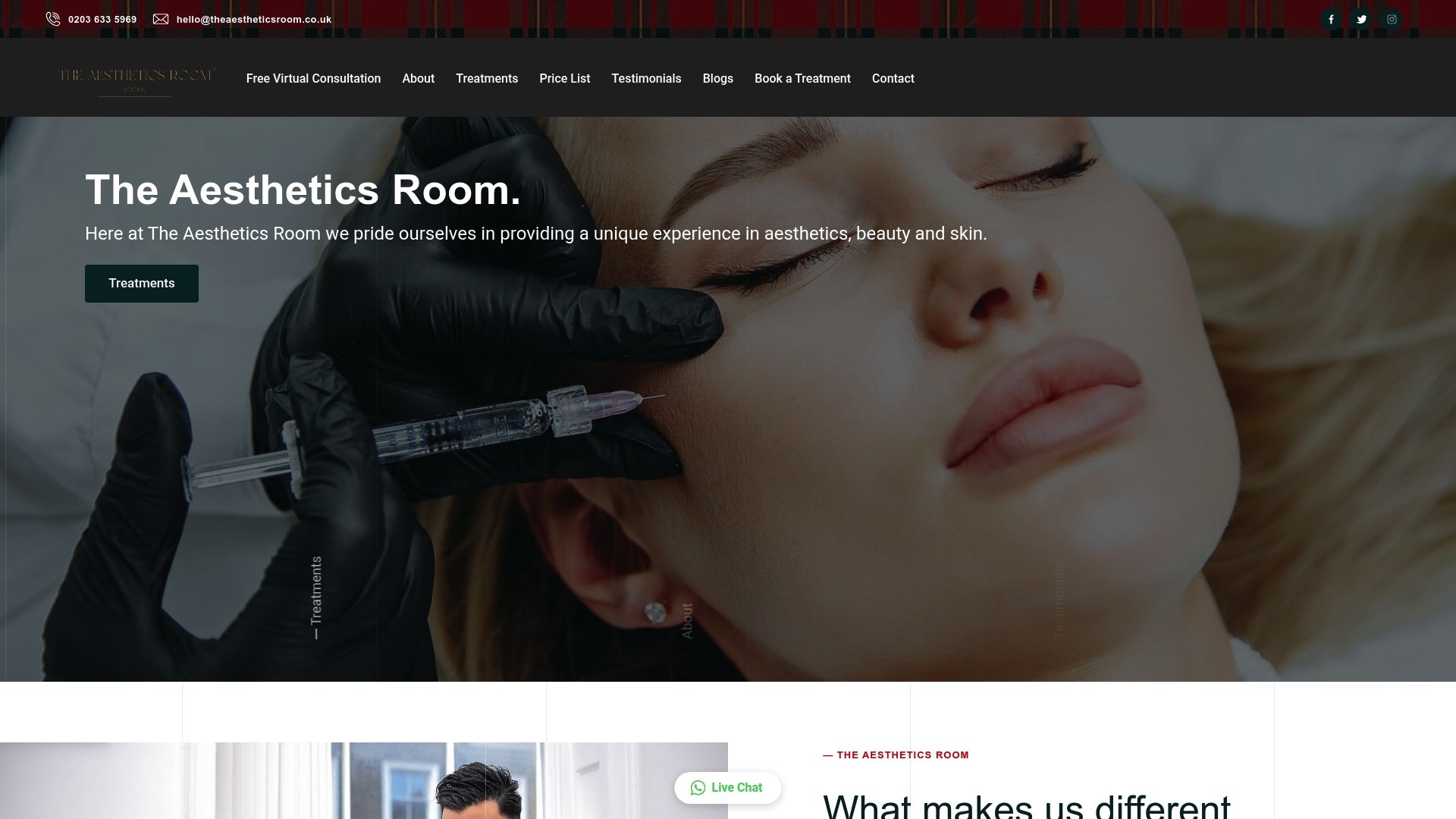
At Theaestheticsroom, every treatment begins with a thorough consultation led by a qualified medical practitioner. Based in London’s Knightsbridge and also serving clients at Harley Street and Mayfair, the clinic holds CQC registration and membership in the ACE Group, both of which reflect a genuine commitment to patient safety rather than a tick-box approach to compliance. Whether you are considering Botox treatments or dermal fillers, you will receive a bespoke assessment, separate and treatment-specific consent documentation, and a clear aftercare plan before any procedure begins. If you want to experience what a fully CQC registered aesthetic clinic looks and feels like in practice, book your consultation today.
FAQ
What does a medical spa checklist include?
A medical spa checklist covers medical director credentials, provider qualifications, intake and informed consent processes, facility safety standards, data privacy measures, consultation protocols, and transparent pricing. Use it to evaluate any clinic before booking a treatment.
Why is a face-to-face consultation required before treatment?
Most regulated jurisdictions require an initial consultation with a licensed prescribing provider, such as a doctor, nurse practitioner, or physician assistant, to assess your medical suitability and prescribe treatment safely. Clinics that skip this step may be operating outside the law.
What is the difference between intake and informed consent forms?
An intake form collects your medical history, medications, and allergies. An informed consent form documents your understanding of specific treatment risks, alternatives, and your agreement to proceed. They serve different clinical and legal purposes and should never be combined into a single generic document.
How can I check if a med spa has proper medical oversight?
Ask for the name of the clinic’s medical director and request confirmation of their formal supervision agreement with the treating practitioners. Documented oversight agreements aligned with local state or national regulations are the operational proof of legitimate medical supervision.
Are data privacy protections required at a medical spa?
Yes. Any clinic using digital booking systems or electronic health records that handle patient health information must have appropriate data protection agreements in place with their vendors. In US-regulated contexts, this means signed HIPAA Business Associate Agreements with all relevant third-party software providers.