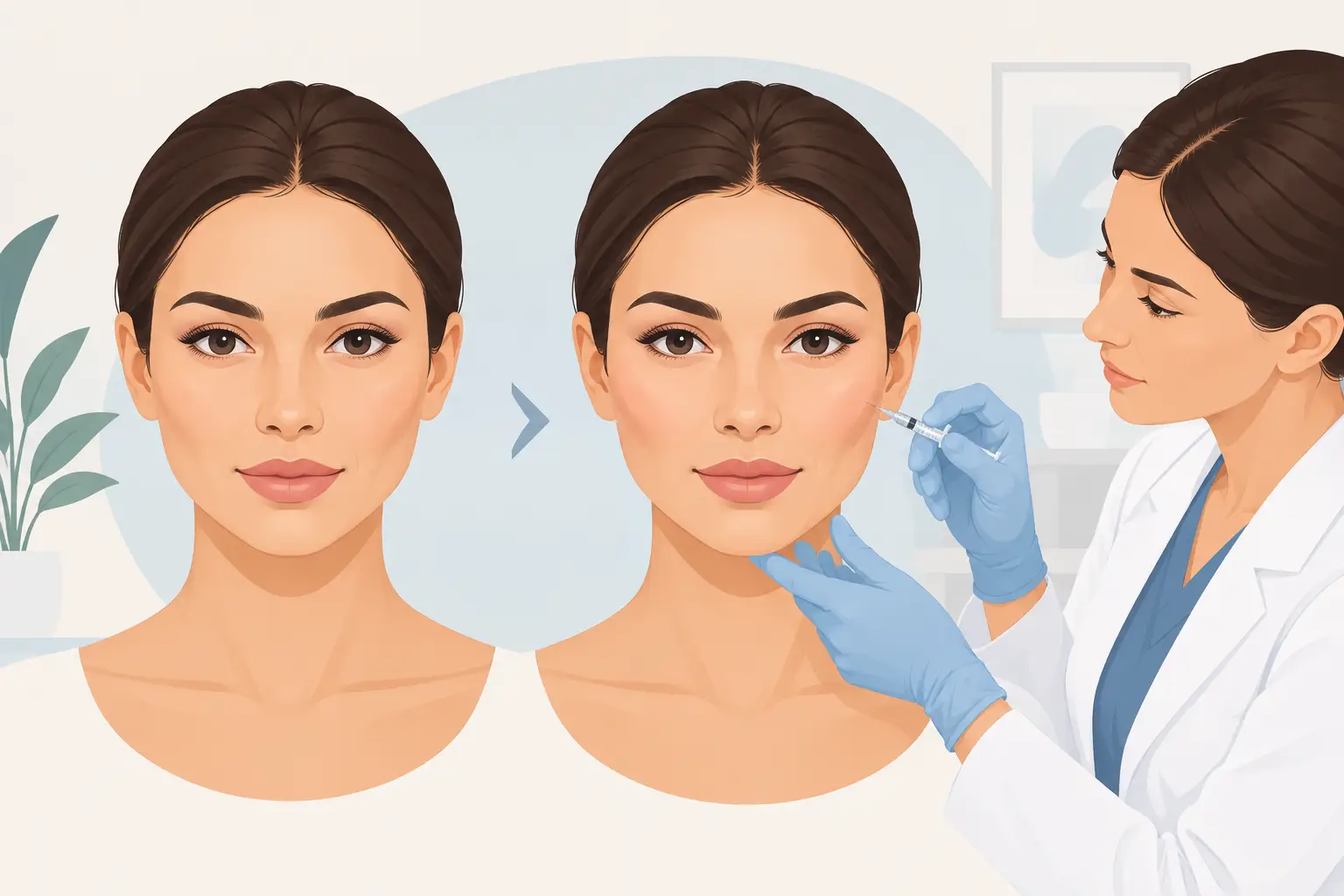


When patients ask about anti wrinkle injections vs dermal fillers, they are rarely asking for a technical definition. They usually want to know which treatment will make them look fresher without looking overdone, and which option makes sense for their face, age and concerns. That is where a proper medical consultation matters, because these treatments are not interchangeable.
Both are injectable aesthetic treatments, but they work in very different ways. Anti-wrinkle injections relax selected muscles that create expression lines. Dermal fillers restore structure, support and volume in areas where the face has thinned, softened or lost definition. If you choose the wrong one for the wrong concern, the result can be underwhelming even when the treatment itself is performed well.
Anti wrinkle injections vs dermal fillers – what is the difference?
The simplest way to understand the difference is this: anti-wrinkle injections treat movement, while dermal fillers treat volume and contour.
Anti-wrinkle injections are commonly used for lines caused by repeated facial expression. Think forehead lines, frown lines between the brows and crow’s feet. These lines form because certain muscles contract again and again over time. By reducing the activity of those muscles, the skin above them can look smoother and more rested.
Dermal fillers work differently. Rather than affecting muscle movement, they are placed strategically to restore lost volume, improve proportions or enhance facial definition. They are often used in the cheeks, lips, jawline, chin, temples and around the mouth. In the right hands, fillers can also support areas that are beginning to look tired or drawn without making the face look puffy.
That distinction sounds straightforward, but in practice many people have a combination of concerns. A patient might have forehead lines from expression, flattening through the cheeks from volume loss and early jowl formation from reduced structural support. Treating only one element may not create a balanced result.
What anti-wrinkle injections are best for
Anti-wrinkle injections tend to suit patients who are bothered by dynamic lines – lines that appear or deepen when they frown, smile or raise their eyebrows. They are often chosen by younger patients who want to prevent deeper static lines from forming, and by those who want a fresher appearance without adding volume.
This treatment is especially effective in the upper face. It can soften a heavy or tense expression and help the face look less tired, less stern or less stressed. For many patients, the appeal is subtlety. Friends may notice that they look well rested, but not necessarily know why.
Results are temporary and develop over several days rather than instantly. That timing suits many busy professionals who prefer a gradual improvement. It also means anti-wrinkle injections are not a treatment for every line. If a line is etched into the skin even at rest, muscle relaxation alone may improve it but not fully remove it.
What dermal fillers are best for
Dermal fillers are more appropriate when the issue is loss of support, shape or definition. With age, the face does not simply wrinkle. Fat pads shift, bone resorption occurs, skin quality changes and certain areas lose the fullness associated with youth and vitality. This is why some faces can look tired even when the skin itself is not heavily lined.
Fillers can address this by restoring strategic volume. In the cheeks, they can reintroduce lift and contour. In the lips, they can refine shape, hydration and balance. In the jawline and chin, they can improve profile and structure. Around the mouth, they can soften shadows and folds when used carefully.
The key word is carefully. Good filler treatment should respect facial anatomy, movement and proportion. More product does not automatically mean a better result. In fact, one of the most common reasons patients seek a more premium, medically led clinic is to avoid the overfilled look that comes from treating volume as a shortcut rather than part of a wider assessment.
Anti wrinkle injections vs dermal fillers for common concerns
If your main concern is forehead lines, crow’s feet or frown lines, anti-wrinkle injections are usually the more suitable option. These are classic expression-related concerns, and trying to treat them with filler would not address the root cause.
If you are noticing flatter cheeks, a less defined jawline or deeper folds running from the nose to the mouth, filler may be more relevant. Those concerns are often linked to structural change rather than muscle movement.
For lip enhancement, dermal filler is the treatment used to shape and add volume. Anti-wrinkle injections do not create fuller lips, though they may occasionally be used around the mouth in selected cases for muscle-related concerns.
For a tired appearance under the eyes, the answer is often more nuanced. Some patients have volume loss, some have pigmentation, some have skin laxity, and many have a combination. This is a good example of why a consultation should come before a treatment request.
Why the best answer is sometimes both
Patients often assume they need to choose one treatment over the other, but many of the strongest results come from combining treatments in a measured way. A face that has both dynamic wrinkling and volume loss may benefit from anti-wrinkle injections in one area and filler in another.
This combined approach can look more natural because it treats the face as a whole rather than chasing one feature in isolation. Softening a strong frown while restoring gentle cheek support, for example, can create a refreshed result that still looks entirely like you.
That said, combination treatment should never mean doing more for the sake of it. The right plan depends on facial anatomy, skin quality, age-related change, medical suitability and personal preference. Some patients want the lightest possible intervention. Others are seeking more visible correction. Both are valid, but they require different planning.
Longevity, maintenance and what to expect
Anti-wrinkle injections and dermal fillers differ not only in function but also in how results appear and how long they tend to last. Anti-wrinkle injections usually take effect within a few days and then gradually wear off over a period of months. Maintenance is needed to preserve the result.
Dermal fillers tend to offer more immediate change, although final settling takes a little time. Longevity varies according to the area treated, the product used, metabolism and lifestyle factors. Areas with more movement, such as the lips, may require earlier maintenance than areas with more structural support.
This is where realistic expectations matter. Neither treatment stops the ageing process, and neither should be approached as a one-off fix. The most successful aesthetic plans are usually built around ongoing review, conservative treatment and adjustment over time.
Safety matters more than the treatment trend
Whether you are considering anti-wrinkle injections or dermal fillers, the standard of practitioner and clinic should be central to your decision. These are medical aesthetic treatments, not casual beauty purchases. A tailored assessment, clear consent process, strong hygiene standards and knowledge of facial anatomy are essential.
This matters particularly with fillers, where product placement and technique have a direct impact on both results and safety. It also matters with anti-wrinkle injections, where poor assessment can lead to an unnatural look or a result that does not suit your face.
A premium clinic experience should not just feel more polished. It should reflect stronger clinical standards, better judgement and a more personalised approach. At The Aesthetics Room, that consultation-led approach is central to how treatment plans are built, especially for patients who want natural results and a clear rationale behind every recommendation.
How to decide which treatment is right for you
A useful question is not, “Which treatment is better?” but, “What exactly is bothering me when I look in the mirror?” If the issue is movement lines, anti-wrinkle injections may be appropriate. If the issue is flattening, sagging or loss of definition, dermal fillers may be the better fit.
If you are unsure, that is completely normal. Most patients are not expected to diagnose their own facial ageing. Your role is to describe the concern. A skilled practitioner should assess why it is happening, explain the options clearly and advise whether treatment is suitable, necessary or worth postponing.
The best aesthetic outcomes rarely come from asking for a product by name. They come from a bespoke treatment plan built around your features, your goals and the kind of result you actually want to live with.
If you are weighing up anti wrinkle injections vs dermal fillers, think less about which treatment is more popular and more about which one addresses the cause of your concern. The right choice should leave you looking refreshed, balanced and entirely yourself.