


TL;DR:
- Pigmentation disorders are common and require accurate diagnosis for effective treatment.
- Combining topical agents, procedures, and sun protection yields the best, lasting results.
- Personalized, staged treatments with ongoing maintenance are essential for managing pigmentation in London.
Pigmentation disorders are far more widespread than most people realise, affecting millions in urban populations including right here in London. Yet despite how common they are, the confusion around what causes them and how to treat them effectively remains significant. Not every dark spot is the same, and not every treatment works for every skin type. Whether you’re dealing with stubborn melasma, sun-induced spots, or marks left behind by a past breakout, understanding the science behind your skin is the first step towards real, lasting results. This article gives you clear, evidence-based answers.
Table of Contents
- Understanding pigmentation: causes, types and effects
- How pigmentation treatments work: mechanisms and evidence
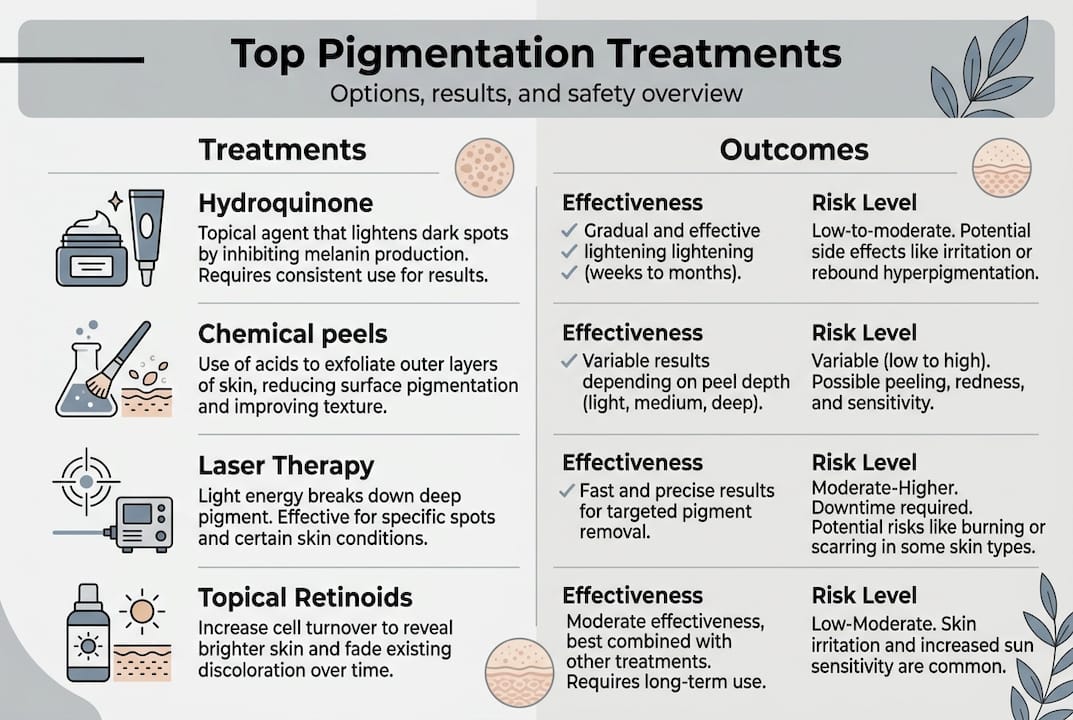
- Comparing top pigmentation treatments: options, results and safety
- Pigmentation treatment nuances: skin of colour, maintenance and common pitfalls
- Practical journey: choosing the right approach for your skin in London
- Why successful pigmentation treatment relies on the right strategy, not quick fixes
- How The Aesthetics Room supports your skin confidence journey
- Frequently asked questions
Key Takeaways
| Point | Details |
|---|---|
| Pigmentation is common | Pigmentation problems like melasma and PIH are widespread and affect confidence for many in London. |
| Science-driven therapies | Modern treatments target pigment at multiple levels for safer, more effective outcomes. |
| Prevention is vital | Consistent use of sunscreen and proper aftercare are critical for both treatment success and preventing recurrence. |
| Tailored plans matter | Best results come from professional assessment and a personalised mix of therapies suited to your skin type. |
Understanding pigmentation: causes, types and effects
Pigmentation, in the context of skin health, refers to changes in the natural colour of your skin caused by an imbalance in melanin production. Melanin is the pigment that gives skin its colour, and when certain triggers push cells called melanocytes into overdrive, you get patches that are darker than the surrounding skin. Our introduction to pigmentation covers the basics, but the key point is this: not all pigmentation is the same, and treating it effectively starts with identifying which type you have.
The three most common types are:
- Melasma: Typically appearing as symmetrical patches on the cheeks, forehead, or upper lip, melasma is strongly linked to hormonal changes. It’s particularly common during pregnancy or with contraceptive pill use, and UV exposure makes it significantly worse.
- Sun spots (solar lentigines): These are flat, brown marks caused by cumulative sun exposure over time. They tend to appear on the face, hands, and décolletage, and are more common as we age.
- Post-inflammatory hyperpigmentation (PIH): This occurs after skin trauma, such as acne, eczema, or even an overly aggressive facial treatment. The skin produces excess melanin as part of its healing response, leaving behind a dark mark.
As pigmentation research confirms, these conditions involve excess melanin production triggered by UV exposure, hormonal fluctuations, inflammation, or genetic predisposition. In London’s diverse population, this matters enormously because skin of colour is particularly prone to PIH, and treatment must be chosen with this in mind.
Pigmentation doesn’t just affect how your skin looks. For many people, visible patches on the face affect self-confidence, social interactions, and overall wellbeing. Addressing it is not vanity; it’s self-care.
Our hyperpigmentation guide London explores these distinctions further, but the core message is clear: correct diagnosis is the foundation of effective treatment.
How pigmentation treatments work: mechanisms and evidence
Understanding the roots of pigmentation issues, the next key step is knowing how modern treatments actually make a difference at the skin level. Treatments don’t simply bleach the skin. They work by interrupting specific biological processes that drive excess pigment production.
The five core mechanisms that most evidence-based treatments target are:
- Inhibiting tyrosinase: Tyrosinase is the enzyme that drives melanin synthesis. Many of the most effective topical agents, including hydroquinone, kojic acid, and thiamidol, work by blocking this enzyme.
- Reducing inflammation: Because inflammation triggers PIH, calming the skin’s inflammatory response is critical, particularly after procedures.
- Accelerating epidermal turnover: Chemical exfoliants like AHAs and retinoids speed up the shedding of pigmented skin cells, bringing fresher, more even skin to the surface faster.
- Blocking melanosome transfer: Some agents prevent the transfer of melanin-containing packages (melanosomes) from melanocytes to surrounding skin cells, limiting how far pigment spreads.
- Photoprotection: UV exposure is the most powerful driver of melanogenesis (melanin production). Blocking UV with broad-spectrum SPF is not optional; it is a core treatment mechanism.
As research on PIH confirms, these mechanisms form the backbone of all effective pigmentation protocols. Understanding the importance of sunscreen in this context is essential.
| Mechanism | Example agents | Primary target |
|---|---|---|
| Tyrosinase inhibition | Hydroquinone, thiamidol, kojic acid | Melanin production |
| Anti-inflammatory | Niacinamide, corticosteroids | PIH prevention |
| Epidermal turnover | Retinoids, AHAs | Pigmented cell shedding |
| Melanosome transfer block | Tranexamic acid (TXA) | Pigment spread |
| Photoprotection | Broad-spectrum SPF 50+ | UV-induced melanogenesis |
Combining these mechanisms is where the real power lies. Single-agent treatments rarely resolve complex pigmentation; multimodal approaches consistently outperform them in clinical evidence.
Comparing top pigmentation treatments: options, results and safety
With an understanding of how treatments function, let’s compare which options truly stand out for different needs. The market is crowded with products and procedures, but not all are equal in evidence or safety.
Topical agents remain the first line of treatment. Hydroquinone (HQ) has long been the gold standard but carries risks including irritation and, with prolonged use, ochronosis (a bluish-black discolouration). Newer alternatives are proving highly effective. Clinical trial data shows thiamidol 0.2% cream reduced melasma severity scores by 36.1% at 12 weeks versus just 16.1% for placebo. Tranexamic acid (TXA) and N-acetyl glucosamine (NCA) have also demonstrated efficacy comparable to HQ 4% with a significantly better safety profile.
Chemical peels accelerate skin turnover and can visibly brighten pigmentation within a course of treatments. Superficial peels using glycolic or lactic acid are generally safe for most skin types. Our guide to best chemical peels outlines what to expect from a professional peel in London.

Laser and light treatments target melanin directly using specific wavelengths of light. Q-switched Nd:YAG lasers and picosecond devices are particularly effective for sun spots and PIH. However, these must be used with caution on darker skin tones.
| Treatment | Effectiveness | Risk level | Best for |
|---|---|---|---|
| Hydroquinone cream | High | Moderate | Melasma, PIH |
| Thiamidol / TXA | High | Low | Melasma, sensitive skin |
| Chemical peels | Moderate to high | Low to moderate | Sun spots, PIH |
| Laser (Q-switched) | High | Moderate to high | Sun spots, resistant PIH |
| SPF 50+ daily | Essential | None | All types, maintenance |
Pro Tip: Always ask your practitioner about the Fitzpatrick skin type assessment before any laser or peel treatment. This simple classification helps determine which protocols are safest and most effective for your specific skin.
For a full overview, our treatment guide London provides detailed breakdowns of each approach.
Pigmentation treatment nuances: skin of colour, maintenance and common pitfalls
Although the main options are set, individual skin factors and ongoing care can make or break your treatment outcome. This is where many people go wrong, particularly those with deeper skin tones.
For those with Fitzpatrick skin types IV to VI, the stakes are higher. Research confirms that darker skin carries a significantly elevated risk of PIH following procedures, and that aggressive IPL or heat-based laser treatments can trigger rebound pigmentation rather than resolve it. Safe, effective treatment for skin of colour requires specific protocols, lower energy settings, and practitioners with genuine experience in this area.
Key considerations for all skin types include:
- Melasma is chronic. It does not simply disappear after one course of treatment. Without ongoing maintenance, including daily SPF and antioxidant support, recurrence is highly likely.
- Aftercare is non-negotiable. Skipping sunscreen after a peel or laser session is one of the most common and damaging mistakes. UV exposure immediately post-treatment can cause rapid re-pigmentation.
- Aggressive treatment can backfire. Stronger is not always better. Over-treating the skin, particularly with high-strength peels or lasers on sensitive or darker skin, can worsen the very condition you’re trying to resolve.
- Consistency matters more than intensity. A gentle, consistent routine using evidence-based products will outperform sporadic high-intensity treatments every time.
Pro Tip: Incorporate a broad-spectrum SPF into your daily routine year-round, not just in summer. London’s UV index may be lower than tropical climates, but cumulative exposure still drives melanin production significantly.
For more guidance on protecting your results, our skin treatment tips from our expert practitioners in London are well worth reviewing.
Practical journey: choosing the right approach for your skin in London
Let’s now translate the science and comparisons into a clear action plan. What’s the best way forward for you?
The most important thing to understand is that multimodal therapy, combining topical agents, professional procedures, and strict SPF use, consistently delivers the best outcomes. Single agents are rarely sufficient for complex cases like melasma. Here is a practical roadmap:
- Professional assessment: Begin with a thorough skin consultation. A trained practitioner will assess your skin type, identify the specific type of pigmentation, and review your medical history and any triggers.
- Tailored treatment plan: Based on your assessment, a personalised plan will be created. This may combine topical agents, in-clinic procedures, and home care protocols.
- Staged treatment: Most effective protocols are staged over weeks or months. Rushing the process rarely works and often causes setbacks.
- Follow-up and adjustment: Skin responds differently to treatment over time. Regular follow-up appointments allow your practitioner to adjust the plan based on your progress.
- Maintenance phase: Once target results are achieved, a maintenance routine, including daily SPF and periodic top-up treatments, is essential to preserve them.
Our consultation process is designed to give you complete clarity from the very first appointment. There is no one-size-fits-all answer in pigmentation treatment, and any clinic that suggests otherwise should be approached with caution.
Why successful pigmentation treatment relies on the right strategy, not quick fixes
We see it regularly: clients who have spent months and significant money on over-the-counter serums, viral social media remedies, or aggressive at-home devices, only to arrive at our clinic with compromised skin and frustration. The London market is saturated with products that promise rapid transformation, and the appeal is understandable.
But here is what the evidence consistently shows: pigmentation, particularly melasma, is a chronic condition that responds to strategy, not shortcuts. The most successful outcomes we witness are built on patience, professional guidance, and a commitment to maintenance. Clients who follow a structured, science-led plan and prioritise their aesthetic best practices achieve not just clearer skin, but lasting confidence in their appearance.
The uncomfortable truth is that no single product or one-off treatment will resolve complex pigmentation permanently. What works is a consistent, personalised approach guided by someone who genuinely understands your skin. That is the standard we hold ourselves to at The Aesthetics Room.
How The Aesthetics Room supports your skin confidence journey
If you’re ready to move beyond guesswork and invest in your skin with real confidence, The Aesthetics Room is here to help. Our practitioners specialise in evidence-based pigmentation treatments tailored to your unique skin type, tone, and concerns.

From your first consultation through to your maintenance programme, every step is guided by clinical expertise and a genuine commitment to your results. We understand that skin rejuvenation in London is not a one-size-fits-all journey, and we take pride in the personalised care we deliver. To learn more about what we offer and how medical aesthetics can transform your skin health, visit our website and book a consultation today.
Frequently asked questions
Can pigmentation treatments be effective for all skin types?
Yes, but protocols must be tailored specifically for darker skin tones to minimise the risk of PIH and rebound pigmentation. Darker skin types require pigment-safe protocols and careful practitioner selection.
What is the fastest way to fade pigmentation?
Combining medical topicals with professional in-clinic treatments and consistent daily SPF use is the most effective approach. Multimodal therapy consistently outperforms single-agent treatments in clinical evidence.
Are home remedies safe for pigmentation?
Most home remedies lack robust clinical evidence and some can irritate or worsen the skin. Evidence-based products with proven safety profiles are always the safer and more effective choice.
How can I prevent pigmentation from returning?
Daily broad-spectrum sunscreen and antioxidant skincare are essential to reduce the risk of recurrence. Maintenance SPF and consistent daily care are the most important factors in preventing relapse for chronic pigmentary conditions.
Recommended
- Complete guide to hyperpigmentation treatment in London – The Aesthetics Room
- Pigmentation – The Aesthetics Room
- Skin rejuvenation tips: Advanced London treatments for radiant results – The Aesthetics Room
- Clinical vs Cosmetic Treatments: 85% Satisfaction Guide – The Aesthetics Room
- Clinical Evidence