
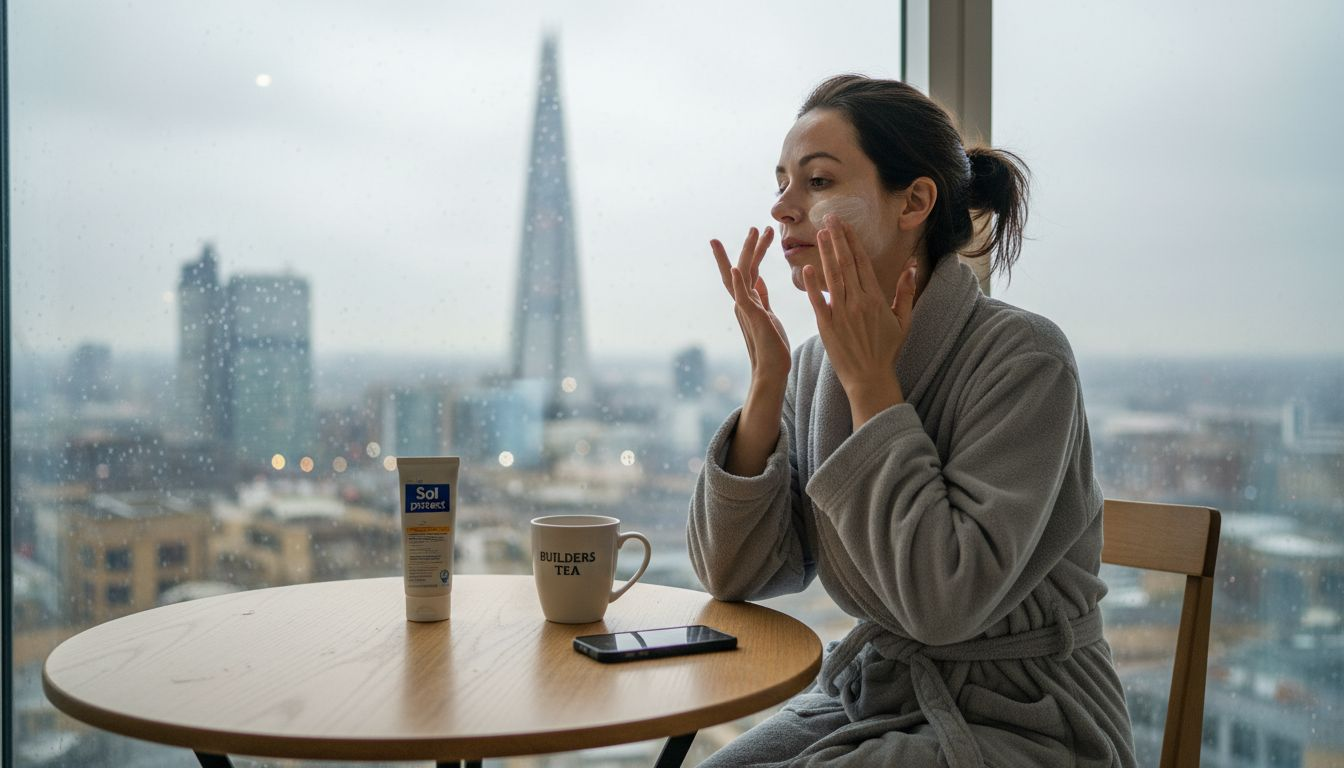

For many in London’s thriving aesthetic community, sunscreen’s significance stretches far beyond a simple defence against sunburn. The truth is that photoprotection against ultraviolet damage forms the cornerstone of any serious approach to preserving a youthful, radiant complexion. Regular use of advanced sunscreen formulations not only protects against visible signs of ageing, such as fine lines and pigmentation, but enhances the outcomes of professional aesthetic treatments sought across Knightsbridge and Mayfair. Discover how integrating sunscreen elevates both your skin health and long-term cosmetic results.
Table of Contents
- Defining The Role Of Sunscreen In Aesthetics
- Types Of Sunscreens And How They Work
- Practical Considerations For Choosing Your Sunscreen
- Sunscreen’s Impact On Aesthetic Treatment Results
- Sunscreen Protocols During Aesthetic Recovery
- Integrating Daily Sunscreen Into London Skin Routines
- Building Sunscreen Into Your Schedule
- Professional Recommendations And Common Mistakes
- Critical Application Guidance
Key Takeaways
| Point | Details |
|---|---|
| Importance of Sunscreen | Sunscreen is essential for protecting skin from UV damage and should be a non-negotiable part of any aesthetic treatment plan. |
| Types of Sunscreens | Choose between chemical and physical sunscreens based on skin type and personal preference, ensuring they provide broad-spectrum protection. |
| Application Guidelines | Apply sunscreen generously as the last step in your morning routine and reapply every two hours for optimal effectiveness. |
| Long-term Benefits | Consistent sunscreen use influences skin aging, maintains treatment results, and prevents cumulative damage over time. |
Defining the role of sunscreen in aesthetics
Sunscreen occupies a more prominent position in modern aesthetics than many realise. For those aged thirty to fifty navigating London’s demanding lifestyle, it’s not merely a summer beach essential or a reactive measure against sunburn. Rather, photoprotection against UV damage forms the foundational layer of any serious aesthetic strategy. Think of it as preventative maintenance for your skin’s appearance. When ultraviolet radiation penetrates the epidermis, it triggers a cascade of biological damage: collagen fibres break down, elastin loses its resilience, and melanin production becomes erratic. These changes manifest as fine lines, loss of firmness, uneven pigmentation, and that overall tired quality that catches your attention in the mirror. Sunscreen interrupts this damage before it begins, meaning it’s actively preserving the clarity, smoothness, and youthful luminosity you’re seeking to maintain or restore through aesthetic treatments.
What distinguishes sunscreen’s aesthetic role from basic sun protection is its capacity to complement your broader skincare investments. If you’re considering dermal fillers, skin rejuvenation procedures, or other enhancements at The Aesthetics Room, sunscreen becomes your insurance policy. Modern formulations go beyond simple UV blocking. Advanced sunscreen technology now incorporates nanotechnology, enhancing cosmetic properties whilst delivering broad-spectrum protection against both UVB and UVA radiation. UVA radiation particularly concerns aesthetic practitioners because it causes photoaging and irregular pigmentation without producing the obvious warning signal of sunburn. Your skin can be suffering significant aesthetic damage from UVA exposure even on overcast London days when you believe protection is unnecessary. By preventing this silent damage, sunscreens maintain skin tone evenness, preserve elasticity, and protect the structural integrity that underpins your appearance. This is why aesthetic professionals consistently emphasise sunscreen use as a non-negotiable component of treatment plans.
The relationship between sunscreen and aesthetic outcomes extends into the recovery and longevity phases of treatments. After procedures such as laser resurfacing or chemical peels, your skin becomes temporarily more vulnerable to sun damage. A high-specification sunscreen protects the newly exposed layers of healthy skin whilst they establish themselves, preventing post-inflammatory hyperpigmentation and ensuring your investment in aesthetic enhancement delivers optimal results. Beyond immediate post-treatment care, regular sunscreen use throughout your life directly influences how you’ll age over the next decade. The choice isn’t simply between “having aesthetic treatments” and “not having them”. The real distinction emerges between those who protect their skin systematically with sunscreen and those who don’t. Over five years, the difference in skin texture, tone consistency, and visible lines becomes striking. For affluent Londoners prioritising skin health within their aesthetic journey, understanding that sunscreen prevents acute and long-term skin damage whilst maintaining youthful appearance positions it as equally important as any specialist treatment you might receive in Knightsbridge.
Pro tip: Apply sunscreen as the final step in your morning skincare routine at least fifteen minutes before leaving your home, allowing it to form a complete protective barrier. Reapply every two hours if you’re spending extended time outdoors or after swimming, particularly during your commute through central London where reflection from buildings amplifies UV exposure.
Types of sunscreens and how they work
When you’re selecting sunscreen for your daily routine, you’re essentially choosing between two fundamentally different protection mechanisms. Chemical sunscreens and physical sunscreens operate through entirely distinct processes, and understanding this distinction helps you make choices aligned with your skin type and aesthetic goals. Chemical sunscreens contain organic molecules such as avobenzone and oxybenzone that absorb ultraviolet radiation through photochemical reactions, converting UV light into heat that dissipates harmlessly from your skin. Physical sunscreens, by contrast, employ inorganic minerals like zinc oxide and titanium dioxide to reflect, scatter, and absorb UV rays before they penetrate the epidermis. The choice between these two categories isn’t about one being universally superior. Rather, each offers distinct advantages, and many modern formulations combine both types to deliver what professionals call broad-spectrum protection. For affluent London clients in their thirties to fifties, the decision often hinges on lifestyle, skin sensitivity, and how you integrate sunscreen into your existing aesthetic treatments.
Chemical sunscreens appeal to many because they tend to be lighter, less visible on the skin, and blend seamlessly into moisturisers or makeup primers. You apply them, and they absorb into the skin without leaving that white cast that physical sunscreens sometimes create. However, chemical filters require about fifteen minutes to become effective because they need to be absorbed into the skin to work properly. They also demand reapplication more frequently, particularly after swimming or perspiration. Some individuals experience irritation or allergic reactions to chemical filters, which becomes especially important if you’ve recently undergone aesthetic procedures like chemical peels or laser treatments when your skin barrier is temporarily compromised. Physical sunscreens, conversely, begin working immediately upon application because they sit on the skin’s surface creating a physical barrier. They’re particularly valued by those with sensitive skin, rosacea, or post-procedure skin because they’re less likely to cause irritation. The trade-off historically involved a thicker texture and visible white residue, but nanoparticle-based physical sunscreens now enhance UV protection without compromising cosmetic acceptability, meaning modern formulations deliver elegance alongside efficacy.
What makes contemporary sunscreen formulations genuinely sophisticated is how the interplay of active ingredients determines protection spectrum, photostability, and skin compatibility. Many premium products combine organic and inorganic filters to capitalise on their complementary effects. Organic filters excel at absorbing specific UV wavelengths whilst inorganic filters provide superior broad-spectrum coverage through their scattering and reflection mechanisms. This combination approach delivers several advantages for your aesthetic maintenance routine. You gain the lighter feel and seamless finish many prefer, combined with the immediate efficacy and gentleness of physical blockers. For clients at The Aesthetics Room considering or recovering from treatments, this dual-mechanism approach proves particularly valuable. Your practitioner can recommend formulations calibrated to your specific skin condition and post-procedure needs. A patient recovering from dermal filler injections might benefit from a gentle physical sunscreen, whilst someone using retinoid products in their evening routine would gain from a lightweight chemical formulation during the day. The most sophisticated approach involves understanding your skin’s unique requirements rather than selecting sunscreen based on marketing claims alone.

Here’s a concise comparison of chemical and physical sunscreens relevant to aesthetic routines:
| Sunscreen Type | Protection Mechanism | Best For | Cosmetic Feel |
|---|---|---|---|
| Chemical | Converts UV rays into dissipated heat | Daily wear, makeup layering | Lightweight, invisible |
| Physical (Mineral) | Reflects and scatters UV rays | Sensitive, post-procedure skin | May leave white residue |
| Hybrid Formulations | Blends both mechanisms | Broad-spectrum urban protection | Balanced finish |
Practical considerations for choosing your sunscreen
When evaluating sunscreen options, several practical factors shape the difference between a product you’ll actually use consistently and one that sits unused in your bathroom cabinet.
- SPF rating: SPF 30 blocks approximately 97 per cent of UVB rays, whilst SPF 50 blocks 98 per cent. The marginal difference doesn’t justify skipping reapplication, which matters far more than chasing higher SPF numbers
- Texture and finish: Physical sunscreens work best if you’ll actually wear them. Test formulations on your jawline before committing to full-face application
- Post-procedure compatibility: Following aesthetic treatments, your practitioner will specify whether chemical or physical sunscreen suits your temporarily sensitised skin
- Antioxidant additions: Modern sunscreens often include niacinamide, vitamin E, or hyaluronic acid, providing additional skin benefits beyond UV protection
Pro tip: Choose a sunscreen you genuinely enjoy using, apply it liberally every morning as non-negotiable routine, and keep a travel-size version in your work bag for midday London commutes. Consistency matters infinitely more than selecting the theoretically perfect formulation that you skip most days.
Sunscreen’s impact on aesthetic treatment results
The relationship between sunscreen use and aesthetic treatment success operates on a surprisingly straightforward principle: your investment in procedures like dermal fillers, laser resurfacing, or chemical peels only delivers optimal results if you protect the treated skin afterwards. This isn’t about maximising an already good outcome by a few percentage points. Rather, sunscreen fundamentally determines whether you achieve the results you paid for or watch them gradually diminish. When your practitioner at The Aesthetics Room performs a treatment, they’re deliberately stimulating your skin’s natural healing and regeneration processes. This temporary state of heightened activity also makes your skin exceptionally vulnerable to ultraviolet damage. Consistent sunscreen use significantly improves outcomes by protecting newly treated skin from UV damage, reducing inflammation, and preventing pigmentation. Without this protection, UV exposure can interfere with the delicate cellular processes occurring during recovery, potentially triggering post-inflammatory hyperpigmentation, undermining collagen remodelling, and shortening the longevity of your results. You’ve essentially removed the most critical protective factor that determines whether your treatment succeeds or fails.
Consider what happens biologically during recovery from aesthetic procedures. Chemical peels deliberately remove layers of damaged skin to reveal fresher, healthier tissue beneath. Laser treatments create controlled micro-injuries that prompt collagen production and cellular renewal. Dermal fillers and injectables work by stimulating your body’s natural healing response around the product. In each scenario, your skin is actively repairing, rebuilding, and remodelling itself over days and weeks following treatment. During this window, unprotected UV exposure can cause several problems simultaneously. UVA radiation penetrates deeply, triggering oxidative stress and erratic melanin production in the newly exposed skin layers. Visible light wavelengths add to this inflammatory burden. Protection against UVA and visible light is important, as these wavelengths can trigger pigmentation and oxidative stress, which detracts from treatment benefits. Post-inflammatory hyperpigmentation becomes particularly problematic because once it develops, treating it requires additional procedures and extends your overall recovery timeline. Your original treatment’s benefits plateau or even reverse as hyperpigmentation masks the skin quality improvements you paid for.
Practitioners at The Aesthetics Room consistently emphasise sunscreen because the clinical evidence demonstrates its transformative impact on treatment longevity. A patient receiving Botox injections who diligently uses SPF 50 sunscreen will maintain results for the full twelve weeks or longer, with optimal smoothness throughout recovery. The same patient without sunscreen protection may notice results appearing compromised within weeks as sun damage begins reversing the treatment’s benefits. For laser treatments or chemical peels, the difference becomes even more pronounced. Appropriate sunscreen choice optimises recovery and extends the duration of visible improvements by months. Beyond immediate post-procedure protection, consistent year-round sunscreen use directly influences how long your aesthetic enhancements maintain their impact. UV damage accumulates over time, gradually eroding the improvements treatments provide. Someone who uses sunscreen religiously sees their treatment results remain pristine over years, whilst someone inconsistent with protection watches gradual degradation as new photodamage accumulates.
Sunscreen protocols during aesthetic recovery
Your practitioner will provide specific aftercare instructions following your treatment, but sunscreen protocol typically follows these principles:
- Immediately post-procedure: Use only the specific sunscreen recommended by your practitioner during the first forty eight hours, as your skin barrier is compromised
- Days three to fourteen: Transition to daily broad-spectrum SPF 50 sunscreen, applied generously every two hours if outdoors
- Ongoing maintenance: Continue daily sunscreen application for at least four weeks following most procedures
- Long-term strategy: Maintain year-round sunscreen use to preserve treatment results and prevent new photodamage
For patients with photosensitive conditions or darker skin tones prone to post-inflammatory hyperpigmentation, appropriate sunscreen choice can delay adverse reactions and enhance treatment tolerance. Your practitioner will personalise these recommendations based on your specific treatment and skin characteristics.
Summary of post-procedure sunscreen recommendations for optimal aesthetic results:
| Recovery Phase | Sunscreen Protocol | Impact on Results |
|---|---|---|
| First 48 hours | Practitioner-recommended product | Prevents irritation, supports healing |
| Days 3–14 | Broad-spectrum SPF 50 every 2 hours | Minimises pigmentation risk |
| Month after treatment | Daily liberal application | Extends enhancement longevity |
| Ongoing (year-round) | Consistent broad-spectrum usage | Reduces visible ageing, preserves results |
Pro tip: Schedule your aesthetic treatments during autumn or winter months when you’ll naturally spend less time outdoors, making consistent sunscreen application easier to maintain and reducing the risk of sun exposure during critical healing phases.
Integrating daily sunscreen into London skin routines
London presents a unique environment for skin protection. The city’s reputation for grey skies masks a genuine threat. UV radiation penetrates cloud cover effectively, and the urban landscape amplifies exposure through reflective surfaces on buildings, pavements, and glass storefronts. A commute from South Kensington to Knightsbridge exposes your skin to more UV damage than you might realise, particularly during midday hours when you’re moving between meetings or shopping in Mayfair. Dermatologists in the UK recommend broad-spectrum, cosmetically acceptable sunscreens to suit diverse skin types and urban lifestyle demands, emphasising daily application even in colder months. This recommendation isn’t about paranoia. Rather, it reflects the reality that London’s intermittent strong sunlight, combined with reflective urban environments, creates cumulative damage that accelerates visible ageing. For affluent professionals aged thirty to fifty managing demanding careers and aesthetic goals, integrating sunscreen into daily routines transforms from optional to essential. The question isn’t whether you have time for sunscreen. It’s whether you have time to reverse the damage that skipping it creates.
The practical challenge lies in seamlessly incorporating sunscreen into routines already populated with serums, moisturisers, and makeup. Modern sunscreen formulations are designed for ease of application and complement existing products such as moisturisers and makeup, meaning integration needn’t feel burdensome. A morning routine that genuinely works follows a logical sequence. Start with your regular cleanser, apply any targeted treatments such as vitamin C serum or niacinamide products, follow with moisturiser appropriate to your skin type, wait approximately sixty seconds for absorption, then apply sunscreen as your final step. This sequencing matters because applying sunscreen last creates a complete protective barrier over your existing skincare. If you wear foundation or tinted moisturiser, apply sunscreen beneath it. Many people mistakenly believe SPF in makeup provides adequate protection, but you’d need to apply far more product than you ever would to achieve the stated SPF. Instead, think of makeup SPF as a supplementary layer. Your real protection comes from dedicated sunscreen applied generously every morning. The beauty of modern formulations is that many blend seamlessly into skin without disrupting makeup application. Fluid mineral sunscreens work particularly well under makeup because they don’t create the thick, tacky base that some traditional physical sunscreens produce.
London’s particular demands require sunscreen selection tailored to urban living. Regular use not only prevents sun damage but also enhances skin radiance and texture, which is central to aesthetic maintenance in metropolitan settings. Choose formulations that layer well with other products you’re already using. If you use prescription retinoids in the evening or vitamin C serums in the morning, ensure your sunscreen doesn’t create a heavy, uncomfortable feel beneath or over these actives. Many affluent London clients find that lightweight daily sunscreens with hydrating ingredients like hyaluronic acid or glycerin actually improve their overall complexion appearance because they’re genuinely enjoyable to use. A sunscreen you love using becomes a sunscreen you’ll actually apply consistently. Year-round application means this product will spend more time on your face than nearly any other cosmetic item. Your investment in finding the right formulation pays dividends.
Building sunscreen into your schedule
The most successful approach involves treating sunscreen application as non-negotiable routine rather than optional step.
- Morning application: Apply sunscreen immediately after your final moisturiser step and before any makeup, allowing fifteen minutes for absorption if using chemical filters
- Midday touch-up: Keep a compact or travel-size SPF in your work bag for reapplication during lunch if you’ve been outdoors
- Weekend adjustment: During weekends with extended outdoor time, apply sunscreen every two hours or immediately after swimming
- Seasonal consistency: Maintain the same routine throughout autumn and winter, not just summer, as UV exposure continues year-round
- Post-procedure priority: After any aesthetic treatment, treat sunscreen application as medical necessity rather than cosmetic preference
Pro tip: Set a daily phone reminder for your morning sunscreen application time, and pair it with an existing habit like finishing your coffee or checking emails. This keystone habit integration makes consistency automatic rather than requiring willpower each morning.
Professional recommendations and common mistakes
Dermatologists and aesthetic practitioners agree on fundamental sunscreen principles, yet most people miss critical application details that significantly undermine protection. Professionals recommend broad-spectrum sunscreens with SPF 30 or higher applied generously and reapplied every two hours. This straightforward guidance masks a surprisingly sophisticated reality. “Applied generously” doesn’t mean a light moisturiser-like layer. Research consistently shows that people apply approximately half the quantity required for the stated SPF to provide actual protection. A proper application involves roughly one-quarter teaspoon for your face alone, then additional product for your neck, ears, and any exposed décolletage. Most people use roughly the amount of a small pea, which delivers perhaps 50 per cent of the promised SPF. Additionally, reapplication every two hours matters more than the initial SPF number. Someone using SPF 30 correctly and reapplying consistently receives superior protection compared to someone using SPF 50 once in the morning and forgetting about it. The gap between professional recommendations and actual practice represents the difference between genuine photoprotection and false security.
The mistakes professionals witness most frequently reveal a pattern of incomplete understanding rather than laziness. Experts emphasise the importance of selecting sunscreens suitable for individual skin types and aesthetic goals, avoiding ingredients that cause irritation or allergic reactions. Yet common errors persist across patient populations. Under-application remains the most prevalent mistake, followed closely by neglecting UVA protection entirely, assuming that any sunscreen provides adequate broad-spectrum coverage. Many people skip sunscreen on cloudy days or during winter months, not realising that UVA radiation penetrates cloud cover effectively and remains consistent throughout the year regardless of season. This inconsistency erodes years of careful sun protection. Another widespread error involves applying sunscreen and then immediately applying other products without allowing proper setting time, which disrupts the protective barrier. People frequently skip anatomical areas that sustain considerable cumulative damage: ears, the back of the neck, the tops of hands, and the chest area. These zones reveal age dramatically because they receive regular sun exposure yet rarely receive dedicated sunscreen application. After aesthetic treatments, patients sometimes abandon sunscreen application during recovery because they assume the treated skin is already damaged. Precisely the opposite is true. Treated skin requires maximum protection during healing phases.
Professionals at The Aesthetics Room consistently emphasise that sunscreen selection must align with your specific skin type and current skincare routine. Frequent errors include failure to apply enough product, skipping areas like ears and neck, and combining sunscreen improperly with other skincare products. Someone using active skincare ingredients like retinoids or vitamin C serums needs a sunscreen formulation that works harmoniously with these products rather than creating an uncomfortable, heavy feel that discourages consistent use. The most common mistake involves selecting sunscreen based on cosmetic appeal or marketing claims rather than actual efficacy and skin compatibility. A sunscreen that feels wonderful but causes irritation becomes counterproductive because irritated skin accelerates ageing and potentially compromises aesthetic treatment outcomes. Conversely, the “ideal” sunscreen formulation sits unused because it feels unpleasant on your skin. Your practitioner can recommend products specifically calibrated to your skin condition, aesthetic goals, and compatibility with other treatments or products you’re using.
Critical application guidance
Implement these professional recommendations to maximise protection and treatment benefits:
- Quantity matters most: Use approximately one-quarter teaspoon of sunscreen for your entire face, neck, and ears combined. This surpasses what feels comfortable initially but matches professional standards
- Timing is essential: Apply sunscreen as your final skincare step, allowing fifteen minutes for chemical filters to absorb fully before applying makeup
- Don’t forget often-missed areas: Include ears, the back of your neck, tops of hands, and your chest when applying sunscreen. These zones reveal age significantly
- Reapply consistently: Set phone reminders for midday and afternoon reapplication, particularly if you’re spending time outdoors in central London
- Verify broad-spectrum coverage: Check that your sunscreen protects against both UVB and UVA radiation. UVA protection matters equally for aesthetic results
- Reconsider seasonal assumptions: Apply sunscreen year-round, including winter months and cloudy days when UV exposure continues
Pro tip: Apply sunscreen to damp skin rather than completely dry skin, as this helps it spread more evenly and maximises coverage without requiring excessive product quantity. Allow your moisturiser to set for roughly thirty seconds, then apply sunscreen to skin with a light moisture sheen remaining.
Protect and Enhance Your Skin with Expert Care at The Aesthetics Room
Understanding the vital role of sunscreen in preserving your skin’s youthful appearance highlights a common challenge faced by many Londoners aged thirty to fifty: preventing UV damage while enhancing aesthetic treatment results. Without consistent and proper photoprotection, even the most advanced treatments risk diminished longevity and visible skin ageing. Incorporating sunscreen as a foundational part of your skincare routine complements your investment in professional solutions such as skin treatments and dermal fillers, ensuring optimal recovery and longer-lasting benefits.

Take control of your skin health today by combining expert aesthetic care with essential sun protection. Visit The Aesthetics Room to explore personalised treatment plans crafted for your unique skin needs. Book your consultation now and let our highly trained specialists guide you through a comprehensive approach where advanced aesthetic procedures meet diligent sun defence for radiant, resilient skin all year round.
Frequently Asked Questions
What is the role of sunscreen in aesthetics?
Sunscreen serves as a foundational layer in any aesthetic strategy, providing photoprotection against UV damage that can lead to premature ageing, uneven pigmentation, and loss of skin elasticity. It actively preserves clarity, smoothness, and youthful luminosity.
How do chemical and physical sunscreens differ?
Chemical sunscreens absorb UV radiation through organic compounds, converting it into heat, while physical sunscreens reflect and scatter UV rays using inorganic minerals. Both types can be combined for broad-spectrum protection, catering to different skin types and preferences.
Why is it important to use sunscreen after aesthetic treatments?
Using sunscreen after aesthetic treatments, such as chemical peels or laser resurfacing, protects vulnerable skin from UV damage, reducing the risk of post-inflammatory hyperpigmentation and ensuring that treatment results are maintained over time.
How should I incorporate sunscreen into my skincare routine?
Apply sunscreen as the final step in your morning skincare regimen, at least fifteen minutes before sun exposure. Ensure you use a broad-spectrum SPF 30 or higher and reapply every two hours, especially if outdoors or after swimming.
Recommended
- Why do you need to wear SPF in winter? – The Aesthetics Room
- Will the sun cause my skin to age? – The Aesthetics Room
- Why Aesthetics for Aging Skin Matter Now – The Aesthetics Room
- Ethics in Medical Aesthetics – Why Safety Matters – The Aesthetics Room
- Sunscreen First or Moisturizer? And Other Important SPF Questions – Claribelskincare.com