
TL;DR:
- LED therapy uses specific wavelengths to stimulate cellular repair and reduce inflammation safely across all skin types. It effectively treats mild skin conditions like acne and photoaging but works gradually as part of a comprehensive skin care plan. Professional devices provide validated doses and calibration that at-home products typically cannot match.
LED therapy is a medically supported, light-based treatment that uses specific wavelengths to stimulate cellular energy production, reduce inflammation, and repair skin at a biological level. Clinically known as photobiomodulation (PBM), the role of LED therapy in cosmetic skin care extends well beyond surface-level glow. It addresses acne, photoaging, wound healing, and hair thinning through targeted light energy rather than heat or physical disruption. A multidisciplinary panel of 21 experts has confirmed PBM as safe and effective across a range of dermatological conditions. At Theaestheticsroom, LED phototherapy sits within a broader framework of medically supervised skin treatments designed to deliver real, lasting results.
How does LED therapy work at a cellular level?
Photobiomodulation describes the process by which specific light wavelengths trigger biochemical changes inside skin cells. The mechanism is non-thermal. LED light does not burn or ablate tissue. Instead, it activates cellular machinery to produce energy and repair damage.
The primary target is cytochrome c oxidase, an enzyme inside the mitochondria. Red light stimulates cytochrome c oxidase to increase ATP production, which is the cell’s primary energy currency. More ATP means faster cell turnover, stronger collagen synthesis, and a more effective inflammatory response.
Each wavelength targets a different depth and cell type:
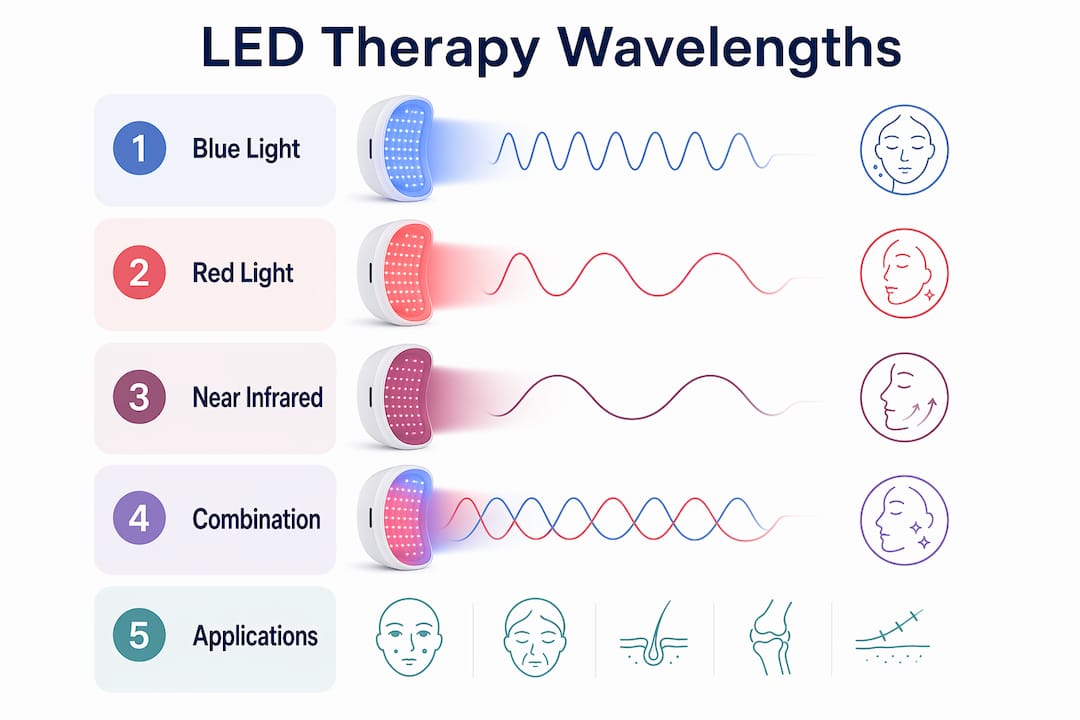
- Red light (630–660 nm): Penetrates the dermis to stimulate fibroblasts, boosting collagen and elastin production. It also reduces pro-inflammatory cytokines, making it effective for redness and photoaging.
- Blue light (415–445 nm): Targets the sebaceous glands and destroys Cutibacterium acnes bacteria through the activation of endogenous porphyrins. This makes it the primary wavelength for acne treatment.
- Near-infrared (830–880 nm): Penetrates deeper than visible light, reaching muscle and connective tissue. It supports wound healing and reduces deeper inflammation.
This non-thermal, non-ablative approach means there is no tissue damage, no recovery period, and no risk of post-inflammatory hyperpigmentation from the treatment itself. That safety profile makes LED phototherapy suitable for a far wider range of skin types than laser or chemical alternatives.
What are the clinically supported benefits of LED therapy?
LED photobiomodulation is clinically supported for inflammatory acne, photoaging, wound healing, and androgenetic alopecia. That breadth of application reflects the fundamental nature of the mechanism. When you improve cellular energy and reduce inflammation, multiple skin conditions respond.
The table below maps each therapeutic wavelength to its primary clinical application and the skin concern it addresses most directly.
| Wavelength | Primary target | Clinical application |
|---|---|---|
| Blue (415–445 nm) | Acne bacteria | Mild to moderate inflammatory acne |
| Red (630–660 nm) | Fibroblasts, inflammation | Photoaging, fine lines, redness |
| Near-infrared (830–880 nm) | Deep tissue, circulation | Wound healing, hair loss, recovery |
Skin texture improvements are among the most consistently reported outcomes. Red light increases collagen density, which firms the skin and softens fine lines over a course of treatments. For acne, blue light reduces active breakouts without the dryness or irritation associated with topical retinoids or benzoyl peroxide.
Clinical evidence supports LED therapy for mild to moderate acne, early photoaging, and post-procedure recovery, though effect sizes are modest compared to lasers or prescription treatments. That is not a weakness. It means LED therapy occupies a specific, well-defined role as a maintenance and adjunctive treatment rather than a primary intervention for advanced conditions.
Pro Tip: Pair red light sessions with a vitamin C serum applied immediately after treatment. The increased cellular activity post-session may enhance absorption and amplify antioxidant benefits for photoaged skin.
Session protocols follow a consistent pattern across clinical settings. Typical sessions last 15–30 minutes, delivered two to three times per week. Most patients see meaningful improvement after six to twelve sessions, though this varies by condition and skin type. LED therapy is suitable for all Fitzpatrick skin types and is considered safe during pregnancy, which broadens its clinical utility significantly.
How does LED therapy compare to other aesthetic treatments?
LED therapy is best understood as an adjunctive or maintenance modality, not a primary treatment for significant skin concerns. Expert consensus confirms it complements but does not replace primary treatments such as ablative lasers, chemical peels, or prescription-grade topicals.
The key distinction is mechanism. Ablative lasers like CO2 or Er:YAG remove layers of skin to force rapid remodelling. Results are visible within days. LED therapy works gradually, through cumulative cellular stimulation over weeks. Neither approach is superior in absolute terms. They serve different purposes and different patients.
Key differences to understand before choosing a treatment path:
- Downtime: Ablative lasers require days to weeks of recovery. LED therapy has zero downtime.
- Intensity of effect: Lasers produce dramatic, rapid changes. LED therapy produces gradual, subtle improvements.
- Risk profile: Lasers carry risks of scarring, pigmentation changes, and infection. LED therapy carries no such risks when used correctly.
- Cost per session: Professional LED sessions are generally more accessible in cost than laser treatments, though more sessions are required.
- Suitability: Lasers are contraindicated for darker skin tones in many cases. LED therapy is safe across all skin types.
The device quality issue deserves particular attention. Consumer-grade LED devices often lack power and wavelength accuracy compared to professional clinical systems. This means many at-home devices fail to deliver the therapeutic dose required to trigger meaningful cellular changes. Buying an at-home mask and expecting clinical results is a common and costly misconception.
Pro Tip: When evaluating any LED device or clinic, ask for the irradiance specification in mW/cm² and the wavelength range. Professional systems should provide validated parameters. If a provider cannot supply these figures, that tells you something important.
Dosing is also more nuanced than most people realise. Precise dosing is critical because both underdosing and overdosing can limit or nullify benefits. This “goldilocks zone” of light exposure is why standardised protocols and calibrated devices matter so much in a professional setting.
What should you know about the LED therapy treatment process?
A professional LED therapy session is straightforward and comfortable. Understanding the process helps set realistic expectations and supports better outcomes when combined with other treatments.
A typical session follows this sequence:
- Skin preparation: The skin is cleansed to remove makeup, SPF, and any topical products that could interfere with light penetration.
- Eye protection: Protective goggles are worn throughout the session to shield the eyes from direct light exposure.
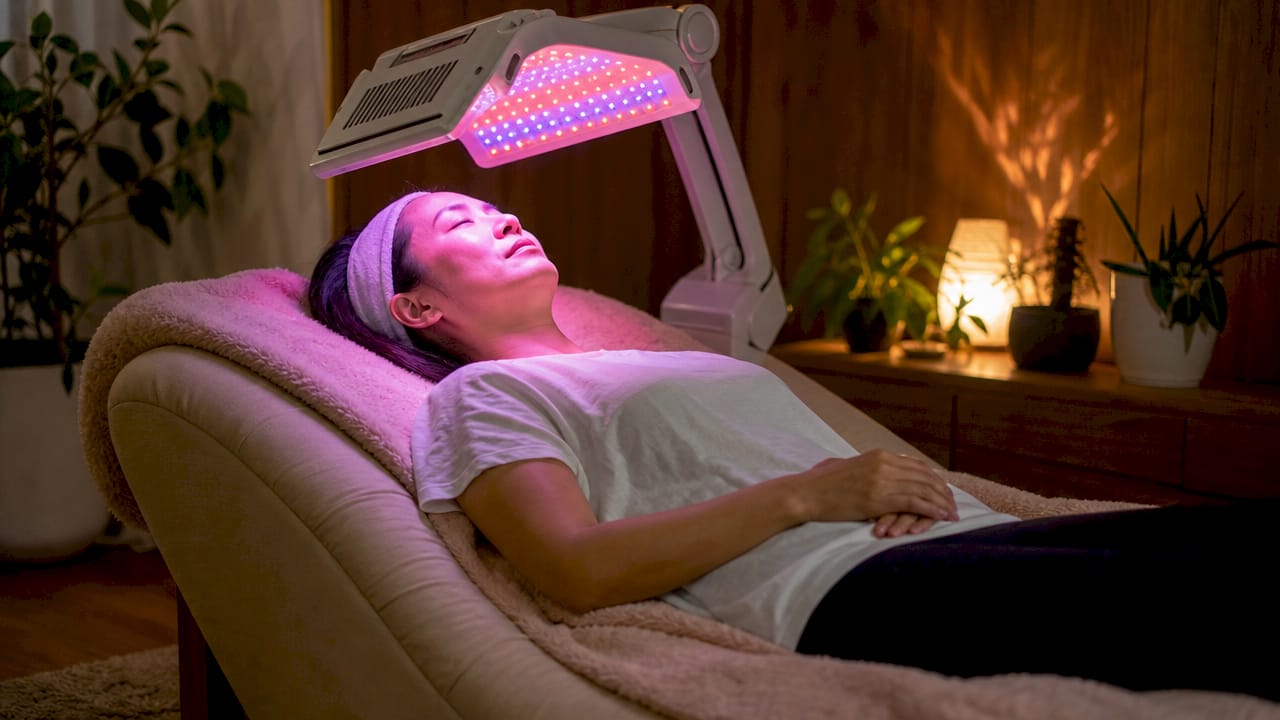
- Light application: The LED panel or device is positioned close to the skin. Sessions last 15–30 minutes depending on the wavelength and treatment goal.
- Post-treatment care: No recovery time is needed. Patients can apply skincare products and return to daily activities immediately.
- Treatment frequency: Two to three sessions per week is the standard protocol for active conditions. Maintenance sessions once or twice monthly are common once the initial course is complete.
LED therapy integrates well with other aesthetic treatments. Many clinics use it as a post-procedure recovery tool after microneedling, chemical peels, or dermal filler treatments, where its anti-inflammatory effects support faster healing. It also works well alongside skin rejuvenation protocols that combine multiple modalities for more comprehensive results.
A professional consultation before starting any LED programme is the right first step. Skin type, active conditions, medications, and treatment history all influence which wavelengths and protocols are most appropriate. Patients respond variably to LED therapy, and it works best as part of a structured, professionally designed treatment plan rather than sporadic use.
Key takeaways
LED photobiomodulation is a clinically validated, non-thermal treatment that stimulates cellular repair through targeted wavelengths, making it most effective as part of a professionally supervised skin care plan.
| Point | Details |
|---|---|
| Mechanism is cellular, not thermal | LED activates mitochondrial energy production rather than damaging tissue, ensuring safety across all skin types. |
| Wavelength determines outcome | Red, blue, and near-infrared light each target different skin concerns, from acne to photoaging to wound healing. |
| Results are gradual and cumulative | Expect improvement over six to twelve sessions, not after a single treatment. |
| Professional devices outperform consumer ones | Clinical systems deliver validated doses; most at-home devices do not reach therapeutic thresholds. |
| Best used as adjunctive therapy | LED therapy complements treatments like Botox and dermal fillers but does not replace primary interventions. |
LED therapy in practice: what I have learned
LED therapy is one of the most misunderstood treatments in aesthetic medicine. Patients arrive expecting dramatic results after two sessions, having seen social media content that presents it as a miracle fix. The science tells a different story, and I think that story is actually more reassuring, not less.
What LED therapy does well, it does consistently. The anti-inflammatory effects of red light are real and well-documented. The acne-clearing action of blue light is supported by solid clinical evidence. The key is calibration, both of the device and of expectations. I have seen patients benefit enormously from LED as part of a structured plan that includes professional-grade treatments. I have also seen patients waste money on at-home devices that simply do not deliver therapeutic doses.
The honest advice is this: LED therapy works best when it is not asked to do everything. Pair it with treatments that address volume loss, texture, or deeper structural concerns. Use it as a recovery and maintenance tool. Commit to the protocol rather than dipping in and out. Non-surgical treatments work best when they are part of a coherent plan, and LED is no exception. The gradual nature of the results is not a flaw. It reflects a treatment that is working with your biology rather than overriding it.
— Vishul
LED therapy at Theaestheticsroom
Theaestheticsroom offers medically supervised LED treatments within a broader programme of skin rejuvenation designed for patients who want results grounded in clinical evidence.
Our practitioners combine LED phototherapy with complementary procedures such as Botox and dermal fillers to address multiple aspects of skin ageing in a single, personalised plan. LED therapy supports post-treatment recovery, reduces inflammation, and maintains results between more intensive sessions. Every protocol is tailored to your skin type, concerns, and goals following a thorough consultation. Based in Knightsbridge and accredited by the CQC, Theaestheticsroom delivers aesthetic care in a safe, professional environment. Book a consultation to find out how LED therapy fits within your skin health plan.
FAQ
What is LED phototherapy?
LED phototherapy, also known as photobiomodulation, is a non-thermal light-based treatment that uses specific wavelengths to stimulate cellular repair, reduce inflammation, and improve skin health. It is clinically supported for acne, photoaging, wound healing, and hair thinning.
How long does an LED therapy session take?
A standard session lasts 15–30 minutes and requires no downtime. Most treatment courses involve two to three sessions per week over several weeks.
Is LED therapy safe for all skin types?
LED therapy is safe across all Fitzpatrick skin types and is considered safe during pregnancy, making it one of the most broadly suitable treatments in aesthetic medicine.
Can LED therapy replace laser treatments?
LED therapy does not replace ablative laser treatments. It is best used as an adjunctive or maintenance modality, complementing primary treatments rather than substituting for them.
Why do professional LED devices produce better results than at-home ones?
Professional systems deliver validated therapeutic doses at accurate wavelengths. Consumer devices frequently lack the power output and wavelength precision required to trigger meaningful cellular changes.
Recommended
- Master your skin rejuvenation workflow in London 2026 – The Aesthetics Room
- Types of aesthetic lasers for skin rejuvenation results – The Aesthetics Room
- Discover the real impact of lasers in skincare for radiant results – The Aesthetics Room
- Role of lasers in aesthetics: 50% wrinkle reduction proven – The Aesthetics Room