

A softening jawline tends to show up in photos before you notice it in the mirror. One day the lower face looks defined, and then suddenly the contour feels less sharp, with heaviness around the jowls or a subtle loss of structure under the chin. If you are wondering how to tighten loose jawline changes, the right answer depends on why it is happening in the first place.
For some people, it is mainly skin laxity. For others, it is volume loss, muscle activity, weight fluctuation, genetics or a combination of several factors at once. That is why the most effective approach is rarely a single product or one-off treatment. A looser jawline is usually a structural issue, and good results come from assessing the whole lower face rather than chasing one area in isolation.
Why the jawline becomes loose
The jawline changes as support in the face gradually shifts. Collagen and elastin reduce with age, so the skin has less spring and firmness. Fat pads also descend, which can create heaviness lower down even when the skin itself is not dramatically loose. Bone resorption plays a part too, particularly around the chin and jaw, where less support can make the profile look softer over time.
Lifestyle factors can accelerate this. Sun exposure, smoking, poor skin quality, stress, disrupted sleep and significant weight changes all affect how firm the lower face appears. Posture can even contribute, especially when the neck and chin are consistently held forward, although posture alone will not explain more established jowl formation.
This is where many people waste time and money. They look for one miracle cream or one trending treatment, when the real issue may be structural support, skin quality and tissue position working together.
How to tighten loose jawline at home
At-home measures can help, but they are best viewed as supportive rather than transformative. If your concern is very mild or preventative, they may make a visible difference. If laxity is more advanced, they can still improve skin condition, but expectations need to stay realistic.
Daily SPF is one of the most effective non-negotiables. UV exposure breaks down collagen and makes skin laxity worse, often gradually enough that people underestimate its impact. Alongside this, a skincare routine with retinoids, peptides and well-formulated antioxidants can support firmer-looking skin over time.
Hydration, sleep and steady weight management also matter more than many people think. Repeated gain and loss can affect tissue quality and facial support, while dehydration and fatigue can make the jawline appear less crisp. These changes will not rebuild deep structural support, but they do influence how the lower face presents.
Facial massage and lymphatic drainage can be useful if puffiness is exaggerating a soft jawline. They may reduce fluid retention and create a fresher, more sculpted appearance temporarily. What they do not do is tighten significant skin laxity or lift descended tissue in any lasting way.
Jaw exercises are often marketed aggressively online, but the evidence is limited. In some cases, overworking lower-face muscles can even create tension or bulk rather than refinement. If someone has jaw clenching or facial imbalance already, generic exercises may be unhelpful.
When skincare is not enough
A common frustration is doing all the sensible things and still feeling that the jawline looks tired or heavier. That usually means the issue is deeper than surface skin quality. Skin can be healthy and well cared for, yet still lack the collagen, support and contour that create a defined lower face.
This is where a clinical assessment matters. A medically led consultation should look at the chin, cheeks, jowls, neck and skin quality together. Treating only the visible fold or heaviness can produce an incomplete result if the underlying cause sits higher in the face or in the chin projection.
For example, someone with early jowling may actually benefit most from subtle support in the lateral cheek or pre-jowl area. Another patient may need skin tightening rather than volume. Another may have fullness beneath the chin contributing more than laxity itself. The right plan is individual, and that is precisely why one size does not fit all.
Non-surgical treatments that can tighten a loose jawline
For patients who want visible improvement without surgery, non-surgical options can be very effective when chosen carefully. The key is selecting the right treatment for the right type of looseness.
Collagen-stimulating skin treatments
If the skin along the jawline feels crepey, thinning or mildly lax, collagen-stimulating treatments are often a strong place to start. Depending on the patient, this may include energy-based treatments, skin remodelling injectables or regenerative approaches designed to improve firmness over time.
These treatments do not usually create an instant lifted effect. Instead, they encourage gradual improvement in skin quality and support. That suits patients who want natural-looking change and are happy to build results over a series of sessions. It is a subtle but often very worthwhile route, especially in earlier stages of laxity.
Dermal filler for structure and contour
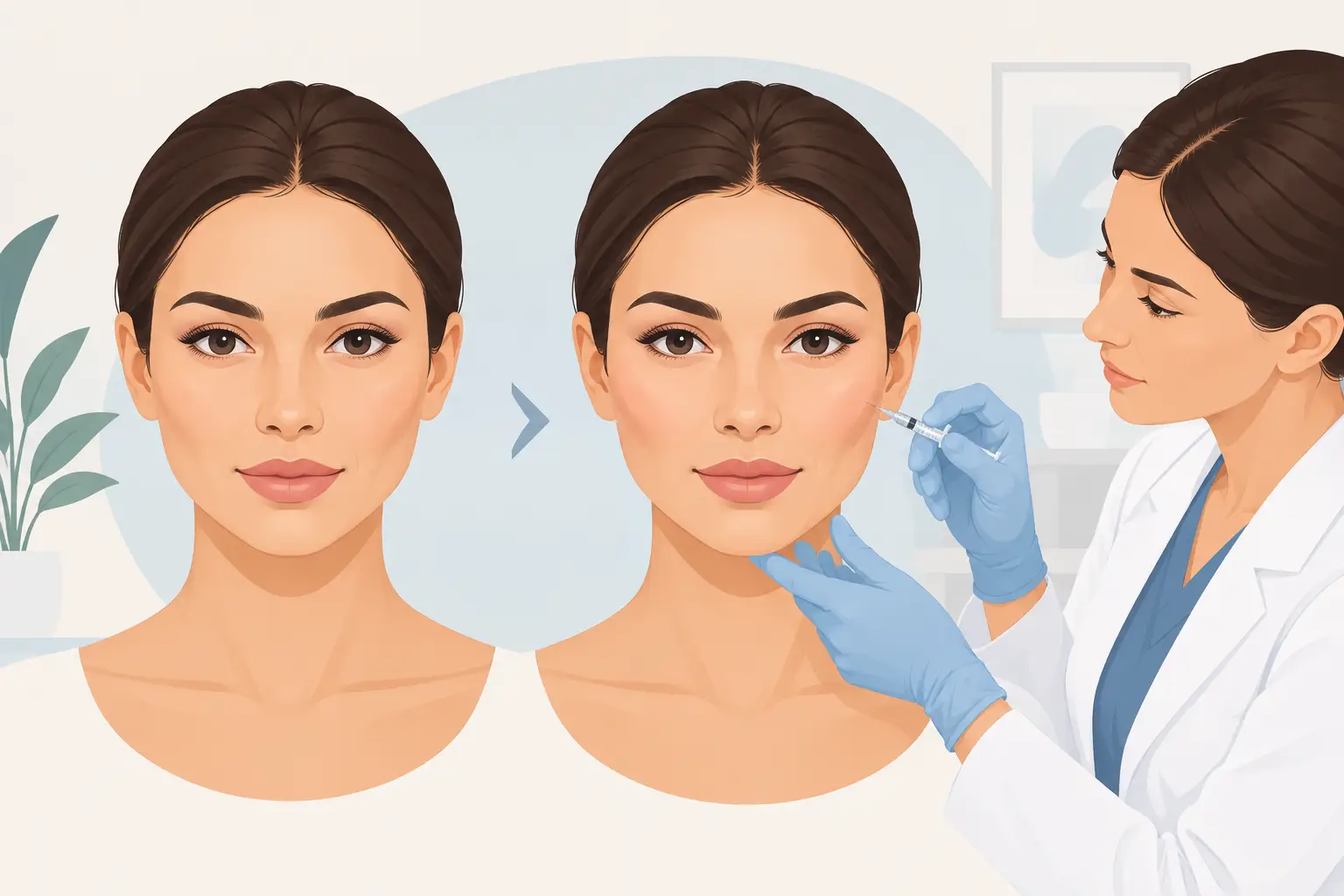
For some patients, a loose-looking jawline is partly a support issue rather than simply excess skin. Strategic dermal filler can restore definition in the chin, jaw angle and pre-jowl area, helping to rebalance the lower face.
Done well, this should not look overfilled or harsh. The aim is to recreate cleaner lines and better proportion, not to make the face look heavier. Technique matters enormously here. Too much product, poor placement or ignoring the rest of the facial anatomy can make the jawline look less refined rather than more so.
Anti-wrinkle treatment for neck bands and downward pull
In selected cases, anti-wrinkle treatment can soften the downward pull of specific muscles that contribute to a heavier lower face. This is most relevant when platysmal banding or lower-face muscle tension affects jawline definition.
It is not a solution for every patient, and it will not replace volume restoration or skin tightening where those are the true causes. Used appropriately, however, it can complement other treatments and improve the overall contour.
Fat-dissolving treatment under the chin
If fullness beneath the chin is blurring the jawline, fat-dissolving treatment may be considered. This is particularly useful where the issue is localised submental fat rather than loose skin alone.
This distinction matters because removing fat from an area with poor skin elasticity can sometimes reveal laxity more clearly. A careful assessment helps determine whether reducing fullness, tightening skin or combining approaches is the best route.
How to tighten loose jawline safely
Safety should sit at the centre of any jawline treatment plan. The lower face is not an area for casual decision-making, especially when injectables are involved. A jawline that looks natural and elegant usually comes from restraint, anatomical understanding and an honest discussion about what non-surgical treatment can and cannot achieve.
A reputable clinic should assess medical history, facial proportions, skin quality and treatment suitability properly before recommending anything. You should feel that the practitioner is listening to your concerns, not simply selling a trending procedure. If the recommendation is to combine treatments or stage them over time, that is often a sign of a thoughtful plan rather than unnecessary upselling.
This matters particularly for patients who have had previous filler elsewhere, have noticeable asymmetry or want to avoid an overdone result. In experienced hands, bespoke treatment can refresh and define the jawline while still looking entirely like you.
What kind of results can you expect?
Results vary according to the starting point. Mild looseness often responds very well to non-surgical treatment, particularly when addressed early. Moderate laxity can usually be improved, though a combination approach is often needed. More advanced sagging may still benefit from non-surgical care, but surgery may offer a more dramatic correction if that is the patient’s priority.
This is one of the most useful conversations to have in consultation. Some patients want a gentle improvement with no obvious signs of treatment. Others are looking for stronger contour and are willing to have a more intensive plan. Neither is wrong, but clarity helps shape the right recommendation.
In a premium clinical setting such as The Aesthetics Room, the advantage of a consultation-led approach is that the treatment plan can be built around your anatomy, your timeline and your comfort level, rather than around a generic package.
When to seek professional advice
If the jawline bothers you in certain lighting, in photographs or when speaking on video calls, that is usually enough reason to seek advice. You do not need severe laxity before exploring options. In fact, earlier intervention is often simpler and more conservative.
The best time to act is when you want guidance, not when you feel desperate to fix it quickly. A well-planned approach tends to produce better, more natural results than rushing into the most aggressive treatment available.
A looser jawline is rarely just one problem, which is why the most effective solutions are tailored rather than trendy. With the right assessment, it is entirely possible to improve definition in a way that feels polished, subtle and true to your features.