

TL;DR:
- Injectable contouring offers a non-surgical way to reshape facial features using fillers and neuromodulators.
- Proper safety protocols and personalized plans ensure natural results while minimizing risks.
- Modern treatments emphasize micro-dosing, staged sessions, and respecting individual facial harmony.
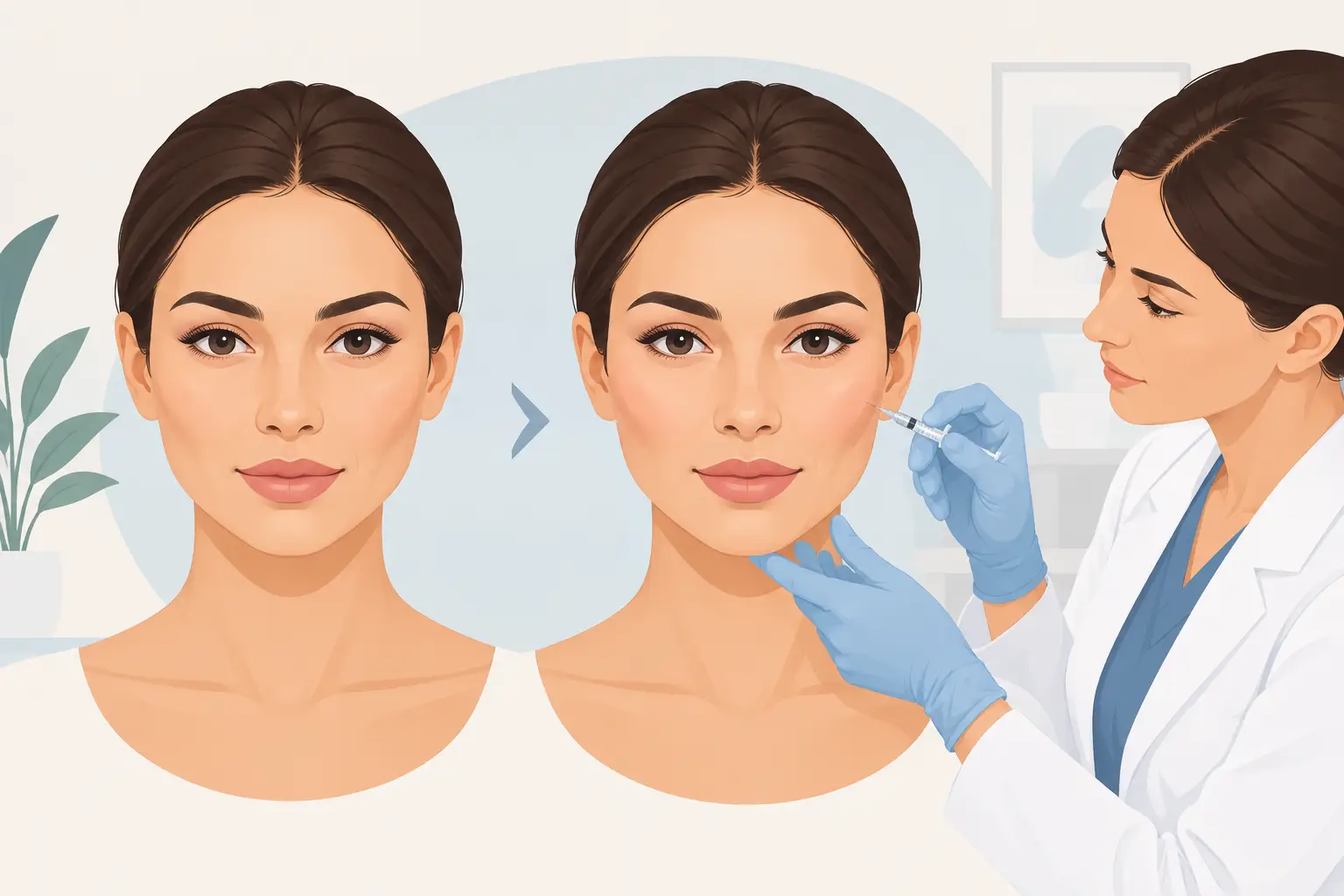
Many people still believe that meaningful facial reshaping requires surgery. That assumption is increasingly outdated. Injectable contouring reshapes the face non-surgically using fillers and neuromodulators, offering a precision-led alternative that fits comfortably into a lunch break. At The aesthetics Room in London’s prestigious knightsbridge, we see clients daily who are surprised by what targeted, well-placed injectables can achieve. This article walks you through exactly what injectable contouring is, which products work best, how safety is managed in premium clinics, and how to personalise your plan for results that look quietly brilliant rather than obviously done.
Table of Contents
- What is injectable contouring?
- Popular types of fillers and injectables explained
- Safety, risks, and best practices in London clinics
- The injectable contouring process: what to expect from consultation to results
- personalisation, trends, and expert tips for optimal results
- Our perspective: true luxury is personal, subtle — and always safe
- explore injectable contouring with leading London experts
- frequently asked questions
Key Takeaways
| Point | Details |
|---|---|
| Non-surgical precision | Injectable contouring uses fillers and neuromodulators to sculpt and enhance facial features without surgery. |
| Safety is paramount | Choosing a regulated London clinic and experienced practitioner greatly reduces risks and ensures optimal results. |
| Personalised natural results | Modern contouring techniques prioritise subtle, undetectable improvements tailored to your unique facial structure. |
| Variety of options | Hyaluronic acid, CaHA, and PLLA fillers each offer distinct benefits and durations, allowing customisation. |
| Expert guidance needed | Consultants help navigate product selection, application techniques, and aftercare for safe, satisfying enhancement. |
What is injectable contouring?
Injectable contouring is a non-surgical approach to facial reshaping. Rather than cutting or moving tissue, a skilled practitioner uses injectables to add volume, define structure, and restore natural balance. The result? A more sculpted, harmonious face with none of the recovery time associated with surgery.
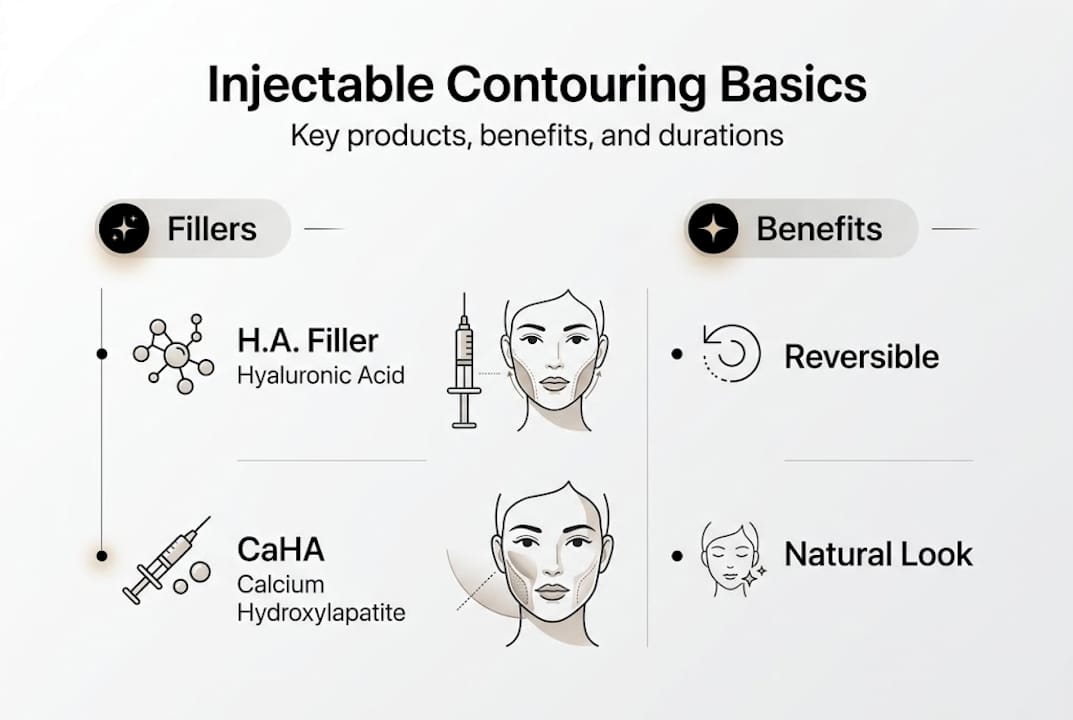
Injectable contouring uses dermal fillers and sometimes neuromodulators to non-surgically enhance facial features by adding volume, defining contours, and improving balance. The most commonly used products are based on hyaluronic acid (abbreviated as H.A.), a substance naturally found in the skin. These gels are injected with precision into specific facial zones to sculpt and lift.
Common treatment areas include:
- The cheeks: to restore volume loss or create higher definition
- The jawline: to sharpen and lengthen for a more structured appearance
- The chin: to improve projection and facial proportion
- The temples and mid-face: to address hollowing and correct asymmetry
What makes injectable contouring distinct from surgical procedures is its adaptability. Every face is unique. A good treatment plan adapts to your individual anatomy, bone structure, and natural proportions rather than applying a one-size-fits-all template. This is why a thorough consultation matters enormously.
For those exploring dermal fillers overview for the first time, it helps to understand that results build gradually. Some practitioners take a staged approach, adding small amounts across multiple sessions. This produces results that feel genuinely yours.
Pro tip: Before booking any injectable treatment, look at before-and-after photographs from your chosen clinic. You are not just assessing results; you are assessing the practitioner’s aesthetic eye and their concept of balance.
If you are wondering why choose fillers over other approaches, the answer usually comes down to reversibility, flexibility, and the absence of surgical risk. Injectable contouring gives you meaningful change without permanent commitment.
Popular types of fillers and injectables explained
With a grasp of the overall technique, it is crucial to understand which injectable products might suit specific needs and how they differ. The three main categories used in facial contouring are hyaluronic acid, calcium hydroxyapatite (CaHA), and poly-L-lactic acid (P.L.L.A.).
Common fillers include hyaluronic acid, CaHA, and P.L.L.A., with results lasting 6 to 24 months depending on the product and treatment area.
| Product type | Key benefit | Duration | reversible? | Best for |
|---|---|---|---|---|
| H.A. filler (e.g. juvederm, restylane) | Natural feel, flexible | 6 to 18 months | Yes, with hyaluronidase | cheeks, lips, temples |
| CaHA (radiesse) | Strong lift, collagen stimulation | 12 to 24 months | No | jawline, chin, hands |
| P.L.L.A. (sculptra) | Progressive collagen rebuilding | 18 to 24 months | No | full face volume loss |
Hyaluronic acid fillers are the most popular choice for new clients because they are reversible. If you are unhappy with the result, an enzyme called hyaluronidase can dissolve the filler quickly and safely. That safety net matters.

CaHA products like radiesse work differently. They provide immediate structural lift while stimulating your own collagen over time. They are excellent for areas requiring firmer support, such as the jawline.
Sculptra (P.L.L.A.) works over several months, gradually encouraging the body to produce new collagen. Results appear slowly but tend to look exceptionally natural. It suits clients looking for subtle, progressive volume restoration rather than an immediate transformation.
Key considerations when choosing your filler:
- Your treatment area: softer fillers for delicate zones, firmer products for structural contouring
- Your timeline: do you want immediate results or a gradual build?
- Your risk tolerance: reversibility is a valuable safeguard
Learn more about what are dermal fillers and find guidance on how to choose dermal fillers based on your anatomy and goals.
Safety, risks, and best practices in London clinics
Understanding safety adds vital confidence. In the right hands, injectable contouring carries a strong safety profile. In less experienced hands, the picture changes significantly. This is why the setting and practitioner credentials matter as much as the product itself.
Safety is strong when clinic standards are met; complications are rare but can be serious, with early intervention critical in cases such as vascular occlusion. This particular complication, where filler inadvertently enters or compresses a blood vessel, is rare but requires immediate action. CQC-regulated clinics maintain emergency protocols and keep hyaluronidase on-site for exactly this reason.
Best practices at premium London clinics include:
- In-depth facial anatomy assessment before any product is selected
- Product selection tailored to skin type, tissue quality, and risk zones
- Use of cannulas (blunt-tipped instruments) in higher-risk areas to reduce bruising and vessel contact
- ultrasound guidance where appropriate for deeper structural injections
- Post-treatment monitoring with a clear protocol for any concerns
“Premium London clinics emphasise consultant-led, personalised care and advanced safety protocols like cannula and ultrasound guidance, setting the standard for responsible injectable practice.”
Common and expected side effects include bruising, swelling, and temporary tenderness at injection sites. These typically resolve within a week. More serious complications are rare but discussed transparently at consultation.
Pro tip: Always ask your clinic directly about their emergency protocols. A confident, specific answer is a reassuring sign. A vague one is a warning.
Explore safe London enhancement options and understand the practical differences when reading about cannulas vs needles in injectable treatments.
The injectable contouring process: what to expect from consultation to results
Having seen what makes the process safe and effective, let us focus on how to maximise your results and avoid common pitfalls. Understanding the journey from consultation to outcome helps you set realistic expectations and arrive prepared.
The typical process unfolds in stages:
- Initial consultation: Your practitioner analyses facial anatomy, photographs your face, and discusses your goals. No two consultations are identical.
- Product and technique planning: The right filler type, volume, and injection points are selected for your specific features.
- The treatment session: Most appointments take 30 to 60 minutes. A topical numbing cream is applied beforehand.
- immediate results: Some lifting and contouring is visible straight away. Final results settle over 7 to 14 days.
- Follow-up appointment: A review at two to four weeks allows your practitioner to assess results and make minor refinements if needed.
| Stage | Duration | What happens |
|---|---|---|
| consultation | 30 to 45 minutes | anatomy review, expectation setting |
| treatment | 30 to 60 minutes | injections, precision placement |
| recovery | 24 to 72 hours | mild swelling, avoid strenuous activity |
| Final result | 7 to 14 days | full effect visible |
precision techniques including linear threading, cross-hatching, microdroplet placement, and cannula delivery enable personalised, balanced outcomes with minimal trauma. The choice of technique depends on the depth of tissue targeted and the area being treated.
A growing shift in approach is worth noting. The trend towards natural-looking results via micro-dosing and staged treatments means clients leave looking like refreshed, rested versions of themselves rather than noticeably altered. Learn more about subtle enhancement with injectables and how this approach is shaping modern aesthetics.
personalisation, trends, and expert tips for optimal results
With a thorough understanding of products, techniques, and safety, our last major consideration is how to tailor the approach for truly exceptional, natural results. This is where skilled practitioners genuinely separate themselves.
The biggest mistake in aesthetic medicine is chasing a trend rather than harmony. personalised plans are critical; expert anatomical knowledge and micro-dosing avoid overcorrection, ensuring natural results that suit your individual face rather than a generalised aesthetic ideal.
Current best practice prioritises preservation over transformation. The goal is to work with the natural architecture of your face, maintaining what is already beautiful while restoring or refining where needed.
Key principles for optimal, natural results:
- Less is more: build gradually rather than adding significant volume in one session
- Choose balance over symmetry: perfect symmetry can look unnatural; harmonious balance is the real target
- Consider skin tone and texture: practitioners experienced in treating skin of colour understand specific risk zones and product behaviour on darker skin tones
- Know your contraindications: certain autoimmune conditions, medications, and pregnancy all affect suitability for injectable treatments
- Trust the practitioner’s restraint: if a practitioner pushes for more product than you feel comfortable with, that is a red flag
Pro tip: Book a second opinion if you feel unsure. A confident, ethical practitioner will always welcome the fact that you are making an informed decision.
For more detail on how bespoke planning makes the difference, explore the advantages of dermal fillers in a premium setting and discover filler transformation tips for genuinely face-enhancing outcomes.
Our perspective: true luxury is personal, subtle — and always safe
In London’s premium aesthetics landscape, the clinics we respect most are the ones that say no as readily as they say yes. That restraint is not a weakness; it is the clearest signal of genuine expertise. We have seen the consequences when volume is added without precision, when trends override anatomy, and when clients are not given time to reflect. The results rarely serve anyone well.
At The aesthetics Room, our view is straightforward. Excellence in injectable contouring is not about the number of syringes used. It is about the quality of the conversation beforehand, the skill applied during the procedure, and the relationship maintained long after. Safe enhancements in London should feel like a partnership between client and practitioner, built on honesty and evidence-based technique. When that partnership exists, the results speak quietly but powerfully.
explore injectable contouring with leading London experts
Ready to explore the next step on your journey? At The aesthetics Room, we bring together CQC-regulated practitioners, bespoke treatment planning, and a commitment to results that honour your natural features. Whether you are new to injectables or looking to refine a previous treatment, our team is here to guide you thoughtfully.
Every consultation begins with a careful anatomy review and an honest conversation about your goals. We never recommend more than you need. Book your appointment for London dermal fillers and discover what genuinely personalised contouring feels like. If you are still weighing your options, our guide to choosing fillers in London is a helpful next step.
frequently asked questions
How long does injectable contouring last?
Depending on the filler used, results last 6 to 24 months before a maintenance session is typically needed.
Is injectable contouring safe?
It is generally safe with rare risks such as vascular occlusion when performed by trained professionals in regulated clinics.
Can injectable contouring look natural?
Yes. micro-dosing and staged treatments prioritise undetectable, natural-looking enhancements that simply make you look like a more rested version of yourself.
Who is not suitable for injectable contouring?
People who are pregnant, have certain autoimmune conditions, or take specific medications may not be suitable and require careful assessment before any treatment proceeds.
What are the risks of overfilling?
Overfilling can produce an unnatural, heavy appearance. micro-dosing is preferred in modern practice precisely to avoid this outcome and deliver gradual, refined results.
Recommended
- Why choose injectables? Benefits, safety and results – The Aesthetics Room
- Injectables in Aesthetics: Subtle Enhancement Explained – The Aesthetics Room
- 7 Essential Natural Looking Filler Tips for Subtle Results – The Aesthetics Room
- Cosmetic injectables guide: Safe choices for London luxury – The Aesthetics Room
- Corso contouring professionale: guida per aspiranti MUA