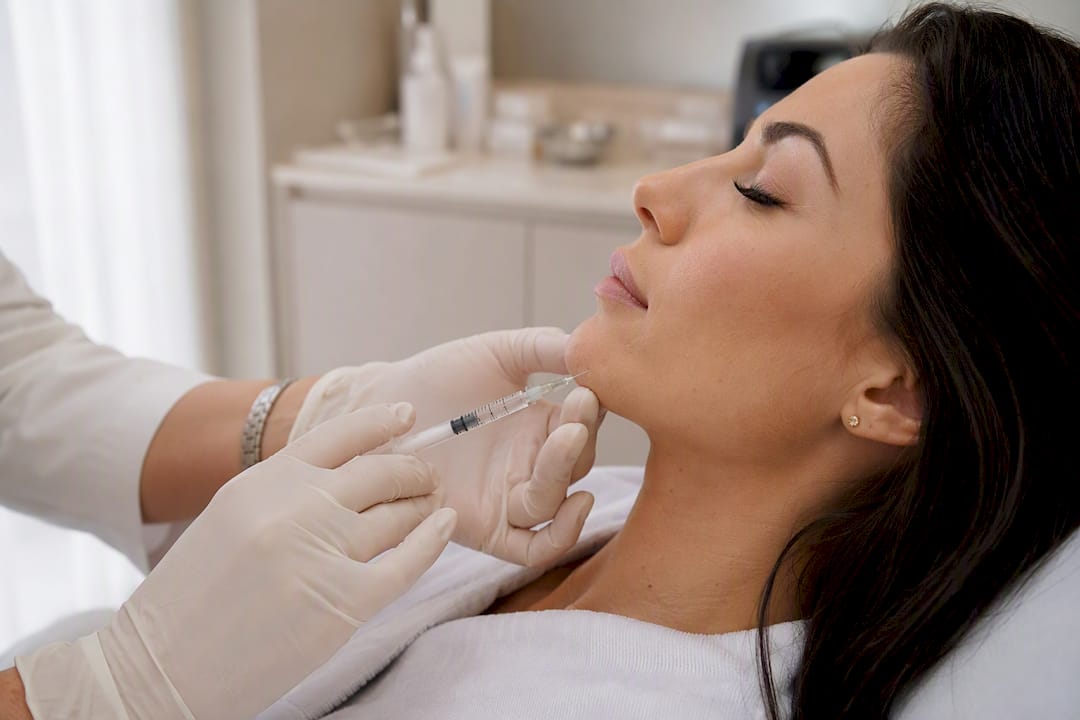


Many Londoners notice subtle shifts in their facial contours as the years go by, often sparking interest in refined, natural-looking enhancements. With the growing popularity of safe, non-invasive options, choosing the right approach can feel overwhelming for those seeking confidence without lengthy recovery. This guide cuts through the confusion to explain non-surgical facial contouring techniques, outlining trusted methods that deliver visible results while prioritising your safety and aesthetic goals.
Table of Contents
- What Is Facial Contouring? Fundamental Concepts
- Popular Facial Contouring Techniques in London
- Non-Invasive Versus Surgical Options Compared
- Safety Regulations And Practitioner Standards
- Risks, Recovery, And Typical Costs
Key Takeaways
| Point | Details |
|---|---|
| Facial Contouring Techniques | Various non-surgical and surgical methods enhance facial aesthetics, focusing on symmetry and natural appearance. |
| Personalised Consultations Essential | Each individual’s facial structure and aesthetic goals require tailored assessment before any procedure. |
| Non-Invasive vs Surgical Options | Non-invasive methods offer minimal downtime with temporary results, while surgical options provide permanent transformations but involve longer recovery. |
| Safety and Practitioner Standards | Stringent regulations ensure practitioner qualifications and patient safety in cosmetic procedures. |
What Is Facial Contouring? Fundamental Concepts
Facial contouring is a sophisticated aesthetic approach designed to enhance and harmonise facial features through targeted modifications. It represents an advanced technique that goes beyond traditional cosmetic procedures, focusing on creating balanced, natural-looking facial proportions. Advanced aesthetic techniques involve precise modifications to specific facial structures to achieve optimal aesthetic outcomes.
The fundamental concept of facial contouring involves strategic enhancement of facial anatomy, which can be accomplished through both surgical and non-surgical methods. These techniques aim to:
- Reshape and define facial contours
- Improve facial symmetry
- Enhance natural facial characteristics
- Address individual aesthetic concerns
Modern facial contouring encompasses a range of innovative approaches, from minimally invasive treatments to more complex surgical interventions. Non-surgical methods typically include dermal fillers, fat dissolving injections, and energy-based treatments that can subtly refine facial features without extensive downtime.
Professional practitioners evaluate each individual’s unique facial structure, considering factors like bone structure, skin quality, and aesthetic goals before recommending a personalised contouring strategy. Emerging technologies now enable more precise imaging and treatment planning, allowing for increasingly customised aesthetic solutions.
Pro tip: Always consult a qualified aesthetic professional who can provide a comprehensive assessment of your unique facial anatomy and recommend the most appropriate contouring approach.
Popular Facial Contouring Techniques in London
London’s aesthetic landscape offers a sophisticated array of facial contouring techniques tailored to individual aesthetic preferences. Non-surgical facelift methods have revolutionised the approach to facial enhancement, providing clients with minimally invasive options that deliver remarkable results.
The most sought-after facial contouring techniques in London include:
- Dermal Fillers: Strategically placed injectable treatments that reshape facial contours
- Cheek Augmentation: Volumising techniques that enhance facial structure
- Jawline Contouring: Precise treatments defining and sculpting the jaw area
- Chin Enhancement: Procedures that balance and proportion facial profile
Non-invasive techniques have gained significant popularity due to their reduced recovery time and natural-looking outcomes. Liquid facelifts combine multiple injectable treatments to comprehensively rejuvenate and reshape facial features, offering a bespoke approach to aesthetic enhancement.
Cheek fillers represent another innovative technique, allowing practitioners to strategically add volume and definition to the mid-face region. Cheek filler techniques enable precise sculpting of facial contours, creating a more youthful and balanced appearance.

Here’s how facial contouring techniques compare regarding procedure complexity, maintenance, and ideal candidates:
| Technique | Procedure Complexity | Maintenance Frequency | Ideal Candidates |
|---|---|---|---|
| Dermal Fillers | Minimally invasive | 1-2 times per year | Those seeking subtle enhancement |
| Cheek Augmentation | Moderate to invasive | Varies by method | Clients desiring prominent cheekbones |
| Jawline Contouring | Non-invasive to surgical | Annual touch-ups possible | Individuals seeking sharper profile |
| Chin Enhancement | Invasive or non-invasive | Some methods require top-ups | Patients needing improved proportions |
| Liquid Facelift | Multi-step, non-invasive | Once yearly recommended | Ageing individuals wanting rejuvenation |
Pro tip: Always select a clinic with experienced practitioners who can provide personalised facial contouring recommendations based on your unique facial anatomy and aesthetic goals.
Non-Invasive Versus Surgical Options Compared
Facial contouring presents two distinct pathways for aesthetic enhancement: non-invasive and surgical interventions. Non-surgical facial techniques have emerged as a compelling alternative to traditional surgical approaches, offering nuanced improvements with minimal recovery time.
Key differences between non-invasive and surgical options include:
-
Recovery Time
- Non-invasive: Minimal downtime (hours to days)
- Surgical: Extended recovery (weeks to months)
-
Permanence of Results
- Non-invasive: Temporary (6-18 months)
- Surgical: Long-lasting to permanent
-
Risk Profile
- Non-invasive: Lower complication rates
- Surgical: Higher potential for surgical complications
Non-invasive techniques such as dermal fillers and thread lifts provide immediate aesthetic improvements with significantly reduced risks. Collagen stimulators and energy-based devices offer progressive enhancements, gradually improving facial contours through natural collagen regeneration.
Surgical options, while more invasive, can provide more dramatic and permanent transformations by directly modifying bone and soft tissue structures. These procedures require extensive planning, longer recovery periods, and typically involve general anaesthesia, making them a more significant commitment for patients seeking comprehensive facial restructuring.
Pro tip: Consult a board-certified aesthetic professional who can comprehensively assess your facial anatomy and recommend the most appropriate technique matching your specific aesthetic goals and personal health profile.
Safety Regulations And Practitioner Standards
Facial contouring in the United Kingdom is governed by stringent safety regulations designed to protect patient well-being and ensure high-quality aesthetic treatments. Government licensing schemes are transforming the landscape of cosmetic procedures, establishing comprehensive standards for practitioner competence and patient safety.
Key regulatory requirements for aesthetic practitioners include:
-
Mandatory Qualifications
- Verified professional healthcare credentials
- Specialized aesthetic medicine training
- Ongoing professional development certification
-
Safety Protocol Standards
- Comprehensive infection control procedures
- Detailed patient consultation and risk assessment
- Use of licensed medical products
- Documented informed consent processes
The Cosmetic Practice Standards Authority plays a pivotal role in maintaining professional integrity. Practitioner standards emphasize rigorous anatomical knowledge, patient safety protocols, and clear professional boundaries for different treatment levels.
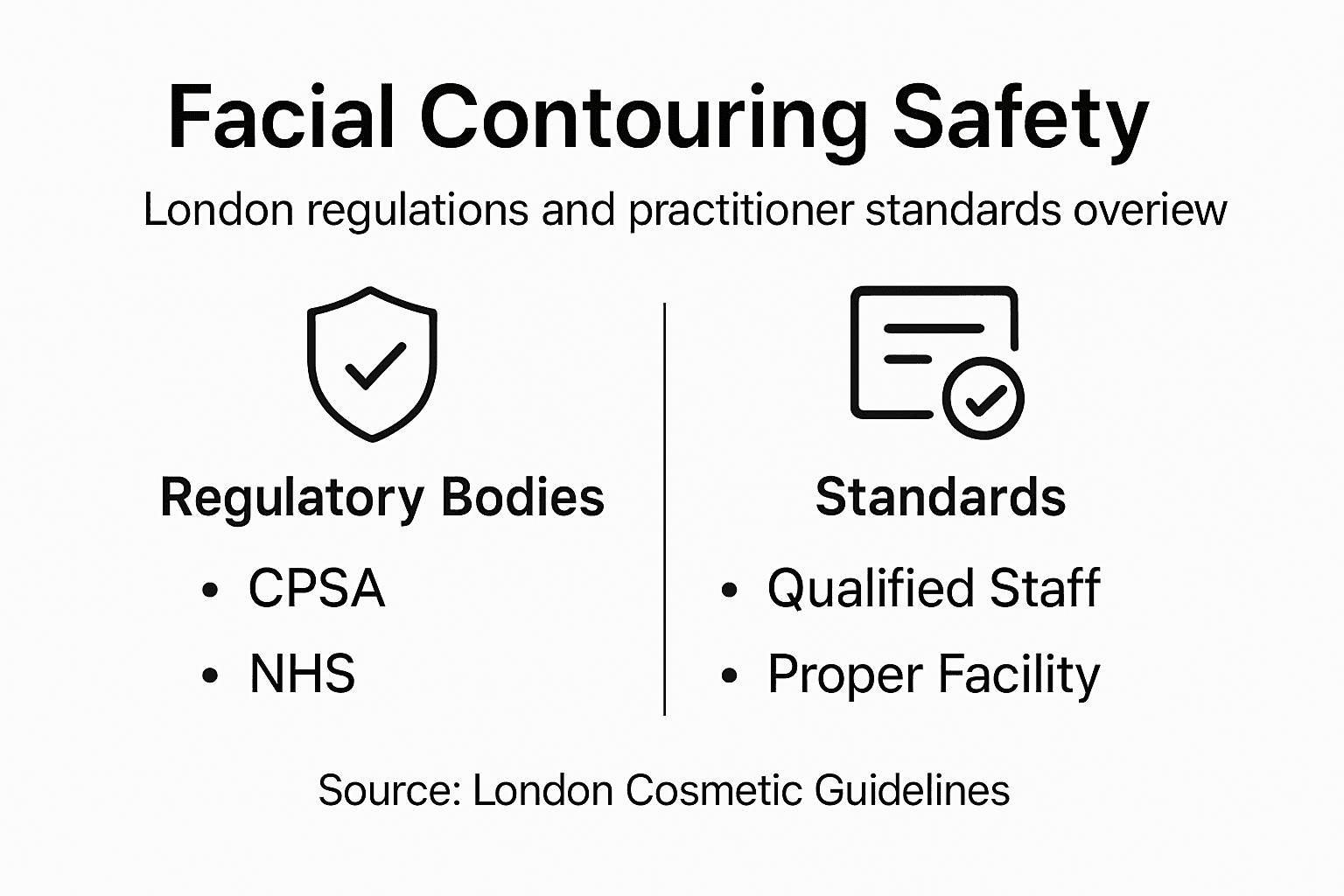
High-risk cosmetic procedures are exclusively reserved for qualified healthcare professionals, ensuring that complex treatments are performed by practitioners with extensive medical training. This approach significantly reduces potential complications and protects patients from unqualified practitioners attempting advanced aesthetic interventions.
Pro tip: Always verify a practitioner’s credentials, professional memberships, and regulatory compliance before undertaking any facial contouring procedure.
Risks, Recovery, And Typical Costs
Facial contouring procedures carry inherent risks and considerations that potential patients must carefully evaluate before proceeding. Cosmetic procedure considerations highlight the importance of understanding potential complications and realistic expectations.
Potential risks across different facial contouring techniques include:
-
Surgical Procedure Risks
- Infection
- Scarring
- Anaesthesia complications
- Asymmetrical results
-
Non-Surgical Procedure Risks
- Temporary bruising
- Minor swelling
- Potential allergic reactions
- Uneven product distribution
Recovery timelines vary significantly between invasive and non-invasive treatments. Non-surgical procedures typically involve minimal downtime, with patients returning to normal activities within 24-48 hours. Surgical interventions require more extensive recovery, potentially spanning several weeks.
Cosmetic procedure costs fluctuate widely based on treatment complexity and practitioner expertise. Non-surgical treatments range from £200 to £1,500, while surgical facial contouring procedures can cost between £3,000 and £10,000, depending on the specific technique and clinic reputation.
Below is a summary of recovery, cost, and long-term impact for facial contouring options:
| Option | Typical Recovery Time | Cost Range | Long-Term Impact |
|---|---|---|---|
| Non-surgical | 24-48 hours | £200–£1,500 | Temporary, repeat needed |
| Surgical | Several weeks | £3,000–£10,000 | Permanent change possible |
Pro tip: Budget for potential follow-up treatments and always prioritize practitioner qualifications over cost when considering facial contouring procedures.
Discover Expert Facial Contouring Solutions in London
Struggling to find safe and effective ways to enhance your natural facial features without long recovery times Facial contouring offers tailored options to reshape and define your facial symmetry with minimal downtime Whether you want subtle rejuvenation or more defined results our specialised treatments use the latest in Dermal Fillers and Advanced Injectables to deliver balanced, natural-looking enhancements in a professional setting.
Experience personalised care at The Aesthetics Room where safety and precision are paramount Benefit from expert assessments and bespoke treatment plans designed specifically for your facial anatomy and aesthetic goals Take the first step towards refined confidence and book your consultation today to explore how facial contouring can safely transform your appearance in London’s most trusted clinics.
Frequently Asked Questions
What is facial contouring?
Facial contouring is an aesthetic technique aimed at enhancing and harmonising facial features through targeted modifications, utilising both surgical and non-surgical methods to improve facial symmetry and natural characteristics.
What are the popular facial contouring techniques available?
Popular techniques for facial contouring include dermal fillers, cheek augmentation, jawline contouring, chin enhancement, and liquid facelifts, each providing varying levels of enhancement and complexity.
What are the differences between non-invasive and surgical facial contouring options?
Non-invasive techniques generally have minimal recovery time and temporary results, while surgical options offer more dramatic, long-lasting transformations but require longer recovery periods and involve higher risks.
What risks should I consider before undergoing facial contouring?
Potential risks include infection, scarring, complications from anaesthesia for surgical procedures, and temporary bruising or swelling for non-surgical options. It’s crucial to discuss these risks with a qualified practitioner.