


Subtle changes can make a world of difference when it comes to ageing gracefully in London. Choosing a non-surgical cosmetic option is about more than convenience—it is about trusting modern techniques and expecting truly personalised care. A liquid facelift uses precisely placed dermal fillers to restore volume and smooth contours, offering immediate yet natural results while keeping safety at the forefront. Explore how this innovative approach can deliver a refreshed appearance tailored to your unique features and aesthetic goals.
Table of Contents
- What Is a Liquid Facelift Treatment?
- Types of Fillers and Injection Techniques
- How the Procedure Works Step-by-Step
- Expected Results and Longevity of Effects
- Potential Risks, Side Effects, and Aftercare
- Comparing Liquid Facelifts with Surgical Options
Key Takeaways
| Point | Details |
|---|---|
| Liquid Facelift Overview | A non-surgical treatment using dermal fillers to achieve facial rejuvenation with minimal downtime and natural results. |
| Types of Fillers | Various fillers like Hyaluronic Acid, Calcium Hydroxylapatite, and Poly-L-Lactic Acid are used, each addressing specific aesthetic concerns. |
| Procedure Steps | The treatment involves a consultation, preparation, and precise injection techniques to enhance facial features. |
| Risks and Aftercare | Understanding common side effects and following proper aftercare is essential for optimal recovery and results. |
What Is a Liquid Facelift Treatment?
A liquid facelift represents an innovative, non-surgical approach to facial rejuvenation that delivers dramatic anti-ageing results without traditional surgical intervention. Unlike conventional facelifts requiring extensive recovery, this minimally invasive treatment uses strategic dermal filler injections to restore volume, smooth wrinkles, and recontour facial features.
The procedure involves carefully placed injectable treatments that work synergistically to address multiple signs of ageing simultaneously. Typically, practitioners combine different types of dermal fillers and sometimes neurotoxins to achieve comprehensive facial enhancement. These injectables can:
- Restore lost facial volume
- Lift sagging skin
- Reduce fine lines and wrinkles
- Enhance facial contours
- Improve overall skin texture
During a liquid facelift, medical professionals use advanced techniques to precisely target specific facial areas. This might include cheek augmentation, jawline definition, nasolabial fold reduction, and subtle lip enhancement. The strategic placement of fillers creates a natural-looking result that appears refreshed rather than dramatically altered.

Pro tip: Always consult a certified aesthetic practitioner who can personalise your liquid facelift approach based on your unique facial anatomy and aesthetic goals.
Types of Fillers and Injection Techniques
Liquid facelifts utilise several types of dermal fillers, each designed to address specific aesthetic concerns and facial rejuvenation goals. Dermal filler varieties range from hyaluronic acid (HA) to more specialised formulations, offering versatile solutions for age-related volume loss and skin refinement.
The primary types of dermal fillers used in liquid facelift treatments include:
- Hyaluronic Acid (HA) Fillers
- Ideal for hydration and immediate volume restoration
- Best for lips, cheeks, and fine line correction
- Brands include Juvederm and Restylane
- Calcium Hydroxylapatite (CaHA) Fillers
- Excellent for deeper facial folds
- Provides structural support and contour
- Stimulates natural collagen production
- Poly-L-Lactic Acid (PLLA) Fillers
- Gradual collagen stimulation
- Long-lasting volumising effects
- Ideal for overall facial rejuvenation
Injection techniques are equally crucial in achieving natural-looking results. Practitioners employ sophisticated methods like linear threading, where filler is deposited continuously along facial contours, and point injection techniques for precise volume enhancement. The strategic placement requires extensive anatomical knowledge to ensure safety and aesthetic harmony.
Pro tip: Consult an experienced aesthetic practitioner who can recommend the most appropriate filler type and injection technique tailored to your unique facial structure and rejuvenation objectives.
Here is a concise overview of the types of dermal fillers and their unique features:
| Filler Type | Key Benefit | Typical Use Area | Approximate Longevity |
|---|---|---|---|
| Hyaluronic Acid (HA) | Immediate volume boost | Cheeks, lips | 6-18 months |
| Calcium Hydroxylapatite | Deep fold support | Nasolabial folds | 12-24 months |
| Poly-L-Lactic Acid | Gradual collagen increase | Full face | Up to 2-3 years |
How the Procedure Works Step-by-Step
A liquid facelift is a meticulously planned cosmetic procedure that transforms facial aesthetics through strategic non-surgical rejuvenation techniques. The treatment involves precise steps designed to restore volume, smooth wrinkles, and enhance natural facial contours with minimal invasiveness.
The comprehensive procedure typically follows these key stages:
-
Initial Consultation
- Detailed facial assessment
- Discussion of aesthetic goals
- Review of medical history
- Customised treatment planning
-
Pre-Treatment Preparation
- Facial cleansing and sanitisation
- Topical anaesthetic application
- Facial mapping and marking injection sites
- Selecting appropriate dermal fillers
-
Injection Process
- Precise filler placement using advanced techniques
- Gradual volume restoration
- Symmetrical application across facial regions
- Continuous assessment of aesthetic balance
Each injection is strategically administered to create subtle, natural-looking enhancements. Practitioners use specialised techniques like linear threading and point injections to ensure optimal product distribution and minimal discomfort. The entire procedure typically takes between 30-60 minutes, offering a swift transformation with immediate visible results.
Pro tip: Request before-and-after photographs during your consultation to visualise potential treatment outcomes and discuss realistic expectations with your aesthetic practitioner.
Expected Results and Longevity of Effects
Patients considering a liquid facelift can anticipate remarkable transformations through personalised facial rejuvenation techniques. The outcomes are nuanced, offering subtle yet significant aesthetic improvements that restore youthful volume and smooth facial contours.
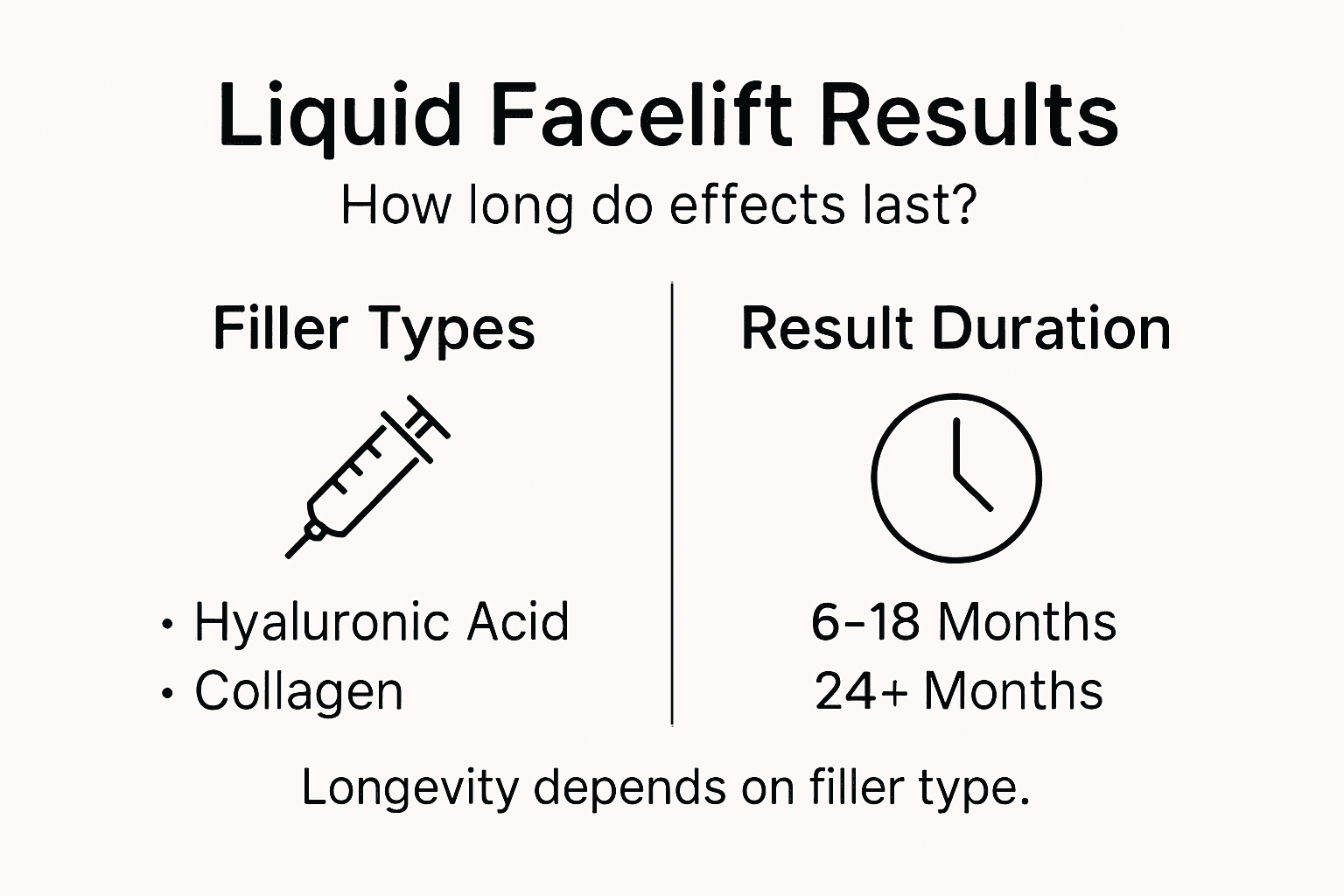
The typical results and duration vary depending on multiple factors:
Immediate Results:
- Instant volume restoration
- Enhanced facial symmetry
- Reduced appearance of fine lines
- Improved skin hydration
- Natural-looking facial rejuvenation
Longevity Expectations:
- Hyaluronic Acid Fillers: 6-18 months
- Calcium Hydroxylapatite Fillers: 12-24 months
- Poly-L-Lactic Acid Fillers: Up to 2-3 years
Individual metabolic rates, lifestyle factors, and precise injection techniques significantly influence the duration of results. Factors such as skin health, age, and environmental exposure can impact how long the aesthetic enhancements remain visible. Some patients experience prolonged effects through consistent treatment and excellent skincare maintenance.
Pro tip: Schedule follow-up consultations every 4-6 months to assess and maintain your liquid facelift results, allowing practitioners to make subtle adjustments for optimal aesthetic outcomes.
Potential Risks, Side Effects, and Aftercare
Understanding the potential risks associated with a liquid facelift is crucial for making an informed decision. Aftercare practices in aesthetic treatments play a significant role in minimising complications and ensuring optimal recovery.
Common side effects and potential risks include:
Minor Side Effects:
- Temporary redness at injection sites
- Mild bruising
- Slight swelling
- Tenderness
- Minimal discomfort
Potential Serious Risks:
- Rare allergic reactions
- Potential tissue damage
- Risk of infection
- Asymmetrical results
- Vascular complications
Professional practitioners take extensive precautions to mitigate these risks. The likelihood of experiencing serious complications is significantly reduced when patients select highly qualified and experienced aesthetic professionals. Immediate post-treatment care involves avoiding strenuous activities, excessive sun exposure, and alcohol consumption for 24-48 hours to support optimal healing.
The following table summarises essential aftercare recommendations to support a smooth recovery after a liquid facelift:
| Aftercare Action | Reason for Importance | Recommended Duration |
|---|---|---|
| Avoid strenuous exercise | Reduces swelling risk | 24-48 hours |
| Minimise sun exposure | Prevents pigmentation issues | 2 days minimum |
| Refrain from alcohol consumption | Reduces bruising and swelling | 1-2 days |
| Maintain facial hygiene | Lowers infection risk | Until sites heal completely |
Proper aftercare and selecting a certified practitioner are fundamental to ensuring a safe and successful liquid facelift experience.
Pro tip: Maintain open communication with your aesthetic practitioner and report any unusual symptoms or concerns immediately following your treatment.
Comparing Liquid Facelifts with Surgical Options
Patients seeking facial rejuvenation now have multiple options, with non-surgical facelift techniques offering compelling alternatives to traditional surgical approaches. The choice between liquid and surgical facelifts depends on individual aesthetic goals, recovery preferences, and specific ageing concerns.
Key comparison points include:
Surgical Facelift:
- Permanent structural changes
- Dramatic, long-lasting results
- Significant recovery time (2-4 weeks)
- Higher cost (£6,000-£15,000)
- Invasive procedure with surgical risks
Liquid Facelift:
- Temporary, reversible enhancements
- Minimal downtime
- Lower cost (£500-£2,500)
- Gradual, natural-looking improvements
- Minimal invasiveness
- Customisable and adjustable results
The most significant difference lies in the approach. Surgical facelifts physically reposition and tighten tissues, whereas liquid facelifts use strategic injectable fillers to restore volume and smooth contours. Younger patients with minimal sagging typically benefit more from liquid techniques, while those with extensive skin laxity might require surgical intervention.
The ideal rejuvenation strategy balances aesthetic goals, budget, and individual anatomical considerations.
Pro tip: Consult with a board-certified aesthetic practitioner to conduct a comprehensive facial assessment and determine the most appropriate rejuvenation approach for your specific needs.
Experience the Transformative Power of a Liquid Facelift at The Aesthetics Room
If you are seeking a natural, non-surgical solution to restore facial volume, smooth wrinkles, and enhance your contours without the downtime of surgery, our expert team at The Aesthetics Room is here to help. Using advanced dermal fillers and precise injection techniques, we personalise each liquid facelift to your unique facial anatomy and rejuvenation goals, delivering subtle yet remarkable results in a safe and luxurious environment.

Discover how our premium clinic in Knightsbridge combines professionalism, safety, and bespoke care to revitalise your appearance and boost confidence. Act now to schedule a consultation through our website https://theaestheticsroom.co.uk and explore the full range of advanced injectables that can complement your treatment journey. Your refreshed, youthful look awaits with minimal downtime and expertly tailored solutions.
Frequently Asked Questions
What is a liquid facelift?
A liquid facelift is a non-surgical cosmetic procedure that uses injectable dermal fillers to restore volume, reduce wrinkles, and enhance facial contours without the need for traditional surgery.
How long do the results of a liquid facelift last?
The longevity of results from a liquid facelift varies by the type of filler used: Hyaluronic acid fillers typically last 6-18 months, calcium hydroxylapatite fillers last 12-24 months, and poly-L-lactic acid fillers can last up to 2-3 years.
What are the potential risks and side effects of a liquid facelift?
Common side effects include temporary redness, swelling, and bruising at injection sites. Rare serious risks might include allergic reactions, infection, or vascular complications, which can be minimised by choosing a qualified practitioner.
How does a liquid facelift compare to a surgical facelift?
Liquid facelifts offer minimal downtime, lower costs, and temporary enhancements compared to surgical facelifts, which provide permanent results but involve significant recovery time and higher costs.
Recommended
- Non-Surgical Facelift: Safer Skin Rejuvenation in London – The Aesthetics Room
- Non-Surgical Face Lift Options: A Guide to Facial Rejuvenation – The Aesthetics Room
- What Is Facial Rejuvenation and Why It Matters – The Aesthetics Room
- Top 6 Non-Surgical Face Lifts in 2026 for Londoners Seeking Gentle Rejuvenation and Safety – The Aesthetics Room