

TL;DR:
- A medical consultation in aesthetics is a structured process where clinicians assess health and goals before treatment. It prevents harm by screening for risks and psychological factors, ensuring safe, personalized care. Shared decision-making and clear communication improve satisfaction and reduce dissatisfaction post-procedure.
A medical consultation is the structured, collaborative process through which a clinician and patient assess health status, discuss goals, and agree on a safe treatment plan before any procedure begins. For anyone considering cosmetic treatments, understanding why medical consultation matters is the difference between a result you love and a complication you did not anticipate. At Theaestheticsroom, every treatment begins with this process because it protects you and personalises your care from the very first appointment.
Why does medical consultation matter for safety?
Structured consultations are the primary barrier preventing patient harm in aesthetic medicine. The Journal of Aesthetic Nursing confirms that aesthetic practitioners overwhelmingly support mandatory consultation frameworks to improve patient safety and accountability. That consensus exists because informal assessments miss the physical and psychological factors that determine whether a treatment is appropriate for you.
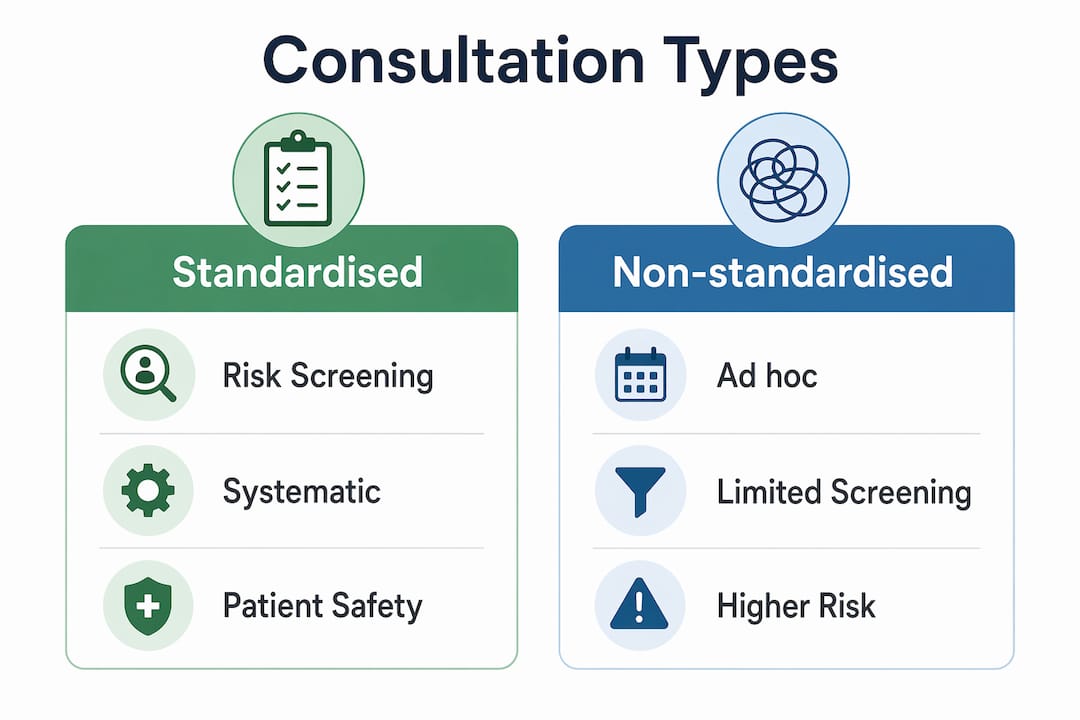
Standardised frameworks such as SAGA provide a systematic way to evaluate treatment risk factors and patient suitability. They reduce variability between clinicians and create a consistent safety standard. Without this structure, the same patient could receive very different assessments depending on who they see.
Consultations also screen for psychological factors. Conditions such as body dysmorphic disorder affect informed consent and treatment satisfaction. A thorough psychological assessment during the consultation identifies these issues before a needle is ever picked up. This protects both the patient and the practitioner.
Consider dermal fillers as a concrete example. Complications such as vascular occlusion are rare but serious. A structured pre-treatment consultation reviews medical history, current medications, previous filler treatments, and anatomical considerations. Each of those checks reduces the probability of a serious adverse event.
Standardised vs non-standardised consultations
| Factor | Standardised consultation | Non-standardised consultation |
|---|---|---|
| Risk screening | Systematic, documented | Inconsistent, clinician-dependent |
| Psychological assessment | Included as standard | Often omitted |
| Contra-indication detection | Reliable | Variable |
| Patient documentation | Formal record kept | May be absent |
| Accountability | Clear and traceable | Difficult to audit |
Pro Tip: Ask your practitioner which consultation framework they use before booking any aesthetic treatment. A named, structured approach signals clinical rigour.
Why is shared decision-making critical in consultations?
Shared decision-making is a two-way interactive process, distinct from informed consent, in which clinicians provide evidence-based options while patients contribute their values and preferences. Cleveland Clinic defines it as a partnership that ensures care aligns with individual goals rather than a generic treatment protocol. This distinction matters enormously in cosmetic medicine, where outcomes are deeply personal.
Informed consent is a legal requirement. Shared decision-making goes further. It means your clinician explains the realistic range of outcomes, discusses alternatives, and genuinely incorporates what matters to you before finalising a plan. The result is a treatment that fits your life, not just your anatomy.
Clinicians guide without dictating, balancing medical standards with individual goals to avoid unilateral decisions. That balance reduces mismatched expectations, which are the most common source of dissatisfaction after cosmetic procedures. When you feel heard during a consultation, you are far more likely to be satisfied with the result.
The benefits of shared decision-making in aesthetic consultations include:
- Personalised treatment plans that reflect your specific facial anatomy and aesthetic goals
- Reduced regret because you have actively participated in the decision
- Clearer expectations about recovery, results, and timelines
- Stronger trust between you and your practitioner, which supports follow-up care
- Better adherence to aftercare instructions when you understand the reasoning behind them
Pro Tip: Write down your top three aesthetic concerns and your non-negotiables before your consultation. Sharing these at the start gives your clinician the context to build a plan that genuinely suits you.
How does communication in consultations improve outcomes?
Clear, active communication during a consultation directly improves diagnostic accuracy and treatment success. NYC Health guidance recommends that patients repeat information back to their clinician, raise concerns about emotional wellbeing, and ask about costs openly. Each of those steps closes the gap between what a clinician assumes you understand and what you actually take away from the appointment.
Clinicians carry a specific responsibility in this exchange. Raw risk statistics are frequently misunderstood without context. A practitioner who simply lists side effects without framing them leaves patients anxious and poorly informed. Personalised risk framing translates statistics into relevant, decision-ready information. That is a clinical skill, not a formality.
The rise of AI tools and online health resources has created a false sense of preparedness. An Oxford University study warns that large language models can give wrong diagnoses and fail to recognise urgent care needs. AI lacks the two-way communication required for accurate medical advice. A consultation with a qualified clinician cannot be replaced by a chatbot search.
“Patients who engage openly and confirm understanding improve diagnostic accuracy and treatment success.” — NYC Health
Here are the communication best practices every patient should follow during a consultation:
- State your goals clearly. Describe the outcome you want, not just the treatment you think you need.
- Ask about alternatives. There is often more than one way to achieve a result.
- Repeat key points back. Confirm you have understood the risks, recovery, and expected results.
- Raise emotional concerns. If anxiety or self-image is part of your motivation, say so. It shapes the clinical assessment.
- Discuss costs upfront. Financial pressure can affect decision-making. A good clinician will factor this into the plan.
- Ask what happens if things go wrong. Understanding the aftercare and complication protocol builds confidence.
What should patients expect during a cosmetic consultation?
A cosmetic consultation follows a structured sequence that moves from assessment through to a personalised treatment plan. Understanding this sequence helps you prepare and get the most from the appointment. You can review a full aesthetic consultation checklist to see the steps in detail.

The consultation typically begins with a medical history review covering current medications, allergies, previous treatments, and relevant health conditions. This is followed by a physical examination of the treatment area, which in facial aesthetics includes assessment of skin quality, muscle movement, and underlying anatomy. Your practitioner will then discuss your goals and explain which treatment options are appropriate.
Consultation forms play a critical role in this process. They create a documented record of your health status, your consent, and the agreed treatment plan. This documentation protects you and provides a clinical baseline for measuring outcomes at follow-up appointments.
The table below shows what a consultation typically covers across common cosmetic treatments:
| Consultation element | Botox | Dermal fillers | Skin rejuvenation |
|---|---|---|---|
| Medical history review | Yes | Yes | Yes |
| Psychological screening | Yes | Yes | Recommended |
| Physical examination | Muscle movement and skin | Volume and anatomy | Skin texture and tone |
| Goal discussion | Line reduction, prevention | Volume, contour, symmetry | Radiance, texture, firmness |
| Treatment alternatives discussed | Yes | Yes | Yes |
| Aftercare plan provided | Yes | Yes | Yes |
Before your appointment, prepare by noting:
- Your current medications and any supplements
- Previous aesthetic treatments and your experience of them
- Photographs of results you admire or want to avoid
- Any skin conditions or sensitivities
- Your timeline and budget
Key takeaways
A medical consultation is the single most important step before any cosmetic procedure, because it screens for risk, aligns treatment with your goals, and ensures every decision is made with your full understanding.
| Point | Details |
|---|---|
| Safety screening is non-negotiable | Structured frameworks like SAGA detect contra-indications that informal assessments miss. |
| Shared decision-making personalises care | Your values and preferences shape the final plan, reducing regret and mismatched expectations. |
| Communication drives better results | Patients who engage openly and confirm understanding achieve more accurate, satisfying outcomes. |
| AI cannot replace a clinician | Oxford University research confirms AI chatbots give wrong diagnoses and miss urgent care needs. |
| Documentation protects you | Consultation forms create a clinical record that supports safe, accountable practice. |
Why I believe consultation is the most undervalued step in aesthetics
Patients often arrive having already decided what treatment they want. They have seen results on social media, read about hyaluronic acid dermal fillers or botulinum toxin, and formed a clear picture. The consultation can feel like an administrative hurdle between them and the outcome they want. That framing is the most dangerous attitude in aesthetic medicine.
The consultations I have seen go wrong share a common thread: the assessment was rushed, the conversation was one-directional, and the patient left without truly understanding what was agreed. The results were technically delivered but emotionally disappointing. Dissatisfaction in aesthetics almost never comes from a bad injection technique. It comes from a misaligned expectation that a proper consultation would have caught.
What separates a good clinic from a great one is not the range of treatments on offer. It is the quality of the conversation before any treatment begins. A practitioner who asks about your motivations, your lifestyle, and your concerns is not being slow. They are being thorough. That thoroughness is what makes the difference between a result that lasts and one you regret.
My advice is direct: if a clinic skips the detailed assessment and moves straight to booking, walk away. The role of qualified practitioners in aesthetic medicine is not just technical. It is clinical, ethical, and deeply personal. You deserve both.
— Vishul
How Theaestheticsroom approaches your consultation
Theaestheticsroom is a CQC-accredited clinic and member of the ACE Group, a body dedicated to patient safety in aesthetic medicine. Every treatment at our Knightsbridge, Harley Street, and Mayfair locations begins with a structured consultation designed to assess your health, understand your goals, and build a plan that is right for you specifically.
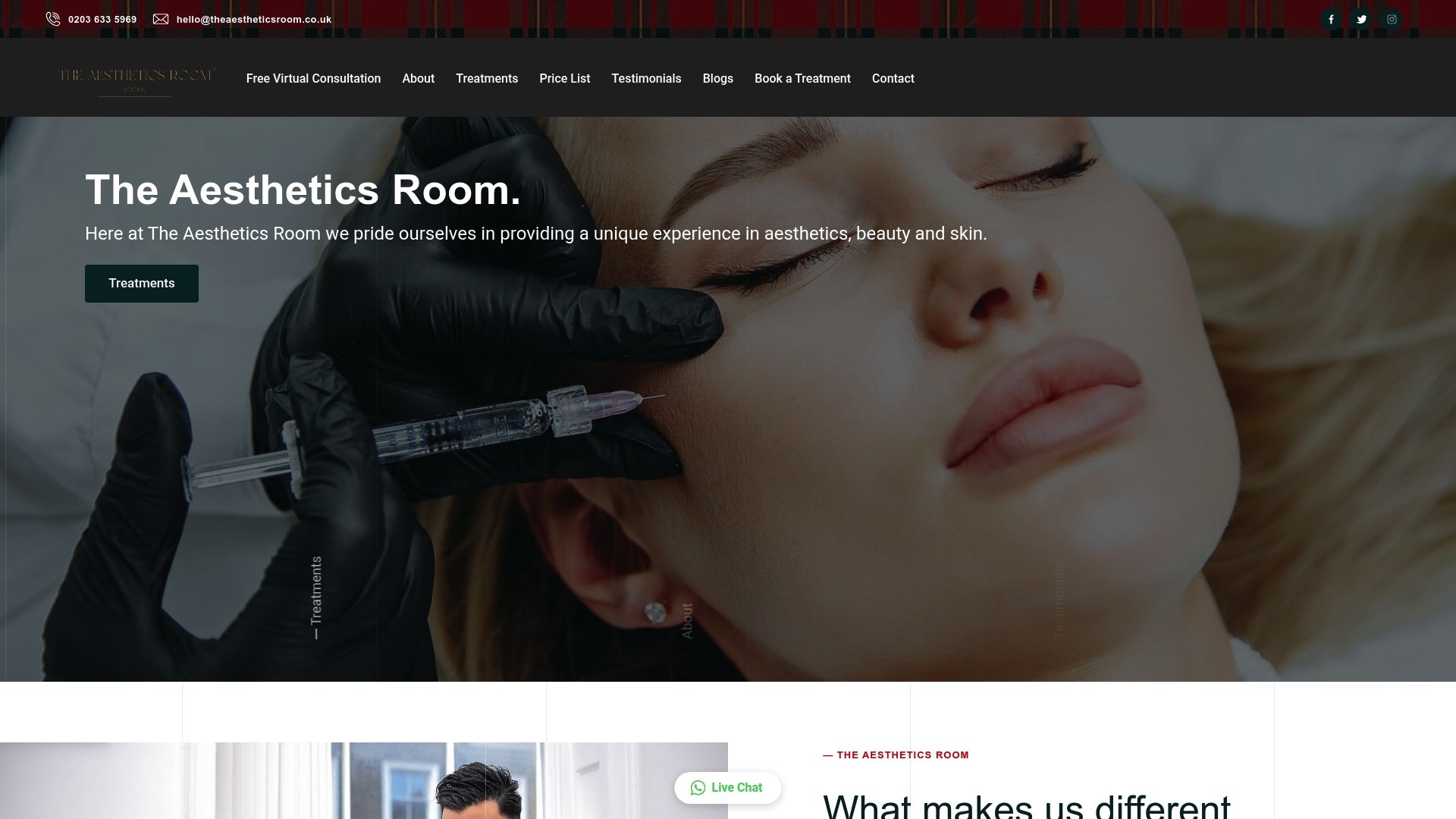
Whether you are considering Botox treatments for the first time or exploring dermal fillers to restore volume, our practitioners take the time to screen thoroughly, communicate clearly, and personalise every recommendation. We offer both virtual and in-person consultations, so you can begin the conversation in whichever way feels most comfortable. Book your consultation with Theaestheticsroom and take the first step towards a result you can feel confident about.
FAQ
What is a medical consultation in aesthetics?
A medical consultation in aesthetics is a structured assessment in which a qualified clinician reviews your health history, examines the treatment area, discusses your goals, and agrees a personalised treatment plan before any procedure takes place.
Why is a consultation necessary before cosmetic treatments?
Consultations screen for contra-indications, detect psychological factors such as body dysmorphia, and establish informed consent. They are the primary clinical safeguard against complications and poor outcomes.
What is shared decision-making and how does it differ from consent?
Shared decision-making is a two-way process in which clinicians provide evidence-based options and patients contribute their values to shape the final plan. Informed consent is a legal requirement; shared decision-making is the clinical partnership that goes beyond it.
Can I rely on AI or online research instead of a consultation?
No. An Oxford University study found that AI chatbots can give wrong diagnoses and fail to identify urgent care needs. Online research cannot replicate the two-way clinical assessment a qualified practitioner provides.
How should I prepare for my first cosmetic consultation?
Bring a list of your current medications, note any previous treatments and their outcomes, and prepare a clear description of your goals. Writing down your top concerns in advance helps your clinician build a plan that genuinely reflects what you want.
Recommended
- What is a medical consultation? A clear guide – The Aesthetics Room
- Role of Consultation in Aesthetics: Enhancing Safety and Results – The Aesthetics Room
- Beauty Consultation Process: Ensuring Safe, Tailored Results – The Aesthetics Room
- 7 Key Steps for a Successful Aesthetic Consultation Checklist – The Aesthetics Room