

A well-balanced profile is rarely about making one feature noticeably bigger or smaller. It is about the relationship between the forehead, nose, lips, chin, jawline and skin quality when viewed together. Non surgical profile balancing takes this wider view, using carefully selected medical aesthetic treatments to refine proportions while preserving the features that make you recognisably you.
For many patients, the concern begins with one area: a recessed chin, a jawline that has softened with age, lips that appear less defined in profile, or a nose that draws attention from other features. Yet treating that area in isolation can create an outcome that feels overdone. A considered, consultation-led plan assesses the whole face before recommending whether treatment is appropriate, and where a subtle adjustment may make the greatest difference.
What is non surgical profile balancing?
Non surgical profile balancing is a bespoke approach to facial harmonisation, most commonly using injectable treatments such as dermal fillers and anti-wrinkle injections. Rather than changing the face dramatically, it aims to bring proportion and definition to features that may appear under-supported, asymmetrical or out of balance from certain angles.
The profile is particularly revealing because it shows how the nose, lips, chin and jaw relate to one another. For example, a small amount of carefully placed chin filler may improve the appearance of a weak chin and make the nose appear more proportionate without treating the nose at all. Equally, restoring support around the cheeks or jawline can improve facial structure and reduce the temptation to overfill the lips.
This is not a standardised package. The right approach depends on bone structure, facial movement, skin thickness, existing volume, age-related changes and your own aesthetic preferences. Some patients benefit from treatment in one area only; others may prefer a phased plan that allows results to be assessed gradually.
The areas commonly considered in profile balancing
Chin and jawline
The chin has a significant effect on facial proportion. When it sits slightly behind the ideal relationship to the lips and nose, the lower face can appear less defined, even where there is no issue with weight or skin quality. Dermal filler can sometimes add projection, length or contour, helping create a more balanced transition from the lower face to the neck.
The jawline may also be assessed for definition and symmetry. Strategic filler placement can support a softer jawline or improve contour where volume loss has developed over time. However, a sharper jaw is not the goal for everyone. The most flattering result is one that suits your facial anatomy and retains an elegant, natural line.
Lips and the area around the mouth
Profile balancing does not automatically mean lip enhancement. In fact, lips can look more harmonious when surrounding support is addressed first. The chin, chin crease and lower-face structure influence how the lips sit in profile, while subtle treatment may be used to restore border definition or hydration where appropriate.
A skilled practitioner will consider lip projection carefully. Adding volume without assessing the rest of the face can result in a look that feels disproportionate, particularly in side view. For patients who want a refined result, restraint and precise technique matter as much as product choice.
Nose
Non-surgical rhinoplasty uses dermal filler to alter the appearance of selected nasal contours. It may be suitable for camouflaging a dorsal hump, improving the visual line of the bridge or giving the tip more support in carefully chosen cases. It does not make a nose physically smaller, correct breathing concerns or replace surgical rhinoplasty where substantial structural change is required.
This is an advanced treatment with significant vascular risks and requires thorough assessment, detailed consent and an experienced medical aesthetic practitioner. It is not appropriate for every nose or every patient. Safety must always take priority over a requested aesthetic outcome.
Cheeks, temples and forehead
Although the central and lower face receive much of the attention in profile balancing, the upper face contributes to overall harmony too. Loss of volume at the temples or mid-face can make the face look flatter or less supported, while forehead movement and brow position influence the profile’s overall balance.
Depending on clinical suitability, filler and anti-wrinkle treatment may be considered alongside lower-face work. This is where a full-face assessment is invaluable: the aim is not to treat every area, but to understand which treatment will offer the most meaningful, proportionate improvement.
Why the consultation matters more than a treatment menu
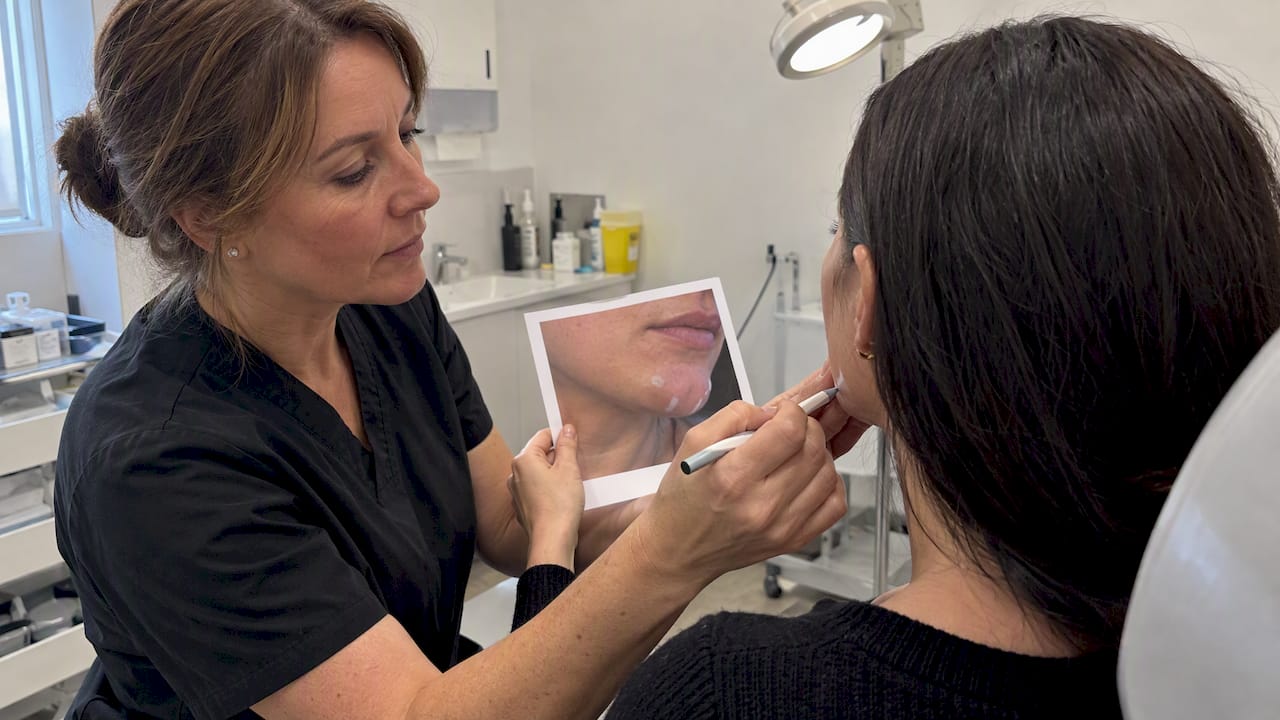
The best non surgical profile balancing begins with listening. You may arrive with a clear concern, but an ethical consultation should explore your medical history, previous treatments, aesthetic goals, lifestyle and expectations before a plan is suggested. Photographs, facial assessment at rest and in movement, and discussion of different angles all help inform safe decision-making.
At The Aesthetics Room, treatment planning is centred on bespoke enhancement rather than a one-size-fits-all formula. A practitioner may recommend treating less than you expected, spacing appointments apart, or avoiding a treatment altogether if it is unlikely to provide the result you want safely.
This approach is particularly important for patients who have had filler elsewhere. Existing filler can alter facial proportions, migrate, retain water or make it difficult to judge the true structure beneath. In some cases, dissolving unsuitable hyaluronic acid filler and allowing the area to settle may be preferable to adding more product.
What natural-looking results should look like
A successful result should not announce itself before you do. Friends may notice that you look fresher, more rested or somehow more polished, without being able to identify why. In profile, the changes should complement your existing features rather than create a new face.
Natural results are not defined by using the smallest possible amount of filler. They are defined by using an appropriate amount, in the right plane, for the right indication. Under-treatment can be ineffective, while over-treatment can blur structure and create heaviness. The balance lies in clinical judgement, technical skill and a willingness to work progressively.
It is also worth remembering that symmetry is not the same as beauty. Almost every face has natural asymmetries, and attempting to correct every small difference can produce an unnatural outcome. The objective is improved harmony, not mathematical perfection.
Safety, suitability and realistic expectations
Injectable treatments are medical procedures, even when they are quick and minimally invasive. Temporary swelling, tenderness, bruising and redness can occur, particularly around the lips, chin and jawline. Results and longevity vary according to the area treated, the product used, metabolism, facial movement and individual anatomy.
Dermal fillers also carry less common but serious risks, including vascular occlusion. This is why profile balancing should only be undertaken in a properly clinical setting by appropriately trained practitioners who understand facial anatomy, have emergency protocols in place and provide clear aftercare guidance. Patients should disclose all relevant health information, medications, allergies and previous cosmetic procedures during consultation.
Certain circumstances may mean treatment should be postponed or avoided, including pregnancy and breastfeeding, active skin infections, some autoimmune conditions, recent dental work for particular facial areas, or a history that requires further medical review. A responsible practitioner will explain suitability candidly rather than promising an instant solution.
Planning your treatment around real life
Most patients can return to normal daily activities shortly after treatment, but it is sensible to plan around possible swelling or bruising. Avoid arranging injectable treatments immediately before a major event, wedding, important presentation or holiday. Allowing at least two weeks gives the area time to settle and provides space for a review if one is needed.
Your appointment should also include a discussion of aftercare. You may be advised to avoid strenuous exercise, excess heat, alcohol and pressure on treated areas for a short period, depending on the procedure. Following this guidance supports a comfortable recovery and helps protect your investment in a carefully planned result.
The most valuable outcome of profile balancing is often quiet confidence: seeing your face from the side without focusing on the one feature you wish you could change. A thoughtful consultation can help you understand what is possible, what is not, and whether a subtle, medically led plan is the right next step for you.