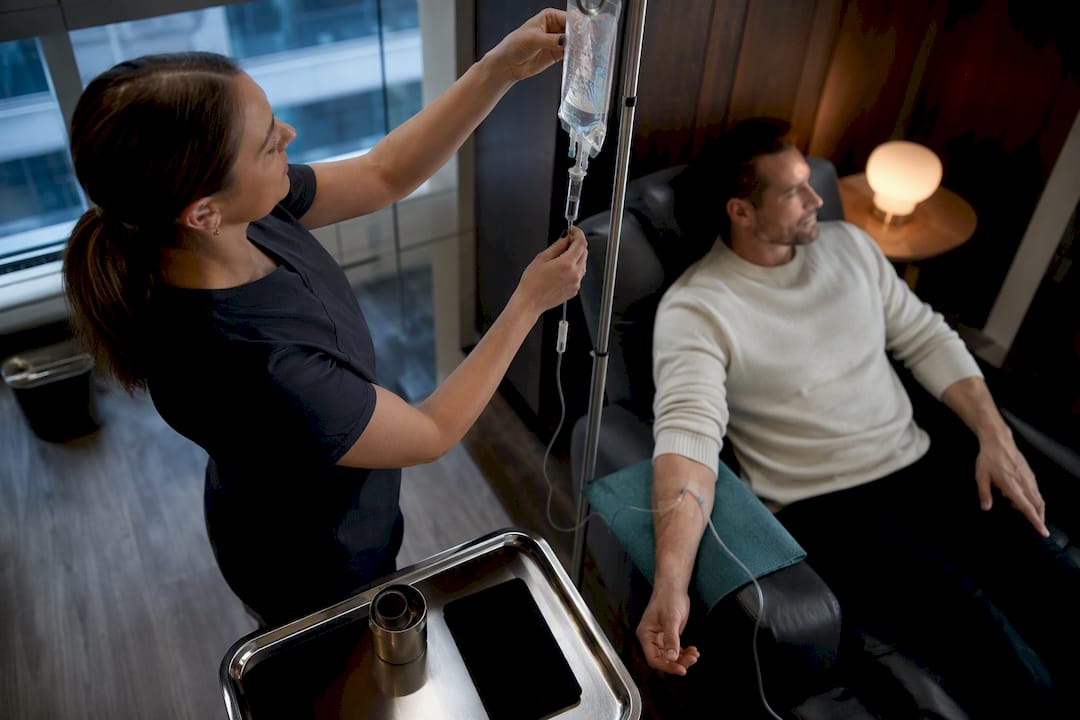


A vitamin infusion is a clinician-administered solution of vitamins, minerals, and saline delivered directly into a vein via an intravenous (IV) cannula. In specific clinical settings, such as documented severe deficiency or malabsorption, IV administration is genuinely valuable. For otherwise healthy adults, however, the evidence does not support routine wellness use. NHS England has publicly labelled party drips “exploitative” and warned that most advertised claims lack evidence. The Advertising Standards Authority (ASA) has challenged clinics making unsubstantiated energy, immunity, or anti-ageing claims, and the Care Quality Commission (CQC) sets the registration standards any reputable clinic must meet. One pharmacokinetic reality worth knowing upfront: healthy kidneys excrete a large proportion of excess water-soluble vitamins, so much of what is infused may simply leave the body in urine.
Pro Tip: Before booking any IV vitamin drip, ask the clinic for proof of CQC registration, the prescriber’s GMC or GPhC number, and details of their sterile compounding source. If they cannot provide all three, look elsewhere.
Table of Contents
- What is a vitamin infusion and how does it work?
- What goes into a typical IV vitamin drip?
- What does the research actually show about vitamin infusion benefits?
- What are the risks and who should avoid IV vitamin infusions?
- What happens during and after an IV infusion?
- How much do IV vitamin infusions cost in the UK?
- How do NHS, ASA, CQC, and NICE view wellness IV vitamin services?
- When is IV vitamin administration genuinely appropriate?
- What UK professional bodies say about IV vitamin therapy
- Key takeaways
- Our approach to IV vitamin therapy at Theaestheticsroom
- Book a medically supervised consultation at Theaestheticsroom
- A note on the evidence gap in wellness IV therapy
- Useful sources and further reading
What is a vitamin infusion and how does it work?
Oral vitamins travel through the digestive tract, where absorption is limited by gut transport proteins, stomach acid, and first-pass metabolism in the liver. An IV infusion bypasses all of that entirely. A small cannula is placed into a vein, usually in the forearm, and a saline-based solution containing vitamins and minerals drips directly into the bloodstream over a period of several minutes to about an hour.

The pharmacokinetic consequence is real: intravenous vitamin C, for example, reaches plasma concentrations far higher than any oral dose can achieve. That is why IV administration has legitimate clinical applications under medical supervision. The critical nuance, though, is that higher blood concentrations do not automatically translate into better long-term outcomes for most vitamins.
Water-soluble vitamins — the B group and vitamin C — are not stored in meaningful quantities. Excess is filtered by the kidneys and excreted, often within hours. Fat-soluble vitamins (A, D, E, K) behave differently: they accumulate in fatty tissue and the liver, which means excessive IV doses carry a genuine toxicity risk rather than a simple “waste” outcome. Understanding this distinction matters when evaluating what any given drip can realistically deliver.
What goes into a typical IV vitamin drip?
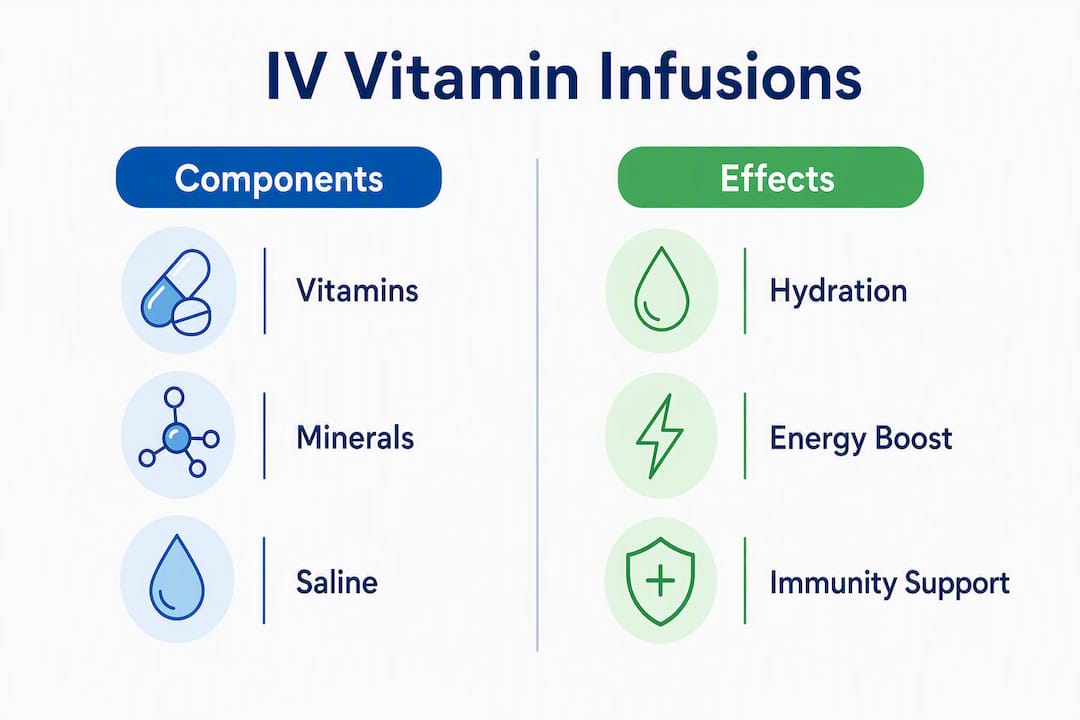
Formulations vary considerably between clinics, and there is no single licensed formula for most wellness drips in the UK. Common ingredients include:
- Saline base (sodium chloride or Ringer’s lactate) for fluid delivery
- Vitamin C (often at high dose, sometimes several grams)
- B-complex vitamins, including B1 (thiamine), B2, B3, B6, and B12
- Magnesium and calcium
- Zinc
- Antioxidants such as glutathione or alpha-lipoic acid
Clinics market these under names like “hydration drips,” “energy blends,” “immunity boosts,” or “Myers-type cocktails.” The Myers-type formulation, loosely based on a combination of magnesium, calcium, B vitamins, and vitamin C, is one of the more widely referenced recipes. However, the name does not imply standardised content or dosage — two clinics using the same label may use very different concentrations.
Market analysis confirms that most wellness drip recipes are carefully worded to avoid treating or preventing disease, which keeps them outside MHRA medicines regulation. That regulatory gap is precisely why compounding standards and prescriber oversight matter so much. Without pharmacy oversight and sterile compounding procedures, contamination risk rises significantly.
What does the research actually show about vitamin infusion benefits?
The honest answer is that the evidence base for wellness IV drips is thin. Systematic reviews and clinical bulletins, including the BMJ Drug & Therapeutics Bulletin, note a scarcity of well-designed randomised controlled trials demonstrating benefit in healthy populations. The calls for higher-quality evidence have been consistent for years.
| Setting | Evidence quality | Verdict |
|---|---|---|
| Severe documented deficiency (e.g. scurvy, B12 malabsorption) | Strong clinical evidence | IV administration appropriate under medical supervision |
| Malabsorption syndromes, short-bowel syndrome | Good clinical evidence | IV or parenteral nutrition clinically indicated |
| Oncology (high-dose IV vitamin C in trials) | Emerging, research-stage | Used within clinical protocols only |
| Fatigue, energy, immunity in healthy adults | Weak to absent | No reliable RCT evidence of benefit |
| Hangover recovery | Anecdotal | No clinical trial support |
| Anti-ageing in healthy adults | Absent | No credible evidence |
Which? summarises the consumer position plainly: most healthy people meet their vitamin needs through diet and oral supplements, and routine IV drips expose them to unnecessary risk and expense.
What are the risks and who should avoid IV vitamin infusions?
IV administration is an invasive procedure, and the risks are not trivial. Common and serious adverse events include:
- Infusion-site infection, phlebitis, and haematoma at the cannulation point
- Allergic reactions, ranging from mild urticaria to anaphylaxis
- Fluid overload, particularly dangerous in people with heart failure or kidney disease
- Kidney injury from high-concentration nutrient loads
- Septic shock in cases of contaminated compounding (rare but documented)
- Organ damage in extreme overdose scenarios
Adverse events can appear hours or days after the infusion, sometimes when no medical oversight is present. That delayed presentation is one reason aftercare instructions and accessible follow-up matter.
Contraindications requiring pre-screening include chronic kidney disease, heart failure, haemochromatosis (iron overload), pregnancy (where certain vitamins are contraindicated at high doses), and known hypersensitivity to any infusion component. Any reputable clinic should request a medical history, review current medications, and ideally require recent blood tests covering renal function, liver function, and iron studies before proceeding.

Pro Tip: Ask the clinic whether they hold emergency equipment on-site and whether staff are trained in managing anaphylaxis. Position statements from clinical colleges specify that qualified staff, informed consent, and emergency preparedness are minimum requirements for any infusion clinic.
What happens during and after an IV infusion?
Before your appointment
A responsible clinic will take a full medical history, review allergies and current medications, and may request recent blood test results. Written informed consent should be obtained before any cannula is placed.
During the infusion
You will be seated comfortably while a clinician inserts a small cannula, typically into a forearm vein. The drip runs over 20–60 minutes depending on the formulation and volume. People commonly report a sensation of mild warmth or coolness at the infusion site, and occasionally a metallic taste (associated with B vitamins or magnesium). Mild nausea or light-headedness can occur, particularly if the infusion rate is too fast.
After the session
Most people feel no dramatic immediate change. Any hydration effect is usually noticeable within the first hour. Discharge instructions should cover what to watch for: redness, swelling, or warmth at the cannulation site in the days following (signs of phlebitis or infection), worsening symptoms, or any systemic reaction such as fever or rash. If any of these develop, seek medical attention promptly rather than waiting for a follow-up appointment.
How much do IV vitamin infusions cost in the UK?
Private IV vitamin infusions are not funded by the NHS for wellness purposes. Prices in the UK private market vary considerably by clinic, location, and formulation. Basic hydration drips tend to sit at the lower end of the price range, while full vitamin and antioxidant blends command higher fees. London clinics, particularly those in Knightsbridge, Mayfair, or Harley Street, typically price at the premium end of the market.
When choosing a clinic, the price alone tells you very little about safety. Verify the following before booking:
- CQC registration (mandatory for regulated activity in England): check the CQC public register directly
- Prescriber credentials: the clinician overseeing your treatment should be GMC-registered (doctor) or GPhC-registered (pharmacist prescriber)
- Compounding source: ask whether infusions are prepared by a licensed pharmacy under sterile conditions
- Pre-treatment screening: a reputable clinic requires blood tests, not just a brief online questionnaire
- Emergency procedures: confirm that anaphylaxis management is available on-site
- Aftercare policy: written discharge instructions and a clear point of contact for post-treatment concerns
If a clinic cannot answer these questions clearly, that is a meaningful red flag. Our private blood tests for wellness page explains what pre-treatment screening should cover.
How do NHS, ASA, CQC, and NICE view wellness IV vitamin services?
The UK regulatory picture is consistent across bodies, and it is not favourable to the wellness drip industry’s bolder claims.
NHS and NICE are clear that IV vitamins are medical interventions reserved for defined clinical needs. NHS guidance does not support routine prescribing of vitamins as a “pick-me-up,” and NICE recommends appropriate pre-treatment screening where IV administration is clinically indicated. The NHS position statement from South West London ICB states explicitly that vitamins and minerals should not be prescribed as a general dietary supplement where there is limited evidence of clinical benefit.
ASA and CAP have challenged clinic advertisements making unsubstantiated claims about energy, immunity, or anti-ageing. Clinics must avoid medicinal claims for non-licensed products. Marketing a drip as “boosting immunity” or “reversing ageing” without clinical evidence breaches CAP Code rules and risks an ASA ruling.
CQC registration confirms a facility in England meets governance and safety standards. It does not validate the clinical efficacy of any specific treatment offered. Consumers often conflate CQC registration with a treatment endorsement — the two are entirely separate. A CQC-registered clinic can still offer treatments for which the evidence is weak; registration governs how the service is run, not what it claims to achieve.
For registered practitioners and consumers alike, the practical implication is the same: transparency about the non-medicinal status of most wellness drips, no therapeutic claims without evidence, and documented consent.
When is IV vitamin administration genuinely appropriate?
There are clear clinical scenarios where IV vitamins are not just appropriate but necessary:
- Severe documented deficiency: scurvy (vitamin C deficiency), severe B12 deficiency where oral absorption is impaired, or Wernicke’s encephalopathy (thiamine deficiency, particularly in alcohol dependence)
- Malabsorption syndromes: Crohn’s disease, coeliac disease, or post-surgical short-bowel syndrome where gut absorption is compromised
- Parenteral nutrition: when oral or enteral feeding is impossible, IV nutrition is a life-sustaining intervention
- Oncology research protocols: high-dose IV vitamin C is used in some clinical trials and supervised oncology settings, within research or clinical care frameworks
The pathway to these treatments runs through your GP, not a wellness booking page. If you suspect a deficiency, the right first step is a blood test and a GP referral, not self-selecting a drip. IV vitamin therapy in a clinical aesthetics setting is a different proposition entirely from parenteral nutrition in a hospital ward, and any reputable clinic will be transparent about that distinction.
What UK professional bodies say about IV vitamin therapy
The positions of NHS England, the British Dietetic Association (BDA), ASA, CQC, and NICE align on the core points:
In practical terms, this means:
- Insist on seeing prescriber credentials before any treatment begins
- Require documented informed consent covering risks, alternatives, and the evidence base
- Expect appropriate screening blood tests, not just a health questionnaire
- Confirm the clinic has a clear aftercare protocol and emergency capability
- If you have an existing health condition, ask whether the clinic will coordinate with your GP
Clinicians offering IV infusions should document their clinical rationale, record consent, and flag any findings to the patient’s GP where clinically appropriate. The IV therapy aesthetics context adds further considerations around legal and ethical obligations for aesthetic providers.
Key takeaways
IV vitamin infusions are clinically valuable in specific deficiency and malabsorption settings but lack reliable evidence for routine wellness use in healthy adults.
| Point | Details |
|---|---|
| Healthy adults excrete most excess | Water-soluble vitamins are filtered by the kidneys; much of an infused dose may be excreted rather than retained. |
| Evidence supports clinical use only | Documented deficiency, malabsorption, and parenteral nutrition are the validated indications; wellness claims lack RCT support. |
| Risks are real and require screening | Infection, phlebitis, fluid overload, and allergic reactions are all documented; pre-treatment blood tests are non-negotiable. |
| Regulation does not equal efficacy | CQC registration confirms facility governance, not that a wellness drip works; always verify prescriber credentials separately. |
| Theaestheticsroom offers assessed IV therapy | At Theaestheticsroom, IV vitamin therapy is offered only after clinical assessment, with CQC registration, prescriber oversight, and sterile compounding. |
Our approach to IV vitamin therapy at Theaestheticsroom
We believe the most reassuring thing a clinic can say about IV vitamin therapy is not that it will change your life, but that we will tell you honestly whether it is right for you. At Theaestheticsroom, we offer IV vitamin therapy only after a clinical assessment has identified a clear rationale. We do not market drips as cure-alls, and we do not proceed without appropriate pre-treatment screening.
Our operational safeguards are non-negotiable: CQC registration, GMC-registered prescriber oversight, sterile compounding from a licensed pharmacy, and routine blood tests before any infusion. Informed consent is documented, and where clinically appropriate, we coordinate with a patient’s GP. We think that is simply what responsible practice looks like, and we are proud to hold ourselves to that standard.
Book a medically supervised consultation at Theaestheticsroom

Theaestheticsroom offers medically supervised IV vitamin therapy consultations from our Knightsbridge clinic, with locations also in Harley Street and Mayfair. Every consultation begins with a clinical assessment and, where indicated, private blood tests to establish whether IV therapy is appropriate for you. Our GMC-registered prescribers, CQC-registered facility, and sterile compounding procedures mean you receive care that meets the standards the NHS and professional bodies expect.
If you are considering IV vitamin therapy, the right starting point is an honest conversation with a qualified clinician, not a booking form. Visit our IV vitamin therapy page to learn more about what we offer, or explore our skin rejuvenation treatments if you are seeking aesthetic outcomes through evidence-backed alternatives. Book your consultation today and let us assess what is genuinely right for you.
A note on the evidence gap in wellness IV therapy
The gap between what IV vitamin drips are marketed to do and what the evidence actually supports is wider than most people realise. The wellness drip industry has grown rapidly, and the marketing is persuasive. But persuasive is not the same as proven.
What strikes me most about the clinical literature is not that IV vitamins are dangerous across the board — in the right clinical context, they are genuinely valuable. The problem is the context. When a healthy adult with no documented deficiency pays for a “Myers cocktail” to feel more energetic, they are not receiving a medical treatment. They are receiving a saline drip with vitamins their kidneys will largely filter out, administered through a needle, with real infection and phlebitis risk attached. The NHS calling this exploitative is not hyperbole.
The clinics doing this responsibly — those that screen properly, document consent, and are honest about what the evidence supports — are not the problem. The problem is the ones that do not. And consumers cannot always tell the difference from a website. That is why the CQC registration check, the prescriber credentials question, and the blood test requirement are not bureaucratic niceties. They are the practical filter between a clinic that takes your safety seriously and one that does not.
Useful sources and further reading
- NHS England: “England’s top doctor slams ‘exploitative’ party drips” — Primary NHS statement on wellness drip risks and exploitative marketing; essential reading for any consumer considering a drip.
- BMJ Drug & Therapeutics Bulletin: IV vitamin therapy guidance — Peer-reviewed clinical bulletin summarising the evidence base (and its gaps) for IV vitamin therapy; the most authoritative UK clinical source on this topic.
- BBC News: “Is it really worth injecting vitamins?” — Accessible journalism citing clinical dietitians and NICE guidance; useful for understanding the expert consensus in plain language.
- Which?: “Why IV vitamin drips are a waste of money” — Consumer watchdog analysis of the UK market; covers clinic standards, ASA rulings, and the financial case against routine drips.
- ACCP Position Statement on Hydration and Vitamin Infusion Clinics — Clinical college guidance on minimum safety standards, sterile compounding, and practitioner requirements for infusion clinics.
- NCI: Intravenous Vitamin C (patient version) — Clear explanation of why IV vitamin C reaches higher plasma concentrations than oral doses, and where clinical use is supported.
- PMC: To IV or Not to IV — The Science Behind Intravenous Vitamin Therapy — Peer-reviewed systematic review; useful for readers wanting the full academic evidence summary.