


TL;DR:
- Non-surgical skin tightening treatments stimulate collagen and elastin to improve skin firmness with minimal downtime. Effectiveness depends on candidacy, with energy-based devices like RF and ultrasound best suited for mild to moderate laxity. Combining professional procedures with daily skincare optimizes results and prolongs skin rejuvenation.
Skin tightening options are non-surgical treatments that firm and lift the skin by stimulating collagen and elastin production, improving appearance with minimal downtime. Collagen declines roughly 1% annually after the age of 25, which explains why skin laxity becomes noticeable through your thirties and accelerates into your forties and fifties. The good news is that technologies such as radiofrequency, microfocused ultrasound, and fractional RF microneedling now deliver measurable results for mild to moderate laxity without a surgical incision. This guide covers every major treatment category, what the clinical evidence actually shows, and how to build a plan that works for your skin.
1. What are skin tightening options and who are they for?
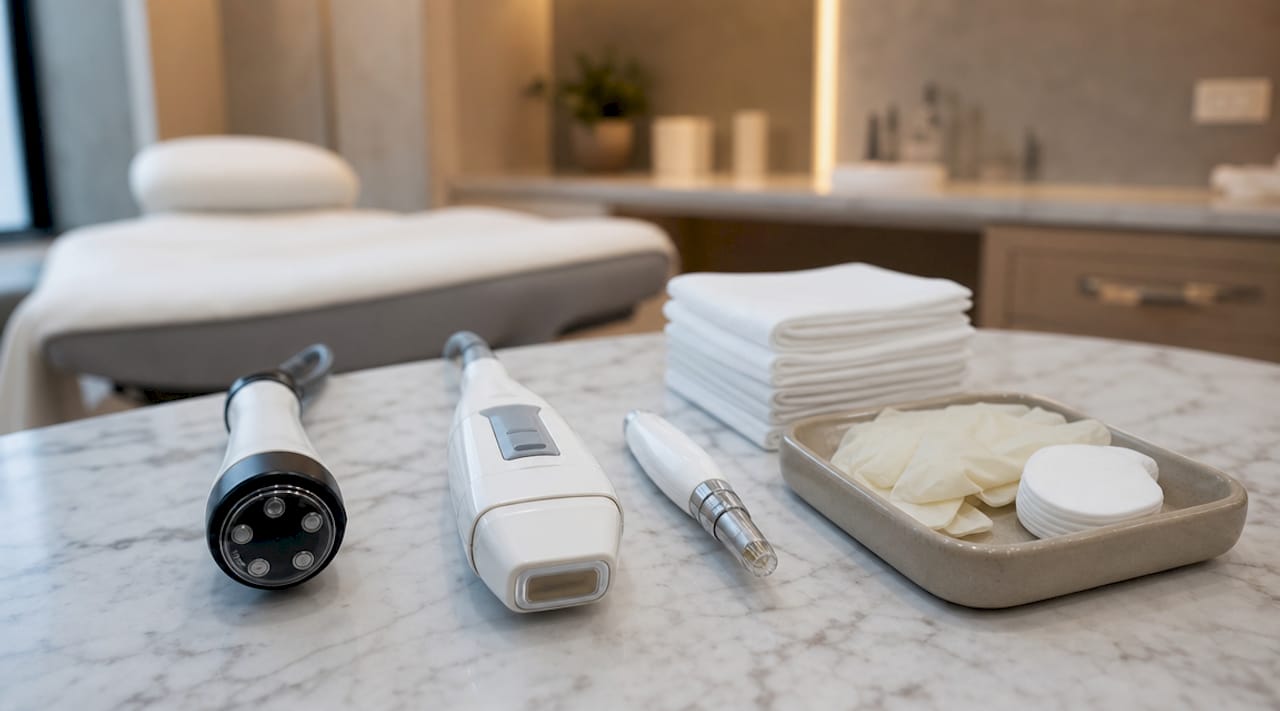
Non-surgical skin tightening is the clinical term for energy-based and topical treatments that trigger controlled thermal or mechanical injury in the dermis, prompting the body to produce new collagen and elastin. The result is firmer, smoother skin over weeks to months. Common treatment areas include the face, neck, jawline, décolletage, abdomen, and inner arms.
Candidacy is the single most important factor to understand before booking anything. Skin elasticity testing predicts how well non-invasive treatments will perform. If you pinch the skin on your cheek or jaw and it snaps back quickly, you are a strong candidate. If it stays tented or moves in folds, the laxity may be too severe for energy devices alone, and a surgical consultation is the more honest starting point.
2. Radiofrequency: Thermage and monopolar RF devices
Radiofrequency (RF) therapy delivers controlled heat deep into the dermis, causing immediate collagen contraction and triggering a longer remodelling process over three to six months. Monopolar RF devices such as Thermage are among the most studied platforms available. Clinical data shows 70 to 75% skin tightening improvement at three months, with collagen types I and III increasing measurably post-treatment.
Pros and cons of radiofrequency:
- Pros: Single session often sufficient; treats face, body, and periorbital areas; no downtime; suitable for all skin tones
- Cons: Moderate discomfort during treatment; results build gradually; maintenance sessions recommended after 12 to 18 months; cost per session is high
Thermage FLX, the current generation device, covers larger surface areas per pulse than earlier versions, reducing overall treatment time. RF is particularly well suited to patients with early jowling, mild neck laxity, or brow heaviness who are not ready for surgery.
3. Microfocused ultrasound: Ultherapy and HIFU
Microfocused ultrasound, most commonly delivered via Ultherapy, is the only FDA-cleared non-surgical lifting treatment for the brow, chin, and neck. It targets three precise tissue depths: 1.5mm, 3.0mm, and 4.5mm, reaching the superficial muscular aponeurotic system (SMAS) layer that surgeons address during a facelift. Clinical trials report over 90% patient improvement at six months after a single session.
Pros and cons of microfocused ultrasound:
- Pros: Targets the deepest non-surgical tissue plane; one session typical; visible lifting effect; FDA-cleared indication
- Cons: Notably uncomfortable without topical anaesthetic; results take three to six months to peak; not ideal for very thin or very lax skin; premium price point
High-intensity focused ultrasound (HIFU) devices from other manufacturers offer similar mechanisms at lower price points, though the clinical evidence base for Ultherapy remains the most extensive. For patients with moderate brow descent or early neck banding, microfocused ultrasound often produces the most dramatic non-surgical lift available.
4. Fractional RF microneedling: combining two mechanisms
Fractional RF microneedling platforms such as Morpheus8 and Profound RF combine two collagen stimulation pathways in a single treatment. Microneedles create controlled micro-injuries in the dermis while simultaneously delivering RF energy at precise depths. Fractional RF microneedling produces statistically significant wrinkle reductions and addresses both skin laxity and surface texture in the same session.
Pros and cons of fractional RF microneedling:
- Pros: Treats laxity and texture simultaneously; adjustable depth for different areas; effective on darker skin tones; improves acne scarring alongside laxity
- Cons: Requires three to four sessions for optimal results; two to five days of redness and swelling post-treatment; not suitable during active skin infections
This treatment is particularly popular for the lower face, neck, and abdomen. The combination mechanism means patients who have both skin laxity and textural concerns, such as enlarged pores or mild scarring, get dual benefit from each session.
5. Laser skin tightening: ablative vs non-ablative
Laser tightening is less effective for structural laxity than RF or ultrasound, but it excels at improving skin texture, tone, fine lines, and pigmentation. Non-ablative lasers such as the Nd:YAG or 1550nm fractional devices cause minimal downtime and stimulate collagen gradually. Ablative CO2 lasers remove the outer skin layers entirely, producing dramatic resurfacing results but requiring seven to fourteen days of recovery.
The practical distinction matters for treatment planning. If your primary concern is skin firmness and lift, RF or ultrasound is the more direct route. If you want to address sun damage, uneven tone, or fine lines alongside mild firmness improvement, a fractional non-ablative laser or a combination approach delivers better overall skin quality. Many practitioners at clinics such as Theaestheticsroom use laser as a finishing layer after a primary tightening treatment.
6. At-home and maintenance treatments that support professional results
Professional treatments create the stimulus for collagen remodelling, but your daily skincare routine determines how long those results last. Topical retinoids are the most evidence-backed at-home agents for sustaining collagen production, with measurable improvements in fine lines and firmness after eight to twelve weeks of consistent use. Peptides such as Matrixyl and Argireline support the same pathway through a different mechanism, making them a useful complement to retinol.
Key at-home agents and their roles:
- Retinol or prescription tretinoin: Stimulates collagen synthesis; use nightly, starting at a low concentration
- Peptides: Support collagen and elastin production; well tolerated alongside retinoids
- Broad-spectrum SPF 30 or higher: Prevents UV-driven collagen degradation; non-negotiable daily use
- Antioxidant vitamin C serum: Neutralises free radical damage and brightens tone; apply in the morning
At-home RF and microcurrent devices such as NuFACE and the Tripollar STOP Vx offer a genuine but modest benefit. They cannot replicate clinical energy levels, but used consistently three to five times per week, they help maintain tissue tone between professional sessions.
Pro Tip: Begin a retinol and peptide routine four to six weeks before your first professional treatment. This primes the dermis for collagen remodelling and can meaningfully improve your final result.
7. Comparing skin tightening options: effectiveness, downtime, and cost
The table below summarises the four main non-surgical skin tightening categories across the factors that matter most when making a decision.
| Treatment | Sessions needed | Results onset | Downtime | Relative cost |
|---|---|---|---|---|
| Radiofrequency (Thermage) | 1 to 2 | 3 to 6 months | None | High |
| Microfocused ultrasound (Ultherapy) | 1 | 3 to 6 months | None | High |
| Fractional RF microneedling (Morpheus8) | 3 to 4 | 4 to 8 weeks | 2 to 5 days | Moderate to high |
| Non-ablative laser | 3 to 6 | 4 to 8 weeks | 1 to 3 days | Moderate |
When skin fails the snap-back test, no energy device will produce satisfactory results, and a surgical facelift remains the gold standard for severe redundancy. Honest candidacy assessment before spending on multiple treatment courses saves both money and disappointment.
8. Minimally invasive laser ‘shrink-wrapping’: when to consider iLaser
The iLaser technique sits between non-invasive devices and surgery. A fine fibre optic is inserted through 1mm to 2mm ports beneath the skin, delivering subdermal laser energy directly to the tissue plane where fat and fibrous septae meet. The result is targeted fat reduction and skin contraction in small, localised areas such as the jowls, submental region, or inner arms.
Pros and cons of iLaser:
- Pros: Addresses both fat and laxity simultaneously; minimal downtime with mild swelling; results continue to improve over three to six months; suitable for areas where non-invasive devices underperform
- Cons: Minimally invasive procedure requiring local anaesthetic; not appropriate for large areas or severe laxity; performed by trained practitioners only; higher cost than single non-invasive sessions
The ideal candidate for iLaser has mild to moderate laxity with a small, localised fat pocket that has not responded to non-invasive treatment. Practitioners at clinics such as Theaestheticsroom frequently combine iLaser with dermal fillers or neuromodulators, because energy-based devices cannot restore lost volume. Tightening without volume replacement can create a hollowed appearance, particularly around the temples and midface.
Pro Tip: Treat iLaser as one component of a broader plan rather than a standalone fix. Pairing it with a volumising filler in the midface and a neuromodulator for dynamic lines produces a balanced, natural result that no single device achieves alone.
Key takeaways
The most effective skin tightening options for mild to moderate laxity are energy-based treatments, and their results depend as much on candidacy and daily maintenance as on the technology chosen.
| Point | Details |
|---|---|
| Candidacy determines outcome | Skin that fails the snap-back test requires surgical assessment, not more energy treatments. |
| RF and ultrasound lead for lift | Thermage and Ultherapy produce the strongest non-surgical tightening with no downtime. |
| Fractional RF microneedling does double duty | Morpheus8 and similar platforms address laxity and texture in the same session over three to four treatments. |
| Daily maintenance prolongs results | Retinol, peptides, and SPF used consistently protect and extend the collagen remodelling achieved clinically. |
| Combination plans outperform single devices | Pairing tightening treatments with fillers or neuromodulators addresses volume loss that energy devices cannot correct. |
My view on choosing the right skin tightening treatment
After working with patients across a wide range of ages and skin types, the pattern I see most often is this: people arrive expecting a non-invasive device to deliver surgical results, and they leave disappointed not because the treatment failed, but because the expectation was never realistic in the first place.
Energy devices are genuinely impressive for mild to moderate laxity. Ultherapy can lift a brow by several millimetres. Morpheus8 can visibly tighten a jawline. But they work within the limits of what collagen remodelling can achieve, and those limits are real. If the underlying laxity is structural, no amount of RF or ultrasound will replicate what a surgeon can do in two hours.
What I find produces the most satisfied patients is a combination approach: a primary tightening treatment matched to the area and laxity grade, supported by injectables where volume loss is present, and maintained with a consistent topical routine. Nutrition also plays a role that most patients underestimate. The impact of diet on skin health is well documented, and patients who eat well and protect their skin daily simply hold their results longer.
The most important step is an honest consultation before committing to any treatment course. A good practitioner will tell you what a device can and cannot do for your specific skin, and that conversation is worth more than any single session.
— Vishul
How Theaestheticsroom can support your skin tightening goals
At Theaestheticsroom, we build personalised treatment plans that address skin laxity, volume loss, and dynamic lines together, because real rejuvenation rarely comes from a single device. Our Knightsbridge clinic offers advanced energy-based procedures alongside a full range of injectable treatments to complement your tightening results.
Dermal fillers restore the volume that tightening devices cannot replace, preventing the hollowed look that can follow aggressive laxity treatment. Botox addresses dynamic wrinkles that sit alongside structural laxity, completing the picture. Book a consultation with our CQC-accredited practitioners to receive an honest, evidence-based plan tailored to your skin, your goals, and your timeline.
FAQ
What is skin tightening and how does it work?
Skin tightening refers to non-surgical treatments that use energy such as radiofrequency, ultrasound, or laser to heat the dermis, triggering collagen contraction and new collagen production. Results develop gradually over three to six months as the tissue remodels.
Which skin tightening treatment has the least downtime?
Radiofrequency treatments such as Thermage and microfocused ultrasound such as Ultherapy both require no downtime, making them suitable for patients who cannot take time away from work or social commitments.
How many sessions do non-surgical skin tightening treatments require?
Radiofrequency and Ultherapy typically require one session with maintenance after 12 to 18 months, while fractional RF microneedling such as Morpheus8 requires three to four sessions for optimal results.
When is surgery a better option than non-invasive skin tightening?
When skin fails to snap back on pinching, non-invasive treatments will not suffice and a surgical facelift is the more appropriate recommendation. Severe redundancy or significant jowling typically falls outside the effective range of energy devices.
Can at-home devices replace professional skin tightening treatments?
At-home devices such as NuFACE and Tripollar deliver a maintenance benefit but cannot replicate clinical energy levels. They are best used between professional sessions to support and prolong results rather than as a primary treatment.