
Forehead lines tend to creep up in a way few people appreciate. One day your make-up sits smoothly or your skin looks fresh on a video call, and the next those horizontal creases seem to stay put even when your face is at rest. If you are weighing up the best treatments for forehead lines, the right answer depends on why the lines have formed, how deep they are, and whether you want prevention, correction or both.
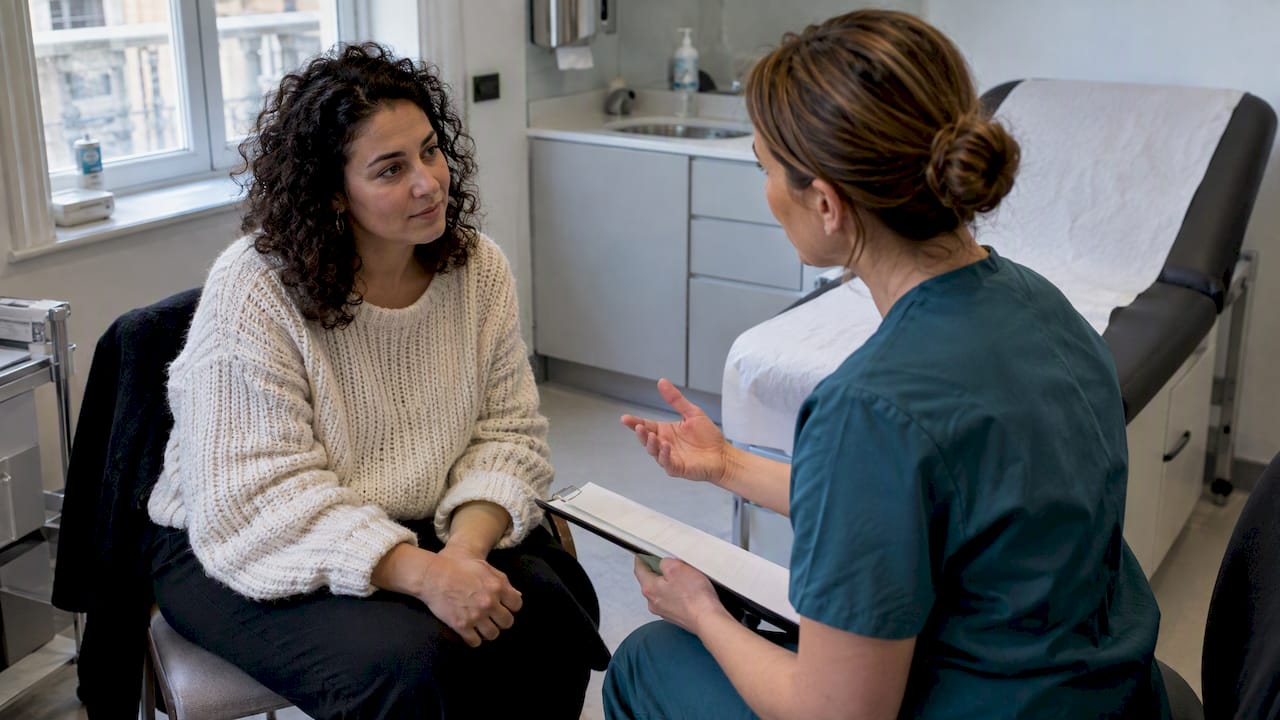
This is where a proper consultation matters. Forehead lines are not all the same, and treating them well is about much more than simply softening movement. Skin quality, muscle activity, hydration, age-related collagen loss and even lifestyle all shape the result.
What causes forehead lines?
Forehead lines are usually caused by repeated muscle movement over time. Every time you raise your brows, the frontalis muscle contracts and creates horizontal folds across the skin. In younger skin, those folds disappear quickly. As collagen, elastin and hydration levels decline, the skin becomes less able to spring back, so the lines begin to linger.
Sun exposure is another major factor. UV damage breaks down collagen and accelerates skin ageing, which is why some people develop visible forehead lines earlier than expected. Stress, smoking, poor sleep and dehydration can all make the area look more creased as well.
It is also common to see forehead lines linked with compensatory movement. For example, if the brow sits low, or if there is strong activity in the muscles around the eyes, a person may unconsciously overuse the forehead. In those cases, treating the forehead in isolation may not produce the most balanced outcome.
The best treatments for forehead lines depend on the type of line
The most effective treatment plan starts by separating dynamic lines from static lines. Dynamic lines appear when the forehead moves. Static lines are visible even when the face is relaxed. Many patients have a combination of both.
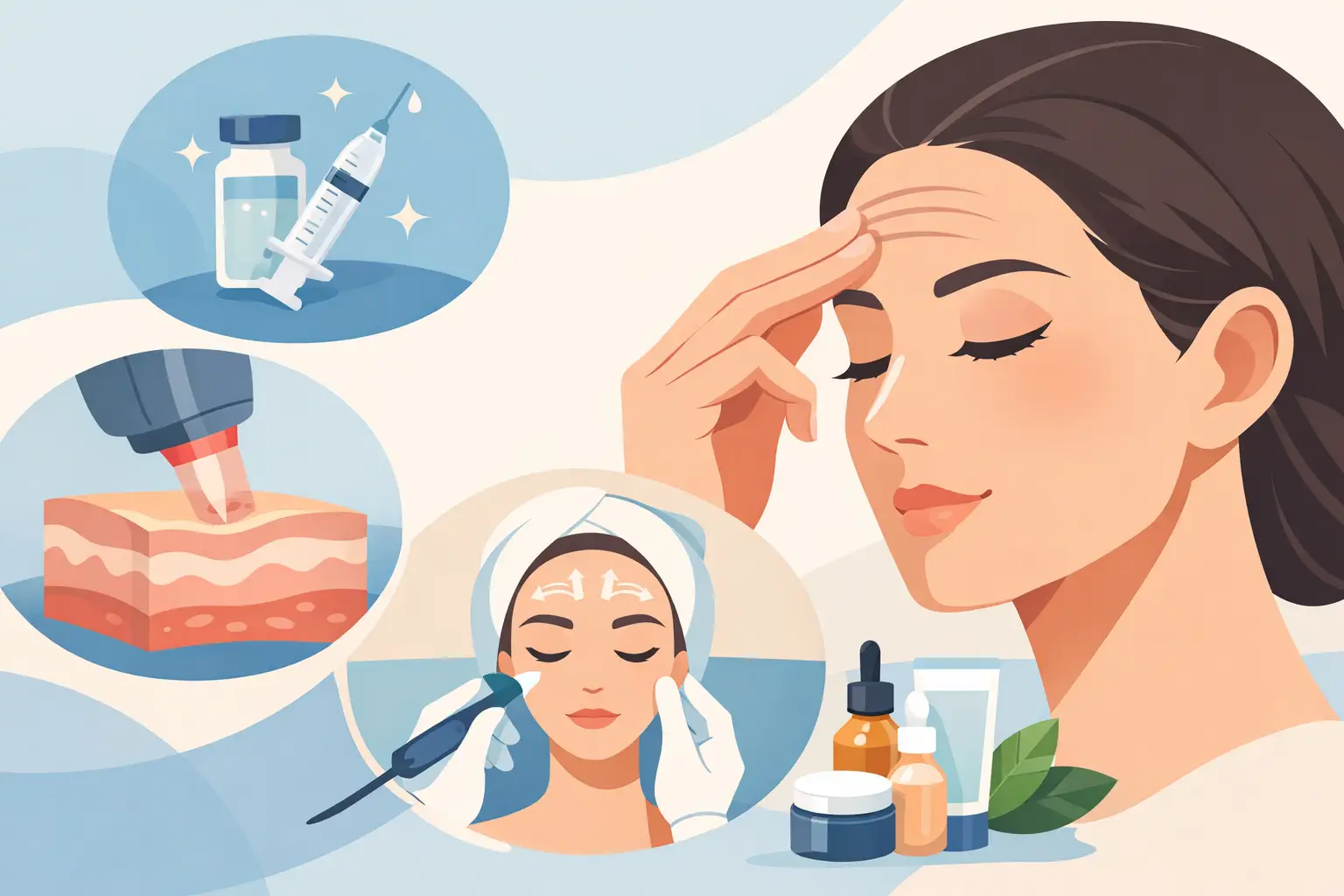
For dynamic lines, anti-wrinkle injections are often the first-line option. For deeper static lines, skin treatments may need to sit alongside injectables. If volume loss, skin laxity or poor skin texture are also contributing, a more comprehensive approach is usually the better investment.
Anti-wrinkle injections for forehead lines
For many patients, anti-wrinkle injections remain one of the best treatments for forehead lines because they directly reduce the muscle activity that causes repeated creasing. When placed precisely, they soften expression lines while still allowing the face to look natural and expressive.
The key word is precisely. The forehead is one of the most technically sensitive areas to treat because there must be balance between reducing lines and preserving an elegant brow position. Too much product, or poor placement, can leave the brow looking heavy or the forehead overly flat. Too little may not achieve enough improvement. This is why medically led assessment is so important.
Results usually begin to show within several days and continue to develop over around two weeks. For patients with mild to moderate forehead lines caused largely by movement, this can make a noticeable difference. If the lines are already etched into the skin at rest, injections may soften them but not remove them entirely.
That is often where expectations need careful handling. A natural-looking result is not about erasing every line at any cost. It is about refreshing the upper face in a way that still suits the individual.
Skin boosters and injectable hydration
When forehead lines are linked with crepey texture, dehydration or thinning skin, skin boosters can be a useful addition. These treatments work differently from anti-wrinkle injections. Rather than reducing movement, they aim to improve skin quality by supporting hydration and overall texture.
This can be particularly valuable for patients who do not yet need a heavy corrective approach, but want their skin to look smoother and healthier. In some cases, improved hydration and skin quality make fine lines less noticeable. In others, skin boosters are best used alongside other treatments rather than instead of them.
They are not a direct substitute for anti-wrinkle treatment if strong muscle movement is the main cause. That trade-off matters, because choosing the gentler option is not always the most effective route if the underlying issue has not been addressed.
Medical-grade skin treatments
For static forehead lines, especially those sitting in skin that looks sun-damaged or uneven, medical-grade skin treatments can make a meaningful difference. Options such as chemical peels, microneedling and laser or resurfacing treatments help stimulate renewal and support collagen production.
These treatments are often well suited to patients who want to improve the overall quality of the skin, rather than focusing only on movement. They can help with fine lines, texture irregularity and dullness, but results tend to build gradually over a course of sessions.
There is, however, an it-depends factor here. Aggressive resurfacing is not right for every skin type or every lifestyle. Some patients are happy with downtime and temporary redness if it means stronger correction. Others want subtle improvement with minimal interruption to work and social plans. A bespoke plan should account for both clinical suitability and real life.
Polynucleotides and regenerative approaches
Regenerative treatments have become increasingly popular among patients seeking a fresher, more refined result without looking overdone. Polynucleotides are one example, used to support tissue repair, hydration and skin quality.
For the forehead area, these treatments may be considered where the skin appears fragile, tired or lacking resilience. They are not typically a stand-alone fix for pronounced expression lines, but they can form part of a broader plan to improve how the skin behaves and responds over time.
This appeals to many patients who want a more measured, skin-first strategy. The trade-off is patience. Regenerative treatments are rarely the fastest route, but they can be valuable when the goal is long-term skin optimisation rather than a single quick intervention.
Is filler used for forehead lines?
In most cases, filler is not the standard treatment for horizontal forehead lines. The forehead is a high-risk area anatomically and requires considerable medical expertise. For that reason, it should never be approached casually.
Very occasionally, selected patients may be suitable for advanced treatment strategies where volume or contour elsewhere in the upper face is relevant to the overall result. But in general, patients asking for filler in forehead lines often benefit more from anti-wrinkle treatment, skin remodelling or resurfacing.
A trustworthy practitioner should explain not only what can be done, but what should be avoided.
Prevention is often the most cost-effective approach
One of the most overlooked points in forehead line treatment is timing. Fine movement lines are usually easier to manage than deeply set creases. That does not mean everyone should start treatment early, but it does mean prevention can be more straightforward than correction.
Daily SPF, consistent skincare and good treatment planning matter. Medical-grade skincare with active ingredients that support cell turnover and collagen can complement in-clinic procedures very well. Patients who commit to both often see better longevity from their results.
At a premium clinic level, this is where a personalised protocol becomes valuable. Rather than chasing one line with one product, the skin, muscle movement and wider ageing pattern are considered together.
How to choose the right forehead line treatment
The best treatments for forehead lines are the ones matched properly to your face, your skin and your priorities. If you want fast improvement in movement lines, anti-wrinkle injections may be the best option. If your concern is etched-in lines and declining skin quality, combination treatment is usually more effective. If you prefer a gradual, skin-led approach, regenerative or resurfacing options may be more suitable.
It is also worth considering the look you want. Some patients want very smooth results. Others want to remain expressive, just less tired or less stern. Neither preference is wrong, but both require an honest consultation and a treatment plan shaped around the individual.
For patients seeking discreet, medically led care in Central London, this level of assessment is often what separates a refined result from a generic one. At The Aesthetics Room, the emphasis is on bespoke planning, patient safety and natural outcomes that respect the structure of the face rather than chasing a one-size-fits-all ideal.
When to seek expert advice
If forehead lines are bothering you at rest, if previous treatment has left the brow looking heavy, or if you are unsure whether you need injectables or skin treatment, it is worth booking a professional consultation. The right practitioner should assess not just the lines themselves, but the relationship between the forehead, brows, skin quality and facial movement.
A well-planned treatment can soften lines beautifully. An over-simplified one can create new imbalances.
The most reassuring place to start is not with a trend or a fixed treatment menu, but with expert guidance that takes your face seriously and treats confidence as part of the outcome.