
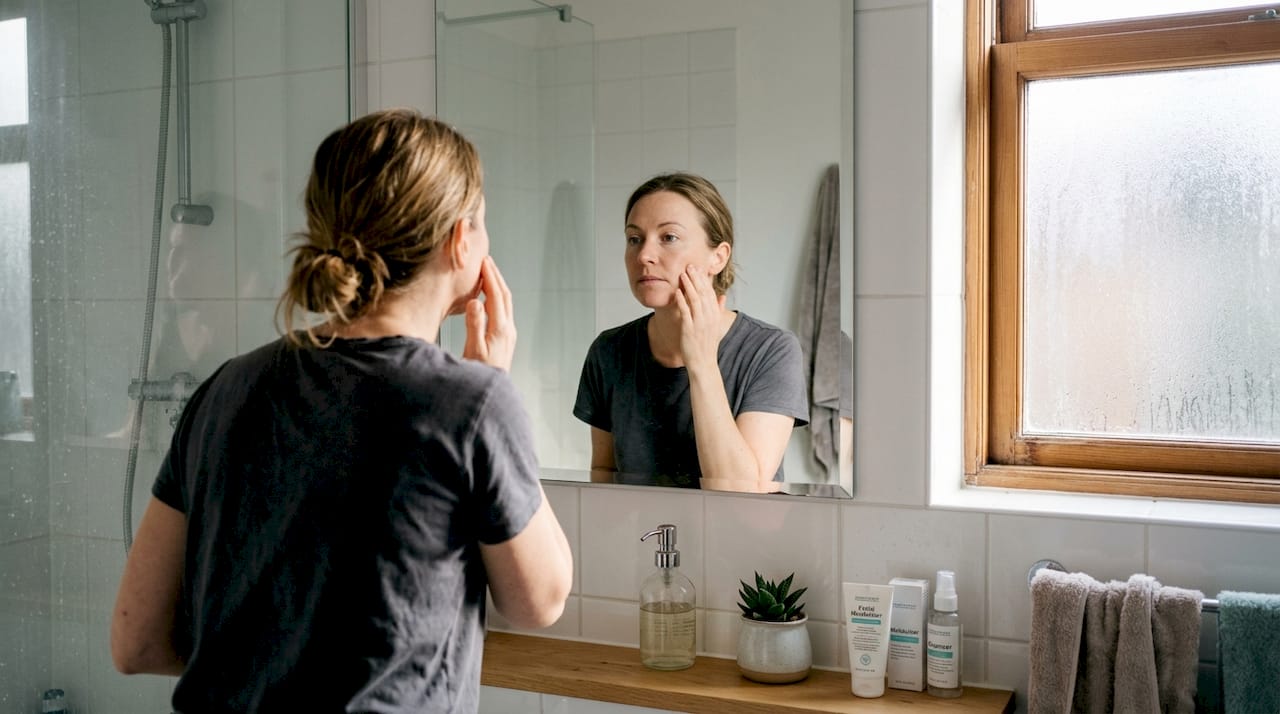

Many people believe sagging skin is simply an unavoidable part of getting older, something you must accept without question. That assumption stops countless individuals from seeking effective solutions. Skin laxity, the medical term for loose or sagging skin, actually results from specific biological processes you can understand and address. By learning what causes skin laxity, recognising its early signs, and exploring proven non-invasive treatments, you gain control over your skin’s appearance and confidence. This guide explains the science behind skin laxity, reveals which treatments genuinely work, and helps you make informed decisions about maintaining firm, youthful skin well into your forties and fifties.
Table of Contents
- Key takeaways
- Understanding skin laxity and its causes
- How non-invasive treatments address skin laxity
- Choosing the right treatment and realistic expectations
- Explore expert skin laxity treatments in London
- Frequently asked questions about skin laxity
Key Takeaways
| Point | Details |
|---|---|
| Definition of skin laxity | Skin laxity is the loss of skin elasticity leading to sagging. |
| Causes and drivers | Age related collagen decline, elastin loss and external factors such as sun exposure, smoking, poor nutrition and stress drive sagging. |
| Non invasive treatments | Non invasive treatments can safely stimulate collagen production and improve skin firmness. |
| Best results mild to moderate | The strongest improvements are typically seen in mild to moderate cases. |
Understanding skin laxity and its causes
Skin laxity refers to decreased elasticity that makes skin appear loose, saggy, or unable to bounce back after stretching. Your skin relies on structural proteins, particularly collagen and elastin fibres, to maintain its shape and firmness. These proteins form a support network in the dermis, the skin’s middle layer, creating the foundation for smooth, taut skin.
From your early twenties onwards, your body produces less collagen each year. Research shows collagen declines approximately 1% annually after age 20 to 25, whilst elastin and hyaluronic acid levels also drop. This gradual reduction weakens the dermal structure, making skin less resilient and more prone to sagging. The process accelerates in your thirties and forties, when you might first notice visible changes around your jawline, neck, or cheeks.
External factors significantly worsen this natural decline. UV radiation from sun exposure breaks down collagen fibres through a process called photoageing, which accounts for up to 80% of visible facial ageing. Smoking restricts blood flow to skin cells and introduces harmful chemicals that damage elastin. Poor nutrition deprives your skin of essential building blocks like vitamin C, necessary for collagen synthesis. Chronic stress elevates cortisol, a hormone that accelerates collagen breakdown. Even repeated facial expressions create lines that deepen as skin loses its ability to spring back.
Pro Tip: Understanding the difference between cellulite and skin laxity helps you target the right treatment, as these conditions require different approaches despite both affecting skin appearance.
Dermatologists use tools like the Facial Skin Laxity Index to objectively measure skin elasticity. This assessment evaluates how quickly skin returns to its original position after gentle manipulation, providing a standardised way to track changes over time and treatment effectiveness. The index considers factors like skin thickness, hydration levels, and the degree of sagging in specific facial zones.
Common areas affected by skin laxity:
- Jawline and jowls, where gravity pulls loosened skin downward
- Under-eye area and eyelids, creating a tired or aged appearance
- Neck and décolletage, often showing horizontal lines and crepey texture
- Cheeks and nasolabial folds, deepening as facial fat pads descend
- Upper arms and abdomen, particularly after significant weight changes
The biological mechanisms involve more than simple protein loss. As you age, fibroblasts (cells that produce collagen) become less active and fewer in number. The existing collagen fibres become cross-linked and rigid, losing their flexibility. Meanwhile, the fat compartments beneath your skin shrink and shift position, removing the volumising support that once kept skin taut. This combination creates the characteristic appearance of aged, lax skin.
“Skin laxity represents a complex interplay between intrinsic ageing processes and extrinsic environmental damage, measurable through standardised clinical indices that assess dermal resilience and elasticity.”
Recognising these causes empowers you to make lifestyle adjustments whilst considering professional treatments. Protecting your skin from UV damage, maintaining proper hydration, eating a nutrient-rich diet, and managing stress all support understanding collagen health and may slow the progression of laxity.
How non-invasive treatments address skin laxity
Non-invasive treatments work by triggering your body’s natural healing response to stimulate fresh collagen and elastin production. These technologies deliver controlled thermal energy to specific depths within the skin, creating microscopic zones of injury that prompt repair mechanisms without damaging the surface. The process, called collagen neogenesis, gradually tightens and firms skin over several months as new structural proteins form.
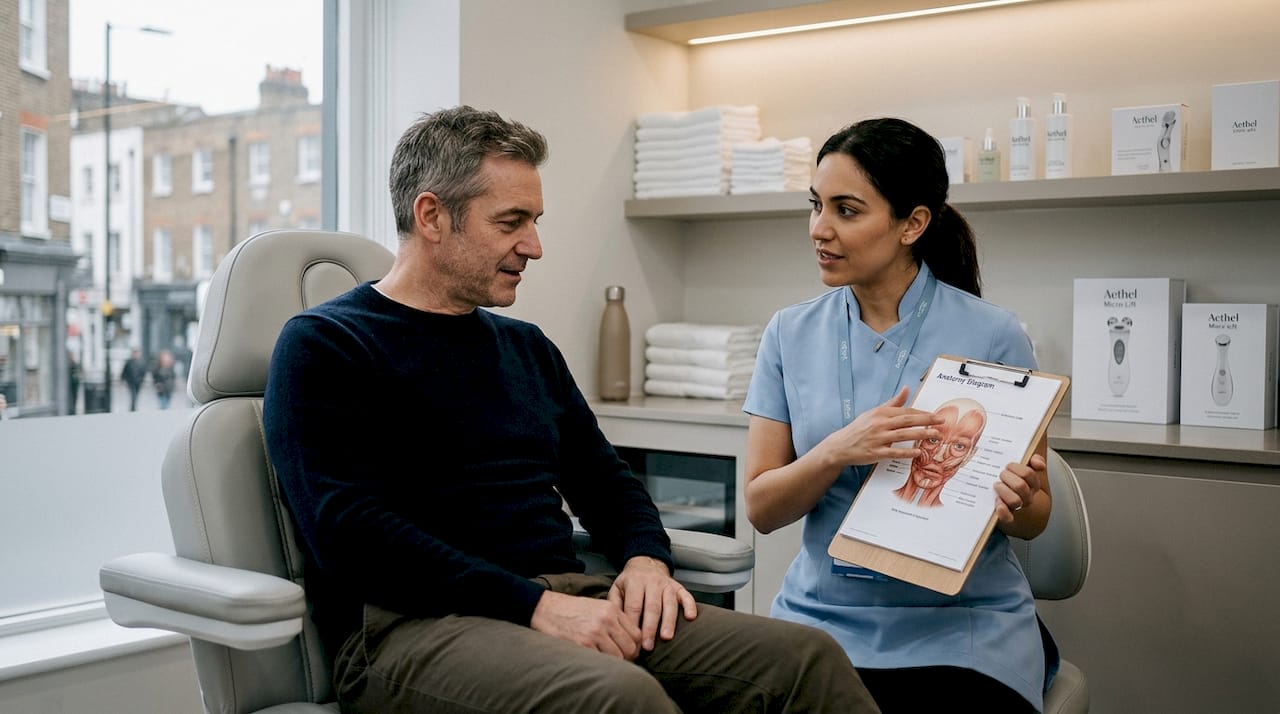
Radiofrequency (RF) treatments use electromagnetic waves to heat the dermis to precise temperatures, typically between 40 and 45 degrees Celsius. This thermal energy causes existing collagen fibres to contract immediately whilst stimulating fibroblasts to produce new collagen over the following weeks and months. RF and HIFU stimulate collagen production through controlled thermal injury, offering safe, zero-downtime treatments particularly suited for professionals aged 30 to 55 who cannot afford extended recovery periods.
High-intensity focused ultrasound (HIFU) takes a different approach by delivering ultrasound energy to deeper tissue layers, reaching the superficial muscular aponeurotic system (SMAS) that surgeons target during facelifts. The focused beams create thermal coagulation points at depths of 3 to 4.5 millimetres, lifting and tightening tissue from within. Unlike surgical procedures, HIFU leaves the skin surface untouched, eliminating visible wounds or scarring.
Laser treatments for skin tightening use light energy to heat collagen fibres, causing them to contract and stimulate remodelling. Fractional lasers create thousands of microscopic treatment zones, leaving surrounding tissue intact to speed healing. However, certain laser wavelengths carry higher risks for darker skin tones, potentially causing hyperpigmentation or burns if not properly calibrated.
Treatment selection considerations:
- Assess your skin laxity severity through professional consultation and possibly clinical measurements
- Consider your skin tone and type, as some technologies suit certain complexions better than others
- Evaluate your schedule and tolerance for potential mild swelling or redness lasting a few days
- Discuss realistic timelines, as most treatments require 2 to 6 months for full results to appear
- Review combination options that address multiple concerns simultaneously for comprehensive rejuvenation
Pro Tip: Combining HIFU for deep tissue lifting with RF microneedling for surface texture improvement often delivers superior results compared to single-modality treatments, though this approach requires careful planning with an experienced practitioner.
Clinical evidence supports the efficacy of these approaches. A comprehensive meta-analysis found that RF and MFU-V provide equivalent efficacy with significant laxity reduction appearing within 30 to 180 days post-treatment. Patients report noticeable improvements in skin firmness, reduced sagging, and enhanced facial contours without surgical intervention.
The safety profile of non-invasive treatments makes them particularly attractive for busy Londoners seeking effective solutions without disrupting their professional lives. Most procedures require no anaesthesia beyond topical numbing cream, take 30 to 90 minutes to complete, and allow immediate return to normal activities. Side effects typically remain mild and temporary, including slight redness, tingling, or tenderness that resolves within hours to a few days.
| Treatment type | Depth reached | Downtime | Ideal for |
|---|---|---|---|
| Radiofrequency | 1-3mm (dermis) | None to minimal | All skin tones, mild to moderate laxity |
| HIFU | 3-4.5mm (SMAS layer) | None to 1-2 days | Jawline, neck, brow lifting |
| Fractional laser | 0.5-2mm (upper dermis) | 2-5 days | Lighter skin tones, texture concerns |
| RF microneedling | 0.5-3.5mm (adjustable) | 1-3 days | Acne scars, fine lines, moderate laxity |
These facial skin rejuvenation treatments continue improving skin quality for months after the initial session as collagen remodelling progresses. Many patients schedule maintenance treatments annually or biannually to sustain results, creating a proactive approach to managing skin laxity rather than waiting for surgical necessity.
The top skin tightening treatments in 2026 increasingly incorporate multiple technologies in single sessions, maximising collagen stimulation whilst minimising appointment frequency. This hybrid treatment approach combines complementary mechanisms, such as ultrasound for deep lifting with radiofrequency for surface tightening, delivering comprehensive rejuvenation that addresses skin laxity at multiple tissue depths simultaneously.
Choosing the right treatment and realistic expectations
Selecting the appropriate treatment requires honest assessment of your skin laxity severity and understanding each technology’s capabilities and limitations. Mild to moderate laxity, characterised by early jowl formation, slight neck looseness, or beginning under-eye sagging, responds excellently to non-invasive options. These cases show visible improvement that satisfies most patients seeking natural-looking enhancement rather than dramatic transformation.
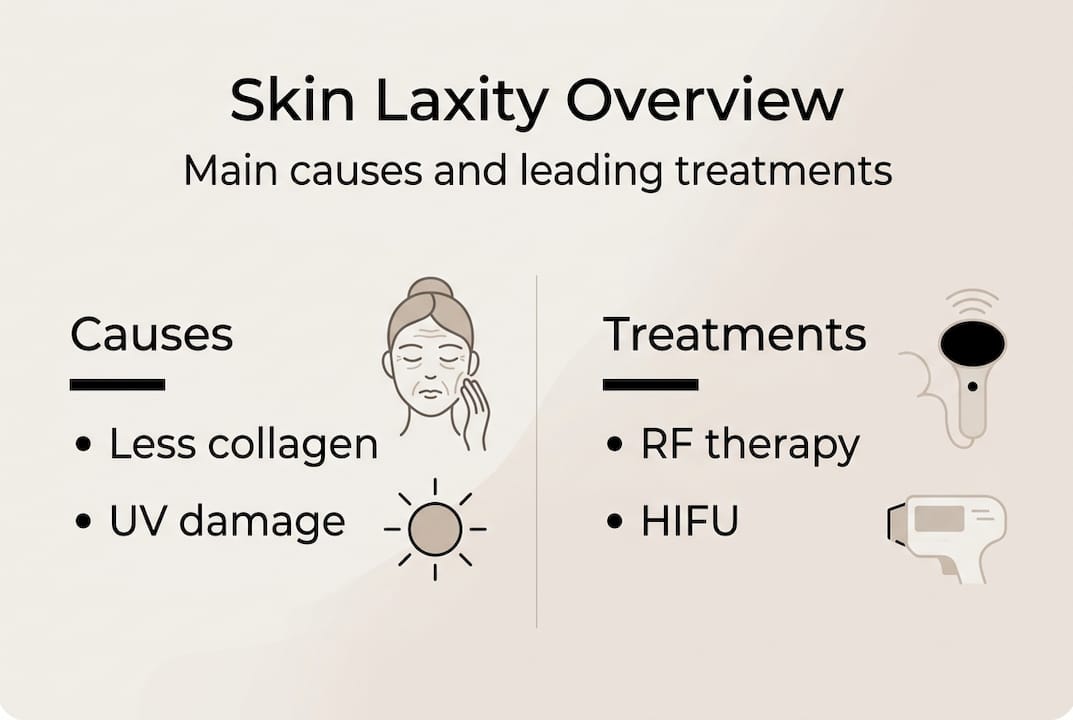
Severe skin laxity presents different challenges. When skin hangs significantly, creating pronounced jowls, deep neck bands, or substantial eyelid drooping, energy-based devices may provide insufficient lifting. Surgical procedures like facelifts, neck lifts, or blepharoplasty become more appropriate recommendations for achieving desired outcomes. A qualified practitioner will honestly discuss whether non-invasive treatments can meet your expectations or whether surgical consultation makes more sense.
Safety considerations vary by treatment type and individual characteristics. The FDA has issued warnings about RF microneedling risks, noting potential for burns and localised fat loss when devices are misused or settings are inappropriate. The science behind skin tightening reveals that whilst results prove excellent in mild to moderate laxity, severe sagging requires different interventions, and improper technique can cause complications rather than improvements.
Your skin tone significantly influences treatment selection. Radiofrequency and HIFU work safely across all Fitzpatrick skin types because they bypass melanin, the pigment that absorbs laser light. Darker skin tones (types IV to VI) face higher risks with certain lasers, which can trigger post-inflammatory hyperpigmentation or, in rare cases, burns. Always verify your practitioner’s experience treating your specific skin type and their technology’s safety profile for diverse complexions.
Factors affecting treatment suitability:
- Current skin thickness and elasticity levels measured during consultation
- Presence of active skin conditions like eczema, rosacea, or recent sunburn
- Medical history including autoimmune disorders or keloid scarring tendencies
- Realistic timeline expectations, understanding results develop gradually over months
- Budget considerations, as optimal outcomes often require multiple sessions or combination approaches
Pro Tip: Schedule consultations with multiple qualified practitioners to compare recommendations and approaches, ensuring you receive personalised advice rather than one-size-fits-all treatment plans.
Combination treatments can amplify results by addressing skin laxity through complementary mechanisms. Pairing HIFU for deep structural lifting with RF microneedling for surface texture refinement tackles multiple ageing concerns simultaneously. However, combining treatments requires careful timing and technique to avoid overwhelming the skin or causing adverse reactions. Not every patient needs or benefits from combination approaches, making individualised assessment crucial.
| Consideration | Non-invasive suitable | Surgical consideration |
|---|---|---|
| Laxity severity | Mild to moderate sagging | Severe, pronounced drooping |
| Age range | Typically 30-60 years | Often 50+ years |
| Recovery tolerance | Minimal downtime acceptable | Can accommodate 2-4 weeks |
| Result preference | Natural, gradual improvement | Dramatic, immediate change |
| Maintenance commitment | Annual or biannual treatments | One procedure, long-lasting |
Realistic expectations form the foundation of treatment satisfaction. Non-invasive procedures deliver subtle to moderate improvements that develop over 2 to 6 months as collagen matures. You will not wake up looking 20 years younger or achieve facelift-level results from energy-based treatments alone. Instead, expect firmer skin, improved contours, reduced sagging, and a refreshed appearance that maintains your natural features whilst enhancing them.
Maintenance requirements deserve consideration when planning your approach. Unlike surgical lifts that provide years of improvement from a single procedure, non-invasive treatments require periodic repetition to sustain results. Most practitioners recommend annual or biannual maintenance sessions as natural ageing continues and collagen gradually declines again. This ongoing commitment suits individuals who prefer gradual, continuous improvement over one-time dramatic intervention.
Exploring skin rejuvenation benefits beyond laxity treatment reveals additional advantages of these technologies, including improved skin texture, reduced pore size, and enhanced overall radiance. Many patients find that addressing skin laxity simultaneously improves multiple aesthetic concerns, delivering comprehensive facial rejuvenation.
Consider how treatments integrate with other aesthetic procedures you may already use or plan to incorporate. Anti-wrinkle treatments like neuromodulators address dynamic lines from muscle movement, whilst skin tightening targets structural laxity. Combining these approaches creates comprehensive facial rejuvenation that addresses both movement-related and gravity-related ageing signs for harmonious, natural-looking results.
Explore expert skin laxity treatments in London
Addressing skin laxity requires expertise, precision, and access to advanced technologies that deliver proven results safely. If you’re ready to take control of your skin’s appearance and explore professional solutions tailored to your unique concerns, discovering the right aesthetic partner makes all the difference in your journey toward firmer, more youthful skin.
The Aesthetics Room offers comprehensive skin treatments designed specifically for individuals seeking non-invasive solutions to skin laxity and related concerns. Located in prestigious Knightsbridge, the clinic combines cutting-edge technology with personalised care, ensuring each treatment plan addresses your specific skin type, laxity severity, and aesthetic goals.

Beyond skin tightening, the clinic provides complementary treatments that enhance overall facial rejuvenation. Botox treatments address dynamic wrinkles that often accompany skin laxity, whilst dermal fillers restore volume loss that contributes to sagging appearance. This comprehensive approach ensures all aspects of facial ageing receive appropriate attention, creating harmonious, natural-looking results that reflect your best self.
Frequently asked questions about skin laxity
How long does recovery take after non-invasive skin tightening treatments?
Most non-invasive treatments require minimal to no downtime, allowing you to resume normal activities immediately. You might experience slight redness or tenderness for a few hours to two days, depending on the specific technology used. RF and HIFU typically cause no visible side effects, whilst fractional treatments may produce mild swelling that resolves within 48 hours.
How often do I need maintenance treatments to sustain results?
Maintenance frequency depends on your individual ageing process, lifestyle factors, and the specific treatment received. Most practitioners recommend annual or biannual sessions to maintain optimal firmness as natural collagen decline continues. Some patients find that combining professional treatments with excellent skincare and sun protection extends the time between appointments.
Can lifestyle changes improve skin laxity without professional treatments?
Whilst lifestyle modifications cannot reverse existing laxity, they significantly slow its progression and support treatment results. Daily broad-spectrum sun protection prevents further collagen damage, whilst a diet rich in vitamin C, amino acids, and antioxidants provides building blocks for collagen synthesis. Regular exercise improves circulation, delivering nutrients to skin cells, and adequate sleep allows optimal repair processes.
When should I consult a professional about my skin laxity concerns?
Schedule a consultation when you first notice changes that concern you, even if they seem minor. Early intervention with non-invasive treatments often delivers better results than waiting until laxity becomes severe. A qualified practitioner can assess your current condition, predict likely progression, and recommend proactive strategies. Exploring skin rejuvenation benefits during an initial consultation helps you understand all available options for your specific situation.
Do non-invasive skin tightening treatments hurt during the procedure?
Most patients describe sensations ranging from mild warmth to brief, tolerable discomfort during treatment. Practitioners typically apply topical numbing cream before procedures to minimise any unpleasant feelings. RF treatments feel like deep warmth, whilst HIFU creates momentary tingling or prickling as energy reaches deeper tissue layers. The discomfort remains manageable for the vast majority of patients and lasts only during the active treatment time.
Are results from non-invasive treatments permanent or temporary?
Results are temporary because natural ageing processes continue after treatment. The new collagen produced during the months following your session will eventually degrade as part of normal biological turnover. However, the improvements typically last 12 to 24 months before gradually diminishing, making periodic maintenance treatments necessary to sustain your enhanced appearance. This differs from surgical lifts, which provide longer-lasting but still not permanent results.