
TL;DR:
- Skin mapping provides a detailed, region-by-region analysis of your skin’s unique condition, guiding personalised treatment. It involves systematic imaging, device-assisted measurements, and expert interpretation to create reliable baseline data for ongoing skincare assessments. Regular mapping transforms skin management into a data-driven, tailored approach that optimizes treatment outcomes over time.
Many Londoners invest significantly in serums, creams, and treatments, yet still feel frustrated by inconsistent results. The reason is often straightforward: generic routines cannot account for your skin’s unique biology, lifestyle, and concerns. Skin mapping is changing that. By delivering a structured, region-by-region clinical picture of your complexion, it gives practitioners the precise intelligence needed to design genuinely personalised care. Understanding the role of skin analysis is the first step towards beauty choices that truly work for you.
Table of Contents
- Understanding skin mapping: Definition and fundamentals
- How skin mapping works: From imaging to interpretation
- Personalised guidance: How mapping shapes effective treatment plans
- What to expect in your London mapping experience
- The real value of skin mapping: Beyond the surface
- Ready to begin your mapped skin transformation?
- Frequently asked questions
Key Takeaways
| Point | Details |
|---|---|
| Personalisation is essential | Skin mapping transforms skin care into a tailored journey by revealing individual needs and progress. |
| Accuracy relies on expertise | Standardised, expert-led mapping gives more reliable results than basic skin assessments or apps. |
| Guidance improves results | Mapped skin plans ensure every treatment is evidence-based, targeted, and more effective over time. |
| Ongoing assessments matter | Regular mapping lets you track progress and stay ahead of changes in your skin’s condition. |
Understanding skin mapping: Definition and fundamentals
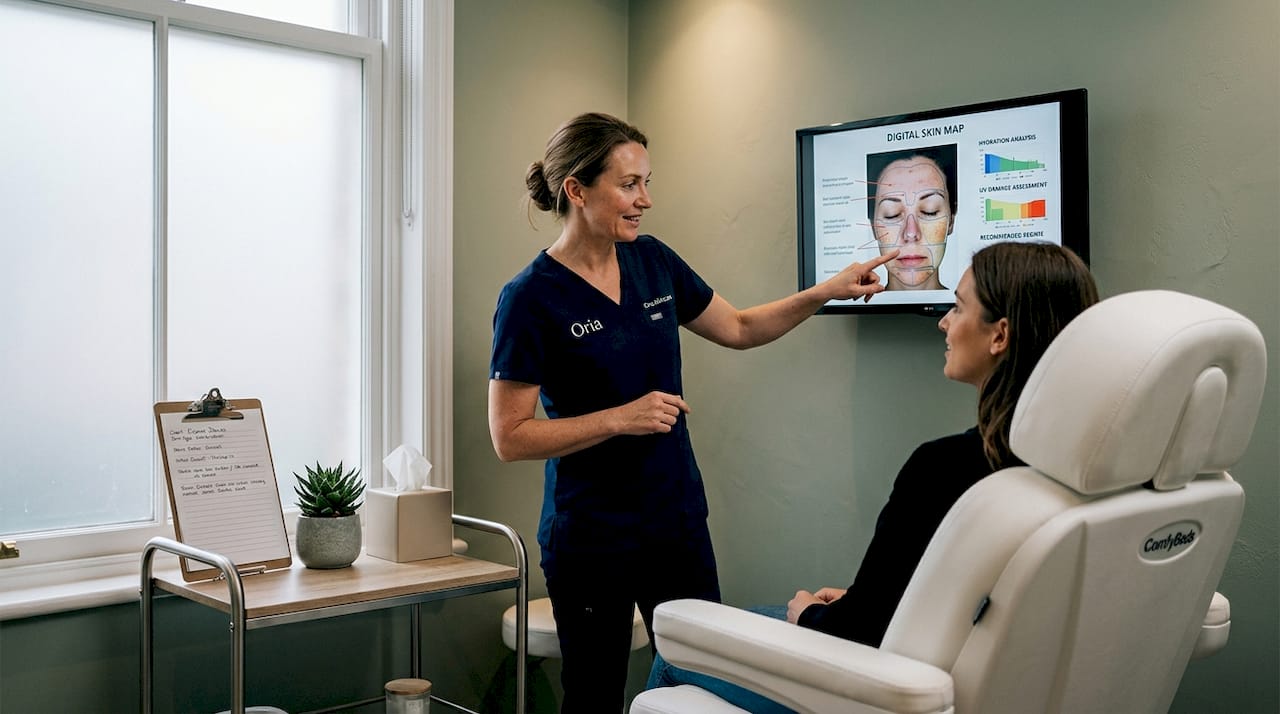
Skin mapping is far more than a quick visual appraisal under a bright light. It is a structured clinical process in which a practitioner systematically assesses each zone of the face and body, capturing baseline data across multiple parameters including hydration levels, pigmentation, pore distribution, texture irregularities, and early signs of collagen loss. This level of detail is what separates a genuine mapping session from the cursory consultation you might receive before purchasing a shelf product.
At its core, skin mapping treats your skin like a landscape. Different regions behave differently. The T-zone produces more sebum than the cheeks. The eye area is thinner and more prone to fine lines than the forehead. The jawline can be a focal point for hormonal breakouts. Mapping captures all of this systematically, so no concern is overlooked and no recommendation is made without evidence.
Several principles make mapping clinically meaningful:
- Baseline capture: Recording your skin’s current condition creates a reference point against which all future changes can be measured accurately.
- Region-based assessment: Evaluating each facial or body zone independently ensures that localised concerns receive targeted attention rather than a blanket approach.
- Repeatability: Consistent methodology means that follow-up assessments can be compared reliably over months and years.
- Expert interpretation: Raw images and readings only become useful when analysed by a trained specialist who understands the clinical significance of what they reveal.
“The most clinically meaningful use of skin mapping is baseline capture and region-based assessment with expert interpretation.”
Our skin profiling guide expands on how each of these principles translates into real results. The takeaway is simple: skin mapping is a clinical discipline, not a marketing buzzword, and it lays the only reliable foundation for effective, personalised skincare and aesthetic treatment.
How skin mapping works: From imaging to interpretation
Now that we understand what skin mapping is, let’s demystify how the process works from the inside out.
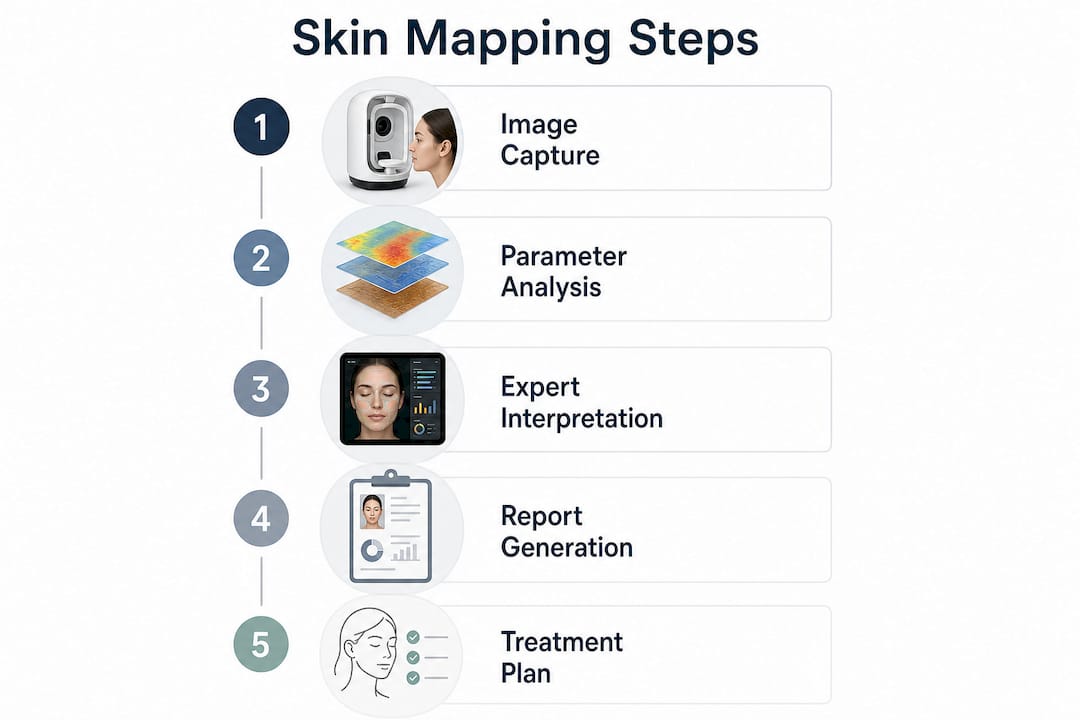
A professional skin mapping session follows a clear sequence that transforms raw observation into actionable insight. Here is what a typical appointment looks like in practice:
- Pre-session preparation: You will be asked to arrive with clean skin, free of make-up and heavy products. This ensures that imaging captures your skin’s true baseline rather than a product-influenced version.
- Standardised photography: High-resolution cameras capture images under consistent lighting conditions from multiple angles. Polarised light and UV filters may be used to reveal sub-surface pigmentation, vascular concerns, and pore structure that are invisible to the naked eye.
- Device-assisted analysis: Specialised devices measure parameters such as skin hydration (corneometry), sebum levels (sebummetry), and transepidermal water loss, providing quantitative data to complement visual assessment.
- Zone-by-zone mapping: The practitioner systematically documents findings for each facial region, noting concerns such as dehydration lines, uneven tone, loss of volume, or collagen thinning.
- Data review and expert interpretation: The collected data is reviewed in context. A trained specialist identifies patterns, prioritises concerns, and connects findings to likely causes such as UV exposure, hormonal changes, or lifestyle factors.
- Personalised report and discussion: You receive a clear summary of findings alongside an initial discussion of possible treatment pathways tailored to your mapped profile.
Repeatability depends on standardised imaging, including consistent angles, lighting, and calibration, for accurate longitudinal comparisons. This is why attending a clinic with proper equipment and trained staff is non-negotiable.
Pro Tip: Bring a list of your current skincare products and any past treatments to your mapping appointment. This context helps your practitioner interpret your results more accurately and avoid recommending anything that duplicates or conflicts with your existing routine.
| Mapping parameter | What it measures | Why it matters |
|---|---|---|
| Hydration levels | Water content in the outer skin layer | Guides moisturisation and barrier repair strategies |
| UV pigmentation | Sun damage beneath the skin’s surface | Identifies early photodamage before it becomes visible |
| Pore distribution | Size and density of pores by region | Informs sebum-control and texture-refining treatments |
| Skin texture | Surface smoothness and irregularity | Highlights areas for resurfacing or rejuvenation |
| Vascular patterns | Redness, rosacea, and vascular lesions | Directs targeted vascular or anti-inflammatory interventions |
Exploring the latest skin mapping technologies and understanding advanced facial analysis across 29 parameters demonstrates just how sophisticated this process has become. For London clients seeking genuinely expert-led care, the technology is only as valuable as the clinical mind interpreting the output.
Personalised guidance: How mapping shapes effective treatment plans
With the mapping process clear, it is time to reveal its true power: informing your customised journey to beauty and confidence.

An expertly interpreted skin map becomes the blueprint for every subsequent treatment decision. Rather than guessing which approach might improve your skin, your practitioner works from evidence. This changes everything, particularly when you consider the range of treatments available at a premium London clinic.
Consider how mapping influences specific aesthetic interventions:
- Botox and muscle relaxants: Mapping reveals patterns of dynamic movement and early static lines, helping the practitioner identify precisely where targeted muscle relaxation will deliver the most natural-looking result.
- Dermal fillers: Volume loss is rarely uniform. A mapped assessment identifies which regions, whether the cheeks, temples, or perioral area, have lost the most structure, so filler placement restores balance rather than guessing at it.
- Skin rejuvenation treatments: Whether using laser, radiofrequency, or chemical resurfacing, mapping shows which zones carry the greatest burden of photodamage or textural irregularity, allowing energy levels and treatment areas to be calibrated precisely.
- Bespoke skincare protocols: Mapping data guides the selection of active ingredients. A zone with compromised barrier function needs different actives than one with excess sebum production. Personalised skincare becomes genuinely scientific rather than speculative.
Structured, region-based assessment informs a treatment pathway and should be tied to expert interpretation plans. Without this foundation, even highly skilled practitioners are working with incomplete information.
| Planning approach | Outcome quality | Risk of over-treatment | Personalisation level |
|---|---|---|---|
| Mapped and expert-interpreted | High | Low | Excellent |
| Visual assessment only | Moderate | Moderate | Limited |
| Client self-report alone | Variable | Higher | Poor |
| Generic product selection | Low | Higher | None |
The consequences of skipping mapping are real. Common pitfalls include treating superficial symptoms while missing underlying causes, applying filler in areas of adequate volume while neglecting depleted zones, and selecting skincare actives that worsen rather than improve barrier health. The professional skin assessment benefits become obvious when you consider how much is at stake in every treatment decision.
Pro Tip: Ask your practitioner to walk you through your mapped findings before any treatment commences. Understanding your own skin’s profile keeps you informed and allows you to track meaningful improvements over time. This is the hallmark of tailored skincare outcomes done properly.
The difference between a clinic that maps and one that does not is the difference between tailored precision and an educated guess. For anyone serious about their skin health and confidence, that distinction is significant.
What to expect in your London mapping experience
Equipped with an understanding of mapping’s role in personalisation, let’s make sure you know what to expect, and what to demand, from your mapping experience in London.
Choosing where to have your skin mapped is as important as choosing to have it done at all. London has no shortage of clinics offering “skin analysis,” but the quality varies enormously. Here is how to prepare and what to look for.
Before your appointment, you should:
- Remove all make-up and avoid applying any products on the morning of your visit.
- Note any recent changes in your skin, including new breakouts, dryness, or reactions to products.
- Prepare a list of medications and supplements, as some affect skin behaviour significantly.
- Review your skincare history and any aesthetic treatments you have had previously.
Hallmarks of a reputable skin mapping practice include:
- Standardised imaging equipment with consistent lighting protocols.
- A qualified practitioner, not a sales consultant, conducting and interpreting the assessment.
- A written or digital report summarising your mapped findings.
- A clear explanation of how findings connect to specific treatment recommendations.
- No pressure to purchase treatments immediately following the session.
Red flags to avoid:
- “Mapping” performed with a handheld mirror or a basic smartphone camera.
- A results summary that leads immediately to a pre-packaged treatment bundle without individual discussion.
- No explanation of what the images or readings actually mean for your specific concerns.
- A practitioner unable to answer detailed questions about your mapped parameters.
“Repeatable imaging standards and expert interpretation are central to meaningful skin mapping.”
After your session, you should receive a personalised report and have the opportunity to discuss your mapped pathway in detail. Follow-up mapping at six to twelve month intervals allows your practitioner to compare new images against your baseline, tracking genuine improvement or identifying emerging concerns early. Your skin health checklist can support you in maintaining progress between sessions.
Skin mapping is also not exclusively a facial service. It can be applied across the body to monitor areas of pigmentation change or structural concern, making it a genuinely holistic tool. Exploring specialised skin treatments for your specific demographic helps you understand which mapped findings warrant priority attention.
The real value of skin mapping: Beyond the surface
Having set clear expectations for your mapping appointment, let’s consider what really sets world-class practices apart.
At The Aesthetics Room, we have observed a common pattern among clients who arrive having had “skin scans” elsewhere. They bring images, sometimes impressive-looking digital renders, but no meaningful interpretation. The technology performed its function, but no expert translated the data into a clinical picture. This is the most underappreciated failure point in modern aesthetic skincare.
Skin mapping is not a product. It is a process, and its value lives entirely in the quality of the expert reviewing the output. A high-resolution image of sub-surface UV pigmentation is interesting. A clinician explaining what that pigmentation tells us about your collagen degradation timeline, your candidacy for specific rejuvenation treatments, and the lifestyle adjustments that will slow the process further: that is genuinely transformative.
We also challenge the notion that mapping is a one-time event. Many clients have one session and consider the work complete. In reality, your skin changes with the seasons, your hormones, your stress levels, and your sun exposure. Repeat mapping is what converts a single data point into a meaningful story about your skin’s trajectory. Are treatments working? Is a concern stabilising or progressing? Without longitudinal data, these questions cannot be answered confidently.
London clients who benefit most from mapping are those who approach it as an ongoing, data-driven relationship with their practitioner rather than a one-off diagnostic novelty. Clinics that encourage regular comparison sessions and maintain detailed records over time are the ones worth your investment. This is the mindset behind unlocking tailored skin health at its most sophisticated level.
The honest truth is that the aesthetic industry has not always done enough to distinguish genuine clinical mapping from surface-level “analysis” used primarily as a sales tool. Knowing the difference protects you and ensures your time, money, and trust are directed towards care that genuinely improves your skin.
Ready to begin your mapped skin transformation?
If you are inspired to pursue a truly evidence-led approach to skin confidence, here is how you can take action now.
At The Aesthetics Room, our expert practitioners in London’s Knightsbridge, Harley Street, and Mayfair locations combine advanced imaging with clinical expertise to deliver skin mapping that is genuinely meaningful. Every assessment forms the foundation of a bespoke treatment plan, whether that involves London dermal fillers, Botox treatments, or skin rejuvenation protocols tailored precisely to your mapped profile.
We are CQC accredited and proud members of the ACE Group, reflecting our unwavering commitment to patient safety and excellence. Your mapped skin journey begins with a consultation, in person or virtual, where we listen, assess, and plan with your confidence and long-term skin health as our priority. Book your consultation today and discover what truly personalised aesthetic care feels like.
Frequently asked questions
How often should skin mapping be performed?
For most people, annual or biannual mapping is ideal for detecting changes and guiding ongoing treatment plans. Baseline capture and longitudinal comparison are the most clinically valuable uses of skin mapping over time.
Is skin mapping only useful for the face?
While most commonly used for facial analysis, skin mapping can be applied across the entire body for thorough skin health monitoring. Skin mapping supports structured, region-based assessment of any skin surface, including the neck, décolletage, and hands.
Can over-the-counter apps provide the same insights as clinical skin mapping?
No. Clinical mapping relies on expert interpretation and standardised imaging that consumer apps cannot replicate. Repeatability and accuracy require calibrated equipment and trained clinical oversight that no app currently delivers.
What should I look for in a provider offering skin mapping in London?
Seek clinics with qualified practitioners who emphasise repeatable imaging standards and deliver a detailed, personalised interpretation of your findings. The value lies in expert-led mapping with structured, evidence-based treatment planning rather than a quick scan and a product sale.
Recommended
- Skin profiling guide: unlock radiant, tailored skin – The Aesthetics Room
- Skin analysis: The key to radiant, effective results – The Aesthetics Room
- Unlock radiant skin: how nutrition transforms your complexion – The Aesthetics Room
- Glowing skin guide: achieve radiance with expert treatments – The Aesthetics Room