

You usually notice it first in photos – a frown line that seems to stay put even when your face is at rest, or forehead lines that make you look more tired than you feel. If you have been wondering how do anti wrinkle injections work, the answer is both simpler and more precise than many people expect. These treatments do not fill lines or change the structure of your face. They work by temporarily relaxing selected muscles so the skin above them can smooth out.
That sounds straightforward, but good outcomes depend on much more than the product itself. The way your face moves, the strength of your muscles, your age, skin quality and aesthetic goals all influence the result. In a medically led clinic setting, anti-wrinkle treatment is less about freezing expression and more about reducing unwanted movement in a controlled, tailored way.
How do anti wrinkle injections work in the skin and muscle?
Anti-wrinkle injections use a purified protein that interrupts the signal between a nerve and a muscle. Normally, your nerves release a chemical messenger that tells a muscle to contract. When that signal is reduced, the treated muscle cannot contract as strongly. The overlying skin is then subjected to less folding and creasing, which softens the appearance of dynamic lines.
Dynamic lines are the lines caused by facial movement – for example, frowning, raising your brows or squinting. Over time, repeated movement can turn dynamic lines into static lines, which remain visible even when the face is relaxed. Anti-wrinkle injections are particularly effective at addressing the movement that creates those lines in the first place.
This is why common treatment areas include the forehead, the frown lines between the brows and crow’s feet around the eyes. In the right hands, treatment can also be used more strategically in other areas of the face or jaw, depending on anatomy and suitability. The aim is not to erase personality. It is to soften excessive muscular pull while keeping the face balanced and natural.
What happens after treatment?
The effect is not immediate. Most patients begin to notice a change within a few days, with the full result usually appearing after around 10 to 14 days. During that time, the targeted muscle gradually becomes less active. As movement reduces, the skin has a chance to look smoother and more rested.
The result is temporary because the body slowly restores communication between the nerve and muscle. For most people, the effect lasts around three to four months, although this varies. A first treatment may wear off a little sooner, while some patients metabolise the product more quickly than others. Muscle strength, lifestyle and the treatment area can all make a difference.
This temporary nature is often seen as a benefit. It allows treatment to be adjusted over time as your face changes, your preferences evolve or you decide you want a lighter or stronger result. Bespoke treatment planning matters because what looks elegant and refreshed on one person may feel overdone on another.
Why anti-wrinkle injections soften lines rather than fill them
One of the most common misunderstandings is that anti-wrinkle injections and dermal fillers do the same job. They do not. Anti-wrinkle injections reduce muscle movement. Fillers restore or add volume. If a line is mainly caused by repeated facial expression, relaxing the muscle may improve it very well. If a concern is caused by volume loss, skin laxity or deeper structural ageing, a different treatment may be more appropriate.
This is where honest assessment matters. A patient may ask for forehead treatment when the real issue is brow position, skin quality or dehydration. Another may be concerned by lower face heaviness, but muscle relaxation alone will not address that. The best aesthetic plans start with diagnosis, not assumptions.
In some cases, anti-wrinkle injections can also help prevent lines from becoming more deeply established. By reducing repetitive creasing, they can lessen the wear and folding that contributes to visible ageing over time. Prevention, however, still needs nuance. Younger patients do not always need treatment, and treating too much too early can create an unnatural look if not handled carefully.
Who is a good candidate?
Most suitable patients are adults who want to soften expression lines and maintain a fresher, more rested appearance without surgery. Some are in their late twenties or thirties and want a preventative approach. Others are later in life and want to reduce established lines while preserving facial character.
Suitability is not just about age. It depends on medical history, facial anatomy, muscle activity, pregnancy or breastfeeding status, skin condition and expectations. If someone wants a completely line-free forehead at any cost, that may not align with a natural-looking outcome. If another person wants subtle softening but still wants movement, treatment can often be tailored to that preference.
For a premium clinic audience, discretion is often just as important as effectiveness. Many patients want colleagues or friends to notice they look well, not obviously treated. Achieving that level of polish requires restraint, technical precision and a good understanding of facial balance.
What does the appointment involve?
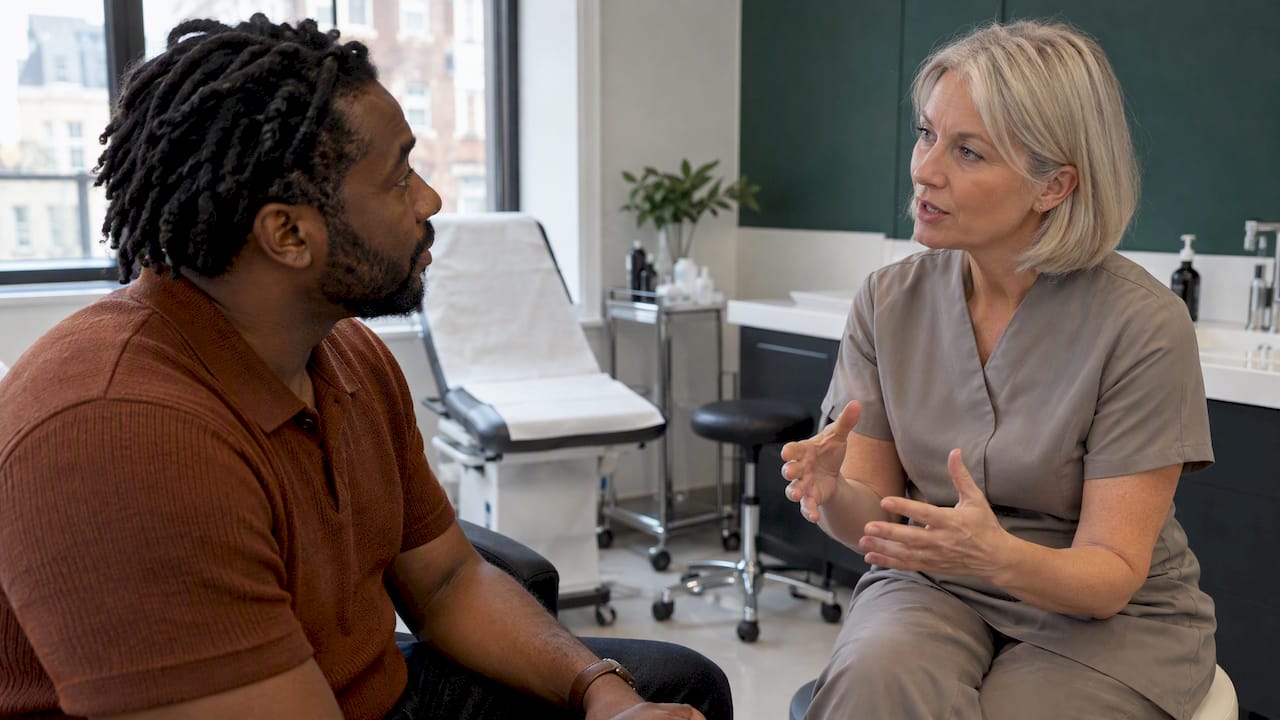
A proper consultation should come before any injections. This is the point at which your practitioner assesses how your face moves, where lines form, whether there is asymmetry and what kind of result would suit you. Photographs may be taken for clinical assessment, and the treatment plan should be explained clearly, including expected results, limits and aftercare.
The injections themselves are usually quick. Small amounts of product are placed into carefully selected muscles using a very fine needle. Most patients find the treatment manageable, with only mild discomfort that lasts seconds. You can usually return to normal daily activities soon afterwards, although you will be given aftercare advice to minimise the risk of unwanted spread or irritation.
In a medically led setting, safety is not treated as an extra. It sits at the centre of the process. Facial anatomy is complex, and precision matters. Choosing an appropriately qualified practitioner is one of the biggest factors in both safety and outcome.
How do anti wrinkle injections work when results look natural?
Natural-looking anti-wrinkle treatment is not about using the maximum amount possible. It is about using the right amount in the right place for your face. That may mean preserving a degree of forehead movement, softening rather than flattening crow’s feet, or approaching stronger muscles more gradually over a series of treatments.
This is particularly relevant for patients who have had disappointing results elsewhere. An overly heavy brow, a flat expression or an imbalanced result often comes down to poor assessment or a one-size-fits-all approach. Facial muscles do not work in isolation. Relaxing one area affects surrounding movement, which is why experience and judgement are so important.
A tailored plan also takes skin quality into account. If the skin is creased, dehydrated or losing elasticity, relaxing the muscle may help but may not be enough on its own. Combination treatment can sometimes create a more refined result, provided that it is clinically appropriate and paced properly.
Risks, side effects and realistic expectations
Anti-wrinkle injections are widely used and generally well tolerated, but they are still medical treatments. Common short-term effects include slight redness, swelling, tenderness or bruising at the injection sites. These are usually mild and settle quickly.
Less common complications can include asymmetry, heaviness in the brow or eyelid, or a result that feels weaker or stronger than expected. This is another reason follow-up matters. Sometimes a small review adjustment is appropriate once the result has fully developed.
It is also worth being realistic about what treatment can and cannot do. Anti-wrinkle injections can soften movement-related lines beautifully, but they do not replace surgery, lift very loose skin or recreate lost facial volume. Good practitioners explain those limits rather than overpromising.
For patients seeking elegant, confidence-building results, that honesty is reassuring. It means your treatment plan is being built around your face and your goals, not around a standard package.
Why consultation-led treatment matters
When patients ask how do anti wrinkle injections work, they are often really asking something broader: will this work for me, and will I still look like myself? The answer depends on assessment, technique and clinical judgement as much as the product. In a bespoke clinic environment such as The Aesthetics Room, treatment should feel considered from start to finish – medically sound, carefully planned and designed around natural enhancement rather than obvious intervention.
The most successful anti-wrinkle treatment is often the kind no one can quite identify. You simply look fresher, less tense and more like the well-rested version of yourself. If you are considering treatment, the best place to start is not with a trend or a fixed area, but with a consultation that takes your anatomy, safety and desired outcome seriously.
A subtle change, done well, can do far more for confidence than an aggressive one ever could.