

Dermal filler on Harley Street typically costs somewhere between £250 and £500 per treatment, depending on the area, the product and the practitioner. Research on UK pricing puts the London average at £330.89 per mL. Our own published prices at The Aesthetics Room run from £215 for lip filler to £450 for Sunekos. This guide explains what sits behind those numbers, so you can compare quotes properly and not just chase the lowest one.
TL;DR
- London filler pricing averages about £331 per mL in a 2025 UK industry analysis. Doctors sit lower than dermatologists and plastic surgeons.
- The price depends on the area treated, the volume, the product and who injects. A fair quote states all four.
- Our published prices include lip filler at £215-£300, jaw definition and contouring at £310 and tear trough at £360.
- Filler is temporary, but studies show some product can persist well beyond a year. Value is about how it is placed, not only what it costs.
- Check who is treating you and what happens if something goes wrong before you ask about price.
Table of Contents
- What dermal filler costs on Harley Street
- What changes the price of a filler treatment
- Is Harley Street worth the premium?
- Safety first: check before you compare prices
- How long does filler last, and what does that do to cost?
- Can filler help with jowls?
- Our perspective
- What a consultation should cover
- Book a consultation with us
- Frequently asked questions
- Sources
What dermal filler costs on Harley Street
Harley Street has a reputation for premium medicine, and the pricing broadly reflects it. A 2025 analysis of the UK aesthetic medicine market found that London clinics average £330.89 per mL. The same research reports a UK median of about £295 per mL for doctors and £302 for dentists. Dermatologists and plastic surgeons charge more, with medians of £334.95 and £347.48 per mL.
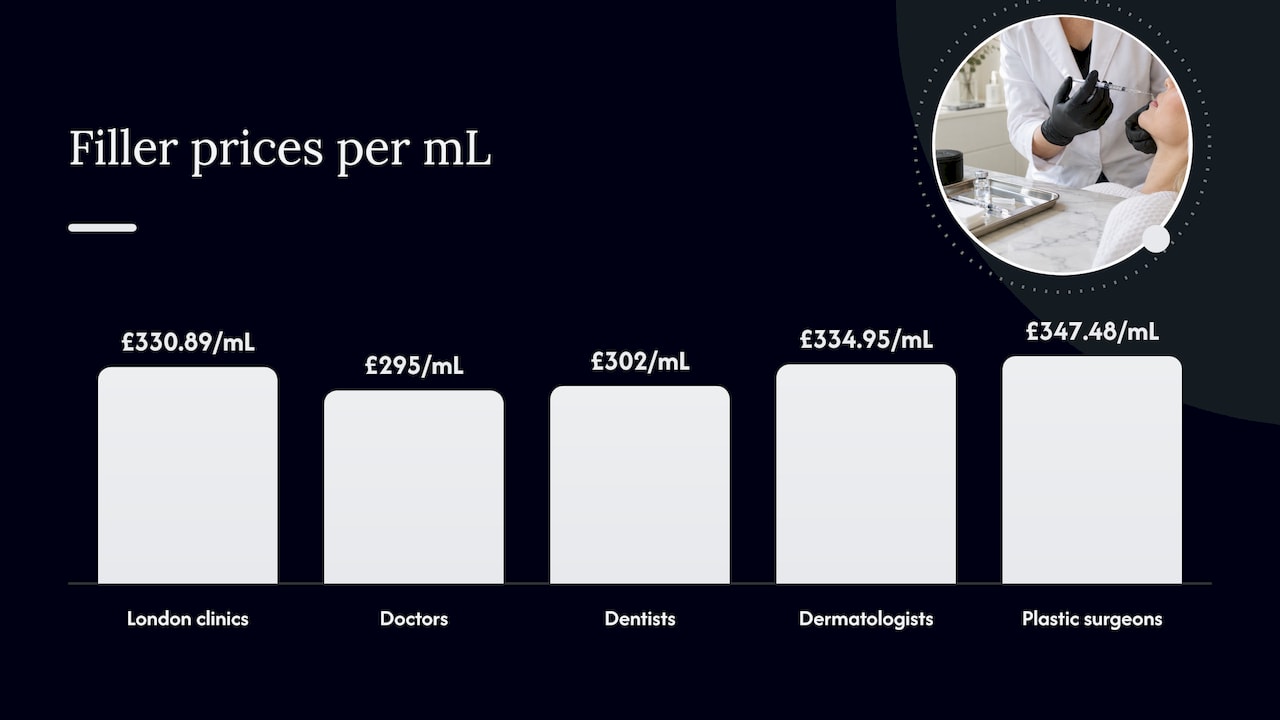
That gives you a useful reference range. If a quote comes in far below £250 for a full syringe, ask what product is used and who is injecting. If it is far above £450 for a single area, ask what is included: follow-up, a review appointment, or a complication plan.
Here is how that looks in practice.
| Area | What to expect |
|---|---|
| Lips | Often the entry point. Our lip filler is priced from £215 to £300 depending on the plan agreed at consultation. |
| Jawline and chin | Our jaw definition and contouring is £310. |
| Under-eye (tear trough) | A technically demanding area. Our tear trough treatment is £360. |
| Cheeks and midface | Usually priced per mL, so the total depends on how much structure needs restoring. |
| Skin quality | Products such as Profhilo (£350) and Sunekos (£450) are not volume fillers but are often compared with them. |
All our prices come from our published price list, which is the page to check for the current figure.
What changes the price of a filler treatment
Two clinics can quote very differently for what sounds like the same treatment. These are the reasons.
The amount of product
Filler is sold in syringes, typically 1 mL, and the amount used is the largest driver of cost. A subtle lip refresh may need half a syringe. Restoring cheek volume may need two. A good practitioner will tell you honestly if a smaller amount will do the job, and will say when a plan needs staging across more than one visit.
The product itself
Hyaluronic acid fillers differ in how firm they are, how much they hold water and how they behave in different tissue. A softer product suits lips and under-eyes. A firmer one suits the jawline and chin. Brand matters less than choosing the right product for the area, and a practitioner who explains that choice is worth more than one who simply names a premium brand.
The area and its risk
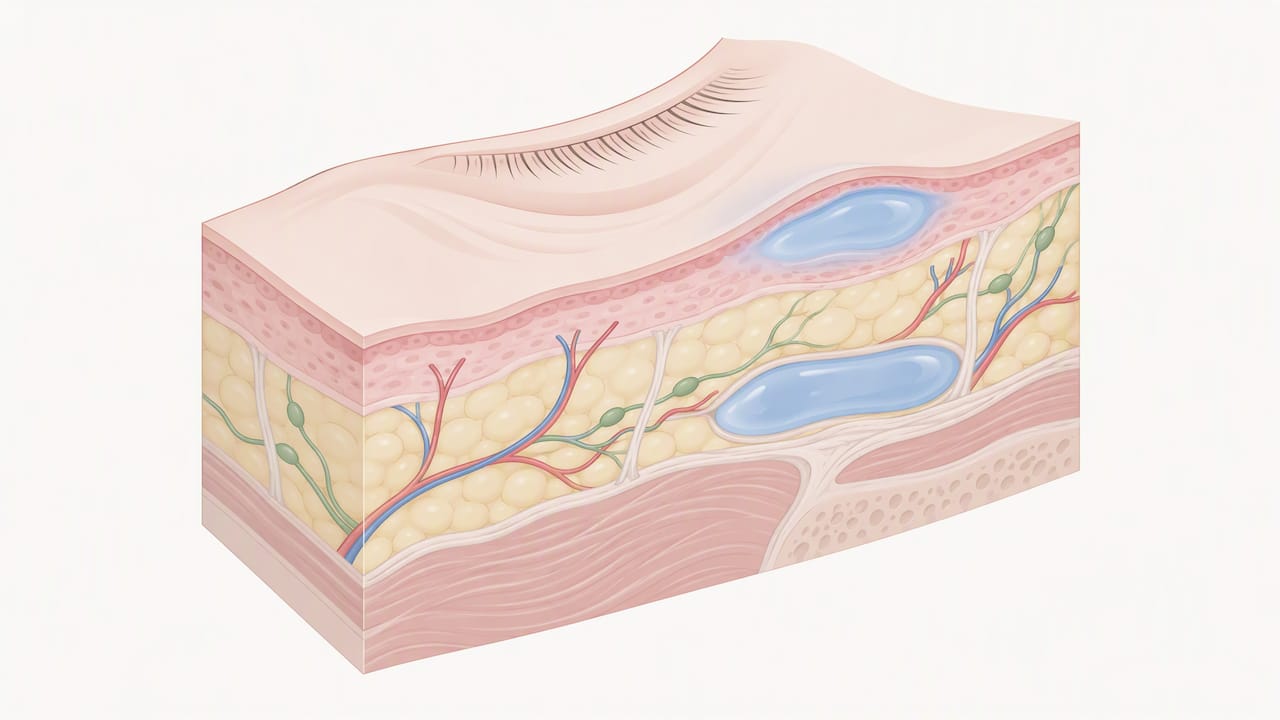
Some areas are simply harder to treat. The under-eye region has thin skin and a delicate lymphatic and vascular anatomy. Moorfields Private lists risks including a bluish tint known as the Tyndall effect and persistent puffiness when product is placed too superficially. A higher fee for a technically demanding area is not a markup. It reflects the skill involved. If you are considering this area, our guide to tear trough filler recovery sets out what swelling and aftercare to expect.
Who is injecting
The UK pricing research shows a clear gradient by profession, as noted above. Training, medical background and the ability to manage complications are part of what you pay for. We come back to this below, because it matters more than the number on the quote.
Consultation and follow-up
Some clinics charge a separate consultation fee, others fold it in. Some include a review appointment, others charge for it. Ask for the full cost to the end of the process, not just the price of the syringe.
Is Harley Street worth the premium?
Honestly, the address does not make an injection better. What you are paying for is the setting around the treatment: clinical governance, a medically led team, proper premises and an established route for dealing with problems.
The cheapest quote often removes exactly those things. A low price can be perfectly legitimate, but it is worth asking what was cut. Clinics advertising heavily on price are also under scrutiny: an audit of London cosmetic providers examined their compliance with advertising rules, which is a reminder that a polished offer is not proof of quality.
You do not need a Harley Street postcode to get safe treatment, and a Harley Street postcode alone does not guarantee it. Judge the practitioner and the clinic, not the street name.
Safety first: check before you compare prices
This is the part of the decision where a wrong choice costs far more than any price difference.
The regulatory picture
In England, there is not yet a mandatory licensing scheme for fillers and Botox. The government has set out plans: its August 2025 announcement says lower-risk treatments including Botox, lip fillers and facial dermal fillers will come under a local authority licensing system, with practitioners required to meet safety and training standards. The consultation response explains that licences would be issued by local authorities. Until the scheme is in force, you need to do the checking yourself.
What the NHS advises you to ask
The NHS guidance on choosing who will do your procedure recommends booking a consultation with the person who will actually treat you. It suggests asking how many of the procedures they have done, what qualifications and training they have, and whether they belong to a relevant professional body. Use that as your checklist.
Add these questions:
- Who will inject me, and what is their medical background?
- Is the clinic registered with the Care Quality Commission?
- Which product will be used, and why for this area?
- What is the plan if I develop a vascular complication, and who can I reach out of hours?
- What is included in the price, including any review appointment?
Know the risks
Most problems are minor. A systematic review of high-level studies found that most adverse events with hyaluronic acid filler were short-lived injection site reactions. But serious events such as vascular occlusion do happen, and the same review stresses that a practitioner’s ability to spot and respond to early warning signs matters. If you notice severe pain, skin blanching or colour change, or vision changes after treatment, contact your clinic immediately and seek urgent medical care.
Late reactions are also documented. A systematic review of lip filler adverse reactions found that reactions can occur long after the procedure, which is why follow-up matters.
How long does filler last, and what does that do to cost?
The common answer is six to twelve months, but that varies widely by product and area. A 2025 systematic review of 1,410 patients found hyaluronic acid persistence of 50-86% at 24 months in volumetric assessments, though visible results and satisfaction depend on tissue movement, injection depth and the manufacturing technology.
In practical terms:
- Mobile areas such as lips tend to need topping up sooner.
- Structural areas such as the chin and jawline often hold longer.
- Persistence of material is not the same as a visible result, so the effect you see may fade before the product has gone.
This changes how to think about cost. A £310 jaw treatment that holds well is a different proposition from a cheaper treatment you repeat several times. Compare cost per year of result, not cost per appointment.
Because filler can persist for years in some cases, it can also matter for future procedures. Research on filler longevity notes that it can interfere with later surgery. Tell any surgeon about fillers you have had.
Can filler help with jowls?
Sometimes, in the right face. Filler in the cheeks and temples can restore support and soften the look of jowling. But it is not a cure-all, and Moorfields Private notes that treating complex areas carries higher risk. For significant sagging, a professional assessment will tell you whether filler is suitable or whether a surgical opinion is the better route. A trustworthy clinic will say so, even if it means you do not book filler. Our cheek filler before and after page shows what midface treatment can realistically achieve.
Our perspective
We see the same pattern again and again. Someone searches for the lowest filler price in central London, books quickly, and later comes to us to correct or review the result. We would much rather you ask better questions first.
Our view is simple. Price is one input, and the least important of three. The first is who is treating you and what governance sits behind them. The second is whether the plan is bespoke: your anatomy, your goals, and a natural result. The third is cost, which should be clear, itemised and published.
We are registered with the CQC and a member of the ACE Group, which is dedicated to patient safety. All of our treatments are performed by medically trained professionals. We work from clinics in Knightsbridge, Harley Street and Mayfair, and we offer both in-person and virtual consultations. We publish our prices because we believe you should be able to compare before you commit.
We also believe in restraint. Filler should look like you on a good day. If a smaller amount, a different treatment or no treatment at all is the right answer, we will tell you.
— Vishul
What a consultation should cover
Before any needle, a good consultation should leave you with a clear understanding of your options. Our guide to London aesthetic consultations sets out what to expect. In short, you should come away knowing:
- Your medical history has been reviewed, including medication and previous treatments.
- Which areas will be treated, in what order, and why.
- The product, the volume and the full cost.
- The likely downtime and the aftercare.
- The risks specific to the area, and what happens if something goes wrong.
If you are comparing skin quality treatments alongside volume filler, our comparison of polynucleotides and skin boosters explains how they differ. If a lip treatment is what you are after, the choice between lip flip and lip filler is worth reading before you decide.
Book a consultation with us
If you would like a clear, itemised quote, start with a consultation. We offer virtual and in-person appointments, and you can see every current treatment price on our price list. From there, we build a plan around your face and your budget, with no pressure to treat on the day. You can also visit The Aesthetics Room to book online.
Frequently asked questions
How much does dermal filler cost in the UK?
A 2025 analysis puts the median at about £295 per mL for doctors, with higher medians for dermatologists and plastic surgeons. London averages roughly £331 per mL. Your total depends on volume, area and product, so ask for an itemised quote.
What is the most natural looking filler?
There is no single answer, because the right product depends on the area. Softer hyaluronic acid products suit mobile areas like lips, while firmer ones suit the chin and jawline. Natural results come mostly from restraint and placement, so choose a practitioner who plans conservatively and explains the choice.
How long do fillers last?
Often six to twelve months, but it varies. A 2025 systematic review found hyaluronic acid persistence of 50-86% at 24 months in volumetric assessments. Lips usually fade sooner than structural areas.
Can dermal fillers help with jowls?
They can improve the look of jowls by restoring support in the cheeks and temples, but they are not suitable for everyone. For more significant sagging, a professional assessment will tell you whether a surgical opinion is a better option.
Sources
- Mapping the UK Aesthetic Medicine Industry: Practitioner Profiles, Pricing, and Socioeconomic Gradients (PMC)
- Clinical Durability of Hyaluronic Acid-Based Dermal Fillers: A Systematic Review (PubMed)
- Adverse Events Associated with Hyaluronic Acid Filler Injection: A Systematic Review (PubMed)
- Aesthetic lip filler augmentation is not free of adverse reactions (PubMed)
- The 5 key risks of under-eye filler injections (Moorfields Private)
- Choosing who will do your cosmetic procedure (NHS)
- Crackdown on unsafe cosmetic procedures to protect the public (GOV.UK)
- The licensing of non-surgical cosmetic procedures in England: consultation response (GOV.UK)
- Cosmetic business mechanics in London: ASA compliance audit