
Lymphatic drainage is gentle, but it is not right for everyone, and not on every day. You should not have it with an active infection or cellulitis, an untreated blood clot, uncontrolled heart, kidney or liver failure, active cancer in the area, or within six weeks of finishing radiotherapy to that area. Some of these are permanent reasons to say no. Many are only reasons to wait.
Below, we set out the absolute and relative contraindications, the questions a good practitioner will ask you, what “going wrong” really looks like, and when to see your GP first.
TL;DR
- Do not have lymphatic drainage with active infection or cellulitis, untreated DVT or pulmonary embolism, uncontrolled heart, kidney or liver failure, or active cancer in the treated region.
- Wait six weeks after radiotherapy before treatment over the affected area, and see your GP about any new or unexplained lump.
- Swelling needs a diagnosis first. Leg, ankle or arm swelling can come from heart, vein or kidney problems, so get it checked before you book a “detox” session.
- Minor, short-lived effects are common after manual therapy. Serious harm is rare, and a thorough consultation lowers the risk further.
- Choose a medically led setting where a clinician screens your history before the first session.
Table of Contents
- What lymphatic drainage does, and why that creates contraindications
- Absolute contraindications: do not go ahead
- Cancer, radiotherapy and lymph node surgery
- Relative contraindications: proceed only with clearance
- Swelling is a symptom: get it explained first
- Can lymphatic drainage go wrong?
- Technique matters as much as your health
- Our approach to screening
- Questions to ask before you book any lymphatic drainage
- Book a consultation at The Aesthetics Room
- FAQ
- Sources
What lymphatic drainage does, and why that creates contraindications
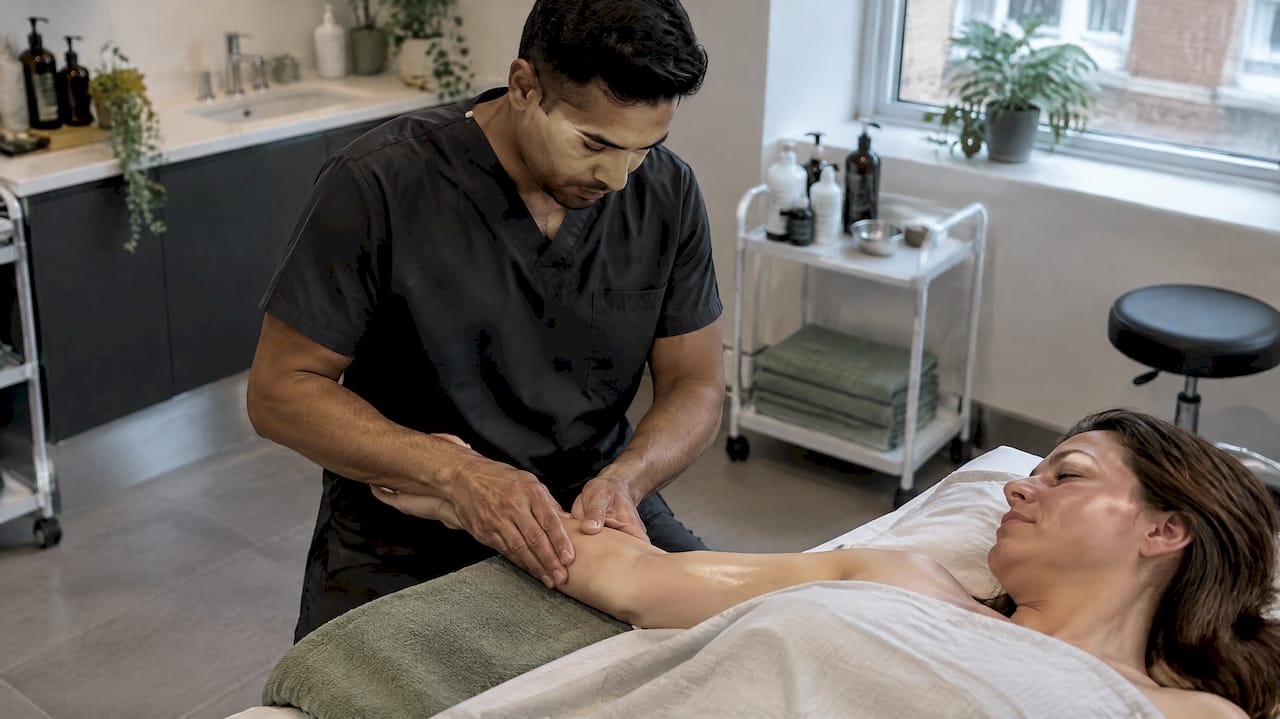
Your lymphatic system carries fluid away from the tissues. Lymphatic drainage uses light, slow, rhythmical strokes to encourage that fluid to move towards areas that drain more freely. The Royal Marsden explains that manual lymphatic drainage (MLD) is distinct from therapeutic massage. Deeper massage increases blood supply, which can increase lymph fluid production and worsen swelling. MLD aims to stimulate the lymph vessels without that effect.
That is exactly why the contraindications exist. Moving fluid is a real physiological effect. If the fluid is infected, if the heart cannot cope with extra fluid returning to the circulation, or if a clot or tumour sits in the pathway, shifting it can do harm.
Two practical points follow:
- Lymphatic drainage is a technique, not a general relaxation massage. Pressure, speed and direction all matter.
- The right question is not only “is this safe?” but “is this safe for this part of my body, today?”
Absolute contraindications: do not go ahead
NHS clinical guidance on lymphatic compression therapy lists absolute contraindications that are a useful guide to the same principles in hands-on drainage. In plain English:
| Condition | Why it matters |
|---|---|
| Active infection or acute skin inflammation, such as cellulitis | Drainage over an infected or inflamed area risks spreading infection |
| Untreated deep vein thrombosis (DVT) or pulmonary embolism | Moving tissue and fluid near a clot is a risk, so the clot must be treated first |
| Uncontrolled severe heart, kidney or liver failure | The body may not cope with extra fluid returning to the circulation |
| Active metastatic disease in the region | Stimulating a region with active cancer is not appropriate without specialist agreement |
| Ischaemic vascular disease | Poor arterial blood supply makes the tissues vulnerable |
| Open wounds or pulmonary oedema | Broken skin and fluid on the lungs both rule treatment out |
Infection and cellulitis
This is the one most people have heard of, and rightly. An NHS hospital leaflet on daily lymphoedema care states that drainage should never be done over an inflamed or infected area, including during a cellulitis flare-up, because it risks spreading the infection. If an area is hot, red, painful or you feel feverish, postpone and contact your GP or NHS 111.
Blood clots
DVT and pulmonary embolism are on the NHS guidance list. The same guidance refers to a window of six weeks for untreated clots. A calf that is suddenly swollen, warm and painful on one side needs urgent medical assessment, not a massage. Do not book treatment while you wait to find out.
Heart, kidney and liver failure
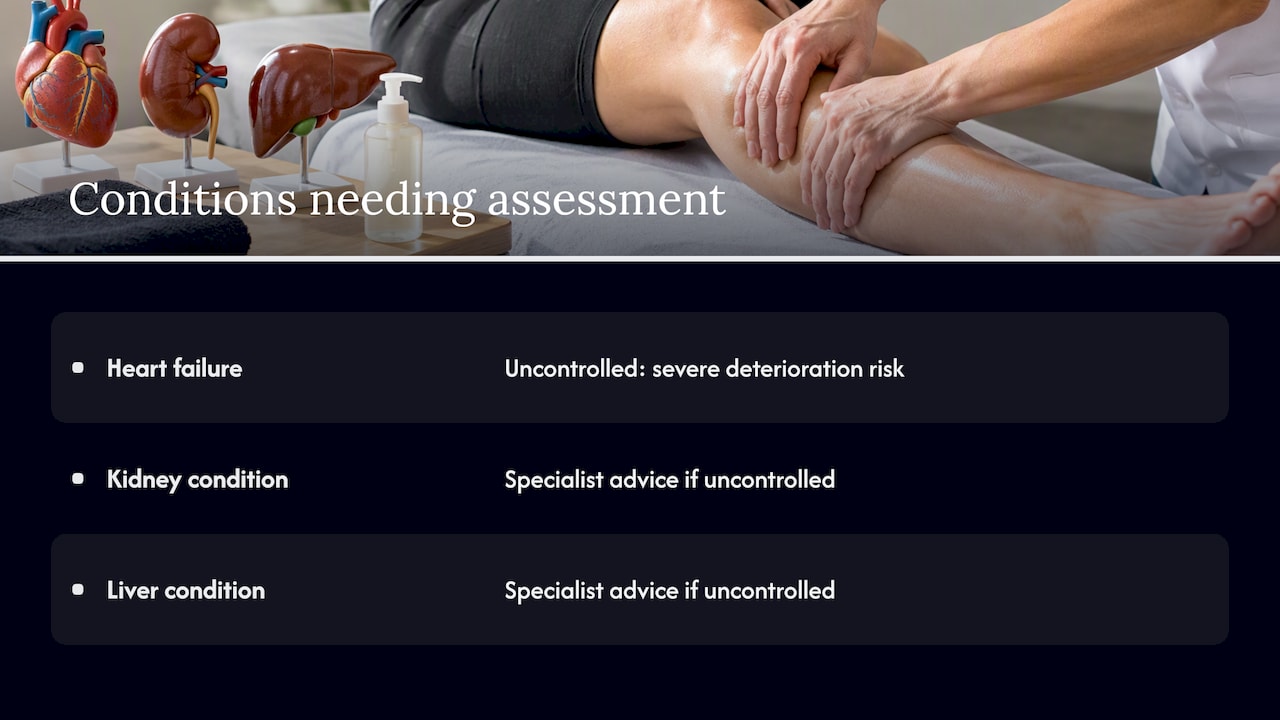
Healthcare professionals stress that lymphatic drainage should follow a thorough medical assessment to exclude other causes of swelling, such as uncontrolled heart failure. Stimulating drainage in these patients can lead to severe clinical deterioration. If you have been told your heart, kidney or liver condition is not well controlled, speak to your specialist before any lymphatic treatment.
Cancer, radiotherapy and lymph node surgery
This is the area where reader questions are most anxious, and where individual advice matters most.
- Active cancer. Active or untreated cancer is on the standard lists of reasons to avoid lymphatic massage, and active metastatic disease in the treated region is an absolute contraindication in the NHS guidance above. Your oncology team should decide if and when drainage is appropriate.
- After radiotherapy. Clinical guidance sets a six-week wait after radiotherapy before lymphatic drainage over the treated area. Ask your oncology team to confirm that date rather than counting it yourself.
- New lumps. The same leaflet tells patients with new or unexplained lumps to contact their GP or clinician straight away. A lump is a reason to be examined, not massaged.
- Lymph nodes removed or radiated. If you are at lifelong risk of lymphoedema, the Royal Marsden advises that your risk is limited to the area where drainage was affected. You should avoid blood tests, injections and blood pressure readings in that limb where possible.
If you have lymphoedema already, treatment belongs with a specialist lymphoedema service, not a beauty appointment. The Lymphoedema Support Network is clear that unproven alternative therapies should never replace established clinical care: compression, skin care, exercise and qualified lymphatic drainage.
Relative contraindications: proceed only with clearance
A relative contraindication does not mean “never”. It means the treatment may need adapting, delaying or a doctor’s agreement first. The NHS guidance flags caution for:
- Peripheral neuropathy, where reduced sensation means you may not notice discomfort.
- Fragile skin, which can be damaged by even light contact.
- Extreme limb deformity, which changes how the technique can be applied.
Other situations a careful practitioner will ask about include:
- A recent fever or feeling generally unwell
- Recent surgery or injury in or near the treatment area
- Any new, unexplained swelling, pain or skin change
- Long-term conditions such as heart disease, kidney disease or circulation problems
- Current cancer care, or cancer care in the past
- Blood-thinning or other prescribed medication
None of that list means you cannot be treated. It means the practitioner needs your full history before they decide. Be honest and complete, even if something feels unrelated.
Swelling is a symptom: get it explained first
This is the most overlooked contraindication in practice. People book drainage because their legs feel heavy, their ankles swell or their face looks puffy. But swelling has many causes, and some of them are serious.
The Lymphoedema Support Network describes excess fluid in the tissues as arising whenever filtration exceeds drainage, with multiple possible factors in ill health. In plain terms, the same visible puffiness might be lymphatic, venous, cardiac, kidney-related or medication-related.
See your GP before treatment if you have:
- Swelling in one leg or arm that appeared suddenly
- Swelling that does not go down overnight
- Breathlessness with swelling, or swelling together with chest pain
- Skin that is hot, red, tight or weeping
- A new lump in the neck, armpit or groin
Breathlessness or chest pain with leg swelling is an emergency. Call 999.
Can lymphatic drainage go wrong?
In a properly screened client, serious problems are uncommon. A systematic review of manual therapy found the risk of major adverse events is low, at roughly 0.13%. The same review found that many patients can have minor to moderate, short-lived effects afterwards, up to 41% in cohort studies. Those figures cover manual therapy in general, not lymphatic drainage specifically, so treat them as context rather than a forecast.
In practice, the following are the effects people mention:
- Tiredness or light-headedness afterwards
- Needing the loo more often
- Mild tenderness in the treated area
What should worry you is different: increasing pain, spreading redness, heat, fever, new swelling in one limb, or breathlessness. Contact your GP or NHS 111, or call 999 if it is severe. Tell the clinic as well.
Technique matters as much as your health
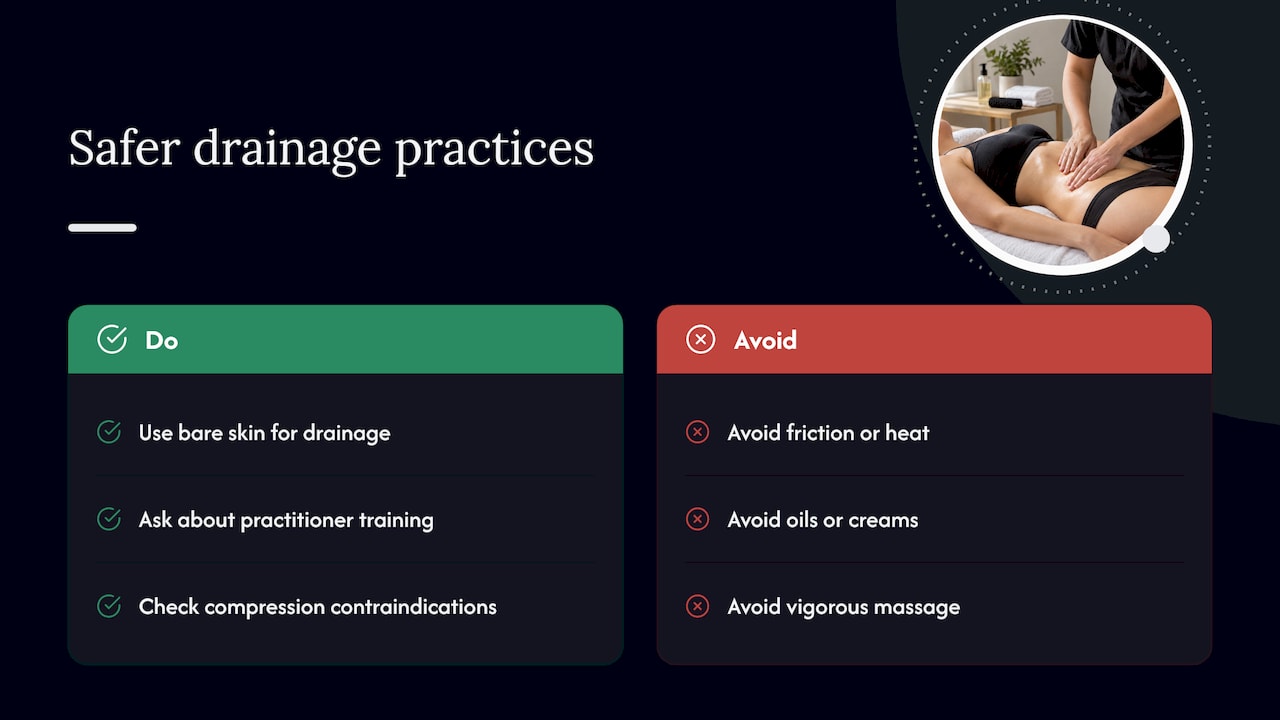
A poorly delivered session can be unhelpful even in a healthy person. The Royal Marsden notes that techniques producing friction or heat can prompt the body to make more lymph fluid, potentially worsening the very swelling you hoped to reduce. A deep, vigorous “lymphatic massage” is therefore not a stronger version of the real thing. It is a different treatment.
The same NHS guidance on simple lymphatic drainage says it should be done on bare skin without oils or creams. If your practitioner uses heavy oils and firm pressure and calls it drainage, ask what training they have.
Compression-based approaches have their own rules too. If you are weighing them up, this lymphatic compression therapy guide explains the clinical side. An NHS leaflet on intermittent pneumatic compression lists its own contraindications, including active curative cancer treatment such as chemotherapy or radiotherapy.
Our approach to screening
We are a medical aesthetics clinic, and we treat lymphatic drainage as a medical-style treatment that begins with questions, not with the couch. Here is how we think about it.
- History before treatment. We want to know about infections, clots, heart, kidney and liver conditions, cancer care, surgery and medication before we recommend anything.
- Medically trained practitioners. All treatments at the clinic are performed by medically trained professionals, and we are CQC registered and members of the ACE Group, which is dedicated to patient safety.
- A “not today” is part of the service. If your history points to a risk, we will postpone, adapt or ask you to speak to your GP or specialist first. We would rather lose a booking than put you at risk.
- Bespoke plans. Lymphatic drainage can sit within a wider, personalised plan alongside skin and wellbeing treatments, and we choose the order with your safety first.
- Virtual consultations. If you are unsure whether you are suitable, a virtual consultation lets us go through your history before you travel to Knightsbridge, Harley Street or Mayfair.
The most useful thing a client can bring to us is a complete picture of their health, including the parts they assume are irrelevant.
— Vishul
Questions to ask before you book any lymphatic drainage
- Who will perform the treatment, and what is their medical or clinical training?
- Will I complete a health questionnaire and consultation before the first session?
- What would make you postpone or refuse treatment?
- Is the clinic regulated, and by whom? (In England, check the CQC register.)
- What aftercare and who to contact will I be given if I feel unwell?
A clinic that welcomes these questions is the one to trust.
Book a consultation at The Aesthetics Room
If you want advice on whether lymphatic drainage suits you, start with a consultation. We will review your history, explain what is suitable and what is better left until later, and build a plan around you. You can see our full range of treatments and published prices on our price list, or find out more about the clinic on our website.
FAQ
Who can’t have lymphatic drainage?
People with active infection or cellulitis, an untreated DVT or pulmonary embolism, uncontrolled severe heart, kidney or liver failure, or active cancer in the treatment area should not have it. Anyone who has recently completed radiotherapy should wait six weeks for the treated area. Your GP or specialist can confirm your own position.
Is lymphatic massage safe if I have lymphoedema?
Lymphoedema is best managed by a specialist lymphoedema service using compression, skin care, exercise and trained lymphatic drainage. A general beauty session is not a substitute. Speak to your lymphoedema team before booking anything.
Can lymphatic drainage massage go wrong?
Serious harm is rare in properly screened people, but minor, short-lived effects such as tiredness or tenderness are common after manual therapy. Problems are more likely when contraindications are missed or the technique is too forceful. Seek medical help for spreading redness, fever, one-sided limb swelling or breathlessness.
Should I see my GP before lymphatic drainage?
Yes, if you have unexplained or sudden swelling, a new lump, a heart, kidney or liver condition, or have had cancer treatment. Swelling can have causes that need diagnosis and treatment first. If you are healthy and simply curious, a consultation with a medically trained practitioner is a sensible starting point.
Sources
- NHS clinical guidance on lymphatic compression therapy (Weston Area Health NHS Trust)
- Lymphoedema: guidance on daily care (NHS leaflet)
- Intermittent pneumatic compression (NHS leaflet)
- Upper Limb Simple Lymphatic Drainage (Worcestershire Acute Hospitals NHS Trust)
- Lymphatic drainage (The Royal Marsden)
- Lymphoedema (The Royal Marsden)
- Adverse events and manual therapy: a systematic review
- Alternative therapies for the management of lymphoedema (Lymphoedema Support Network)
- Commissioning guidance for lymphoedema services for adults in the UK
- Oedema in advanced disease (Lymphoedema Support Network)