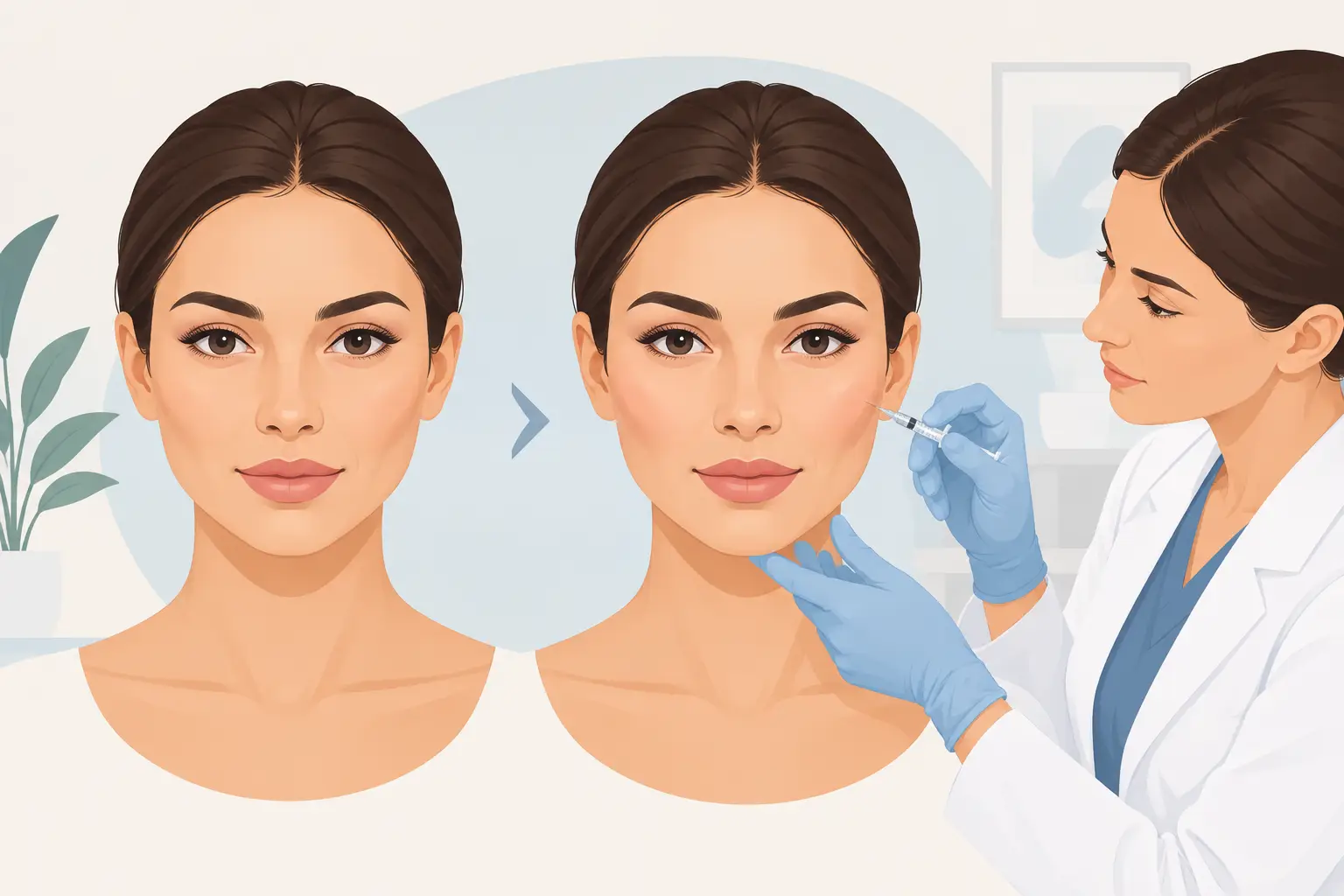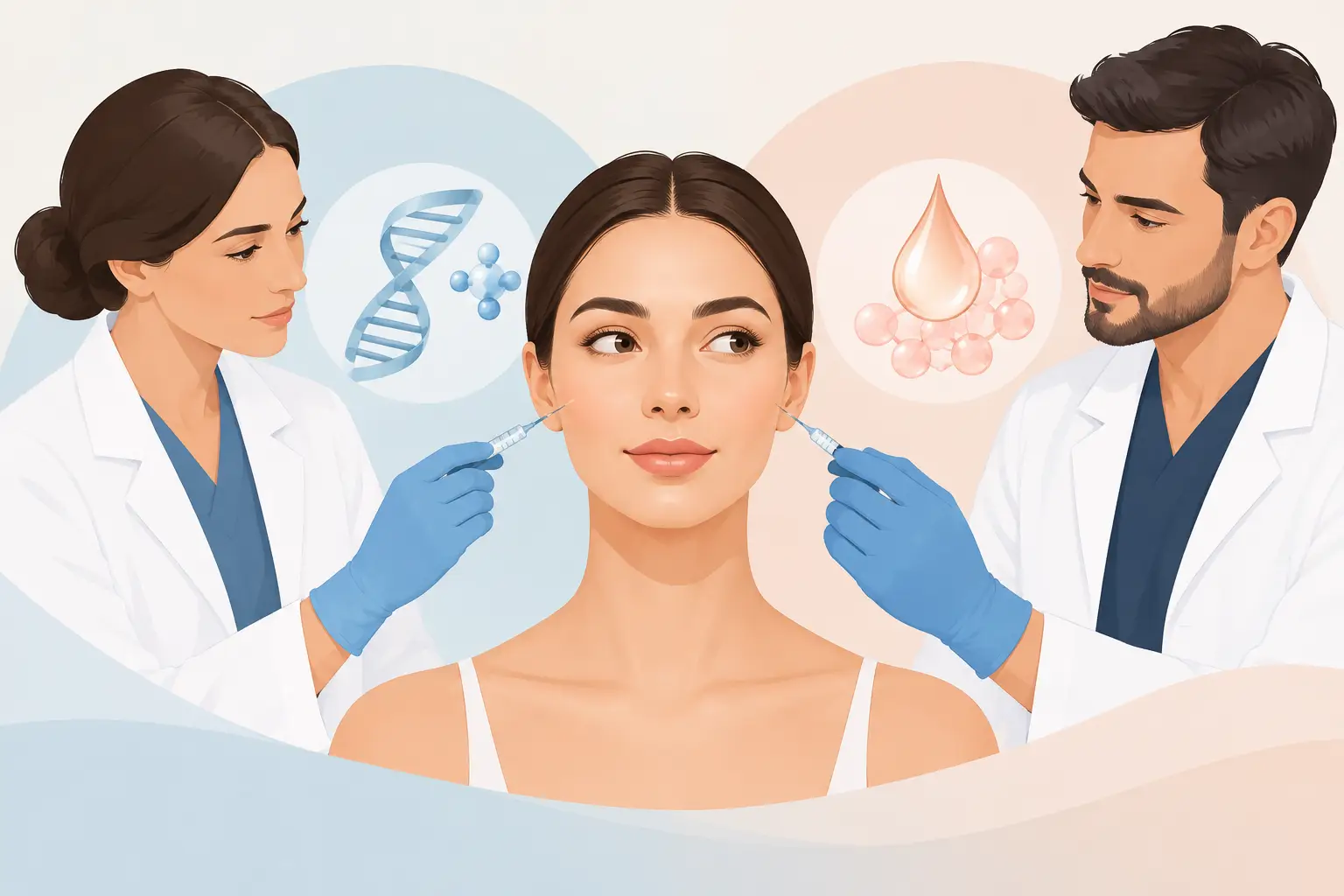


PRP can help some women with hair thinning after pregnancy, but for shedding that is purely postpartum it is often unnecessary. Postpartum shedding is usually temporary and settles on its own. PRP earns its place when thinning lasts beyond the expected window, or when a consultation shows another cause is involved, such as hormone-related pattern thinning or chronic shedding.
This guide explains what is happening to your hair, what the research says about platelet-rich plasma, what to rule out first and what to expect from treatment at our London clinic.
TL;DR
- Postpartum hair loss is a form of telogen effluvium. It typically starts 2 to 5 months after birth and usually recovers within 6 to 9 months, according to the British Association of Dermatologists.
- PRP has randomised trial evidence in women with hair loss, but not specifically for acute postpartum shedding. It is not a quick fix.
- Check for iron deficiency and other triggers before paying for a multi-session course.
- If you are breastfeeding, discuss timing and any medicines with your clinician before starting.
- Our PRP Hair treatment is priced at 450 GBP per session, and a consultation comes first.
Table of Contents
- What is actually happening to your hair
- Does PRP work for postpartum hair loss?
- Wait, or act? A practical way to decide
- What to rule out before PRP
- PRP, breastfeeding and safety
- Perspective: how we approach postpartum hair concerns
- What a PRP hair session involves
- Other options to discuss at consultation
- PRP hair treatment at The Aesthetics Room
- Questions to ask any clinic before you book
- FAQ
- Sources
What is actually happening to your hair
During pregnancy, higher oestrogen levels keep more hairs in the growth phase (anagen) for longer. Many women notice thicker hair. After birth, hormones drop and a large number of follicles move together into the resting phase (telogen) and then shed. This is why the loss feels sudden and heavy rather than gradual.
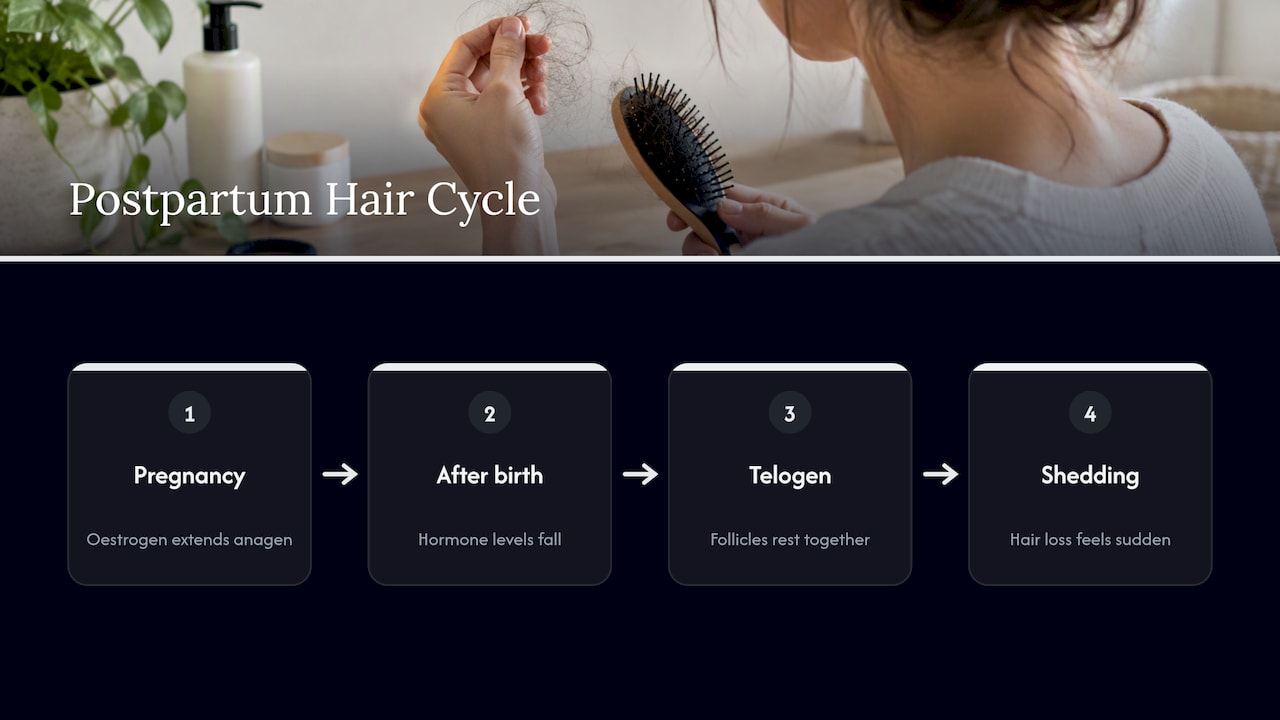
The NHS describes hair loss in women and how to cope with it, and the medical name for this reactive shedding is telogen effluvium. It is a diffuse thinning across the scalp, not bald patches.
How much shedding is normal
Most people lose around 100 hairs a day. With telogen effluvium the BAD notes it can reach up to 300 a day. That is why a hairbrush, plughole or pillow can look alarming.
The usual timeline
| Stage | What you notice |
|---|---|
| Birth to 2 months | Hair often feels full, the shedding has not started yet |
| 2 to 5 months | Shedding begins, often noticeably at the temples and hairline |
| 6 to 9 months | Shedding slows and recovery typically begins |
| After 9 months | Short regrowth hairs appear, and if there is no sign of recovery it is time for a medical review |
The timings come from the BAD guidance. Individual experience varies, and regrowth hairs start short, so they can look like flyaways before they add up to visible density.
Does PRP work for postpartum hair loss?
Platelet-rich plasma is made from a small sample of your own blood. It is spun to concentrate the platelets, which carry growth factors, and the plasma is then injected into the scalp. The aim is to support follicles and encourage thicker, healthier growth.
Here is what the research does and does not tell us.
What the evidence supports
A systematic review and meta-analysis of randomised controlled trials looked at PRP in female hair loss. It reported improvements in hair density and thickness across various trials, and adverse effects were generally mild and temporary. A pilot randomised, double-blind trial in women with chronic telogen effluvium also examined safety and efficacy in a closely related condition. A wider meta-analysis in alopecia covered androgenetic alopecia and alopecia areata.
What it does not show
These studies are mostly about chronic hair loss conditions. None of them tell us that PRP speeds up the recovery of a normal postpartum shed, which is self-limiting. The review itself calls for more extensive controlled studies. Results also depend on the protocol: how often sessions are given and how the plasma is prepared. Improvements are typically seen over several months of repeated sessions, not after one visit.
That is our honest position. PRP is a promising treatment, but it is the right choice for the right patient, at the right time.
Wait, or act? A practical way to decide
If your shedding began a few months after birth, is spread evenly across the scalp and your baby is under about nine months, the most reasonable plan is usually to wait, look after your general health and have the right checks. Dermatological advice for telogen effluvium centres on reassurance and finding any aggravating factors rather than immediate intervention.
Consider a professional assessment sooner if any of these apply:
- Thinning is not recovering after 6 to 9 months.
- Your parting is widening or you see a clear pattern of thinning on the crown, which may point to female pattern hair loss rather than postpartum shedding alone.
- The shedding is in distinct, round patches. This needs medical evaluation, since patchy loss can indicate conditions such as alopecia areata.
- Your scalp is sore, scaly, scarred or very itchy.
- You feel exhausted, breathless or generally unwell, which can accompany low iron.
- The loss is affecting your confidence or mood in a way that is hard to manage.
Points 3 and 4 are best seen by a GP or dermatologist first. If there is no recovery by 6 to 9 months, the BAD advice is to move from cosmetic care to a clinical evaluation. We would rather you had the right diagnosis than a treatment that does not fit.
What to rule out before PRP
A good PRP plan starts with a conversation, not a needle. The most common contributors to prolonged shedding after birth are:
- Iron deficiency. It is very common after pregnancy and delivery, and it can make shedding heavier or longer. Ask your GP about a blood test, including ferritin.
- Thyroid changes. Thyroid problems can occur after pregnancy and affect hair. A GP blood test can check this.
- Low vitamin D or other nutritional gaps. Reduced appetite, restrictive eating or broken sleep can all play a part.
- Underlying pattern hair loss. Pregnancy can unmask thinning that was developing already.
- Stress and sleep loss. These do not cause postpartum loss alone but can prolong a shedding episode.
The point of this step is simple. If iron or thyroid is the driver, correcting it matters far more than any injectable treatment. At our clinic, we ask about these factors in consultation and encourage you to see your GP for tests where they are relevant.
PRP, breastfeeding and safety
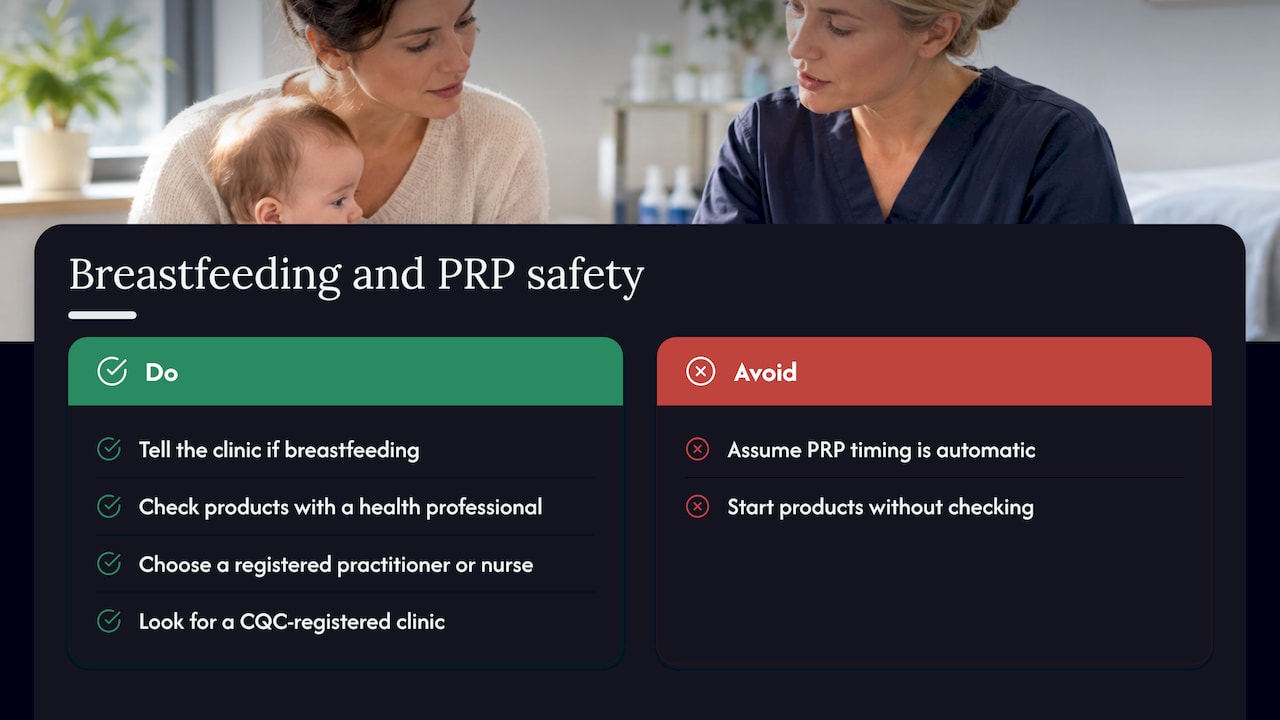
PRP uses your own blood, so it does not add a drug to your system in the way a prescription tablet does. That does not mean timing is automatic. Whether you should start while breastfeeding depends on your health, your medication and how you are feeling, and it is a decision to make with a clinician who has your full history.
If you are breastfeeding, tell us at the consultation. Check any medicine, supplement or topical product with your GP, midwife, health visitor or pharmacist before starting it. Evidence on safety in nursing infants is lacking for many hair loss medicines, which is one reason a medically led assessment matters.
Because PRP involves handling blood products, sterile technique and practitioner credentials matter. PRP should be carried out by a registered medical practitioner or nurse. Look for a clinic that is registered with the Care Quality Commission (CQC) and open about who will treat you. The CQC regulations set the framework for regulated healthcare activities in England.
Perspective: how we approach postpartum hair concerns
Many women come to us a few months after birth, worried and looking for a solution. Our first job is not to sell a course of treatment. It is to work out whether you need one.
We are a medically led clinic, registered with the CQC and a member of the ACE Group, which is dedicated to patient safety. Our approach is bespoke: we look at both the external picture, such as your scalp, density and hair cycle, and the internal factors, such as iron levels, nutrition, stress and recovery from birth.
If your shedding is typical postpartum telogen effluvium and you are within the usual window, we will tell you so. We may suggest supporting your general health, repeating a review in a few months and having your GP check relevant bloods. If your thinning is lasting, patterned or affecting your confidence, PRP can be a sensible part of a plan, alongside other options in our hair restoration range.
We also believe in setting expectations clearly. PRP is not instant. Hair grows slowly, and any visible change takes months and more than one session. Reassurance, a proper assessment and a realistic timeline are as much a part of the treatment as the injection.
— Vishul
What a PRP hair session involves
It helps to know what to expect before you book.
- Consultation. We review your history: birth date, breastfeeding, medications, iron and thyroid results, family history of hair loss and your hair care habits. We examine the scalp and discuss whether PRP is appropriate. Virtual and in-person consultations are available.
- Blood draw. A small blood sample is taken, as for a routine blood test.
- Preparation. The sample is processed to concentrate the platelet-rich plasma.
- Scalp treatment. The plasma is injected into the areas of thinning. Your practitioner will talk you through comfort measures.
- Aftercare. You will receive instructions on washing, styling and activity. Mild, short-lived effects such as tenderness are the kind of reaction the trials report.
- Review. Progress is judged over months, not days, so a follow-up is planned with you.
Will it make my hair shed more?
Some people notice temporary increased shedding after PRP as follicles reset and finer hairs are released. If you are already shedding postpartum, this can be unsettling, which is another reason timing is worth discussing. Tell your practitioner about any change that worries you.
Other options to discuss at consultation
PRP is one tool among several. Depending on your assessment, we may talk about:
- Vitamin Hair Therapy, a nutrient-focused treatment to support the scalp environment.
- A Medical Skincare Prescription, where appropriate, as part of a wider plan.
- Lifestyle and nutrition steps, such as eating enough protein and iron-rich foods and addressing sleep where you can.
- Gentle hair handling. Avoid tight hairstyles and excessive heat while hair is fragile. NHS guidance on coping with hair loss as a woman includes practical tips for styling and confidence.
None of these replaces a medical review if something looks different from ordinary postpartum shedding.
PRP hair treatment at The Aesthetics Room
Our published prices are listed on our price list. The treatments most relevant to hair concerns are:
| Treatment | Price |
|---|---|
| PRP, Hair | 450 GBP per session |
| PRP, Facial Hair | 258 GBP per session |
| Vitamin Hair Therapy | 218 GBP per session |
| Medical Skincare Prescription | 50 GBP |
We treat clients at our clinics in Knightsbridge, on Harley Street and in Mayfair. Every treatment is performed by a medically trained professional, and we begin with a consultation so the plan fits you.
If you would like to know whether PRP is right for you, or whether waiting is the better choice, book a consultation with us. We are happy to give you a straight answer either way.
Questions to ask any clinic before you book
Whichever clinic you choose, these questions protect you:
- Is the clinic registered with the CQC, and who exactly will treat me?
- What are the practitioner’s medical qualifications?
- Will you assess my iron, thyroid and hair pattern, or ask for recent test results, before recommending PRP?
- How many sessions do you expect I will need, and what does the whole course cost?
- How will we measure progress, and when will we decide to stop if there is no change?
- Is it suitable while I am breastfeeding, and what would you want me to check with my GP?
A clinic that welcomes these questions and sometimes advises you to wait is a clinic worth trusting.
FAQ
When does postpartum hair loss stop?
For most women it begins 2 to 5 months after birth and recovers within 6 to 9 months, according to the BAD. Regrowth first appears as short new hairs along the hairline. If you see no sign of recovery by then, speak to your GP or a dermatologist.
Is PRP worth it for hair loss after pregnancy?
It depends on the cause and the timing. For normal postpartum shedding, which resolves by itself, it is often unnecessary. For thinning that persists or follows a pattern, trial evidence in women suggests PRP can improve density and thickness over several sessions, so a consultation is the right place to decide.
Can I have PRP while breastfeeding?
PRP uses your own blood rather than a medication, but it is still a medical decision to take with a clinician who knows your history. Tell us you are breastfeeding at the consultation, and check any medicine or supplement with your GP or pharmacist.
How many PRP sessions will I need?
That depends on your assessment and the protocol used. Research points to improvement over several months of consistent, multi-session treatment rather than one visit. We will explain the plan and the cost of each session before you commit.
Should I get blood tests first?
Yes, where possible. Iron deficiency is common after pregnancy and can prolong shedding, and thyroid changes can also affect hair. Ask your GP for the relevant tests and bring the results to your consultation.
Sources
- Telogen effluvium, British Association of Dermatologists
- Women and hair loss: coping tips, NHS
- Effectiveness of platelet-rich plasma in treating female hair loss: systematic review and meta-analysis, PubMed
- PRP in female chronic telogen effluvium: randomised, double-blind pilot trial, PubMed
- Platelet-rich plasma for the treatment of alopecia: systematic review and meta-analysis, PubMed
- The Care Quality Commission (Reviews and Performance Assessments) Regulations 2018, legislation.gov.uk