
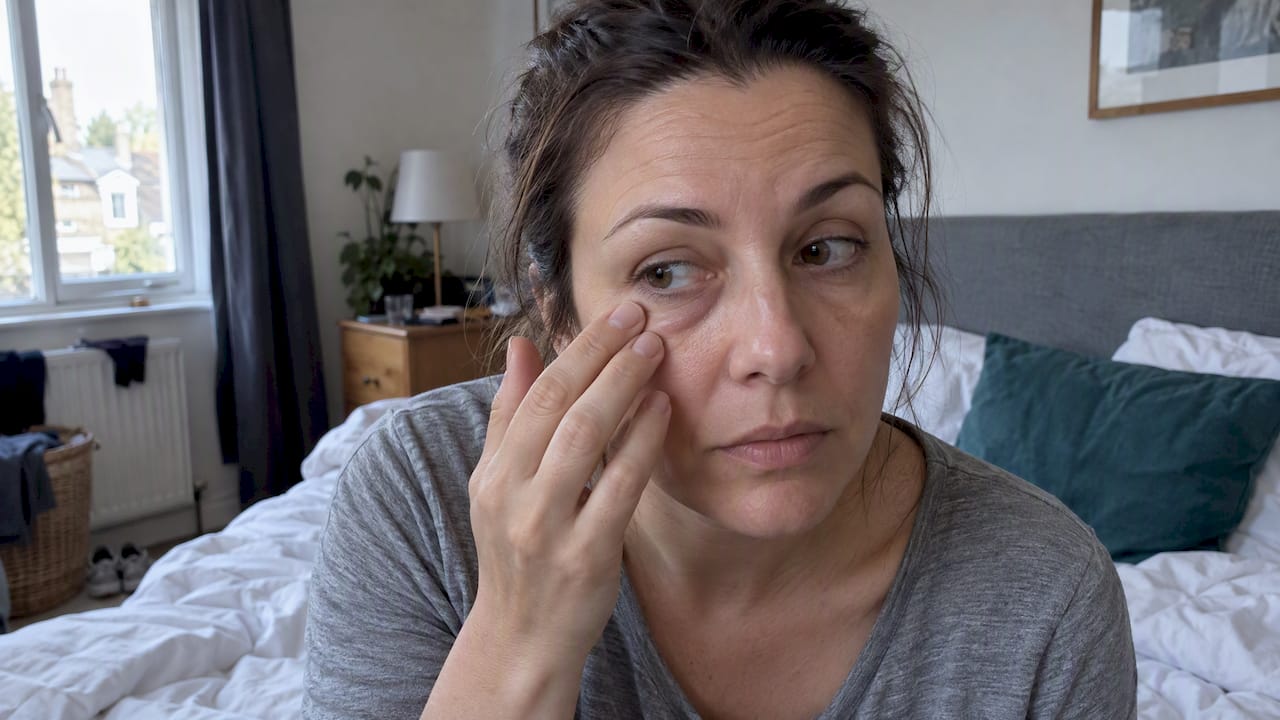

After tear trough filler most people have only mild swelling and bruising that peaks in the first 48–72 hours and improves over 7–14 days. Everyday activities usually continue, though strenuous exercise is best avoided for 24–72 hours. Contact your clinic immediately for severe pain, a sudden change in skin colour or any vision problems.
TL;DR:
- A 2023 meta analysis of 2,556 participants reported swelling in 19.2%, bruising in 18.4%, and overall satisfaction of 91.0% after hyaluronic acid injections.
- Use wrapped cold packs for 20 minutes at a time and elevate your head; avoid heat, facial pressure, and strenuous exercise for 24–72 hours.
- Report a persistent dull ache, a nonfading dark patch, or increasing redness, warmth, pus, or fever promptly; these may signal a complication or infection.
- Book a review at 2–4 weeks for persistent puffiness or lumps; clinicians usually assess the final appearance around 4–6 weeks.
- Hyaluronic acid filler can be dissolved with hyaluronidase; results typically last 9–18 months, though some products or people reach 24 months or retain filler longer.
Table of Contents
- What does tear trough filler recovery look like week by week?
- How common are swelling and bruising after tear trough filler?
- What should you do in the first 48 hours and the two weeks after?
- Which symptoms need urgent clinic contact or emergency care?
- When does the area settle, and how long do results last?
- Why can you trust this recovery guidance?
- How do recovery needs differ between types of filler?
- How do we manage complications such as malar oedema?
- When and how should you book a follow-up appointment?
- A clinic perspective on expectations and reassurance
- Book your tear trough treatment and follow-up with us
- FAQ
- Sources
What does tear trough filler recovery look like week by week?
Recovery follows a predictable pattern, and knowing it helps you tell normal healing from something that needs a call to us.
- 0–48 hours: swelling is at its peak, the area feels tender, and bruising may appear. Apply cold compresses and keep your head elevated.
- As recovery progresses: swelling reduces and bruises fade. Avoid pressure on the area, including rubbing your eyes or resting your face on a pillow edge.
- Weeks 2–6: the filler settles and matures. Small irregularities or mild lingering puffiness can continue to improve during this phase. If anything still bothers you, a clinician review at 2–4 weeks is the usual point to check it.
Guidance written for eyelid surgery gives a useful comparison: swelling and bruising commonly increase for the first three days and then improve. Your pace will depend on your skin, your anatomy and how much product was placed.
How common are swelling and bruising after tear trough filler?
Swelling and bruising are the two effects you are most likely to notice. A 2023 meta-analysis of hyaluronic acid tear trough injections reported a pooled swelling or oedema rate of 19.2% and a pooled bruising rate of 18.4%.
Pooled rates of 19.2% for swelling and 18.4% for bruising come from that analysis of 2,556 participants, which also reported 91.0% overall satisfaction. Most of these effects are short-lived and manageable.
The same systematic review and meta-analysis supports a generally low risk profile alongside high patient satisfaction. What each effect usually looks like:
- Swelling: soft puffiness under the eyes, often worse in the morning, that eases over days to a couple of weeks.
- Bruising: purple, blue or yellowing patches. Blepharoplasty guidance notes that bruising typically resolves within two weeks. Cold packs help, and we can advise on arnica if it suits you.
- Less common issues: early contour irregularities and bluish discolouration (the Tyndall effect) occur less often than swelling, according to a major review of periorbital filler complications. Persistent lumps are also possible and are worth showing us at review.
- Serious but rare events: vascular occlusion and vision problems are uncommon, but they are emergencies. The symptoms are covered in the red flags section below.
What should you do in the first 48 hours and the two weeks after?
Good aftercare is simple, and it makes a visible difference to swelling and bruising. Our dermal filler aftercare guide sets out the home-care steps in more detail.
- Wrap ice or a cold pack in a clean cloth and apply it for 20 minutes on, 20 minutes off during the first 24–48 hours, as standard advice following skin surgery recommends.
- Sleep with your head raised on pillows for the first few nights to limit swelling around the eyes.
- Avoid heavy exercise, heat (saunas, sunbathing), alcohol and facial pressure for 24–72 hours.
- Take paracetamol or ibuprofen for discomfort if they are suitable for you. NHS eye-injection advice says to avoid aspirin-containing products unless your GP advises otherwise, and to follow your GP’s guidance on prescription medicines.
- Reintroduce skincare and make-up once the swelling has settled, or as your practitioner advises.
Pro Tip: Do not massage the area unless we tell you to. Our short guide explains why to wait 24–72 hours before touching filler.
Which symptoms need urgent clinic contact or emergency care?
Most recoveries are uneventful, but a few symptoms must never be waited out. Call us straight away, or seek emergency care if you cannot reach us, if you notice:
- Severe pain at or near the injection site, particularly pain that is out of proportion to what you expected.
- Skin that turns pale, then mottled, or takes on a dark or bluish discolouration.
- Sudden vision changes of any kind.
- A dull, persistent ache or dark patch that does not fade, since these subtler signs can still respond to treatment if reported promptly.
- Increasing redness, warmth, pus or a fever, which may point to infection.
Hyaluronidase, an enzyme that dissolves hyaluronic acid filler, is the key intervention for vascular complications, and the major review stresses recognising problems early and treating them promptly. You can read how we approach these situations in our guide to tear trough filler safety.
When does the area settle, and how long do results last?
Clinicians commonly assess the final appearance at about 4–6 weeks, although subtle changes can continue afterwards. Reported longevity in the literature varies, typically from 9 to 18 months, with some materials and individuals reaching up to 24 months. Your own timeline depends on the product, your metabolism and how the area is treated.
- If you are unhappy with the result, hyaluronic acid filler can be dissolved with hyaluronidase.
- Filler can persist for years in some people, and Moorfields Private notes that imaging has confirmed persistence and migration in some cases.
- Where a more permanent anatomical correction is wanted, surgical options exist, and many surgeons recommend dissolving remaining filler first.
Why can you trust this recovery guidance?
We are a medically led clinic, registered with the CQC and a member of the ACE Group, which is dedicated to patient safety. The incidence figures here come from the 2023 meta-analysis and the peer-reviewed review cited above. Our practical aftercare steps follow NHS patient leaflets and the aftercare protocols we give our own patients.

How do recovery needs differ between types of filler?
Most tear trough treatments use hyaluronic acid, and the evidence in this guide relates to it. Hyaluronic acid has one practical advantage in recovery: if swelling, lumpiness or discolouration becomes a problem, hyaluronidase can dissolve it. That gives you and your practitioner a reliable way back.
Other filler materials do not offer the same safety net. Longer-lasting products can persist, and Moorfields Private’s discussion of persistent filler is a useful reminder that anything not easily reversible calls for extra caution in a delicate area. The skin under the eye is thin, so the choice of product and the depth of placement matter as much as the product itself.
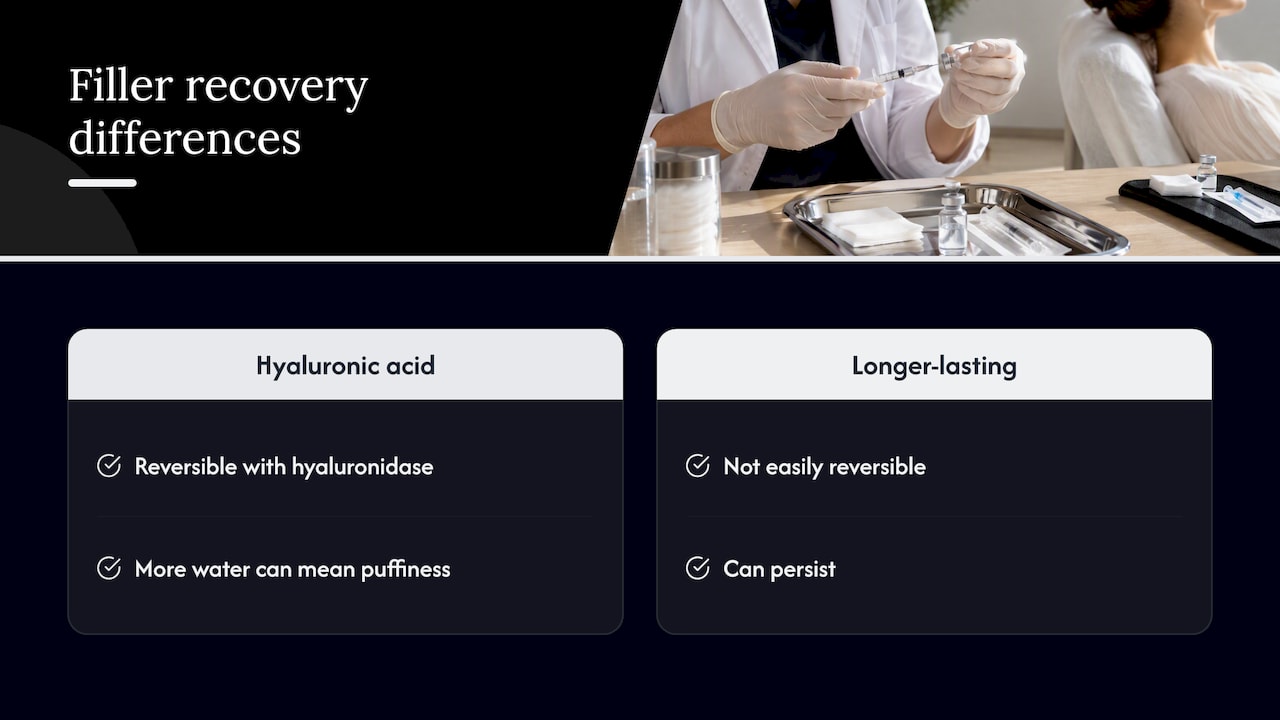
Within hyaluronic acid products, formulations differ in how much water they attract. A product that holds more water can cause more visible puffiness in the first weeks, which is one reason we match the filler to your anatomy rather than using one product for everyone. Our tear trough filler guide explains how suitability is assessed. Ask us at your consultation which product we plan to use and what that means for your recovery.
How do we manage complications such as malar oedema?
Malar oedema is persistent swelling over the cheekbone area, sometimes called a malar mound. One published review describes it as an often-overlooked risk. It can last because of lymphatic obstruction, and it may need specialised management such as drainage techniques or prolonged head elevation.
If puffiness is still there after the first few weeks, tell us early. We will assess whether it is ordinary settling, fluid retention or filler that needs adjusting. Typical steps include:
- Continued head elevation and gentle supportive measures.
- Review of the filler volume and placement.
- Hyaluronidase to dissolve some or all of the product if the filler is the cause.
- Referral to a specialist if the picture is unclear.
An observational study of 41,775 cases found that most early complications from hyaluronic acid fillers are manageable with prompt treatment. That is the reassuring message: early action usually leads to resolution.
When and how should you book a follow-up appointment?
We usually suggest a review at around 2–4 weeks, once the swelling has gone down enough to judge the result. Book earlier if something concerns you. Do not wait for the formal review if you notice pain, colour change, vision changes or signs of infection.
To make the visit useful:
- Take clear photos in the same light at different points during recovery, so we can follow the changes together.
- Note when swelling is worse, such as mornings or after salty meals.
- Tell us about any medicines or supplements you have taken since treatment.
At review we check symmetry, contour and any lumps, and we discuss whether a small refinement or dissolving is appropriate. Reviews are not only for problems. They are the point where we confirm that the result has settled as intended.
A clinic perspective on expectations and reassurance
Mild swelling and bruising are a normal part of healing, and a review exists to confirm exactly that. If anything worries you, ring us early rather than waiting. If recovery seems slower than expected, book a review.
— Vishul
Book your tear trough treatment and follow-up with us

Our medically trained practitioners provide tear trough filler with aftercare support and follow-up. Treatment is £360 as listed on our price list.
- Book a consultation through our dermal filler page.
- Book a review if your recovery feels slower than expected.
This article is general information, not a substitute for advice from a qualified doctor. Consult a qualified healthcare professional about your own circumstances before acting on anything here.
FAQ
What is tear trough in the eyes?
The tear trough is the hollow groove that runs from the inner corner of the eye down towards the cheek. It can look darker or more sunken as we age. Filler is used to soften that hollow. Our tear trough filler guide covers suitability in full.
What are some treatments for sunken eyes?
Hyaluronic acid filler is a common non-surgical option for under-eye hollows. A meta-analysis reported 91.0% overall satisfaction with this treatment. Surgical options exist for more permanent anatomical correction.
Does under-eye filler eventually go away?
Hyaluronic acid filler is gradually absorbed, with reported longevity typically from 9 to 18 months and sometimes up to 24 months. Some filler can persist for longer in certain people. If you want it removed sooner, hyaluronidase can dissolve it.
Can you put fillers under eyes?
Yes, tear trough filler is a recognised treatment, but the area is delicate and requires knowledge of orbital anatomy. It should only be performed by a trained medical practitioner. We provide aftercare and follow-up so any concerns are dealt with early.
Sources
- Pubmed
- Complications of Periorbital Cosmetic Hyaluronic Acid Filler Injections: A Major Review
- Advice following skin surgery