
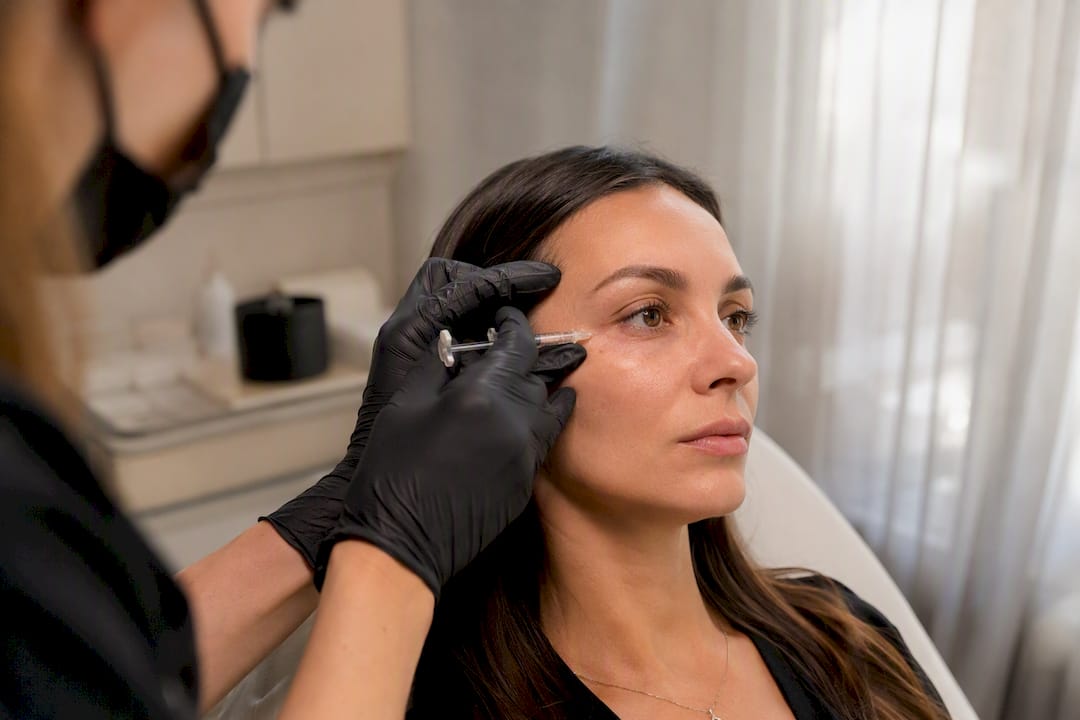

Tear trough filler is safe for most patients when a medically qualified injector uses conservative volumes and correct technique, and the common effects (bruising, swelling, tenderness) settle within days. The one risk that genuinely matters is vascular occlusion, a rare but serious event that can threaten the skin or vision. It demands immediate hyaluronidase and urgent care, so knowing the warning signs before treatment is essential.
TL;DR:
- Vascular occlusion occurs in roughly 1 in 6,600 treatments and requires immediate hyaluronidase administration to prevent serious consequences.
- The Tyndall effect can be avoided by injecting deep in the correct supra-periosteal plane, not through superficial placement.
- Most side effects, like bruising and swelling, resolve within a week, but delayed complications such as lumps can appear over 16 months after treatment.
- Risks are higher in patients with thin skin, previous surgery, or fluid retention, and proper technique greatly reduces the chance of adverse events.
- Choosing a qualified, experienced medical prescriber with proper safety protocols and aftercare plans significantly minimizes complication risks.
Table of Contents
- Understanding the common tear trough filler side effects and recovery
- What causes Tyndall effect and periorbital swelling after filler?
- How likely is vascular occlusion from tear trough filler?
- Delayed tear trough filler complications: what timeline should you expect?
- What increases your risk of tear trough filler complications?
- How do you choose a practitioner who minimises tear trough filler risks?
- What should normal tear trough filler recovery look like?
- Clinic credentials and safety protocols behind this guidance
- A clinician’s view on getting tear trough filler right
- Book a consultation that puts safety first
- Sources
Understanding the common tear trough filler side effects and recovery
Bruising and swelling are the two effects almost every patient experiences to some degree, and neither signals anything has gone wrong. The under-eye skin is thin and richly supplied with small vessels, so even a well-placed needle or cannula can leave a visible mark. A prospective study of cannula-delivered tear trough filler found mostly transient, mild swelling and low pain scores across the group, with no major complications reported.
What you can expect in the days after treatment:
- Bruising or haematoma: usually visible within hours, fading over 5 to 10 days; concealer can cover mild cases after 24 hours.
- Swelling: peaks on day one or two, often more noticeable in the morning, and generally resolves within a week.
- Tenderness: mild soreness at injection points, typically gone within 48 to 72 hours.
- Transient asymmetry: the two sides can settle at slightly different rates as swelling reduces unevenly.
Cold compresses in short bursts, sleeping with your head slightly elevated, and avoiding NSAIDs beforehand (unless your practitioner says otherwise) all help shorten this window.
What causes Tyndall effect and periorbital swelling after filler?
The under-eye area punishes sloppy placement in ways other facial zones do not. Two problems are specific to this region and both come down to how deep the filler sits.
The Tyndall effect is a blue-grey discolouration that appears when hyaluronic acid sits too close to the skin surface, scattering light instead of blending invisibly. It is prevented, not treated, by injecting at the correct supra-periosteal depth rather than superficially.
Malar oedema and festoons are a different mechanism entirely: fluid pooling below the eye because filler has disrupted lymphatic drainage. Tear trough filler can worsen pre-existing festoons, and in some patients the puffiness becomes difficult to fully reverse even after dissolving the product.
Nodules and granulomas tend to appear weeks or months later as firm, palpable lumps. Management follows a ladder: gentle massage first, then steroid injection, hyaluronidase for hyaluronic acid products, and surgical removal only if the lump persists.
- Tyndall effect: prevented by deep, correct-plane injection
- Malar oedema/festoons: caused by lymphatic disruption, may persist
- Nodules/granulomas: delayed onset, staged treatment approach
Pro Tip: Ask your injector specifically how they plan to avoid superficial placement around your tear trough. Their answer tells you more about their technique than any before-and-after photo.
How likely is vascular occlusion from tear trough filler?
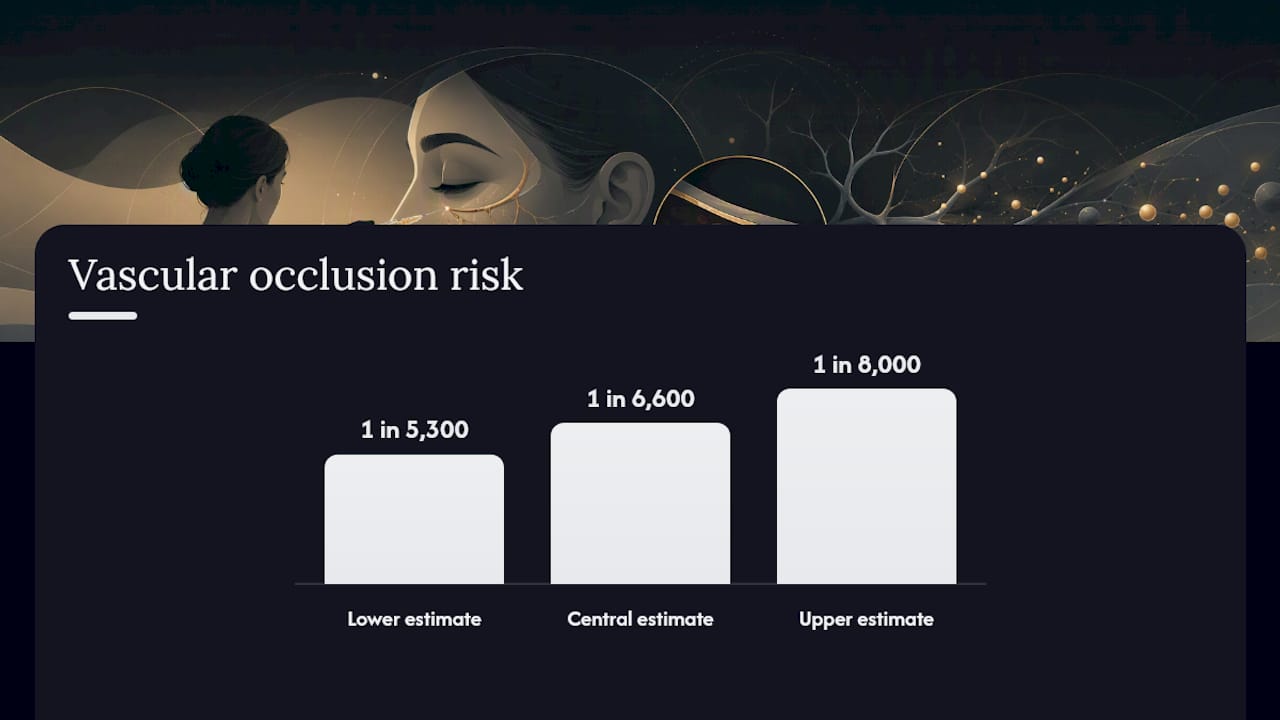
Vascular occlusion is the complication that deserves genuine respect, not casual worry. It happens when filler enters a blood vessel directly or compresses one from outside, cutting off blood supply to the skin or, in the worst cases, the retina via arterial connections in the face. Reviews of periorbital filler complications put the incidence of vascular adverse events at roughly 1 in 6,600 treatments, with estimates ranging between 1 in 5,300 and 1 in 8,000. That makes it rare. It does not make it something to ignore.
If you notice any of these, treat it as an emergency:
- Sudden, disproportionate pain during or shortly after injection
- Skin blanching (turning white) followed by mottled, dusky discolouration
- Any change in vision, however brief
Immediate response steps a clinic should take:
- Stop injecting immediately
- Apply a warm compress to encourage vessel dilation
- Administer hyaluronidase without delay
- Arrange urgent transfer to emergency or ophthalmology care
Moorfields Eye Hospital’s specialist guidance lists vision-threatening events among the key risks of under-eye filler, alongside the more common discolouration and lump concerns, and recommends specialist assessment when anything looks unusual.
Delayed tear trough filler complications: what timeline should you expect?
Most side effects resolve within a fortnight. A smaller number surface much later, sometimes when you have stopped thinking about the treatment at all. A systematic review of delayed reactions after tear trough filler found an average onset of 16.8 months after treatment, with delayed swelling and nodules the most frequently reported problems.
| Complication | Typical onset | Higher risk with |
|---|---|---|
| Delayed swelling | Months to over a year | Any HA filler |
| Lumps/nodules | Weeks to 16+ months | Semi-permanent, synthetic fillers |
| Late discolouration | Months to years | Superficial placement |
| Migration | Months to years | Larger volumes, repeated treatments |
Late inflammatory flare-ups can also be triggered by unrelated illness, vaccination, or dental work, and usually respond to steroids, antibiotics, or hyaluronidase depending on the cause. Persistent lumps that do not resolve with conservative treatment may need imaging or biopsy before a decision is made on excision.
What increases your risk of tear trough filler complications?

Some risk factors sit outside your control. Others come down to choices you and your practitioner make together.
Anatomy matters more here than almost anywhere else on the face. Thin under-eye skin, prior lower-lid surgery, and a tendency towards fluid retention all raise the baseline risk, and anatomical reviews point to arterial connections in the periorbital region that can carry filler backwards towards the retina if injected into a vessel. Needle versus cannula makes less difference than most patients assume. A systematic review of tear trough techniques found no statistically significant safety difference between the two; correct plane and practitioner anatomical knowledge outweigh instrument choice. Volume is the more reliable lever. Clinical guidance commonly favours limiting treatment to around 1ml per session, injected deep at the supra-periosteal level, to lower Tyndall effect and bruising rates.
- Anatomy: thin skin, previous surgery, fluid retention
- Technique: correct plane matters more than needle vs cannula
- Product: hyaluronic acid is reversible; semi-permanent fillers are not
- Medicines: blood thinners and certain supplements raise bruising and bleeding risk
Pro Tip: Not all hyaluronic acid dissolves at the same rate. Heavily cross-linked gels can need larger or repeated hyaluronidase doses, so ask what product is being used and how reversible it is.
How do you choose a practitioner who minimises tear trough filler risks?
The consultation is where most risk gets managed or missed entirely. Treat it as a working interview, not a formality.
Credentials to verify before you book:
- A medical prescriber (doctor, dentist, or nurse prescriber) performing the injection, not a beauty therapist
- Clinic registration with the Care Quality Commission and documented tear trough experience
- Hyaluronidase stocked on site, with staff trained to administer it
- A clear follow-up schedule, not a one-off appointment with no review
Questions worth asking directly:
- Which product and batch will be used, and is it recorded?
- What is the maximum volume planned for this session?
- What happens if I need the filler dissolved?
- When is my follow-up review?
Red flags that should make you walk away:
- Prices dramatically below the local average
- No documented medical cover or emergency protocol
- No written aftercare plan
Before treatment, review current medications with your practitioner, arrange a few days of flexibility in case of visible bruising, and ask for a photo record. Our tear trough filler guide covers technique and prevention in more depth if you want to go further before your consultation.
What should normal tear trough filler recovery look like?
Recovery follows a predictable pattern for most patients, and knowing what counts as normal makes it far easier to spot what is not.
- First 48 hours: use cold compresses intermittently, avoid heavy exercise, and expect visible bruising or swelling.
- Days 3 to 7: swelling and tenderness fade steadily; mild residual bruising can be covered with make-up.
- Beyond a week: any persistent lump, asymmetry, or discolouration should be reviewed by your clinic.
Seek urgent help immediately for sudden severe pain, skin blanching, or any change in vision. Keep your clinic’s contact details, a photo record, and the product batch number (if provided) accessible in case a late complication needs reporting.
Clinic credentials and safety protocols behind this guidance
Theaestheticsroom operates as a CQC-registered practice and holds membership of the ACE Group, a body focused on patient safety standards in aesthetic medicine. Treatments are delivered by on-site medical prescribers, hyaluronidase is kept available for emergency reversal, and every patient is booked into a scheduled follow-up rather than left to self-monitor. This article was reviewed for clinical accuracy by Vishul, drawing on established practice in medical aesthetics and periorbital filler safety.
A clinician’s view on getting tear trough filler right
The biggest mistake in this treatment is chasing volume instead of restraint. A conservative approach, honest conversation about what filler can and cannot fix, and a clear plan to dissolve if something looks wrong will always beat an injector who promises a dramatic result in one sitting. Less genuinely is more here, and expectations set honestly at consultation prevent most regret afterwards.
— Vishul
Book a consultation that puts safety first
Theaestheticsroom gives you what a bargain clinic cannot: a CQC-registered practice where medical injectors plan conservative volumes, keep hyaluronidase on site for reversal, and book you into a scheduled follow-up rather than sending you away with no safety net.

Every tear trough consultation starts with a full anatomical assessment and an honest conversation about whether filler is the right answer for your under-eye concern, not a sales pitch to fill you up regardless. If you want the fuller picture on materials and aftercare first, our dermal fillers guide is worth reading before you commit. When you are ready, book a consultation through our dermal fillers page and get a treatment plan built around your anatomy, not a generic protocol.
This article is general information, not a substitute for advice from a qualified doctor. Consult a qualified healthcare professional about your own circumstances before acting on anything here.
Sources
- A prospective study on safety, complications and satisfaction analysis for tear trough rejuvenation using hyaluronic acid dermal fillers
- Delayed complications after tear trough filler injections: systematic review
- The 5 key risks of under-eye filler injections