

Yes — hyaluronic acid lip filler can be dissolved with hyaluronidase, an enzyme that breaks down the gel from the inside. It must be administered by a qualified, CQC-registered prescriber because dosing and spread are unpredictable and, rarely, patients react to the enzyme itself. Visible softening can start within hours, but expect the final shape to settle over roughly two weeks.
TL;DR:
- The amount of hyaluronidase needed varies widely, typically between 50 and 300 units depending on filler density, age, and cross-linking.
- Safe dissolution requires a qualified prescriber to administer and often involves a skin patch test to minimize allergy risks.
- Visible softening can begin within hours, but the final shape usually settles over two weeks, so patience is essential.
- Repeated or multiple-layered fillers may need more than one session and should be followed by a waiting period of two to four weeks before re-filling.
- Serious allergic reactions are rare but can be life-threatening, making prompt access to emergency treatment critical during and after the procedure.
Table of Contents
- What does dissolving lip filler actually involve?
- How does hyaluronidase dissolve hyaluronic acid, and why is dosing tricky?
- Who is a good candidate for dissolving filler?
- What happens during a dissolving appointment?
- What are the risks of dissolving lip filler?
- When will you see results, and when can you get refilled?
- What aftercare should you follow, and when should you seek help?
- How does an accredited clinic manage this process safely?
- Why the “quick fix” framing around dissolving filler is misleading
- Ready to discuss dissolving or correcting your lip filler?
- Sources
What does dissolving lip filler actually involve?
Dissolving lip filler means injecting hyaluronidase, an enzyme, directly into the treated area so it breaks the chemical bonds holding hyaluronic acid gel together. The filler liquefies and is reabsorbed by the body, and the lips gradually return towards their pre-filler shape.
People request this for several reasons, and rarely is it about vanity alone:
- An uneven or lumpy result from a previous treatment
- Filler migration beyond the lip border, sometimes called “duck bill” lips
- A vascular event, where filler has compromised blood flow and needs urgent removal
- Simply changing their mind about volume or shape
It’s worth being clear about one thing early: only hyaluronic acid fillers respond to this treatment. Brands built on hyaluronic acid dissolve reliably. Permanent or semi-permanent fillers made from other materials, such as calcium hydroxylapatite or polymethylmethacrylate, do not respond to hyaluronidase at all, which is one reason we always confirm what was originally injected before booking anyone in.
How does hyaluronidase dissolve hyaluronic acid, and why is dosing tricky?
Hyaluronidase works by breaking the molecular chains within hyaluronic acid, not just the filler you want gone. That’s the central complication of this treatment: the enzyme cannot tell the difference between injected filler and the hyaluronic acid your body naturally produces in the lips and surrounding tissue.
Pro Tip: If your goal is a smaller, more even result rather than total removal, expect that outcome to be genuinely hard to control. The enzyme spreads through tissue, not just through the filler mass, so “a little bit dissolved” often behaves more like “mostly dissolved” in practice.
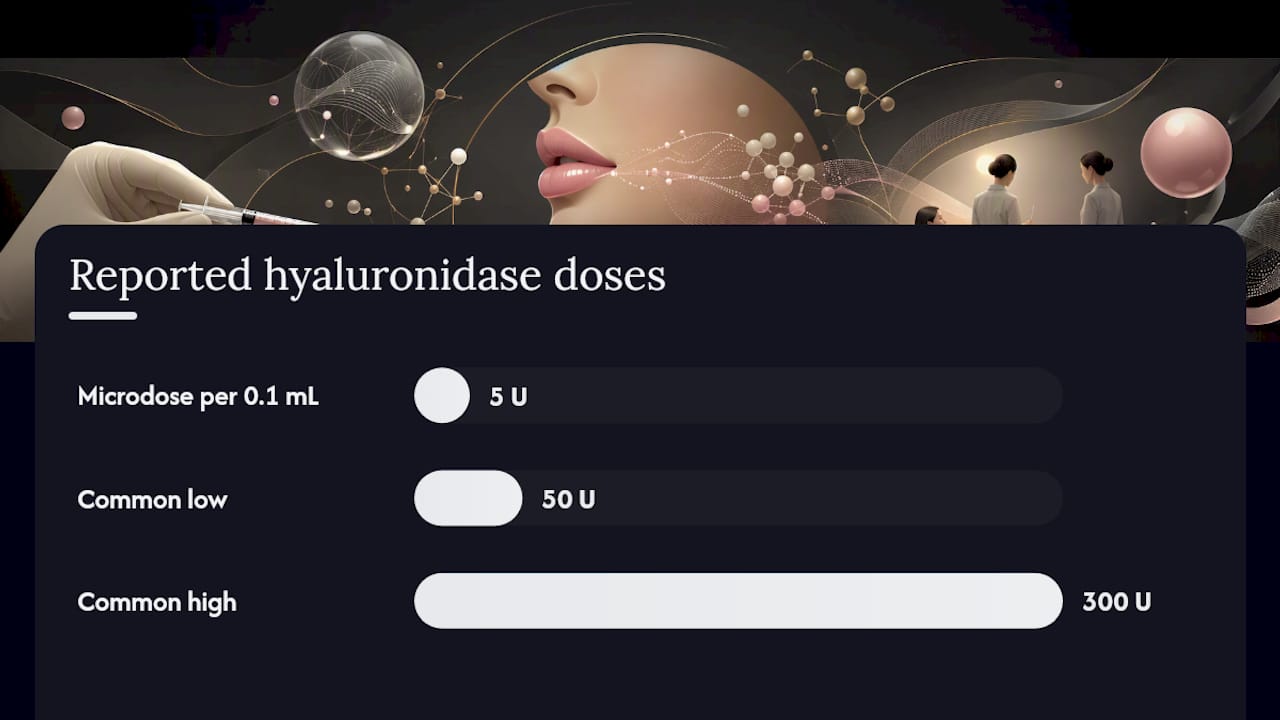
There’s no single agreed dose. Clinical literature reports figures as low as 5 units per 0.1 mL of 20 mg/mL hyaluronic acid, while broader reviews note that subcutaneous doses across various indications commonly range between 50 and 300 units depending on what’s being treated and how it responds.
A few factors change how any given lip reacts:
- How heavily cross-linked the filler gel is (more cross-linking generally means more resistance)
- Particle size and concentration of the original product
- How long the filler has been in place, since older filler can integrate differently with tissue
Because of this variability, practitioners often plan injection points and dilution carefully to maximise contact with the filler mass itself, rather than simply flooding the area.
Who is a good candidate for dissolving filler?
Dissolution suits people dealing with lumps, asymmetry, migration, or a vascular complication that needs prompt correction. It’s also a legitimate option if you’ve simply outgrown the look and want a natural reset before considering anything new.
Not everyone is a safe candidate, though. You should not proceed, or should discuss it carefully with a prescriber first, if you have:
- A history of severe allergic reaction or anaphylaxis, particularly to bee or wasp venom, since hyaluronidase is derived from similar biological sources
- An active skin infection in the treatment area
- A confirmed pregnancy, where elective treatment is generally deferred
Pro Tip: If you have any allergy history at all, ask your clinic about a skin patch test before your appointment. It’s a small, low-risk step that flags a reaction before it happens on your lips rather than during treatment.
In the UK, hyaluronidase is a prescription-only medicine. It must be prescribed and administered by a registered clinical prescriber, not applied casually or bought online, which is exactly the kind of detail worth confirming before you book anywhere.
What happens during a dissolving appointment?
A dissolving session is quick, but the steps matter more than the speed.
- Your prescriber reviews your medical history, current medication, and any allergy concerns, including a specific question about bee venom sensitivity.
- If indicated, a small skin patch test is carried out and observed before full treatment proceeds.
- Hyaluronidase is reconstituted and injected directly into the filler, with the prescriber working carefully around the lip’s blood vessels.
- You’re monitored on-site for a period after injection to check for any early reaction.
- In most cases, the whole appointment runs between 10 and 20 minutes, though this depends on how much filler is being addressed.
Some patients need a single session. Others, particularly where multiple layers of filler have built up over time, are booked for a planned follow-up once the first round of dissolution has settled, rather than trying to remove everything in one go.
What are the risks of dissolving lip filler?
Most reactions after dissolving are mild and predictable. Bruising, swelling, and tenderness around the injection points are common and typically settle within days, alongside a temporary sense of deflation as the gel breaks down faster than the tissue can adjust.
The rare but serious risk is an allergic reaction to hyaluronidase itself, which can progress to anaphylaxis. This is precisely why the patch test and allergy screening covered earlier aren’t optional extras. Red-flag symptoms include difficulty breathing, swelling of the tongue or throat, widespread hives, or sudden dizziness.
Clinics that manage vascular complications well tend to share one trait: timely hyaluronidase administration measurably improves outcomes when a filler has compromised blood flow, which is why fast access to the enzyme, not just its eventual use, is what separates a well-run clinic from a risky one.
Reputable providers reduce these risks through patch testing where indicated, close post-injection observation, and having a resuscitation protocol in place, with treatment carried out only by prescribers trained to recognise and manage a reaction immediately.
When will you see results, and when can you get refilled?
Change often begins within hours. Most of the visible softening happens in the first 24 to 48 hours, with the lips continuing to settle gradually after that.
- Hours to 2 days: Initial reduction in volume, alongside expected swelling and possible bruising
- Days 3 to 7: Swelling largely resolves; shape becomes clearer
- Up to 14 days: Final result is visible as tissue fully recovers
During the middle stretch, don’t be alarmed if your lips look slightly deflated or a little crepey. That’s tissue adjusting to lost volume, not a lasting problem, and it typically improves as the days pass. If genuine skin laxity remains once swelling has fully gone, that’s a separate concern from the dissolving itself and worth discussing at a follow-up.
Most clinicians advise waiting two to four weeks before any new filler goes in. Residual hyaluronidase activity can linger in the tissue for days, so filler placed too soon risks being partially broken down before it’s had a chance to settle.
What aftercare should you follow, and when should you seek help?
Aftercare in the first day is straightforward, but consistency matters.
- Apply ice intermittently in the first 24 hours to help manage swelling.
- Avoid strenuous exercise and alcohol for a day, since both increase blood flow to the area.
- Follow your prescriber’s specific advice on massage and any medication, including whether antihistamines are appropriate.
Pro Tip: Keep your clinic’s out-of-hours contact number saved in your phone before your appointment, not after. If a reaction develops later that evening, you want the number ready, not buried in an email.
Call your clinic if pain worsens rather than easing, redness spreads, you develop a fever, or the area shows signs of infection. Call emergency services immediately for breathing difficulty, swelling of the face or tongue, or any sign of collapse or anaphylaxis.
How does an accredited clinic manage this process safely?
Theaestheticsroom operates as a CQC-accredited clinic and is a member of the ACE Group, a body focused specifically on patient safety standards in aesthetic medicine. Every dissolving treatment is carried out by specialist prescribers across its Knightsbridge, Harley Street, and Mayfair locations, not delegated to unsupervised staff.
That accreditation shows up in practice, not just on paper: allergy screening and patch testing where indicated, full informed consent before any enzyme is injected, close post-treatment monitoring, and emergency protocols ready if a reaction occurs. If you’re weighing up whether dissolution is the right move, or whether a smaller correction might work instead, a proper consultation beats guesswork every time, and safety should shape that decision before aesthetics do.
Why the “quick fix” framing around dissolving filler is misleading
The internet treats dissolving filler like a reset button. It isn’t. The literature is honest about this in a way marketing rarely is: hyaluronidase doesn’t distinguish between the filler you want gone and the hyaluronic acid your lips make naturally, which means “just dissolve a bit” is a much harder request than it sounds. Anyone offering guaranteed partial correction is glossing over genuine unpredictability in how tissue responds.
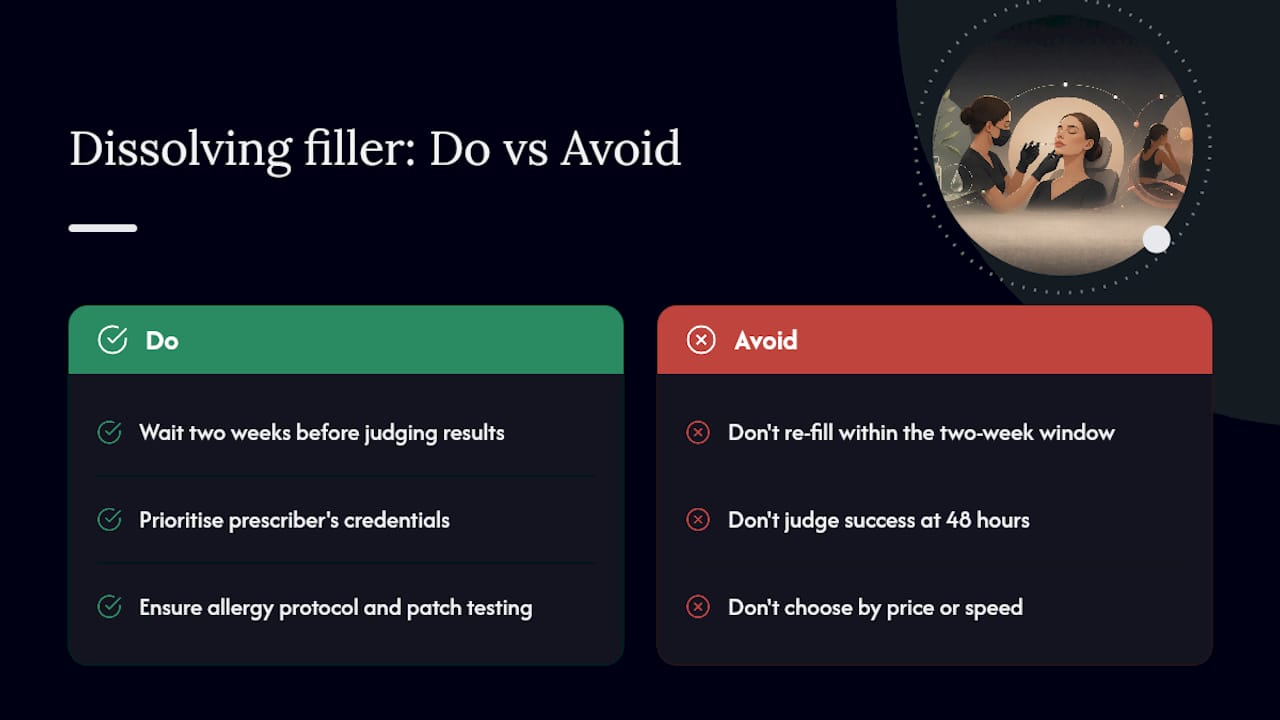
What gets underrated is the two-week window. Patients often judge results at 48 hours, panic at the deflated look, and either book a rushed top-up or assume the treatment failed. Neither reaction is warranted. The tissue needs time, and re-filling inside that window risks degrading the new product before it has settled, which solves nothing and wastes money twice over.
If there’s one thing worth prioritising above all else, it’s the prescriber’s credentials and the clinic’s allergy protocol, not the price or the appointment speed. Bee venom allergy screening and patch testing sound like small procedural steps until they’re the reason a rare reaction gets caught before it becomes dangerous rather than after.
— Vishul
Ready to discuss dissolving or correcting your lip filler?
Theaestheticsroom gives you a safer route to a decision most people are making anxiously and alone. Rather than researching dosing forums or booking with a provider who treats hyaluronidase as an afterthought, you get a CQC-registered prescriber who screens for allergy risk, discusses realistic timelines honestly, and monitors you properly after injection.

If your current filler has migrated, lumped, or simply isn’t you anymore, that consultation is also the right place to talk through what a corrected result should look like, and whether dissolving fully or partially reshaping with fresh product makes more sense for your face. Explore Theaestheticsroom’s dermal filler treatments and book a consultation to get a plan built around your lips, not a generic protocol.
This article is general information, not a substitute for advice from a qualified doctor. Consult a qualified healthcare professional about your own circumstances before acting on anything here.
Sources
- The Use of Hyaluronidase in Aesthetic Practice (v2.4)
- Hyaluronidase clinical review (NCBI Bookshelf)
- Dissolving lip filler: How it works & what to expect | Cleveland Clinic