
Do not massage your fillers unless your treating clinician specifically tells you to. Routine self-massage is normally discouraged because it can shift the product and disturb your results. The only clinical exception is when a practitioner prescribes targeted massage or uses emergency manoeuvres for vascular compromise. Always follow your written aftercare and contact your treating clinician if anything concerns you.
TL;DR:
- Do not massage your fillers unless specifically instructed by your clinician, as routine self-massage can cause product displacement and affect results.
- Avoid touching, applying pressure, or massaging the treated area for at least 24 to 72 hours, and up to two weeks for lip fillers, to prevent migration.
- Only perform medical-grade massage if your practitioner provides a written plan, especially in cases of small lump dispersal or vascular occlusion, and follow instructions precisely.
- Immediate medical intervention is necessary if you experience severe pain, skin discoloration, or vision changes, with no home remedies appropriate for vascular complications.
- Personalized, written aftercare from trained professionals is crucial to manage risks, provide proper follow-up, and address potential complications effectively.
Table of Contents
- Quick rules after filler: what to do and avoid in the first hours and days
- When massage is medically appropriate
- How to massage safely if your clinician instructs you to
- Lumps, hard spots and nodules: how to triage them
- Timeline: when to resume touching, exercise and other treatments
- Red flags that need immediate action
- Why written, bespoke aftercare from trained clinicians matters
- Clinic support if you have concerns after filler
- Sources
- FAQ
Quick rules after filler: what to do and avoid in the first hours and days
The first few days after treatment set the tone for your final result. Most clinics ask patients to avoid touching, rubbing or applying pressure to the treated area for 24 to 72 hours, with some practitioners extending this to two weeks for lip filler because the tissue there is softer and more mobile.
- Avoid touching, massaging or applying pressure to the treated area during the initial recovery window.
- Skip exercise, alcohol, saunas and facial treatments such as peels or microneedling until your practitioner clears you.
- Sleep with your head slightly propped up to reduce swelling.
- Use cold compresses for short spells rather than continuous icing.
- Drink plenty of water and keep makeup off the area for the first day.
These aren’t arbitrary rules. Pressure and heat both increase blood flow to the area, which can worsen bruising and encourage the filler to migrate before it has settled. Our aftercare guide covers the at-home steps in more detail if you want a fuller checklist.
When massage is medically appropriate
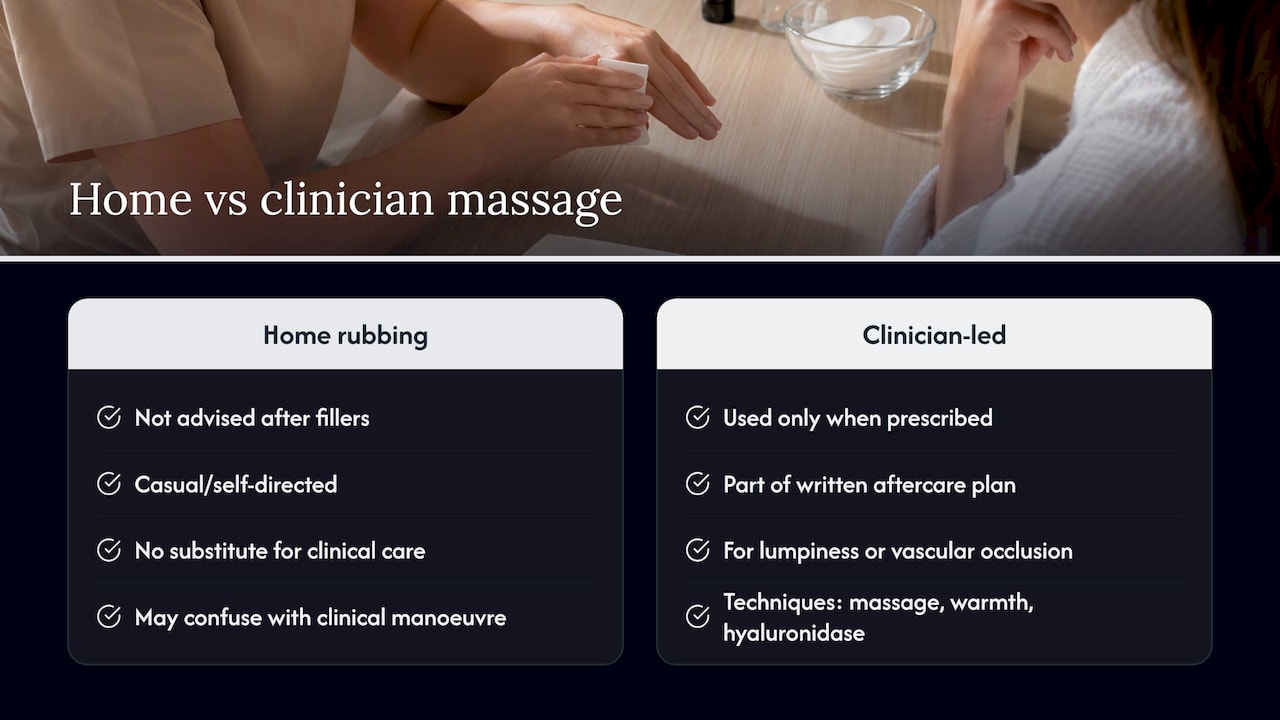
There’s a clear line between casual rubbing and a clinical manoeuvre, and confusing the two is where most problems start. Cosmetic massage, the kind you might see recommended online, is not the same as a technique a practitioner performs or instructs for a medical reason, such as those described in Yoga facial: origem e técnicas | IPYM.
The Royal College of Surgeons makes clear there is no single universal rule for massaging after filler: practitioners are expected to give specific, written aftercare tailored to the procedure and the patient, rather than generic advice. In some cases, that written plan does include massage, for example to help disperse a small area of lumpiness under professional guidance.
The more serious scenario is vascular occlusion, where filler compresses or blocks a blood vessel. A clinical review on vascular occlusion lists massage among the conservative measures used to encourage blood flow while a clinician arranges definitive treatment, alongside warmth and, where needed, hyaluronidase to dissolve the filler. This is not something to attempt on your own. It is a clinician-led response to a medical emergency, and prompt assessment matters more than any technique you might try at home.
How to massage safely if your clinician instructs you to
If your practitioner asks you to massage a treated area, usually to smooth a small lump or help product settle evenly, follow their instructions precisely rather than adapting a technique you’ve seen elsewhere.
- Wash your hands thoroughly and remove any rings or jewellery that could catch the skin.
- Apply a fragrance-free emollient if your clinician has recommended one, similar to the prescribed regimens used in medical massage protocols for facial tissue conditions.
- Use gentle, targeted circular motions over the specific spot identified, not the whole treated area.
- Keep sessions short, often twice daily for one to five minutes, unless told otherwise.
- Stop immediately if you notice increased pain, spreading redness, numbness or a change in skin colour.
Keep a simple log of when you massage, for how long, and any changes you notice. This makes follow-up conversations with your clinic faster and more accurate.
Pro Tip: Take a photo before and after each massage session so you and your clinician can track changes objectively rather than relying on memory.
Lumps, hard spots and nodules: how to triage them
Some firmness and swelling in the first week or two is normal and usually settles on its own. A persistent hard lump, visible asymmetry or a lump that appears well after the initial swelling has gone down is different and worth flagging to your practitioner.
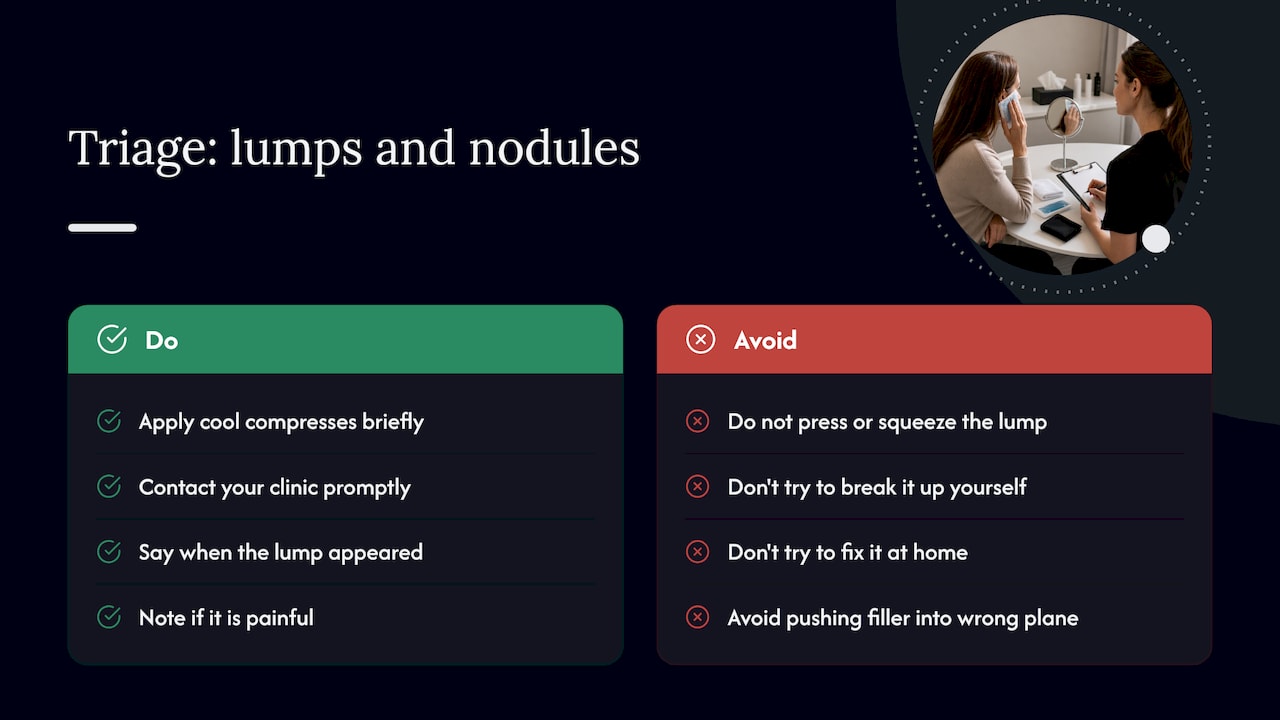
In the meantime, cool compresses applied briefly can ease discomfort, and pressing, squeezing or trying to break up the lump yourself risks pushing filler into the wrong plane or triggering inflammation. Avoid the temptation to “fix” it at home.
When you contact your clinic, be ready to share when the lump appeared, whether it’s painful, and clear photos taken in good light. This helps your practitioner decide quickly whether it needs reassurance, a scheduled review or an in-clinic intervention such as hyaluronidase.
Timeline: when to resume touching, exercise and other treatments
Recovery timelines vary by treatment area, but a general pattern applies across most filler procedures.
- First 24 to 72 hours: avoid touching, massaging and strenuous activity entirely.
- Up to two weeks: hold off on facial massage and elective facial treatments such as peels or laser; check with your clinician before booking dental work, since pressure on the jaw can affect nearby filler.
- First week: stick to gentle cleansing and avoid strong actives like retinol or acids until your practitioner confirms you’re ready.
- Makeup: usually fine after the first 24 hours, applied with a light touch.
If in doubt about a specific activity, ask before booking it rather than after.
Red flags that need immediate action
Severe or worsening pain, skin that turns pale, dusky or mottled, or any change in vision are signs of a vascular problem and need urgent practitioner assessment, not home remedies. The ACE Group’s protocol for these events may include firm massage, warmth and hyaluronidase, but only under clinical direction. Document what you’re seeing and contact your clinic immediately rather than waiting to see if it settles.
Why written, bespoke aftercare from trained clinicians matters
Generic advice cannot replace a plan built around your treatment, your anatomy and your recovery. The Royal College of Surgeons expects patients to receive named emergency contacts and clear, written instructions for exactly this reason: complications don’t wait for office hours, and vague guidance leaves too much room for error.
Accessible follow-up matters as much as the initial advice. A practitioner who can review photos, answer questions quickly and see you in person if needed reduces the chance that a manageable issue becomes a serious one.
— Vishul
Clinic support if you have concerns after filler
If something doesn’t feel right after treatment, or you simply want reassurance, a proper clinical review is the safest next step, not a search engine. A review typically includes an in-person assessment, a discussion of what you’re experiencing, and, where appropriate, hyaluronidase or a follow-up plan tailored to you.

- Book a review or consultation through our dermal fillers page.
- Check treatment pricing on our price list.
- Contact us directly if you’re concerned about swelling, lumps or anything unexpected.
The clinic welcomes patients who want their aftercare questions answered by someone who actually performed, or understands, their treatment.
Sources
- Be prepared: what if things go wrong? — Royal College of Surgeons
- Management of a vascular occlusion associated with cosmetic injections
- Clinical review on vascular occlusion with fillers
- BAAPS statement on fillers
This article is general information, not a substitute for advice from a qualified doctor. Consult a qualified healthcare professional about your own circumstances before acting on anything here.
FAQ
How long after fillers can you have a massage?
Most practitioners advise avoiding massage for at least 24 to 72 hours, with lips sometimes needing up to two weeks. Always follow your own clinic’s written instructions, since timing depends on the treatment area and product used.
Will my fillers move if I massage them?
Unsupervised massage can shift filler before it has settled, which is why routine rubbing is generally discouraged. The Royal College of Surgeons recommends following the specific written aftercare your practitioner provides rather than a generic massage routine.
What not to do after getting fillers?
Avoid touching, massaging, exercising, drinking alcohol or using saunas during the initial recovery window your clinic sets out. Also hold off on facial treatments like peels or microneedling until you’re cleared, since these can irritate the area before it has healed.
What helps fillers last longer?
Following your practitioner’s aftercare advice, avoiding unnecessary pressure on the area, and attending follow-up appointments all support a better, longer-lasting result. Product choice and technique also play a role, which is why BAAPS stresses choosing a properly trained practitioner for the initial treatment.