
TL;DR:
- Mastering essential clinical skills through regulated qualifications and clear communication builds trust and safety in aesthetic practice.
- Focusing on a small range of proven procedures creates natural results and a strong reputation, while smart business strategies support growth.
Aesthetic medicine moves fast. Client expectations are higher than ever, treatment menus are expanding, and the gap between competent and exceptional practitioners continues to widen. Applying the right esthetic practitioner tips is not just about keeping up. It is about building a practice that is safe, results-driven, and built on genuine trust. Whether you are newly qualified or already running a busy clinic, this guide brings together practical, experience-backed advice on clinical skills, client communication, and business growth to help you perform at your very best.
Table of Contents
- Key takeaways
- 1. Foundational esthetic practitioner tips: training and qualifications
- 2. Communication skills and patient consultation best practices
- 3. Clinical tips for achieving natural, harmonious outcomes
- 4. Business growth and practice optimisation
- 5. Building your professional network and avoiding isolation
- 6. Common pitfalls to avoid for safer, sustainable practice
- My honest take on mastering esthetic practice in 2026
- Deepen your practice with Theaestheticsroom
- FAQ
Key takeaways
| Point | Details |
|---|---|
| Prioritise regulated qualifications | OFQUAL-regulated training underpins safe, credible practice far better than short CPD courses alone. |
| Master consultation communication | Clear, honest dialogue reduces complications, builds trust, and sets realistic client expectations every time. |
| Refine before you expand | Mastering a small core of procedures delivers more consistent, natural outcomes than spreading your skills too thin. |
| Build a business mindset | Data-driven decisions on inventory, digital presence, and client retention separate thriving clinics from stagnant ones. |
| Avoid common pitfalls early | Rushed technique progression and substandard products create avoidable risks that harm both clients and your reputation. |
1. Foundational esthetic practitioner tips: training and qualifications
No amount of social media inspiration replaces a solid clinical foundation. The OFQUAL-regulated Level 5 Certificate involves 278 hours of total qualification time, combining theoretical knowledge with supervised clinical practice. That volume of structured learning exists for a reason. Injectable treatments carry real risk, and the only way to manage that risk well is through thorough, regulated education.
CPD courses have genuine value for updating skills and exploring new techniques, but they are not a substitute for a regulated qualification when it comes to career longevity and insurance credibility. If you are considering advancement into Level 7 training, the move strengthens your scope and your standing with medical insurers considerably.
Key competencies every practitioner should build from the start:
- Facial anatomy, including danger zones for filler injection and neurotoxin placement
- Injection technique mastery across cannula and sharp needle approaches
- Complication preparedness, particularly recognising and responding to vascular occlusion
- Sharps safety and the importance of a non-punitive reporting culture for post-exposure incidents
- Aftercare protocols tailored to each treatment type
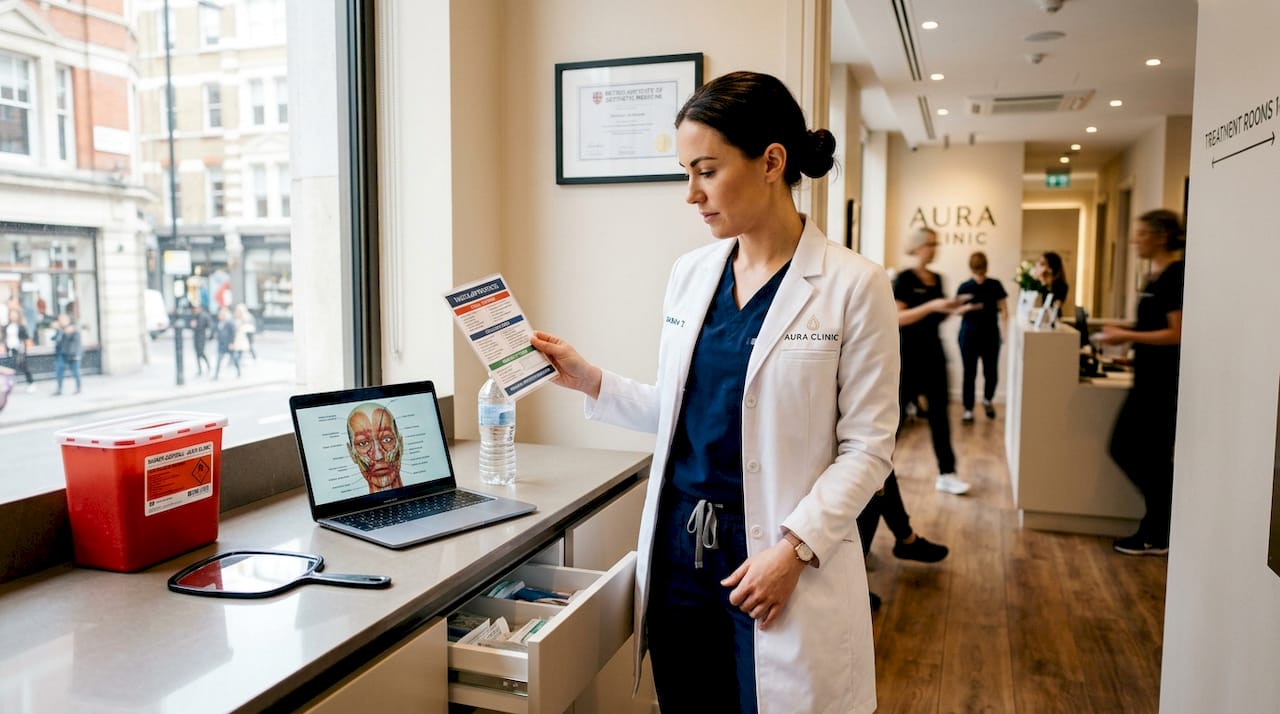
Pro Tip: Keep a laminated vascular occlusion protocol card in your treatment room. Rehearsing the steps monthly, even when you have never faced an incident, keeps your response reflex sharp.
2. Communication skills and patient consultation best practices
The consultation is where outcomes are truly shaped. A practitioner can deliver technically perfect filler placement, yet still produce a dissatisfied client if expectations were never properly aligned. Clear, honest communication is the single most powerful tool you have for reducing both anxiety and post-treatment dissatisfaction.
There is a well-established principle in aesthetic medicine worth keeping front of mind:
“The quality of the consultation directly predicts the quality of the outcome, not just the clinical result.”
When preparing for every consultation, work through a structured checklist to cover the ground that matters most. The aesthetic consultation checklist from Theaestheticsroom outlines seven key steps, including medical history review, consent processes, and expectation setting, that ensure nothing is overlooked.
A few non-negotiables for consultation best practice:
- Discuss what the treatment can and cannot achieve before showing any before-and-after imagery.
- Identify psychological red flags, including body dysmorphic tendencies, before proceeding.
- Confirm understanding in the client’s own words, not just a signed consent form.
- Address pricing transparently and avoid any ambiguity around what is included.
On the subject of professional boundaries, avoiding tips in a clinical setting is worth reinforcing. Tipping blurs the professional and medical relationship and is not standard practice in healthcare settings. Politely declining and redirecting with a referral request or a loyalty programme keeps the dynamic appropriate and respectful.
The role of consultation in aesthetics is a resource worth revisiting periodically, particularly as your client base and treatment offering evolve.
3. Clinical tips for achieving natural, harmonious outcomes
The aesthetics industry has a phrase that every experienced injector recognises: less is more. The most skilled practitioners are not those offering the longest treatment menus. They are the ones who have deeply mastered a small range of procedures and deliver results that look natural, not treated.
Mastering a few core procedures and applying them consistently across a diverse range of face shapes produces far better client outcomes than attempting to follow every new technique trend. Understanding how hyaluronic acid behaves differently in the superficial dermis versus the deep fat compartments, for example, takes repetition and reflection that only focused practice builds.
| Approach | Outcome |
|---|---|
| Wide technique breadth, limited repetition | Inconsistent results, higher complication risk |
| Narrow technique focus, high repetition | Refined, natural outcomes, stronger client trust |
| Evidence-based product selection | Predictable longevity, reduced adverse events |
| Chasing new trends without foundation | Increased risk of error, reputational vulnerability |
When introducing advanced treatments, positioning them strategically within your booking system increases both clinical value and revenue. Strategic treatment positioning such as booking ultrasound facials between injectable appointments creates a recurring schedule that supports tissue health and client retention simultaneously.
Pro Tip: Build an integrated skincare protocol around every injectable treatment you offer. Recommending a professional-grade antioxidant serum and SPF in the days following filler placement genuinely supports healing and minimises bruising, while deepening your client’s trust in your holistic knowledge.
4. Business growth and practice optimisation
The transition from skilled clinician to confident business owner is where many practitioners stall. Clinical excellence alone does not fill an appointment book. A strong digital presence, intelligent forecasting, and a clear referral strategy work together to build a practice that grows without constant hustle.

A well-designed website can increase conversion rates for aesthetic practices by up to 200%. That figure reflects how much booking decisions happen before a client ever calls or emails. Your website needs to communicate trust signals clearly: before-and-after results, practitioner credentials, CQC accreditation where applicable, and transparent pricing structures.
Beyond the website, consider these growth levers:
- Data-driven inventory management: Track product usage monthly and forecast demand around seasonal peaks such as autumn refresh bookings and pre-event periods.
- Client retention strategy: Use follow-up messaging 10 to 14 days post-treatment to check in, gather feedback, and plant the seed for the next appointment.
- Referral network building: Peer mentorship and referrals to specialists builds long-term trust with clients far more effectively than attempting to offer every treatment yourself.
- Client management systems: Use digital tools to automate reminders, track consultation notes, and personalise follow-up communications.
The medical aesthetics workflow optimisation guide from Theaestheticsroom offers concrete frameworks for structuring clinic operations that support both safety and business performance.
5. Building your professional network and avoiding isolation
Aesthetic practice can be surprisingly solitary, particularly for practitioners running independent clinics or mobile services. Without a peer group, clinical confidence erodes more quickly than it should, and minor uncertainties can spiral into professional anxiety.
Community building counters imposter syndrome in a meaningful way. A small group of three to five trusted peers who share cases, discuss complications without judgement, and celebrate wins creates a support structure that no CPD course can replicate. The goal is not a large network. It is a genuine one.
Seek out practitioners whose skills complement rather than mirror your own. A colleague specialising in laser treatments while you focus on injectables creates a natural referral ecosystem. Both practices grow. Both client rosters benefit. This kind of reciprocal relationship is one of the clearest esthetic practice advice principles that separates thriving practitioners from those who plateau.
Attending industry conferences, engaging with professional bodies such as the Joint Council for Cosmetic Practitioners (JCCP), and participating in peer review sessions all add depth to your clinical reasoning in ways that solo practice simply cannot.
6. Common pitfalls to avoid for safer, sustainable practice
Many of the risks in aesthetic practice are not technical. They are attitudinal. Rushing progression, compromising on product quality, and overextending scope of practice are patterns that tend to emerge under business pressure, and all three carry serious consequences.
The most common pitfalls experienced by aesthetic practitioners include:
- Rushing into advanced techniques before consolidating foundational skills, particularly with complex filler areas such as the tear trough or lip border.
- Using lower-cost, unverified products to increase margin, when injection safety protocols require CE-marked or MHRA-approved materials only.
- Neglecting emergency preparation by not stocking hyaluronidase on-site or failing to rehearse vascular occlusion response.
- Overextending scope of practice by treating conditions or body areas outside your current training, often driven by client demand rather than clinical competence.
- Ethical lapses in consent, including downplaying risks or skipping verbal confirmation of understanding to save time during busy clinic days.
Understanding safer injectable treatment outcomes through thorough anatomical knowledge and disciplined risk assessment is the most sustainable way to build a reputation clients trust and refer from.
My honest take on mastering esthetic practice in 2026
In my experience, the practitioners who grow fastest are rarely those chasing the newest techniques or building the largest social media followings. They are the ones who are quietly obsessive about getting the basics right, every single time, with every single client.
I have seen highly trained injectors undermine years of credibility by skipping proper consultations during a busy week. I have also seen practitioners with narrower skill sets build exceptional reputations simply because they communicate brilliantly and never over-promise. Consistency is the real differentiator, and it is genuinely unglamorous.
What I have learned about imposter syndrome is that it does not disappear with more qualifications. It fades with repetition, honest peer feedback, and the slow accumulation of cases where you did everything right. Build your small circle of trusted colleagues. Refer when you are not certain. The practitioners who refer confidently and early are the ones clients trust deeply and return to for everything within your scope.
Blending artistry with clinical rigour is the long game. Let it be your identity, not just your method.
— Vishul
Deepen your practice with Theaestheticsroom
At Theaestheticsroom, we believe the best clinical outcomes begin long before the treatment room. Our team of specialists at Knightsbridge, Harley Street, and Mayfair brings together the kind of evidence-based, safety-first approach that the tips in this article are built around. Whether you want to explore the detail behind our Botox treatments, understand how we approach dermal fillers for natural facial harmony, or discover the full scope of our skin rejuvenation expertise, our resources offer practical insight grounded in real clinical experience. Book a virtual or in-person consultation to see how these principles translate into exceptional results.
FAQ
What qualifications do aesthetic practitioners need in the UK?
OFQUAL-regulated qualifications at Level 5 or Level 7 are the recognised standard for safe aesthetic practice in the UK. The Level 5 Certificate involves 278 hours of total qualification time, including supervised clinical practice.
How do I improve client retention as an esthetician?
Follow up with clients 10 to 14 days after treatment, personalise your communication, and build a referral network with complementary practitioners. Consistent outcomes and honest consultation are the foundation of long-term retention.
What are the most common mistakes new aesthetic practitioners make?
Rushing into advanced techniques before mastering foundational skills, using unverified products, and neglecting emergency preparedness are three of the most frequent and avoidable errors in early-career practice.
Should aesthetic practitioners accept tips from clients?
No. Accepting tips is not standard practice in healthcare or medical aesthetics settings. It can blur professional and clinical boundaries. A loyalty programme or referral incentive is a more appropriate way to reward client loyalty.
How important is a website for an aesthetic practice?
Extremely. A well-designed website builds trust before a client ever contacts you and can increase conversion rates significantly. Clear credentials, treatment information, and easy booking options are non-negotiable for any modern aesthetic practice.
Recommended
- 7 Key Steps for a Successful Aesthetic Consultation Checklist – The Aesthetics Room
- 7 Expert Aesthetic Career Tips for Professionals in London – The Aesthetics Room
- 7 Best Practices in Medical Aesthetics for Confidence – The Aesthetics Room
- Medical Aesthetics Marketing Step by Step for Success – The Aesthetics Room