

TL;DR:
- Lip augmentation enhances lip size and shape through various techniques, from temporary fillers to surgical implants. Results and risks vary, depending on the method chosen, with individual anatomy influencing the outcome and satisfaction. Proper practitioner skill and personalized treatment planning are essential for safe, natural-looking results.
Lip augmentation is a cosmetic procedure designed to improve the size, shape, and fullness of the lips, whether to restore volume lost through ageing, correct asymmetry, or simply enhance natural contours. Clinically, the term covers a broad spectrum of techniques, from temporary hyaluronic acid fillers lasting 6–12 months to permanent surgical implants. Brands such as Juvederm and Restylane dominate the non-surgical end of the market, while fat grafting and dermis transfer represent the longer-lasting surgical alternatives. Understanding the differences between these methods is the first step towards making a confident, informed decision.
What is lip augmentation and which method suits you?
Lip augmentation is defined by Johns Hopkins Medicine as a procedure that enhances lip size, shape, and volume, aiming to restore a youthful appearance and correct asymmetry. The right method depends primarily on how long you want results to last and how much downtime you can accept.

Temporary fillers: hyaluronic acid
Hyaluronic acid (HA) fillers are the most widely chosen lip enhancement technique. Brands including Juvederm and Restylane use a gel formulation that integrates with the lip tissue, adding volume and definition without surgery. Results typically last 6–12 months, after which the body gradually absorbs the filler. One significant advantage is reversibility: a practitioner can dissolve HA filler with hyaluronidase if you are unhappy with the outcome.
Surgical options: implants, fat grafting, and dermis transfer
Surgical lip augmentation suits patients who want results that outlast any injectable. Three main options exist:
- Implants: Lip implants take approximately 30 minutes under local anaesthetic. The surgeon creates a small incision at each corner of the mouth, tunnels under the skin between the fat and muscle layers, inserts the implant, and closes the incision with sutures. Results are permanent.
- Fat grafting: Purified fat harvested from the abdomen under local anaesthetic is injected into the lips using a technique similar to filler. Results can last several years, though some reabsorption is expected.
- Dermis transfer: Skin dermis is removed, rolled into cylinders, and inserted into the lips. The procedure takes 60–90 minutes and results typically last five years or more.
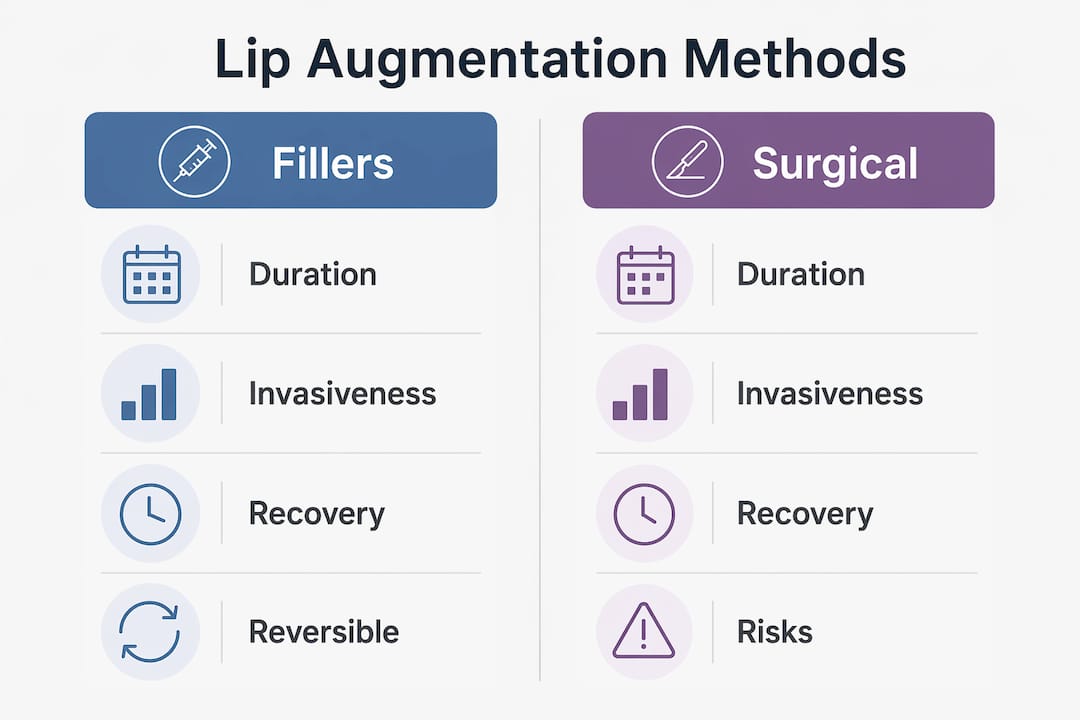
Comparison of lip augmentation methods
| Method | Duration | Invasiveness | Recovery | Reversible |
|---|---|---|---|---|
| HA filler (Juvederm, Restylane) | 6–12 months | Minimal | 1–7 days | Yes |
| Fat grafting | Several years | Moderate | 1–2 weeks | No |
| Dermis transfer | 5+ years | Moderate | 1–2 weeks | No |
| Surgical implant | Permanent | High | 2–4 weeks | Possible with surgery |
What are the benefits of lip augmentation?
The benefits of lip augmentation extend well beyond simply adding volume. Clinical evidence shows that HA fillers improve lip fullness in approximately 60% of patients, with a patient satisfaction rate of 68%. That figure reflects a procedure that reliably delivers visible change while remaining acceptable to the majority who undergo it.
Measurable improvements include:
- Increased projection: HA augmentation increases upper lip projection by approximately 1.26–1.35 mm, according to research published in the Journal of Cutaneous and Aesthetic Surgery. Small as that sounds, it produces a noticeable change in smile aesthetics by improving how much of the upper teeth are visible.
- Restored contours: Ageing causes the vermilion border to flatten and the cupid’s bow to lose definition. Augmentation rebuilds these landmarks precisely.
- Corrected asymmetry: Uneven lips are among the most common reasons patients seek treatment. Targeted injection corrects the imbalance without affecting the overall lip shape.
- Improved confidence: Patients consistently report feeling more satisfied with their appearance after treatment, particularly when results look natural rather than overdone.
Crucially, measurable changes in lip projection depend more on baseline anatomy than on the volume of filler used. This means personalised treatment planning is not optional; it is the determining factor in achieving the result you want.
Pro Tip: Ask your practitioner to show you before-and-after images of patients with a similar lip shape to yours, not just the most dramatic transformations. Natural enhancement is a skill, and the subtlest results often require the most expertise.
What risks and side effects should you consider?
Every lip augmentation procedure carries some degree of risk. Knowing what is common versus what is rare helps you prepare and respond appropriately.
Common mild side effects include:
- Swelling (typically resolves within one week)
- Bruising at injection sites
- Tenderness and firmness in the treated area
These effects are reported in approximately 78% of patients who receive HA fillers. They are temporary and do not indicate a problem with the procedure.
Serious complications are rare but real. Vascular injury, where filler is inadvertently injected into or compresses a blood vessel, can compromise tissue and requires immediate professional attention. Serious adverse events occur in approximately 1.1% of cases. That figure is low, but it underlines why practitioner skill matters enormously.
Injection technique is the single biggest variable in the risk profile. Injecting too superficially risks visible lumps and irregularities. Injecting too deeply risks vascular injury. An experienced practitioner understands the precise tissue planes and anatomical landmarks that keep the procedure safe.
Seek immediate medical attention if you experience severe pain, skin colour changes, or blanching after a lip filler procedure. These can be early signs of vascular compromise and require urgent treatment.
Pro Tip: Always verify that your practitioner holds a recognised medical qualification and carries hyaluronidase on-site. The ability to dissolve HA filler quickly is a non-negotiable safety requirement.
How is the lip filler procedure performed?
A standard HA lip filler appointment follows a clear sequence. Knowing what to expect reduces anxiety and helps you communicate your goals more effectively.
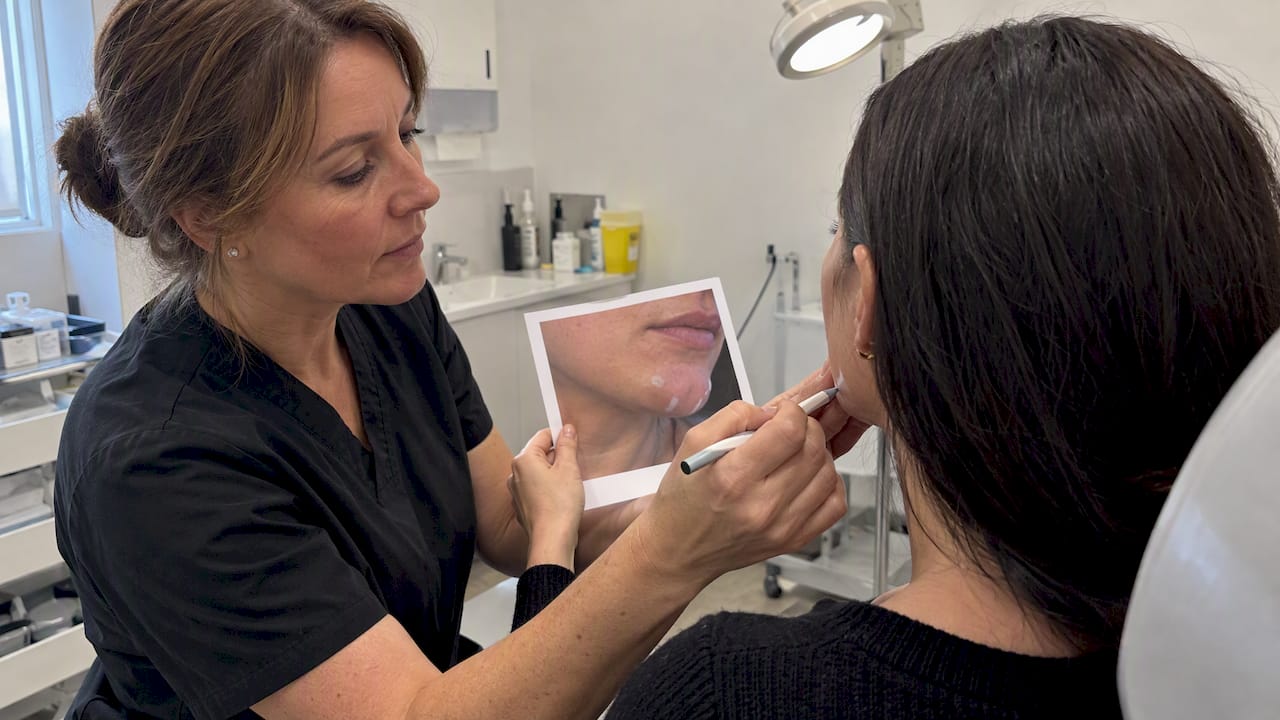
- Consultation and mapping: The practitioner assesses your lip anatomy, discusses your goals, and marks key landmarks including the vermilion border, cupid’s bow, and oral commissures.
- Topical anaesthetic: A numbing cream is applied for 15–20 minutes to minimise discomfort. Many HA fillers also contain lidocaine, which further reduces sensation during injection.
- Injection: The practitioner injects filler in small, controlled amounts across multiple points. Technique varies: some areas use a needle, others a blunt cannula to reduce bruising. The injection sequence follows anatomical landmarks to build shape progressively rather than adding bulk in one area.
- Moulding: The practitioner gently massages the filler to distribute it evenly and check symmetry in real time.
- Review: You assess the result in a mirror. Minor adjustments can be made immediately if needed.
- Aftercare: Avoid strenuous exercise, extreme heat, and alcohol for 24 hours. Apply ice wrapped in a cloth to reduce swelling.
The entire appointment typically takes 30–45 minutes. Swelling peaks at 24–48 hours and largely resolves within one week. For guidance on achieving results that look genuinely natural, the natural lip filler results guide from Theaestheticsroom covers the key principles in detail.
When should you consider surgical lip augmentation?
Surgical lip augmentation is the right choice in specific circumstances. It suits patients who want results that do not require repeat appointments, those seeking a significant volume increase beyond what fillers can deliver, or those who have had repeated filler treatments and want a more permanent solution.
Fat grafting is particularly well suited to patients who already plan to undergo liposuction, as the harvested fat serves a dual purpose. Dermis transfer appeals to patients who want long-lasting results without a foreign implant in the body. Implants offer the most predictable permanent outcome but carry the highest procedural risk and the longest recovery period.
Pre-operative planning for implants includes a symmetry assessment and precise measurement of the lip anatomy to determine implant size and placement. The tunnelling technique used during insertion is critical: the implant must sit between the fat and muscle layers to look and feel natural.
| Surgical method | Procedure time | Recovery | Longevity | Key consideration |
|---|---|---|---|---|
| Implant | ~30 minutes | 2–4 weeks | Permanent | Highest risk; reversible only with surgery |
| Fat grafting | 60–90 minutes | 1–2 weeks | Several years | Some reabsorption expected |
| Dermis transfer | 60–90 minutes | 1–2 weeks | 5+ years | Uses your own tissue; no foreign material |
Surgical options carry greater risks than fillers, including infection, scarring, and asymmetry that may require correction. Recovery is longer and the commitment is greater. For most first-time patients, starting with a reversible HA filler procedure is the sensible approach. Surgical methods are best reserved for those who have already experienced fillers and know precisely what they want.
Key takeaways
Lip augmentation delivers the best results when the method is matched to the patient’s anatomy, goals, and tolerance for downtime, not simply chosen for longevity or cost.
| Point | Details |
|---|---|
| Method determines longevity | HA fillers last 6–12 months; surgical implants are permanent; fat grafting lasts several years. |
| Satisfaction is measurable | Clinical studies report 68% patient satisfaction with HA fillers and improvement in lip fullness in 60% of patients. |
| Technique drives safety | Injection depth is the primary risk variable; experienced practitioners use anatomical landmarks to avoid complications. |
| Anatomy shapes results | Measurable changes in projection depend more on baseline lip anatomy than on filler volume alone. |
| Reversibility matters | HA fillers can be dissolved with hyaluronidase; surgical options require further surgery to reverse. |
My view on choosing the right lip augmentation approach
Patients often arrive at a consultation focused on volume. They want fuller lips and they want them quickly. What they actually need is a conversation about shape, proportion, and what their specific anatomy will support.
The shift I have observed in aesthetic medicine over recent years is encouraging. The best practitioners now approach lip augmentation as a restoration of natural contours rather than a simple volume exercise. They work from anatomical landmarks, assess the relationship between the lips and the surrounding facial structures, and plan treatment accordingly. The result is lips that look like yours, only better.
My honest advice: resist the temptation to choose a practitioner based on price or convenience. Review their portfolio carefully. Look for results that match your aesthetic, not the most dramatic before-and-after images on their feed. Ask about their qualifications, their safety protocols, and whether they carry hyaluronidase. A practitioner who welcomes those questions is one worth trusting.
For those considering selecting lip fillers for natural results, the most important factor is not the brand of filler but the skill of the person holding the syringe.
— Vishul
Lip augmentation at Theaestheticsroom
Theaestheticsroom offers professional dermal filler treatments for lip enhancement at its Knightsbridge clinic, with additional locations on Harley Street and in Mayfair. Every treatment begins with a personalised consultation to assess your lip anatomy, discuss your goals, and design a plan that delivers natural, proportionate results.

The clinic holds CQC accreditation and is a member of the ACE Group, a body dedicated to patient safety in aesthetics. Practitioners are medically qualified and trained in the anatomical injection techniques that minimise risk and maximise precision. Whether you are considering your first HA filler appointment or exploring longer-lasting options, Theaestheticsroom provides the clinical expertise and personalised care to guide your decision. Book a virtual or in-person consultation to get started.
FAQ
What is lip augmentation in simple terms?
Lip augmentation is a cosmetic procedure that increases the size, improves the shape, or restores the volume of the lips using injectable fillers or surgery.
How long does lip augmentation last?
HA fillers last 6–12 months. Fat grafting results last several years, dermis transfer lasts five years or more, and surgical implants are permanent.
What are the most common side effects of lip fillers?
Swelling, bruising, and tenderness are the most common side effects, occurring in approximately 78% of patients. These typically resolve within one week.
Is the lip filler procedure painful?
Discomfort is minimal for most patients. Topical anaesthetic is applied before injection, and most HA fillers contain lidocaine to further reduce sensation during the procedure.
How much does lip augmentation cost in the UK?
The cost of lip enhancement varies by clinic, practitioner experience, and the type of filler used. Prices are not publicly standardised; a consultation with a qualified practitioner will provide an accurate quote based on your specific treatment plan.