

TL;DR:
- Thread lifting is a minimally invasive procedure that offers a natural-looking lift and stimulates collagen production over months. It is most suitable for mild to moderate sagging and typically lasts 12 to 18 months, with quick recovery and minimal downtime. Proper patient selection and expert technique are essential to achieve safe, satisfying results.
Thread lifting is one of those cosmetic procedures that sounds more dramatic than it actually is. If you have noticed mild sagging along your jawline, cheeks, or brow and want to address it without surgery, understanding what is thread lifting can genuinely change your perspective on what is possible. This procedure offers a middle ground between injectable treatments and a full surgical facelift, but it is widely misunderstood. Many people either overestimate how much it lifts or underestimate how long the effects last. This guide covers the procedure itself, the materials used, realistic benefits, risks you should know about, and how to recover well.
Table of Contents
- Key takeaways
- What is thread lifting and how does it work?
- Benefits of thread lifting
- Risks and complications to understand
- Aftercare and recovery tips
- Costs and how thread lifting compares
- My perspective on thread lifting expectations
- Discover the right treatment for you at Theaestheticsroom
- FAQ
Key takeaways
| Point | Details |
|---|---|
| Minimally invasive procedure | Thread lifting takes 30 to 60 minutes under local anaesthetic with no general anaesthesia required. |
| Dual mechanism of action | Threads provide an immediate mechanical lift and trigger ongoing collagen production for months afterwards. |
| Best for mild to moderate laxity | Thread lifts suit adults with early to moderate skin sagging, not those needing surgical correction. |
| Recovery is quick but active | Most people return to normal within days, though specific aftercare steps are needed to protect results. |
| Results last 12 to 18 months | Thread lifts are not permanent, but they can complement other treatments like dermal fillers or Botox. |
What is thread lifting and how does it work?
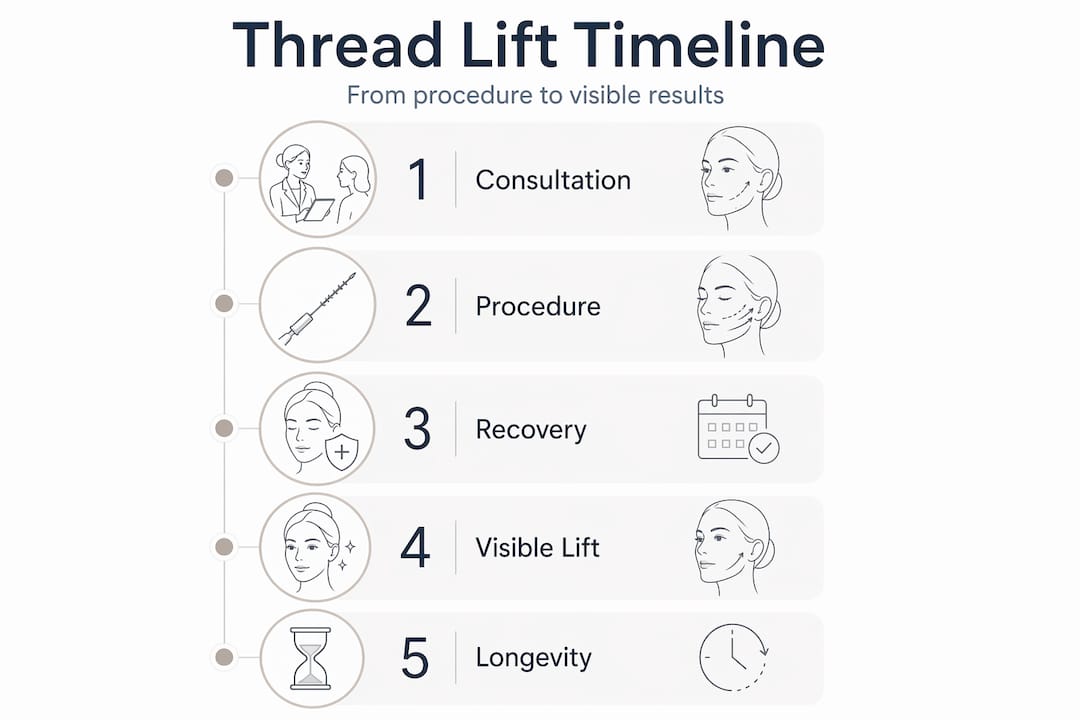
Thread lifting is a minimally invasive cosmetic procedure in which dissolvable sutures are inserted beneath the skin using fine needles or cannulas. The threads grip facial tissue and physically reposition it upward. The procedure typically takes 30 to 60 minutes and is performed under local anaesthetic, making it suitable as an outpatient treatment with no hospital stay required.
Thread materials: PDO, PLLA, and PCL
The three most common thread materials are polydioxanone (PDO), poly-L-lactic acid (PLLA), and polycaprolactone (PCL). All three are absorbable, meaning the body gradually dissolves them over several months. PDO threads are the most widely used. They are absorbed within four to six months, but their collagen-stimulating effects continue well beyond that. PLLA and PCL threads last longer in the tissue, with PCL remaining active for up to two years in some cases.
PDO threads work through two mechanisms: the physical repositioning of tissue via barbed sutures, and the biological response the body mounts to a foreign material. That response triggers neocollagenesis, the production of new collagen fibres around the thread as it dissolves. Peak collagen stimulation often continues for months after the thread has been fully absorbed.
U-shaped vs I-shaped threads
The shape and configuration of threads determine both the lifting power and the risk profile of the procedure.
| Thread type | Lifting strength | Complication profile | Best use |
|---|---|---|---|
| U-shaped (barbed) | Strong, robust lift | Higher: bleeding 15 to 20%, dimpling 12 to 18% | Lower face, jawline, jowl correction |
| I-shaped (smooth or mono) | Milder, subtler lift | Lower complication rate | Midface refinement, skin quality |
U-shaped threads are anchored in the temporal region and provide strong lifting of the lower face and jawline. I-shaped threads are better suited to refining midface contours with a lower complication profile. Many experienced practitioners now combine both types to balance lifting power with safety, tailoring the approach to each patient’s facial anatomy and degree of laxity.
The shift towards bioactive threads is one of the most exciting developments in this space. Newer thread systems incorporate bioactive polymers and sustained-release hyaluronic acid, meaning they do not just lift mechanically but actively signal the skin to regenerate from within. This moves thread lifting from a purely structural intervention towards a genuinely regenerative one.
Benefits of thread lifting
The most immediate benefit is visible. You leave the clinic with lifted tissue. That said, the more durable benefit builds over the following weeks as collagen production ramps up in response to the threads. The combination of instant lift and longer-term skin firming is what sets thread lifting apart from injectable fillers alone.

The benefits of thread lifting are particularly strong for adults who are not yet at the stage where surgery would be recommended. For mild to moderate skin laxity, thread lifts produce natural-looking results without the recovery time or scarring associated with a surgical facelift. The procedure suits sagging skin along the cheeks, jawline, brow, and neck.
Key benefits at a glance:
- Immediate tissue repositioning with visible lift on the day of treatment
- Ongoing collagen stimulation that firms skin texture over two to three months
- Minimal downtime compared with surgical alternatives
- No general anaesthesia, reducing anaesthetic-related risks
- Natural-looking results that preserve facial movement and expression
- Compatible with other treatments such as dermal fillers, Botox, and skin boosters
Pro Tip: If you are considering a non-surgical face lift, thread lifting works best as part of a treatment plan rather than a standalone fix. Pairing it with skin quality treatments addresses both structure and surface.
Thread lifting does not replicate the dramatic, long-lasting correction of a surgical facelift. It is a different tool for a different stage of ageing. Thinking of it as an alternative to surgery often leads to disappointment. Thinking of it as the most effective non-surgical option for moderate laxity tends to produce satisfied patients.
Risks and complications to understand
Thread lifting carries a well-documented complication profile, and understanding it helps you make an informed decision. Swelling affects approximately 34% of patients after the procedure. Bruising and ecchymoses affect around 6%. These are expected early reactions and typically resolve within one to two weeks.
The risk profile differs significantly between thread types. U-shaped threads carry higher rates of bleeding (15 to 20%), dimpling (12 to 18%), and tissue damage at exit points (5 to 10%). I-shaped threads produce fewer and milder complications. This is why thread type selection is a clinical decision, not just an aesthetic preference.
Complications to be aware of before proceeding:
- Swelling and bruising in the first week (common and self-resolving)
- Visible dimpling or puckering at thread entry or exit points
- Asymmetry if threads shift or are placed unevenly
- Infection, particularly if aftercare guidance is not followed
- Thread extrusion, where a thread migrates towards the skin surface
- Rare but serious: parotid duct injury from misplaced sutures, which can cause swelling of the parotid gland or sialolithiasis
The rare complications deserve particular attention. Parotid duct injury is caused by sutures placed too deep or in the wrong plane, underscoring just how much precise anatomical knowledge matters. Understanding facial anatomy for safe outcomes is not optional for practitioners performing this procedure. It is fundamental.
Patient selection is one of the strongest predictors of a good outcome. Thread lifts work best in patients with mild to moderate laxity, good skin quality, and realistic expectations. Attempting to correct severe ptosis or heavily sun-damaged skin with threads tends to produce under-delivery and frustration on both sides.
Aftercare and recovery tips
Thread lifting recovery time is genuinely short for most people. The first 48 to 72 hours involve the most visible swelling and tenderness. Most patients return to normal activities within a few days, though the full result takes two to three months to mature as collagen production peaks.
Effective aftercare is not passive. These practical steps make a real difference to your outcome:
- Sleep with your head elevated for at least the first five nights to reduce post-procedure swelling
- Avoid NSAIDs such as ibuprofen for at least seven days, as avoiding NSAIDs reduces bruising by limiting platelet interference
- Do not apply pressure to treated areas, including during face washing or sleeping on your side
- Avoid strenuous exercise and excessive facial movement for two weeks
- Steer clear of saunas, steam rooms, and alcohol for the first week, as heat and vasodilation worsen swelling
- Attend your follow-up appointment so your practitioner can assess thread position and skin response
Minor skin puckering after a thread lift is common and usually resolves within one to two weeks as the surrounding tissue relaxes and settles around the thread. If dimpling or puckering persists beyond three weeks, seek professional assessment. Persistent puckering can occasionally indicate early fibrosis, which responds much better to early intervention than to waiting.
Pro Tip: For detailed recovery guidance that applies across cosmetic procedures, Theaestheticsroom’s post-treatment care guide is a useful resource to read before your appointment, not just after.
Costs and how thread lifting compares
The cost of thread lifting in the UK typically ranges from £800 to £2,500 depending on the number of threads used, the area treated, and the experience of the practitioner. Treating the full lower face and jawline with a combination of U-shaped and I-shaped threads sits at the higher end of that range.
| Treatment | Average UK cost | Downtime | Longevity of results |
|---|---|---|---|
| Thread lift | £800 to £2,500 | 3 to 7 days | 12 to 18 months |
| Surgical facelift | £6,000 to £12,000 | 2 to 4 weeks | 5 to 10 years |
| Dermal fillers | £300 to £800 per session | Minimal (1 to 2 days) | 9 to 18 months |
| Botox | £150 to £400 per area | None | 3 to 4 months |
The thread lift vs facelift comparison is less about which is better and more about which is appropriate. A surgical facelift produces far more dramatic and long-lasting correction, but carries general anaesthetic risk, significant downtime, scarring, and costs two to five times more. For someone in their late thirties or forties with mild jowling, a thread lift is a proportionate, well-matched response.
Thread lifting for sagging skin works best when it forms part of a broader treatment plan. Many practitioners recommend combining threads with dermal fillers to restore lost volume in areas like the temples or cheeks, while using Botox to relax muscles that pull tissue downward. The structural lift from threads, the volume restoration from fillers, and the muscle relaxation from Botox address ageing from three different angles simultaneously.
Results from thread lifting typically last 12 to 18 months, though this varies depending on the thread material used, the patient’s age, skin quality, and how well aftercare instructions are followed. PCL-based threads may extend results slightly longer. Most patients choose to repeat the procedure or complement it with other treatments as the collagen scaffold gradually remodels.
My perspective on thread lifting expectations
I have seen thread lifting produce genuinely impressive results, and I have also seen it disappoint people who approached it expecting a surgical facelift in a lunch break. In my experience, the gap between expectation and reality is the single biggest driver of dissatisfaction with this procedure.
What I have come to believe strongly is that patient education is not an add-on to a thread lift consultation. It is the consultation. When someone understands that the immediate result will settle and soften slightly before the collagen benefit builds, they are far less likely to panic in week two when the lift looks less dramatic than it did on day one.
The evolution of thread materials has genuinely improved outcomes. The move towards bioactive polymer threads that incorporate hyaluronic acid represents a meaningful step forward. We are no longer just repositioning tissue. We are giving the skin the biological signals it needs to restore itself.
My honest advice: thread lifting is most effective in patients who are a year or two away from considering surgery. Not those who have already been told surgery is the right option, and not those who would see equally good results from fillers alone. That narrow, well-selected group tends to see results that genuinely delight them.
Always choose a practitioner with thorough anatomical knowledge and a conservative approach to patient selection. The best results come from someone who will tell you if you are not the right candidate, not from someone who will thread lift anyone who asks.
— Vishul
Discover the right treatment for you at Theaestheticsroom
At Theaestheticsroom, we specialise in non-surgical facial rejuvenation from our clinics in Knightsbridge, Harley Street, and Mayfair. Thread lifting sits alongside a full suite of treatments designed to restore and firm your appearance without the need for surgery.

Whether thread lifting is the right choice for you, or whether a combination approach using dermal fillers and Botox treatments would deliver better results for your skin’s current needs, our practitioners will give you a frank, personalised assessment. We also offer hybrid treatment options that combine structural lifting with volume restoration and skin quality treatments in a single plan. Book a consultation today and take the first clear step towards looking as well as you feel.
FAQ
What exactly is a thread lift procedure?
A thread lift is a minimally invasive cosmetic procedure in which dissolvable sutures are inserted under the skin to physically lift and reposition sagging facial tissue, whilst also stimulating collagen production over the following months.
How long does thread lifting recovery take?
Most people experience visible swelling and tenderness for three to seven days, with the majority returning to normal activities within a week. The full result, including the collagen-building effect, matures at around two to three months.
How does thread lifting compare with a surgical facelift?
A surgical facelift delivers more dramatic and longer-lasting correction but requires general anaesthesia, two to four weeks of downtime, and costs significantly more. Thread lifting suits adults with mild to moderate laxity who want a proportionate, lower-risk intervention.
What are the main risks of thread lifting?
Common side effects include swelling (affecting around 34% of patients), bruising, and temporary dimpling. Rarer complications include thread extrusion, asymmetry, and, in cases of poor technique, parotid duct injury.
How long do thread lift results last?
Results typically last 12 to 18 months, depending on the thread material used, the patient’s skin quality, and how well aftercare instructions are followed. Many patients choose to maintain results with repeat treatments or complementary procedures.